English हिन्दी
Connect with us

Top Stories

Nearly a dozen army school shut down in Jammu after intel of terror attack, high alert issued

As per the official who is in charge of nabbing the terrorists, search operations in the region are underway and to prevent any unwanted discomfort, the decision to shut the schools has been taken and will remain shut till May 25.


Published

on

Army School

Amid a high alert in the critical region of Jammu and Kashmir, army schools have been shut down as a major security step.

As per a reported statement by an official, this action has been taken as a precautionary measure after a high alert across the region post the killings of army personnel last week in Rajouri.

Last week on Friday, five Army men lost their lives after an explosion that took place during an encounter with the terrorist in the Rajouri district.

As per the official who is in charge of nabbing the terrorists, search operations in the region are underway and to prevent any unwanted discomfort, the decision to shut the schools has been taken and will remain shut till May 25.
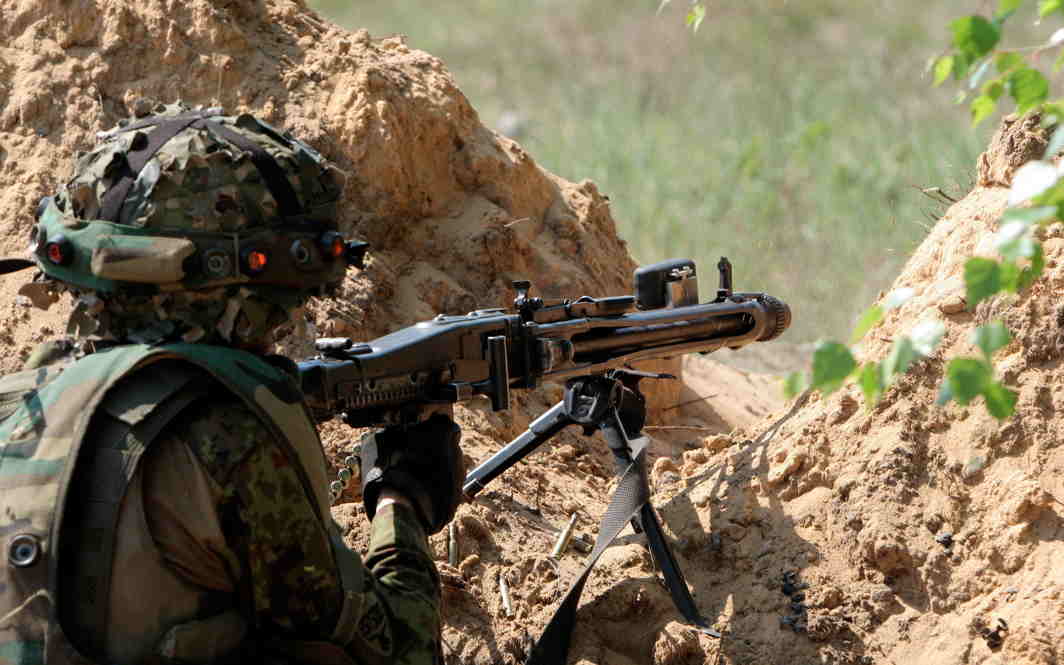
As per reports, some senior officials have signaled receiving of intelligence inputs of a terror attack and a high alert has been issued in all the Defence establishments that is located in the Jammu-Pathankot highway.

Read Also: Traffic camera pics ruined a Kerala man’s marriage . Here’s how

The senior official also said that as a precautionary step at least a dozen army schools have been shut.

Army Goodwill School in Rajouri, Army Pinewood School in Hamirpur, Poonch and Army Public School in Aknoor along other army schools are the ones that have been shut down.

Some schools that now remain closed until May 25 as of now, are going to to hold their classes online.

In the mean time, heavy search operations are underway in the Poonch district after reports of movement of suspicious people noticed by the locals.

Military drills, search and combat operation are being carried out across the region following that intel received.

All this is happening when Kashmir is due to host the third G20 working group meeting later this month, when international delegations from different countries will attend the meeting in the valley.

Stalin govt files defamation suit against Tamil Nadu BJP chief

Karnataka Assembly Election 2023: Congress ahead in exit polls, hung house possibilities beat BJP chances

Latest world news

US-Iran deal text released: Strait of Hormuz reopening, $300 billion fund and no-nuclear pledge among key provisions

The newly released US-Iran agreement includes provisions for reopening the Strait of Hormuz, launching a proposed $300 billion reconstruction fund and advancing negotiations on Iran’s nuclear programme.

Published

on

The memorandum of understanding sets out a roadmap for restoring maritime trade, advancing nuclear negotiations and supporting Iran’s economic recovery through a proposed reconstruction fund.

The United States has released the text of a memorandum of understanding (MoU) with Iran, laying out the framework for ending months of conflict and opening the door to broader negotiations on Tehran’s nuclear programme and economic future. The agreement includes commitments on reopening the Strait of Hormuz, a pledge from Iran not to pursue nuclear weapons, and the creation of a proposed $300 billion reconstruction and development fund.

According to the released text, Iran has agreed to ensure the restoration of commercial shipping through the Strait of Hormuz, one of the world’s most important energy transit routes. The US, in turn, has committed to lifting its naval blockade and refraining from imposing new sanctions during a 60-day negotiation period aimed at reaching a broader and more comprehensive agreement.

Hormuz reopening central to agreement

A major component of the deal focuses on restoring maritime traffic in the Persian Gulf and Gulf of Oman. The memorandum calls for the reopening of the Strait of Hormuz to safe commercial navigation, a move expected to ease concerns in global energy markets after months of disruption.

The agreement also outlines cooperation between both sides to reduce tensions in the region and maintain freedom of navigation through the strategic waterway.

Iran reiterates no-nuclear weapons commitment

The released document states that Iran has reaffirmed its commitment not to develop or acquire nuclear weapons. It also provides for cooperation with the International Atomic Energy Agency (IAEA) and further discussions on the future of Iran’s enriched uranium stockpiles as part of upcoming negotiations.

While the MoU establishes broad principles, several key nuclear issues are expected to be addressed during the 60-day negotiation process that follows the signing of the framework agreement.

$300 billion reconstruction fund proposed

One of the most significant economic elements of the agreement is a proposed $300 billion Reconstruction and Development Fund intended to support Iran’s recovery and investment needs. US officials have said the fund would be financed by private-sector investors and international partners rather than American taxpayers.

Officials have also stressed that access to the fund and broader economic benefits would depend on Iran meeting its commitments under the agreement, including compliance with nuclear-related obligations.

Next phase of negotiations

The memorandum establishes a 60-day period for negotiations on a final agreement covering sanctions, nuclear issues and broader regional security concerns. Both countries have pledged to avoid escalation during this period while working toward a longer-term settlement.

The deal is being viewed as an important step toward reducing tensions in the Middle East, though significant negotiations remain before a permanent agreement can be reached.

Continue Reading

Latest world news

Trump announces interim Iran agreement as peace talks move forward

US President Donald Trump has announced an interim agreement with Iran that seeks to maintain the ceasefire and establish a path toward broader peace negotiations in the Middle East.

Published

on

Donald Trump statement

US President Donald Trump has announced that the United States and Iran have signed an interim agreement intended to reduce tensions and support ongoing efforts to end the conflict that has destabilised parts of the Middle East.

According to officials familiar with the development, the agreement is designed to extend the current ceasefire and establish a framework for future negotiations between the two countries. The move is being viewed as a significant diplomatic step after months of heightened regional tensions.

Agreement focuses on ceasefire and future negotiations

Officials said the arrangement is aimed at maintaining stability while both sides work toward a broader and more permanent settlement. The agreement reportedly includes provisions intended to support continued dialogue and reduce the risk of renewed hostilities.

While the development has been welcomed as a positive breakthrough, reports indicate that several key issues remain unresolved and will require further negotiations. As a result, the current understanding is being described as an interim framework rather than a final peace treaty.

Long-term settlement still under discussion

Diplomatic efforts are expected to continue in the coming weeks as negotiators seek to address outstanding concerns and work toward a more comprehensive agreement.

The announcement comes amid international calls for de-escalation in the region and renewed efforts to secure lasting stability through diplomatic engagement.

Analysts say the interim agreement could provide an opportunity for both sides to pursue further talks while reducing immediate security concerns. However, the success of the initiative will largely depend on progress made during future negotiations.

As discussions continue, global attention remains focused on whether the agreement can lead to a durable settlement and contribute to broader peace and stability across the Middle East.

Continue Reading

Latest world news

Trump calls PM Modi a total killer and tough trader during G7 bilateral talks

US President Donald Trump praised Prime Minister Narendra Modi during their G7 Summit meeting, calling him a tough trader and saying India and the United States are continuing discussions on trade agreements.

Published

on

Donald Trump statement

Prime Minister Narendra Modi and US President Donald Trump held a bilateral meeting on the sidelines of the G7 Summit in France on Wednesday, marking an important engagement between the two leaders amid ongoing discussions on trade, security and strategic cooperation.

During interactions around the meeting, Trump praised Modi in unusually warm terms, describing the Indian Prime Minister as a “tough trader” and highlighting his negotiating abilities. He also referred to Modi as a “total killer” while complimenting his leadership style and effectiveness in dealing with complex issues.

The meeting was the first face-to-face interaction between the two leaders in several months and came at a time when New Delhi and Washington are working toward advancing a bilateral trade agreement. Officials from both sides have indicated that discussions on trade remain a priority, although a final deal is still under negotiation.

Focus on trade and strategic cooperation

Speaking after the meeting, Trump said he had a “very good” conversation with Modi and noted that the two countries were continuing efforts to reach trade agreements. He also described the Indian leader as a strong negotiator and expressed interest in visiting India in the future.

Trade issues have been a major area of discussion between India and the United States, with both sides seeking progress on market access, tariffs and broader economic cooperation.

Maritime security also discussed

The bilateral meeting took place against the backdrop of wider global security concerns. During G7 engagements, Modi raised issues related to maritime security and the safety of Indian seafarers, stressing the importance of secure shipping routes and uninterrupted global trade.

The leaders’ talks were closely watched as India and the United States continue to deepen cooperation across trade, defence and strategic affairs.

Continue Reading

Trending

© Copyright 2022 APNLIVE.com