
India News
Rafale deal controversy: French government’s statement, what is says, what it doesn’t


[vc_row][vc_column][vc_column_text]Congress president Rahul Gandhi’s statement in Lok Sabha, during the debate on no-confidence motion against Narendra Modi government, that there was no secrecy pact between India and France over deal for purchase of Rafale aircraft, was countered by French government within hours.
The statement issued by the French government affirmed that a secrecy pact exists between the two countries. The statement, however, only said the agreement “legally binds the two states to protect the classified information provided by the partner, that could impact security and operational capabilities of the defence equipment”.
However, Defence Minister Nirmala Sitharaman stretched the meaning of “classified information… that could impact security and operational capabilities of the defence equipment” to include the aircraft price.
Also lost in the noise was the aspect of shunting out public sector’s Hindustan Aeronautcis Limited, which has been making fighter aircraft for decades, and giving the contract to a private player with no background or experience in the field.
In its statement issued from Paris, the French foreign ministry said: “We have noted the statement of Mr Rahul Gandhi before the Indian Parliament. France and India concluded in 2008 a security agreement, which legally binds the two states to protect the classified information provided by the partner, that could impact security and operational capabilities of the defence equipment of India or France. These provisions naturally apply to the IGA concluded on 23 September 2016, on the acquisition of 36 Rafale aircraft and their weapons. As the President of the French Republic indicated publicly in an interview to India Today on March 9, 2018, ‘In India and in France, when a deal is very sensitive, we can’t reveal all details’.”

Defence Minister Nirmala Sitharaman also contradicted Rahul and cited Article 10 of the Inter-Governmental Agreement (IGA) between the two countries on the purchase of Rafale aircraft, which calls for the protection of classified information and materials exchanged under the pact.
She said this agreement was signed in 2008 by UPA government’s defence minister AK Anthony – which wasn’t quite accurate. That deal was junked and replaced by another in 2016, as mentioned in French government’s statement.
Read More: No confidence motion: After a scathing attack, Rahul Gandhi hugs PM Modi
As in the French government’s statement yesterday – Friday, July 20 – even in the interview that French president Macron gave to India Today, he did not say Indian government could not disclose the aircraft cost. He said, “…they will have to consider which details they would want to be revealed to the opposition and Parliament.”[/vc_column_text][vc_column_text css=”.vc_custom_1532169050900{padding-top: 10px !important;padding-right: 10px !important;padding-bottom: 10px !important;padding-left: 10px !important;background-color: #a2b1bf !important;border-radius: 10px !important;}”]Here is the relevant portion of the interview:
Raj Chengappa: Why can’t the details of the deal be revealed and the air cleared up rather than have accusations flying around?
President Macron: First of all, you have these commercial agreements, and obviously you have competitors and we can’t let them know details of the deal. In India and in France, when the deal is very sensitive, we can’t reveal details because of business reasons. Part of the absence of answers to some technical issues is these commercial agreements and the interests of different companies. Secondly, there are some discussions to be organised by the Indian government, and they will have to consider which details they would want to be revealed to the opposition and Parliament. I am not the one to interfere in such a discussion, and you too must realise that we have to consider commercial sensitivities.[/vc_column_text][vc_column_text]When Macron visited India in March this year, the two sides signed a new confidentiality agreement, replacing the 2008 pact, that shields the government from sharing classified information on defence deals, including the Rafale fighter aircraft deal, said a report in The Indian Express (IE). The pact, signed by NSA Ajit Doval and the French President’s diplomatic advisor Philippe Etienne, relates to the exchange and reciprocal protection of classified or protected information.[/vc_column_text][vc_column_text css=”.vc_custom_1532169104071{padding-top: 10px !important;padding-right: 10px !important;padding-bottom: 10px !important;padding-left: 10px !important;background-color: #a2b1bf !important;border-radius: 10px !important;}”]Who said what in Parliament
Congress president Rahul Gandhi, while speaking in the Lok Sabha, said: “The defence minister is sitting here. She had initially said she will disclose to the nation the price of the aircraft. Later, the defence minister clearly said she cannot divulge the details because there is a secrecy pact with France. I met the French President. I asked him is there any such pact between India and France. And the French President told me that there is no such pact between the Indian government and French government. That is the truth… Nirmala Sitharaman has spoken untruth, under pressure from Narendra Modi… Nirmala Sitharaman and the Prime Minister must inform the country.”
Defence Minister Nirmala Sitharaman, who was allowed to speak after Rahul’s hour-long speech, said: “On the secrecy clause, I would like to show it before you, and I have submitted it for your consideration. It is an agreement which was signed during the previous government on January 25, 2008. The agreement of secrecy is an umbrella agreement, which was signed by then defence minister, A K Antony.”
Waving the agreement, she said, “This agreement clearly mentions… (that) ‘as per Article 10 of the Inter-Governmental Agreement between Government of India and Government of France on the purchase of Rafale aircraft, the protection of the classified information and materials exchanged under the IGA shall be governed by the provisions of the security agreement signed on 25 January 2008’.”
Prime Minister Narendra Modi also referred to the issue in his speech. “Just because of one careless allegation in the House on Rafale, both the nations had to release statements. One should not indulge in such childish behaviour,” he said.
Rahul, however, said he stood by his statement in Parliament. “Let them deny if they want. He (Macron) said that before me. I was there, Anand Sharma and former prime minister Manmohan Singh were also there,” he said.[/vc_column_text][vc_column_text]The controversy first broke out on February 5 this year, when Sitharaman told Rajya Sabha that the cost of Rafale aircraft could not be shared since it was “classified information” under the security agreement between the two countries. In a statement issued two days later, the defence ministry said that “in not revealing the item-wise details of the contract, the government is merely following in letter and spirit the confidentiality provisions of a bilateral India-France agreement of 2008, signed by the previous government.”
Read More: No confidence vote: Outcome known, BJP & Opposition hope to score propaganda points
Article 18(3) of the “Agreement between The Government of the Republic of India and The Government of the French Republic concerning the Protection of Classified Information and Material in the field of Defence”, signed in New Delhi on January 25, 2008, states that it will “remain in force for a period of 10 years”, and can “be renewed by tacit consent for a new five-year period”.
According to Article 11(3) of the agreement, “For any contract or sub-contracting contract that includes classified information and material, a security annex shall be drawn up. In this annex, the competent security authority from the party forwarding the information or the material, shall specify what has to be protected by the receiving party, as well as the corresponding classification level, applicable to it.”
However, as per law, pointed out the IE report, the government is bound to provide full information to the Public Accounts Committee (PAC), the Parliamentary Standing Committee on Defence, and the Comptroller and Auditor General (CAG).
Also, at a press conference conducted in the defence ministry in 2017, Sitharaman, flanked by the defence secretary and the deputy chief of air staff, had stated that her ministry “had nothing to hide” and would share the full price details of the deal, reported IE.
In November 2016, Dr Subhash Bhamre, MoS (Defence), in a written response to a question in the Lok Sabha, had said that the “cost of each Rafale aircraft is around Rs 670 crore”. After signing the deal with France in September 2016, top defence ministry officials had also given the breakdown of the Euro 7.9 billion deal for 36 Rafale fighters, as reported by The Indian Express. The basic cost of 36 aircraft was Euro 3,402 million (approximately Rs 670 crore per aircraft), the weaponry cost Euro 710 million, spare parts Euro 1,800 million, weather and terrain compatibility fits Euro 1,700 million, and performance-based logistics support Euro 353 million.[/vc_column_text][/vc_column][/vc_row]










India News
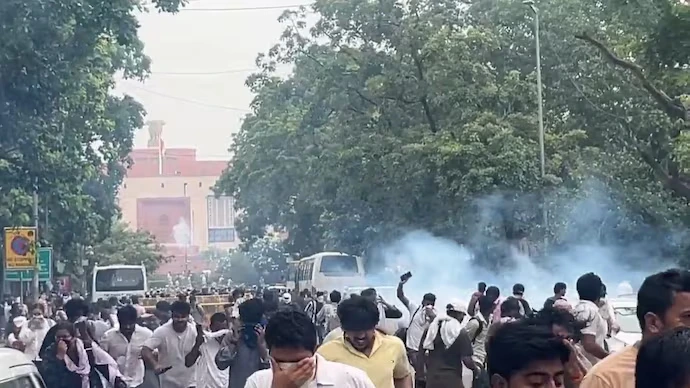
Delhi deploys 25,000 personnel, installs CCTV cameras ahead of CJP march
More than 25,000 police and paramilitary personnel have been deployed in Delhi ahead of the CJP’s planned protest march at Connaught Place. Authorities have also imposed restrictions and stepped up CCTV surveillance.

India News
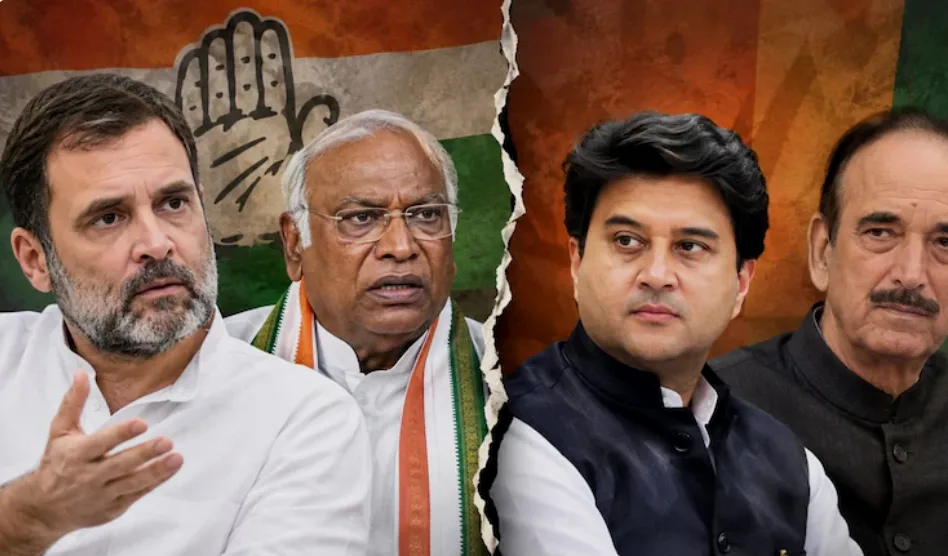
Mallikarjun Kharge’s ‘Your Friends’ jab at Rahul Gandhi over congress exits
Congress president Mallikarjun Kharge took a dig at Rahul Gandhi after the Leader of the Opposition reportedly described former party leaders Jyotiraditya Scindia and Ghulam Nabi Azad as among those who had left the Congress.
India News
Delhi Police offers 11-person limit for CJP’s Connaught Place protest
Delhi Police has offered to facilitate a group of 11 people at Central Park in Connaught Place for the Cockroach Janata Party’s October 16 protest, while warning that violations of prohibitory orders could invite legal action.


India-US trade deal first phase finalised, drafting underway

Election Commission orders voter roll revision in 17 states, UTs

Actor Imran Khan asked to leave India after CJP protest

Delhi Police offers 11-person limit for CJP’s Connaught Place protest

Mallikarjun Kharge’s ‘Your Friends’ jab at Rahul Gandhi over congress exits

Magnitude 7 earthquake strikes Russia’s Kamchatka Peninsula

Delhi deploys 25,000 personnel, installs CCTV cameras ahead of CJP march
Mallikarjun Kharge’s ‘Your Friends’ jab at Rahul Gandhi over congress exits
Delhi Police offers 11-person limit for CJP’s Connaught Place protest
Actor Imran Khan asked to leave India after CJP protest

Afghan Men Try To Hang With The Jet Engine Of The Aircraft in Kabul- Afghanistan News – Kabul News
Trending Top 10 News: 10000 Crore Fine on Flipkart, Apple to Launch Unique Feature, Hdfc Bank Job Ad

Trending Top 10 News: Nokia 6310, Apple sales, Bachpan ka Pyar Video Kid, Dainik Bhaskar IT Raid

Trending Top 10 News: Canada bans Indian flights, Rain in Delhi NCR, AIMIM Twitter hacked, Raj Kundra case

Trending Top 10 News: Shein India, Apple New Service, Pocket Oxygen, Oppo Launched New Phone
-
 India News23 hours ago
India-US trade deal first phase finalised, drafting underway
-
 India News21 hours ago
Election Commission orders voter roll revision in 17 states, UTs
-
 India News21 hours ago
Actor Imran Khan asked to leave India after CJP protest
-
 India News20 hours ago
Delhi Police offers 11-person limit for CJP’s Connaught Place protest
-
 India News8 hours ago
Mallikarjun Kharge’s ‘Your Friends’ jab at Rahul Gandhi over congress exits
-
 India News8 hours ago
Delhi deploys 25,000 personnel, installs CCTV cameras ahead of CJP march
-
 Latest world news8 hours ago
Magnitude 7 earthquake strikes Russia’s Kamchatka Peninsula
