
Latest world news
Japan Builds First Mobile Mosque for 2020 Summer Olympics


Tokyo creates example of tolerance an inculcate “at home” feel among Muslim visitors
Amidst rise in incidents of violence against Muslims in several countries, Japan has created hospitable atmosphere for Muslim visitors, especially during Summer Olympics, by designing a mobile mosque which can accommodate about fifty worshippers at a time.
The first mobile mosque was unveiled earlier this week outside Toyota Stadium, a J-League soccer venue in Toyota city, which is also the headquarters of the car company with the same name. Football is the most popular sport in the Middle Eastern countries.
The back-side of the modified 25-ton truck flipped up to reveal an entrance and then the side slid out, doubling the width of the truck. The 515 sq ft room can accommodate 50 people. It also includes outdoor taps and a washing area for pre-worship cleansing known as ablution.

According to AP report, a large white and blue truck pulls up outside a stadium in central Japan and slowly expands into a place of worship with a sign “Welcome to the Mobile Mosque” written in Arabic.
The report further said that as Japan prepares to host visitors from around the world for the 2020 Summer Olympics, a Tokyo sports and cultural events company has created a mosque on wheels that its head hopes will make Muslim visitors feel at home.
The Chief Executive Officer of Yasu Project: Yasuharu Inoue said that there might not be enough mosques for Muslim visitors in 2020 is alarming for a country that considers itself part of the international community. He said that his mobile mosque could travel to different Olympic venues as needed.
He was quoted saying during an interview, “As an open and hospitable country, we want to share the idea of ‘omotenashi’ (Japanese hospitality) with Muslim people”.
The event company plans to target international sporting events both in Japan and overseas and hope the project will do more than fill a gap in religious infrastructure.
The CEO of the project said, “Going forward, I would be so happy if people from Indonesia, Malaysia, Africa, the Middle East and, for example, refugees who are coming from Syria are able to use the mosque as a tool to promote world peace”.
The history of Islam in Japan is relatively brief in rlation to the religion’s longstanding presence in other nearby countries. Muslims are one of the smallest minorities in the country, having more adherents than the Baha’s faith and fewer than Christians. An estimated 100,000 to 200,000 Muslims live in Japan.











Latest world news
S Jaishankar says India is a natural option for Russia amid Europe tensions
External Affairs Minister S Jaishankar said India remained a natural option for Russia as Moscow increasingly turned towards Asia amid strained relations with Europe. He highlighted the continuity of India-Russia ties and their significance for the balance of power in Asia.


Latest world news
Putin praises PM Modi, says he has very good ideas on Ukraine war
Russian President Vladimir Putin has praised Prime Minister Narendra Modi for repeatedly raising the need to end the Ukraine war, describing his ideas for a settlement as “very good”.

Latest world news
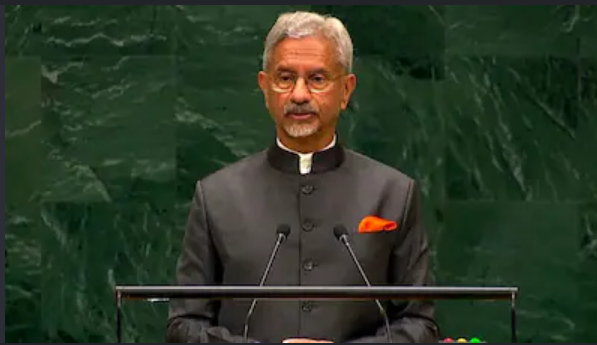
S Jaishankar calls Pakistan a “serial practitioner of terrorism” at UN
S Jaishankar criticised Pakistan at the UN General Assembly, referring to a “serial practitioner of terrorism” and warning against attempts to normalise terrorism.

Dhruv Rathee gets fresh summons in 2018 BJP IT cell video case

Nobody can browbeat judiciary, Chief Justice warns over Rahul Gandhi’s march

India-US trade deal first phase finalised, drafting underway

Election Commission orders voter roll revision in 17 states, UTs

Actor Imran Khan asked to leave India after CJP protest

Delhi Police offers 11-person limit for CJP’s Connaught Place protest
Actor Imran Khan asked to leave India after CJP protest
Election Commission orders voter roll revision in 17 states, UTs
India-US trade deal first phase finalised, drafting underway
Nobody can browbeat judiciary, Chief Justice warns over Rahul Gandhi’s march

Afghan Men Try To Hang With The Jet Engine Of The Aircraft in Kabul- Afghanistan News – Kabul News
Trending Top 10 News: 10000 Crore Fine on Flipkart, Apple to Launch Unique Feature, Hdfc Bank Job Ad

Trending Top 10 News: Nokia 6310, Apple sales, Bachpan ka Pyar Video Kid, Dainik Bhaskar IT Raid

Trending Top 10 News: Canada bans Indian flights, Rain in Delhi NCR, AIMIM Twitter hacked, Raj Kundra case

Trending Top 10 News: Shein India, Apple New Service, Pocket Oxygen, Oppo Launched New Phone
-
 India News15 hours ago
Dhruv Rathee gets fresh summons in 2018 BJP IT cell video case
-
 India News11 hours ago
Nobody can browbeat judiciary, Chief Justice warns over Rahul Gandhi’s march
-
 India News7 hours ago
India-US trade deal first phase finalised, drafting underway
-
 India News5 hours ago
Election Commission orders voter roll revision in 17 states, UTs
-
 India News4 hours ago
Actor Imran Khan asked to leave India after CJP protest
-
 India News3 hours ago
Delhi Police offers 11-person limit for CJP’s Connaught Place protest
