English हिन्दी
Connect with us

India News

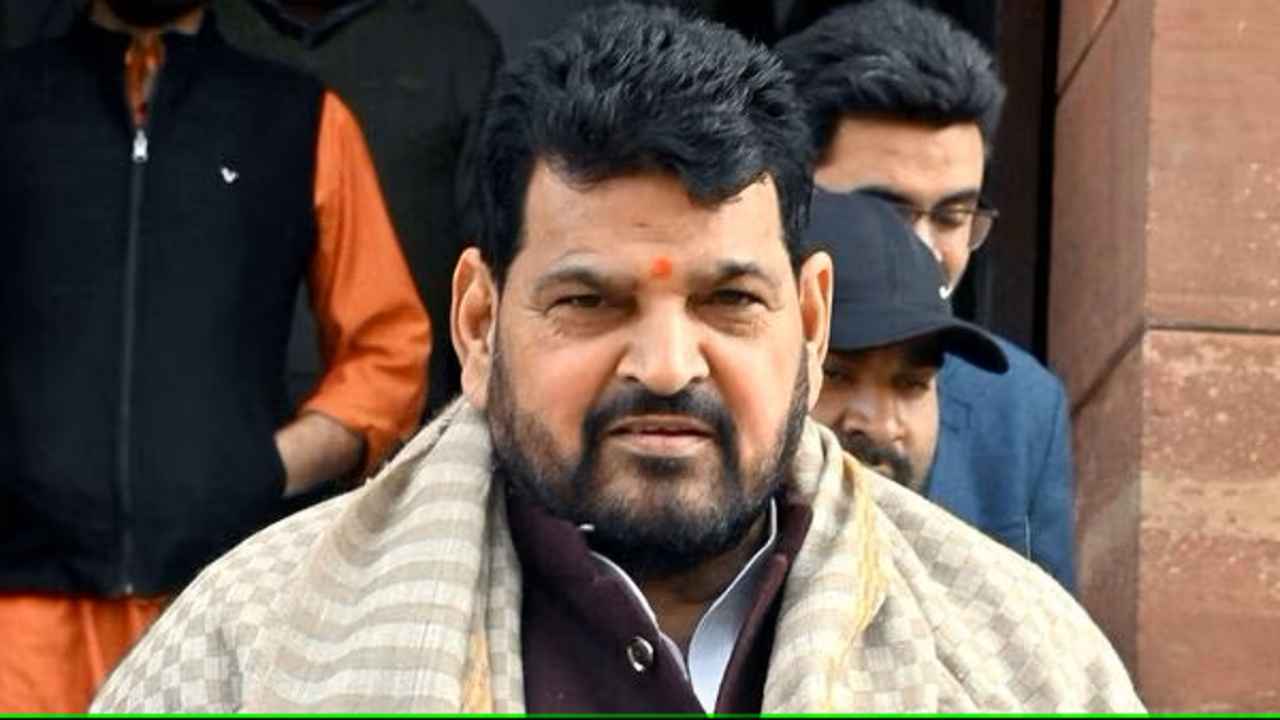
WFI President Brij Bhushan Sharan Singh liable for sexual harassment, molestation and stalking of wrestlers, states Delhi Police chargesheet

According to the chargesheet, the police questioned 108 witnesses, of whom 15, including wrestlers, coaches, and referees, allegedly supported the athletes’ claims.

Published

on

Brij Bhusham Singh

The Delhi police have filed a chargesheet based on their preliminary investigation, the president of the Wrestling Federation of India (WFI) and departing BJP MP Brij Bhushan Sharan Singh, who is accused of sexual harassment, is liable to be prosecuted and punished for offences of stalking and molestation.

According to a media report, Singh was liable to be prosecuted and punished as a result of the complaints made by six female wrestlers.

In the chargesheet, the police cited Sections 506 which states criminal intimidation, 354 says outraging a woman’s modesty, 354 A which says sexual harassment, and 354 D states stalking, and noted that Singh’s harassment in one instance was repeated and continuing.

The report further stated that Singh and the witnesses have been requested to appear in court by the Delhi police. According to the chargesheet, the police questioned 108 witnesses, of whom 15, including wrestlers, coaches, and referees, allegedly supported the athletes’ claims.

As per reports the first allegation mentioned in the chargesheet is the accused Brij Bhushan Singh called one of the wrestlers to his dinner table while she was out for dinner in the hotel restaurant. He grabbed her, put his hand on her breast, and then dragged his fingers down to her stomach and repeated three to four times. He began touching her inappropriately in the WFI office on her palm, knee, thighs, and shoulders without her permission. In order to check her respiration, he placed his hand on her breast and moved it down to her stomach.

The other allegation made by another state that he accused pulled up the wrestler’s T-shirt without asking her permission, putting his hand on her breast, then sliding it down her stomach under the pretense of checking her respiration as she was lying down on the mat. The federation’s office she was invited inside the accused’s chamber. Her brother was told to wait after that Singh shut the door. He drew her close and attempted to make physical contact with her.

Similarly, three to four other allegations are made against him in the chargesheet filed by the Delhi police.

Brij Bhushan Sharan Singh and Vinod Tomar were the subjects of a charge sheet issued by the Delhi Police on June 15. This lawsuit was opened as a result of a complaint by female wrestlers. Six female wrestlers who have represented India internationally have accused Singh of sexual harassment. Singh has disputed the allegations, and his aide has stated that the judiciary will establish his innocence. He might spend up to three to five years in prison if found guilty.

India News

India offers forensic DNA support to identify Nepal flood victims

India will make forensic laboratory facilities available for DNA profiling of first-degree relatives of people missing after Nepal’s August 26 flash floods.

Published

on

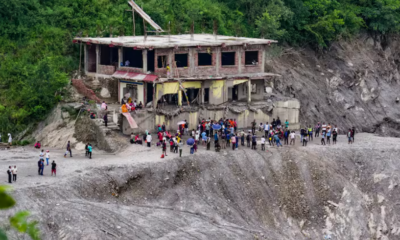
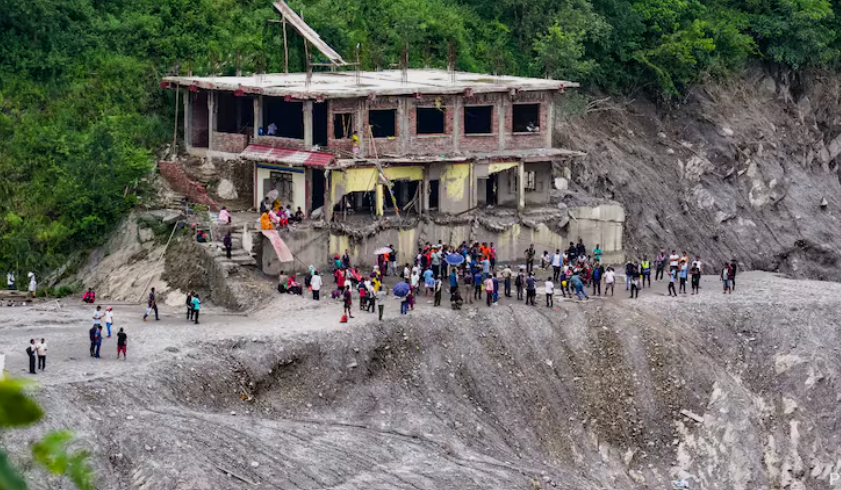
India has offered forensic laboratory support to help identify people who remain missing after the devastating flash floods in Nepal.

The Ministry of External Affairs (MEA) said central and state forensic laboratories in India will make their DNA profiling facilities available for first-degree biological relatives of people missing after the August 26 flash floods in Nepal.

DNA samples can be provided by relatives in India

According to the MEA, first-degree biological relatives living in India can have their biological samples collected and DNA profiles prepared.

The relatives can include a person’s father, mother, son, daughter or sibling. DNA profiling can be carried out at Central Forensic Science Laboratories (CFSLs), State Forensic Science Laboratories (SFSLs), laboratories of the National Forensic Sciences University (NFSU), and NABL-accredited laboratories with DNA profiling capabilities.

The initiative is intended to support Nepal’s ongoing process of identifying mortal remains recovered after the flash floods.

DNA profiles to be compared with unidentified remains

The MEA said the DNA profiling may use Autosomal STR DNA profiling, as advised by Nepal Police, subject to the technical requirements communicated by the Nepali authorities.

Once prepared, DNA profiles and the preliminary information required by Nepalese authorities can be sent to Nepal Police by email for comparison with DNA profiles obtained from unidentified mortal remains.

The Indian Embassy in Kathmandu will also facilitate coordination, with copies of the DNA profiles to be shared with the embassy for this purpose.

Nepal flood death toll rises

The death toll from the flash floods has risen to at least 1,259, according to Nepalese authorities, after rescue workers recovered additional bodies from affected areas.

More than 12,000 people have been rescued, while around 5,000 people remain missing as search and rescue operations continue.

The flash floods, which followed an ice-rock avalanche near the Nepal-Tibet border, caused extensive destruction across towns and villages in northern and central Nepal.

Continue Reading

India News

PM Modi hails ISRO after successful GSLV-F17 launch, calls it proud moment

PM Modi congratulated ISRO after GSLV-F17 successfully launched EOS-05, calling the achievement a proud moment for India.
Published

on

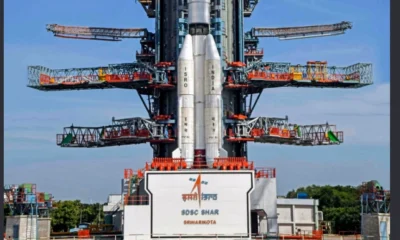
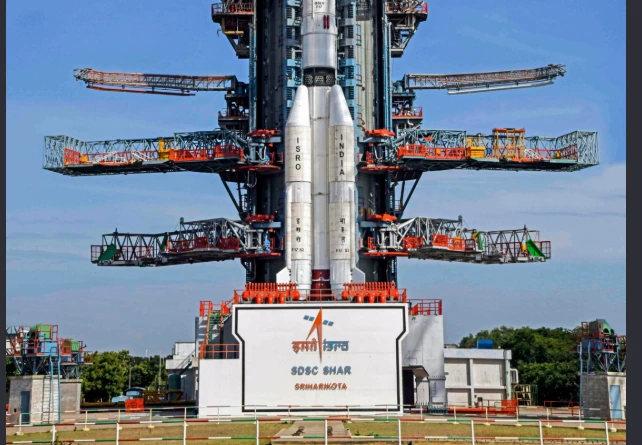
Prime Minister Narendra Modi on Friday congratulated the Indian Space Research Organisation (ISRO) after the successful launch of the GSLV-F17 rocket carrying the EOS-05 Earth observation satellite, describing the achievement as a proud moment for the nation.

The GSLV-F17 lifted off at 2:55 a.m. IST from the Satish Dhawan Space Centre in Sriharikota, Andhra Pradesh. The EOS-05 satellite was subsequently placed into its designated sub-geosynchronous transfer orbit.

PM Modi praises ISRO’s growing capabilities

In a post on X, PM Modi said the successful mission reflected the excellence, innovation and expanding capabilities of India’s space sector.

He also highlighted the growing partnership between ISRO and Indian industry, saying it was strengthening India’s space programme and expanding capabilities across the wider space ecosystem.

The prime minister described the successful launch of GSLV-F17 carrying EOS-05 as another outstanding achievement by ISRO and a matter of national pride.

EOS-05 strengthens earth observation capabilities

According to the report, EOS-05 is India’s first-ever imaging satellite from geosynchronous orbit. The satellite is designed to provide continuous observation of the country from an altitude of nearly 36,000 km above Earth.

The mission is expected to strengthen India’s earth observation capabilities and support advanced imaging and observation applications.

ISRO Chairman Dr V Narayanan expressed satisfaction with the mission, saying the satellite was precisely injected into its intended orbit.

Mission Director Thomas Kurian described the launch as a significant milestone for the GSLV programme. He said it was the 19th flight of the GSLV and noted that EOS-05 is the heaviest satellite the launch vehicle has placed into a geosynchronous transfer orbit or sub-GTO orbit.

GSLV-F17 launch vehicle details

The GSLV-F17 stands 51.7 metres tall and has an approximate liftoff mass of 420.5 tonnes.

Science and Technology Minister Jitendra Singh also congratulated the ISRO team following the successful mission. He described EOS-05 as a state-of-the-art Earth observation satellite capable of advanced imaging across visible, infrared, multispectral and hyperspectral bands.

Continue Reading

India News

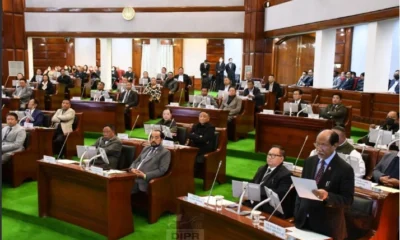
Nagaland Assembly urges Centre to withdraw Protected Area Permit regime

Nagaland Assembly unanimously passed a resolution urging the Centre to withdraw the Protected Area Permit regime, citing concerns over tourism, investment and international engagement.
Published

on

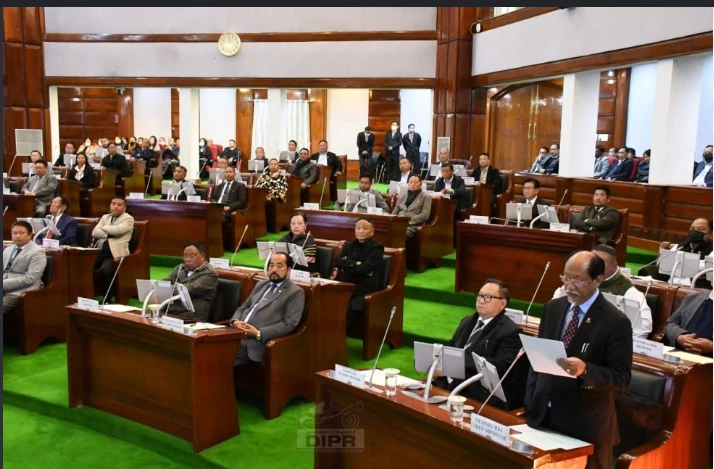
The Nagaland Legislative Assembly has unanimously passed a resolution urging the Centre to withdraw the Protected Area Permit (PAP) regime in the state, arguing that the restrictions are affecting tourism, investment, international engagement and economic opportunities.

The resolution was moved by Deputy Chief Minister and Home Minister Yanthungo Patton and was adopted through a voice vote.

PAP regime was reimposed in 2024

The Protected Area Permit regulates the entry of foreign nationals into notified areas. The regime had been relaxed in Nagaland in 2011 but was reimposed on December 17, 2024.

During the Assembly discussion, Patton said Nagaland had emerged as a peaceful destination for tourism, culture, investment, entrepreneurship and international engagement. He said these sectors were increasingly contributing to employment and livelihood opportunities, particularly for young people.

The resolution also highlighted events and initiatives such as the Hornbill Festival and the “Land of Festivals” initiative, saying they had helped showcase Nagaland and India’s cultural diversity internationally while generating economic opportunities for local communities and entrepreneurs.

Assembly links PAP restrictions to economic concerns

The state government argued that the return of the PAP regime has complicated efforts to expand international tourism, business and investment.

The Assembly resolution said the regime was creating difficulties for international tourism, business and investment, along with cultural exchanges and overseas partnerships.

However, the state maintained that relaxing the permit regime would not mean compromising national security.

The resolution assured the Centre that foreign nationals could continue to be registered, regulated and monitored through technology-based and institutional mechanisms in coordination with central agencies.

Neiphiu Rio backs review of PAP regime

Chief Minister Neiphiu Rio also participated in the debate along with Tourism and Higher Education Minister Temjen Imna Along, Industries and Commerce Advisor Hekani Jakhalu and MLA Naiba Konyak.

The legislators maintained that Nagaland’s present circumstances warranted a different approach, stressing that the state was peaceful and seeking greater opportunities in tourism, investment and other sectors.

Rio linked the demand to Nagaland’s economic aspirations and the need to create more opportunities for young people while maintaining the state’s commitment to national security.

“Security and development can go together,” Rio said.

The resolution further argued that regulations that have outlived their developmental relevance should not become barriers to employment, economic activity and Nagaland’s participation in the wider national and global economy.

Continue Reading

Trending

© Copyright 2022 APNLIVE.com