English हिन्दी
Connect with us

Latest Politics News

Congress MP Rahul Gandhi gets back his official residence at 12, Tughlaq Lane

The Congress leader was allocated the 12, Tughlaq Lane bungalow in 2004 when he became a Member of Parliament (MP) for the first time  from Uttar Pradesh’s Amethi.

Published

on

Rahul Gandhi official residence

Congress MP Rahul Gandhi got back his official residence at 12, Tughlaq lane in New Delhi on Tuesday. The Congress leader was reinstated as Lok Sabha MP after the Supreme Court’s order on conviction in the Modi surname case. According to reports, the aforesaid residence is vacant and the Wayanad MP will relocate to his official residence soon. 

When asked to comment about the developments, Rahul Gandhi expressed that the entire country is his home. The Congress leader was allocated the 12, Tughlaq Lane bungalow in 2004 when he became a Member of Parliament (MP) for the first time  from Uttar Pradesh’s Amethi. It is reported that over the years, 12, Tughlaq Lane has emerged as the second power centre to 10, Janpath, the official residence of his mother Sonia Gandhi. 
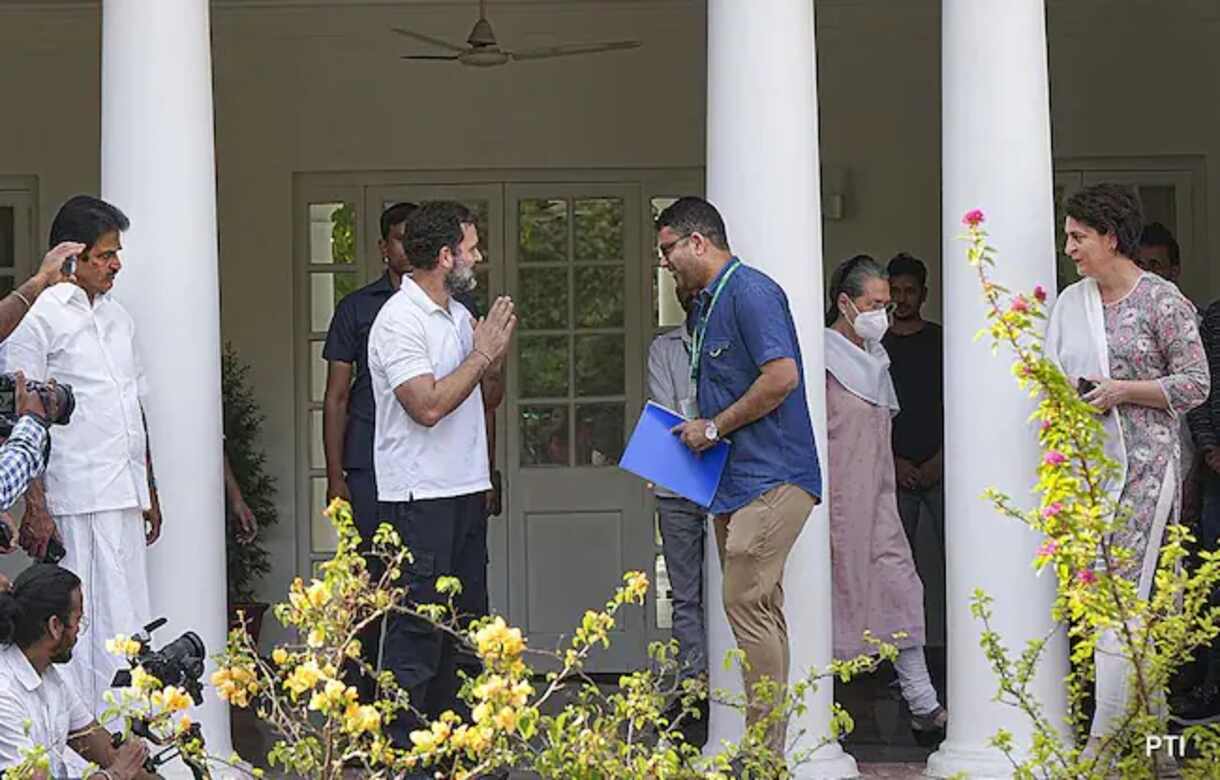
As far as reports are concerned, on April 22, the former Congress chief Rahul Gandhi vacated his official residence and moved to 10 Janpath in the national capital. On March 24, Rahul Gandhi was convicted and sentenced to two years in jail by the Surat metropolitan court after finding him guilty in the defamation case lodged by BJP MLA from Surat Purnesh Modi. A day later, the Congress leader was disqualified as a Member of Parliament.

In the last month, the Gujarat High Court refused to stay his conviction in the Modi surname case. Addressing an election rally in Karnataka’s Kolar in 2019, the Congress leader questioned why all thieves have Modi as their surname. However, on August 4, the Supreme Court stayed Rahul Gandhi’s conviction in the Modi surname case paving the way for him to return to the Parliament.

Meanwhile on Tuesday, Rahul Gandhi opted out from initiating the No Confidence motion debate. The Bharatiya Janata Party leaders mocked the Congress party and Rahul Gandhi over the sudden backoff. The BJP said that the Wayanad MP developed cold feet. Union Minister Pralhad Joshi asserted that they wanted to listen to Rahul Gandhi and questioned what happened in the last five minutes. 

India News

Rahul Gandhi attacks G RAM G bill, says move against villages and states

Rahul Gandhi has criticised the G RAM G bill cleared by Parliament, alleging it dilutes the rights-based structure of MGNREGA and centralises control over rural employment.

Published

on

Rahul Gandhi

Leader of the Opposition Rahul Gandhi has launched a sharp attack on the Modi government after Parliament cleared the Viksit Bharat Guarantee for Employment and Livelihood Mission (Rural) Bill, commonly referred to as the ‘G RAM G’ bill. He described the proposed law as “anti-state” and “anti-village”, arguing that it weakens the core spirit of the Mahatma Gandhi National Rural Employment Guarantee Act (MGNREGA).

The new legislation, which is positioned as an updated version of MGNREGA, was passed amid protests by opposition parties and is expected to replace the existing scheme once it receives presidential assent.

‘Bulldozed without scrutiny’, says Rahul Gandhi

Rahul Gandhi criticised the manner in which the bill was cleared, saying it was pushed through Parliament without adequate debate or examination. He pointed out that the opposition’s demand to refer the bill to a standing committee was rejected.

According to him, any law that fundamentally alters the rural employment framework and affects crores of workers should undergo detailed scrutiny, expert consultation and public hearings before approval.

Claim of dilution of rights-based guarantee

Targeting the central government, the Congress leader said the proposed law dismantles the rights-based and demand-driven nature of MGNREGA and replaces it with a rationed system controlled from Delhi. He argued that this shift undermines the autonomy of states and villages.

Rahul Gandhi alleged that the intent behind the move is to centralise power and weaken labour, particularly impacting rural communities such as Dalits, OBCs and Adivasis.

Defence of MGNREGA’s impact

Highlighting the role of MGNREGA, Gandhi said the scheme provided rural workers with bargaining power, reduced distress migration and improved wages and working conditions, while also contributing to rural infrastructure development.

He also recalled the role of MGNREGA during the Covid period, stating that it prevented crores of people from slipping into hunger and debt. According to him, any rationing of a jobs programme first affects women, landless workers and the poorest communities.

Opposition to name change and provisions

The Congress has also objected to the renaming of the scheme, accusing the government of attempting to erase the legacy associated with Mahatma Gandhi. Opposition MPs staged a dharna within the Parliament complex, questioning provisions of the bill that they claim dilute the “soul and spirit” of the original law enacted in 2005.

Under MGNREGA, the government guaranteed 100 days of work in rural areas along with an unemployment allowance if work was not provided. The ‘G RAM G’ bill proposes to raise the guaranteed workdays to 125, while retaining other provisions. However, critics have flagged concerns over employment being linked to pre-approved plans.

The bill was cleared after a midnight voice vote in the Rajya Sabha, following its passage in the Lok Sabha amid protests and walkouts. It will become law once approved by the President.

Continue Reading

India News

AAP dominates Punjab zila parishad polls, leads in most panchayat samiti zones

AAP has won 201 out of 317 declared zila parishad zones in Punjab so far and is leading in a majority of panchayat samiti seats, with counting still underway.

Published

on

Punjab Zila Parishad Polls

The ruling Aam Aadmi Party (AAP) has recorded a strong performance in the Punjab zila parishad elections and is leading in the majority of panchayat samiti zones, as per results declared so far on Thursday. The counting process is still underway and complete results are awaited, officials said.

Polling for the rural local bodies was held on December 14 to elect representatives across 347 zones of 22 zila parishads and 2,838 zones of 153 panchayat samitis in the state.

AAP secures clear edge in zila parishads

According to the available results, outcomes have been declared for 317 zila parishad zones so far. Of these, the AAP has won 201 zones, placing it well ahead of other parties.

The Congress emerged second with victories in 60 zones, followed by the Shiromani Akali Dal (SAD) with 39 zones. The BJP won four zones, the BSP secured three, while independents claimed 10 zones.

District-wise data shows that the AAP won 22 zones in Hoshiarpur, 19 each in Amritsar and Patiala, 17 each in Tarn Taran and Gurdaspur, and 15 zones in Sangrur. The Congress registered its best performances in Gurdaspur and Ludhiana with eight zones each, followed by Jalandhar with seven zones. The SAD performed strongly in Bathinda with 13 zones, while the BJP managed to win four zones in Pathankot.

AAP leads in panchayat samiti results

In the panchayat samiti elections, trends declared so far indicate that the AAP is leading in a majority of zones. However, officials clarified that counting is ongoing and the final picture will be clear only after all ballot papers are tallied.

Kejriwal, Mann reject opposition allegations

Reacting to the trends, AAP supremo Arvind Kejriwal said the party’s performance reflected strong rural support for the Bhagwant Mann government’s work. Addressing the media in Mohali along with Chief Minister Bhagwant Mann, Kejriwal dismissed allegations of irregularities raised by opposition parties.

He said the elections were conducted in a fair and free manner and claimed that the results so far showed a clear wave in favour of the AAP in rural Punjab. Kejriwal stated that nearly 70 per cent of the zila parishad and panchayat samiti seats had gone in favour of the party.

Congress, SAD question poll conduct

The Congress and the Shiromani Akali Dal, however, accused the ruling party of misusing official machinery. Punjab Congress chief Amrinder Singh Raja Warring alleged that the AAP had “stolen” the rural mandate and claimed that the results did not reflect genuine public support.

Opposition parties had earlier also accused the AAP government of high-handedness during the polling process, allegations that the ruling party has strongly denied.

Continue Reading

India News

Rahul Gandhi Attacks Centre over G RAM G bill, calls it an attack on MGNREGA’s core principles

Rahul Gandhi has strongly opposed the G RAM G bill, accusing the Modi government of undermining MGNREGA and shifting the financial burden of rural employment schemes onto states.

Published

on

Rahul-Gandhi

Congress MP and Leader of the Opposition Rahul Gandhi on Monday sharpened his attack on the Centre over the introduction of the G RAM G bill in the Lok Sabha, alleging that the proposed law weakens the foundations of the Mahatma Gandhi National Rural Employment Guarantee Act (MGNREGA) and undermines the rights of the rural poor.

The bill, formally titled the Viksit Bharat Guarantee for Rozgar and Ajeevika Mission (Gramin) Bill, 2025, has been brought in to replace MGNREGA, which was enacted in 2005 under the UPA government.

Reacting to the move, Rahul Gandhi described the legislation as an “insult to the ideals of Mahatma Gandhi” and accused the Narendra Modi-led government of attempting to dismantle a scheme that guarantees livelihood security to millions of rural households.

Rahul Gandhi’s sharp criticism of the G RAM G bill

In a post on X, Gandhi alleged that Prime Minister Modi has consistently opposed the ideas associated with Mahatma Gandhi and has been trying to weaken MGNREGA since coming to power in 2014. He asserted that the Congress would oppose any attempt to dilute or dismantle the employment guarantee framework.

“Modiji has a deep hatred for two things – the ideas of Mahatma Gandhi and the rights of the poor,” Gandhi said, calling MGNREGA a living embodiment of Gandhi’s vision of village self-rule. He also highlighted the role of the scheme as an economic shield for rural India, particularly during the COVID period.

According to Gandhi, the Centre is now “determined to wipe out MGNREGA completely” by replacing it with a new framework that centralises power and alters the funding structure.

Opposition protests in Parliament

The introduction of the G RAM G bill triggered protests from several opposition MPs inside and outside Parliament. Congress MPs, including Priyanka Gandhi Vadra and Shashi Tharoor, raised objections to key provisions of the bill, particularly the removal of Mahatma Gandhi’s name from the scheme.

Opposition leaders argued that MGNREGA is rooted in the right to employment, decentralised decision-making by villages, and a funding structure where the Centre bears the full wage cost and most of the material expenses.

How G RAM G differs from MGNREGA

Rahul Gandhi pointed out that under MGNREGA, the Centre pays 100 per cent of wages for unskilled workers and 75 per cent of material costs, ensuring steady employment based on demand.

The new G RAM G bill proposes a shift to normative funding, under which states will have to bear 40 per cent of the overall costs. Gandhi claimed this would reduce work availability once budgets are exhausted or during crop harvest seasons, leaving rural workers without employment for extended periods.

The funding ratio for northeastern and Himalayan states has been set at 90:10, while union territories will be fully funded by the Centre. Of the estimated annual expenditure of Rs 1.51 lakh crore, the central government’s share is projected at Rs 95,692 crore.

Leaders from several opposition parties, including those from a key BJP ally, have also expressed concerns over the increased financial burden on states.

Government’s defence of the bill

Government sources have maintained that the G RAM G bill aligns with the broader ‘Viksit Bharat 2047’ vision. According to them, the shift from a demand-based to a normative funding model brings the scheme in line with budgeting practices followed for other central government programmes.

However, the sharp political pushback indicates that the replacement of MGNREGA is set to remain a major flashpoint in Parliament in the coming days.

Continue Reading

Trending

© Copyright 2022 APNLIVE.com