English हिन्दी
Connect with us

Top Stories

Bank puts Sunny Deol’s Juhu villa up for auction after sending him a notice of unpaid debts of Rs 55 crore

The Juhu property will reportedly be put up for sale on September 9. Sunny’s father and actor Dharmedra, has been listed as the grantor.

Published

on

Sunny Deol

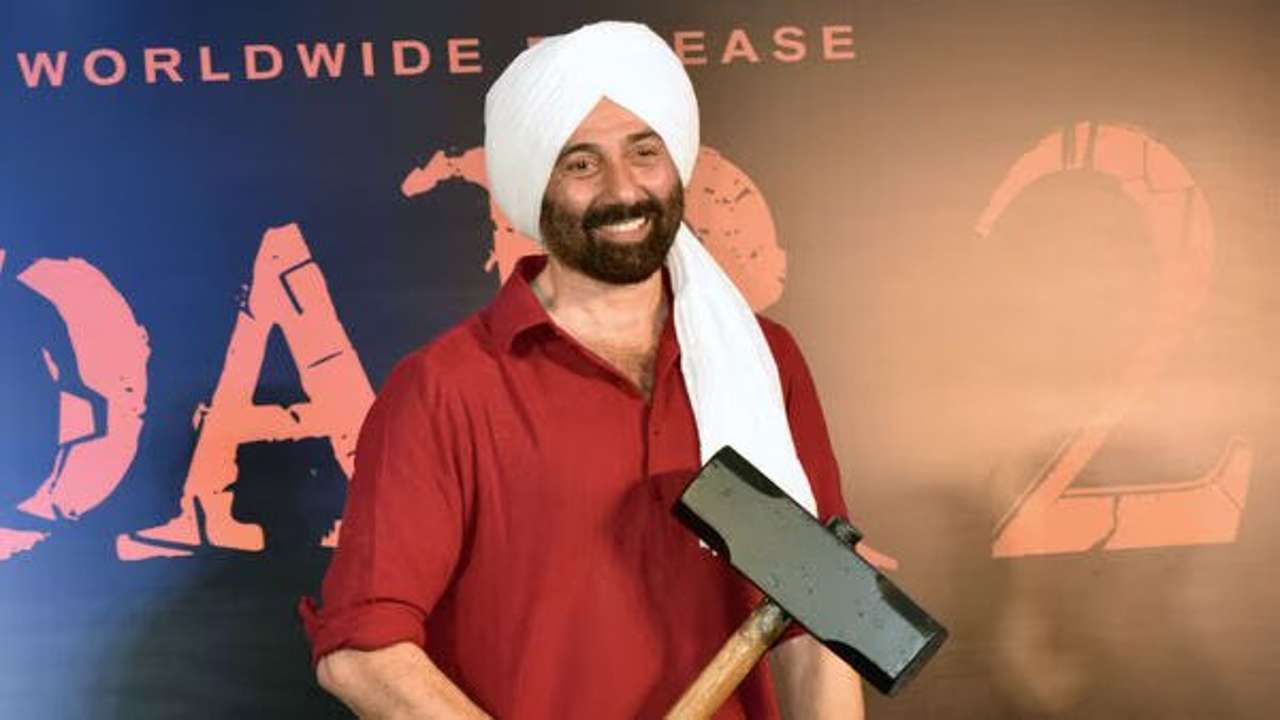
For actor Sunny Deol, whose latest film Gadar 2 recently surpassed the Rs 300 crore milestone at the Indian box office, trouble has emerged. According to reports, the actor has got a letter from the Bank of Baroda regarding unpaid debts totaling more than Rs 55 crore. According to the news, Sunny’s Juhu property has been placed up for sale in order to recoup unpaid debts.

Bank notifies Sunny Deol of his Rs 55 crore in unpaid debts and puts his Juhu house up for sale.

The portal uploaded a photo of the notice that it had seen in a newspaper. The Juhu property will reportedly be put up for sale on September 9. Sunny’s father and actor Dharmedra, has been listed as the grantor. The Deols have not yet responded to this.

According to the notice, Ajay Singh Deol also known as Sunny Deol borrowed Rs 55,99,80,766.33 from the Bank of Baroda. In addition, Sunny Deol served as the loan’s guarantee. The bank has stated that the purpose of the virtual auction is to recoup the amount of Rs 55.99 crore that he owes.

From this house, Sunny Deol manages his business. The Sunny Super Sound offices, a preview theatre, and two post-production rooms are located inside Sunny Villa. In the late 1980s, this company was formed.

The Bank of Baroda requires permission from the District Magistrate as part of the procedure. The bidder who wins will take physical ownership of the property after receiving the DM’s permission.

The winning bidder in the virtual auction will essentially own the bungalow. The bidder can take physical possession after receiving DM’s approval, which might take months or years.

According to rumours, Sunny Deol used his studio as leverage to acquire funding for his directorial debut, Ghayal Once Again (2016). He decided to take out a loan secured by his property in order to pay back his lenders.

Continue Reading

Latest world news

India rejects Hague court proceedings on Indus Waters Treaty

India has reiterated it will not participate in Hague arbitration proceedings under the Indus Waters Treaty, stating the agreement remains in abeyance following the Pahalgam attack.

Published

on

Indus Water Treaty

India has reiterated its refusal to recognise or participate in proceedings initiated by a Court of Arbitration in The Hague under the Indus Waters Treaty framework, asserting that the treaty itself remains in abeyance following the Pahalgam terror attack last year.

Despite the arbitration court moving ahead with fresh hearings and procedural orders, New Delhi has made it clear that it does not consider the panel legally constituted and will not respond to its communications.

India dismisses court orders as illegitimate

The latest development centres on an order issued by the Court of Arbitration directing India to submit operational pondage logbooks of the Baglihar and Kishanganga hydroelectric projects. The documents were sought as part of what the court described as the “second phase on the merits” of the dispute.

Hearings have been scheduled for February 2 and 3 at the Peace Palace in The Hague. The court has noted that India has neither filed counter submissions nor indicated its participation in the process.

However, government sources said the arbitration panel was “so-called and illegally constituted” and accused it of conducting parallel proceedings alongside the neutral expert mechanism prescribed under the treaty. According to the sources, India does not acknowledge the court’s authority and therefore does not engage with its directions.

They further stated that since the Indus Waters Treaty has been placed in abeyance, India is under no obligation to respond to such requests, describing the move as an attempt by Pakistan to draw New Delhi back into the process.

Treaty placed in abeyance after Pahalgam attack

India’s decision to suspend the treaty dates back to April 23, 2025, a day after a terror attack in Pahalgam claimed the lives of 26 civilians. The government formally placed the six-decade-old water-sharing agreement in abeyance, linking cooperation under the treaty to Pakistan’s continued support for cross-border terrorism.

The move marked a significant shift in policy, signalling that bilateral arrangements could not operate independently of security considerations.

Pakistan escalates international outreach

Since the decision, Pakistan has stepped up diplomatic and legal efforts, approaching international forums, sending delegations abroad and initiating multiple legal actions to challenge India’s stance.

The Indus river system remains critical for Pakistan’s economy, with a large share of its agriculture dependent on its waters. Limited storage capacity and stressed reservoirs have further heightened Islamabad’s concerns, turning what was once a technical dispute into a strategic issue.

Neutral expert versus arbitration court

Under the treaty’s dispute resolution mechanism, technical disagreements are to be examined by a neutral expert, while legal disputes may be referred to a Court of Arbitration. India has consistently maintained that the current issues fall within the technical domain and has accused Pakistan of forum shopping by activating arbitration proceedings.

The arbitration court has, however, proceeded with the case, stating that India’s position on suspending the treaty does not affect its competence. It has also warned that adverse inferences could be drawn if India fails to comply with its directions.

New Delhi rejects this interpretation and continues to recognise only the neutral expert process, viewing attempts to link the two mechanisms as illegitimate.

Strategic standoff continues

Officials believe the ongoing proceedings in The Hague, conducted without India’s participation, are unlikely to result in binding outcomes. Instead, they see the situation as part of a broader strategic contest, with India choosing disengagement and Pakistan seeking internationalisation of the dispute.

India has consistently maintained that treaties cannot function in isolation from ground realities and that cooperation will remain suspended until what it describes as persistent hostility is addressed.

Continue Reading

India News

Rahul Gandhi, Rajnath Singh clash in Lok Sabha over ex-Army chief’s unpublished book on Ladakh

Lok Sabha proceedings were disrupted after Rahul Gandhi cited an unpublished book by former Army chief General MM Naravane on the Ladakh stand-off, drawing objections from Rajnath Singh and other BJP leaders.

Published

on

Rahul Gandhi

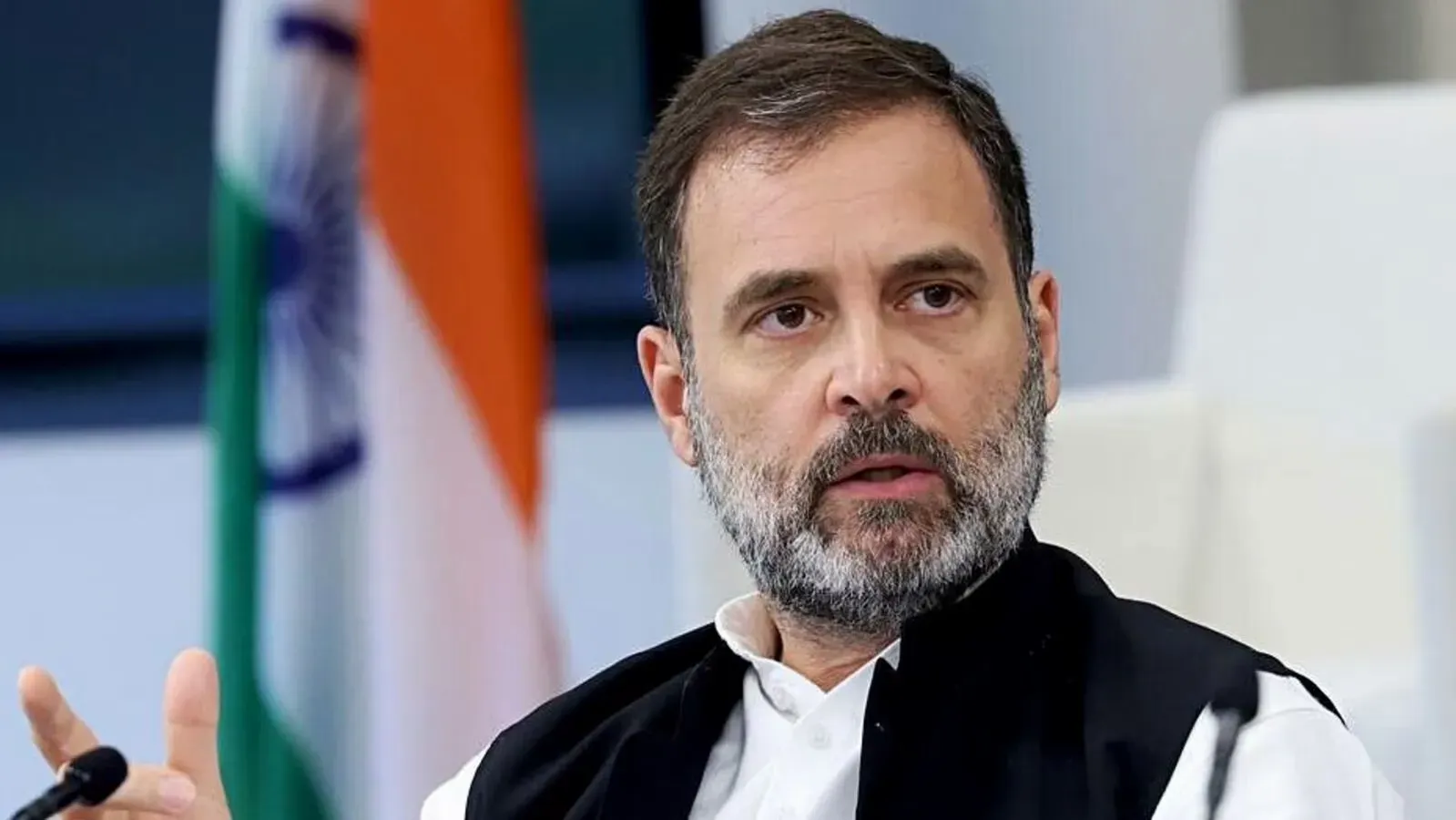
A sharp confrontation unfolded in the Lok Sabha on Monday after Leader of Opposition Rahul Gandhi referred to an unpublished book by former Army chief General MM Naravane while speaking on the 2020 India-China Ladakh stand-off, prompting strong objections from treasury benches.

Rahul Gandhi began his address by holding a printout of a magazine article that carried an essay on General Naravane’s yet-to-be-published memoir, Four Stars of Destiny. The reference immediately drew an intervention from Defence Minister Rajnath Singh, who objected to the citation, saying quoting an unpublished book violated parliamentary rules.

Objections from treasury benches

Rajnath Singh demanded that the Leader of Opposition place the book before the House, arguing that since the memoir had not been formally published, its contents could not be cited during proceedings. The objection was echoed by Home Minister Amit Shah, who questioned how references could be made to material that was not publicly available.

Parliamentary Affairs Minister Kiren Rijiju went a step further, suggesting that the House should deliberate on action against members who do not comply with the Speaker’s rulings.

As Rahul Gandhi persisted, repeatedly referring to “Chinese tanks” while discussing the eastern Ladakh situation, the opposition from BJP members intensified, leading to sustained disruptions.

Opposition support and continued disruptions

Samajwadi Party chief Akhilesh Yadav backed Rahul Gandhi, stating that issues concerning China were sensitive and that the Leader of Opposition should be allowed to present his views in the House.

Responding to the objections, Rahul Gandhi questioned the resistance to his remarks, asking what in the book was causing such concern. He maintained that both the article and the contents he was quoting were “100 per cent authentic.”

The Congress leader also said he had not intended to raise the issue but felt compelled to do so after BJP MP Tejasvi Surya questioned the patriotism of the Congress and its leadership.

Government, Congress trade charges

Government sources accused Rahul Gandhi of setting a dangerous precedent by citing material from an unpublished book, alleging that such references could be misused to make unverified claims on the floor of Parliament.

Congress MP Priyanka Gandhi defended her brother, saying he was not attempting to defame the Army and was merely reading an excerpt attributed to the former Army chief. She accused the ruling party of resisting discussion whenever uncomfortable issues surfaced.

House adjourned amid chaos

The repeated interruptions forced Lok Sabha Speaker Om Birla to adjourn the House till 3 pm. When proceedings resumed, similar scenes played out as Rahul Gandhi again attempted to speak on the subject, leading to further disruptions and another adjournment.

Continue Reading

India News

Parliament Budget Session 2026 set to begin with Lok Sabha debate on President’s address

The Parliament Budget Session 2026 is set to begin with the Lok Sabha scheduled to debate President Droupadi Murmu’s address for 18 hours.

Published

on

Parliament

The Parliament Budget Session 2026 is set to begin on Monday, with the Lok Sabha scheduled to take up discussions on President Droupadi Murmu’s address, a day after Finance Minister Nirmala Sitharaman presented the Union Budget 2026-27 in the House.

The Lok Sabha is scheduled to meet at 11:00 am for a busy day of proceedings. A total of 18 hours has been allocated for the debate on the President’s address, which lays out the government’s policy priorities and broad agenda.

Prime Minister Narendra Modi is slated to reply to the discussion on February 4, while Finance Minister Nirmala Sitharaman is expected to respond on February 11.

As per the session calendar, the Budget Session will comprise 30 sittings spread over 65 days and is scheduled to conclude on April 2. Both the Lok Sabha and the Rajya Sabha will adjourn for a recess on February 13 and reconvene on March 9. During the recess period, Standing Committees are expected to examine the Demands for Grants of various ministries and departments.

In addition to legislative business, Budget documents tabled in Parliament are set to provide a detailed break-up of government revenues and expenditure, outlining how funds are raised and allocated.

The opening of the Budget Session also comes amid discussions on the government’s economic approach, including measures announced in the Union Budget aimed at supporting key sectors and addressing global trade challenges.

Continue Reading

Trending

© Copyright 2022 APNLIVE.com