
Latest world news
Iraq: PM Haider al-Abadi and Muqtada Sadr form largest alliance


After having three and a half month long dialogue before formation of government, eleven Iraqi political groups, including those led by firebrand cleric Moqtada al-Sadr and Prime Minister Haider al-Abadi have announced formation of largest alliance on Sunday before they form new government.
According to a report quoting a document published by the Iraqi state news agency, the newly announced alliance includes 177 lawmakers out of 329 from 16 electoral lists. It is now in pole position to form the next government.
On Monday, parliament was convened for the first time after election results declared on May 18. It will elect a new speaker and launch the process of forming a government.
The new alliance includes the blocs of Vice President Ayad Allawi and Shiite Muslim cleric Ammar al-Hakim, as well as several Sunni Muslim lawmakers and groups representing Turkmen, Yazidi, Christian and other smaller minorities.
Rad More: Iraq: Muqtada Sadr wins highest Parliament seats
The newly announced alliance does not include Kurdish groups. Since 2003, when Saddam Hussein was toppled by US invasion, country’s power has been shared. The prime minister is a Shiite, the speaker of parliament a Sunni and the president a Kurd.

Iraqis voted for electing members of the parliament on May 12 since the defeat of Daesh (IS) but a contentious recount process delayed the announcement of final results until last month.
Uncertainty over the make-up of the new government has raised tensions at a time when public frantic protests were reported from different cities over poor basic services, high unemployment and the slow pace of rebuilding.
Read More: Iraq audits EVMs, orders manual vote count
The recount of the votes delayed the process of formation of new government by three months. However, it has not changed the initial results, with Sadr, a populist Shiite cleric, retaining his lead of 54 seats. Abadi’s bloc remained third with 42.
The elected members of the 329 members of the Council of Representatives, the country’s unicameral legislature, will elect the President and Prime Minister. The Iraqi parliament ordered a manual recount of the results on 6 June 2018. However, on 10 June, a storage site housing roughly half of the ballots in Baghdad caught fire.
Read More: Iraq’s PM: Burning of election warehouse, a plot against democracy
The parliamentary elections took place six months after a non-binding independence referendum in Iraqi Kurdistan. Kurds took part enthusiastically and 93% voted in favour of independence. In return, Haider al-Abadi led government closed Erbil International Airport, seized control of all border crossings between Kurdistan and neighbouring countries.
Mobilization Force known as Hashd al-Shaabi seized control oil-rich city of Kirkuk. Nonetheless, Iraqi politicians called for dialogue with the Iraqi Kurdistan government and force them to formally annul the results.
Meanwhile Iraqi News portal reported Haider al-Abadi saying on Sunday that he will attend Parliament session on Monday “as prime minister and a winner of the elections”. However, he added that he will not take oath at the parliament tomorrow (Monday) because that will prevent him from assuming his executive tasks as a prime minister.
Iraqi President Fuad Masum issued a decree last week, ordering the newly-elected parliament to convene Monday under the leadership of oldest lawmaker, a move which precedes the election of the new president and formation of the new cabinet.
Under the Iraqi constitution, 15 days after final election results are endorsed by the Federal Supreme Court, the new parliament must hold its first session during which the speaker will be elected.
New president will be elected within three days of the legislature convening and the president will then ask the largest parliamentary bloc to form a cabinet. President is elected by the parliament by a two-thirds majority and is limited to two four-year terms.


Latest world news
S Jaishankar says India is a natural option for Russia amid Europe tensions
External Affairs Minister S Jaishankar said India remained a natural option for Russia as Moscow increasingly turned towards Asia amid strained relations with Europe. He highlighted the continuity of India-Russia ties and their significance for the balance of power in Asia.


Latest world news
Putin praises PM Modi, says he has very good ideas on Ukraine war
Russian President Vladimir Putin has praised Prime Minister Narendra Modi for repeatedly raising the need to end the Ukraine war, describing his ideas for a settlement as “very good”.

Latest world news
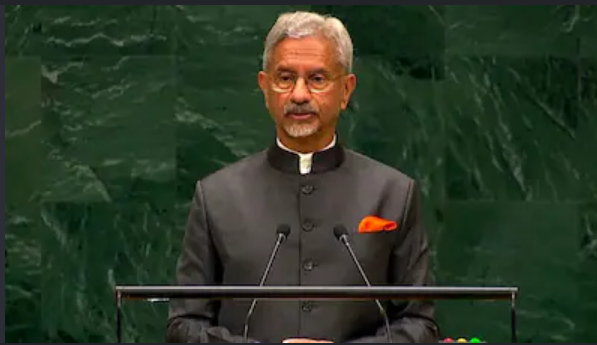
S Jaishankar calls Pakistan a “serial practitioner of terrorism” at UN
S Jaishankar criticised Pakistan at the UN General Assembly, referring to a “serial practitioner of terrorism” and warning against attempts to normalise terrorism.

Dhruv Rathee gets fresh summons in 2018 BJP IT cell video case

Nobody can browbeat judiciary, Chief Justice warns over Rahul Gandhi’s march

India-US trade deal first phase finalised, drafting underway

Election Commission orders voter roll revision in 17 states, UTs

Actor Imran Khan asked to leave India after CJP protest

Delhi Police offers 11-person limit for CJP’s Connaught Place protest
Actor Imran Khan asked to leave India after CJP protest
Election Commission orders voter roll revision in 17 states, UTs
India-US trade deal first phase finalised, drafting underway
Nobody can browbeat judiciary, Chief Justice warns over Rahul Gandhi’s march

Afghan Men Try To Hang With The Jet Engine Of The Aircraft in Kabul- Afghanistan News – Kabul News
Trending Top 10 News: 10000 Crore Fine on Flipkart, Apple to Launch Unique Feature, Hdfc Bank Job Ad

Trending Top 10 News: Nokia 6310, Apple sales, Bachpan ka Pyar Video Kid, Dainik Bhaskar IT Raid

Trending Top 10 News: Canada bans Indian flights, Rain in Delhi NCR, AIMIM Twitter hacked, Raj Kundra case

Trending Top 10 News: Shein India, Apple New Service, Pocket Oxygen, Oppo Launched New Phone
-
 India News21 hours ago
Dhruv Rathee gets fresh summons in 2018 BJP IT cell video case
-
 India News18 hours ago
Nobody can browbeat judiciary, Chief Justice warns over Rahul Gandhi’s march
-
 India News13 hours ago
India-US trade deal first phase finalised, drafting underway
-
 India News11 hours ago
Election Commission orders voter roll revision in 17 states, UTs
-
 India News10 hours ago
Actor Imran Khan asked to leave India after CJP protest
-
 India News9 hours ago
Delhi Police offers 11-person limit for CJP’s Connaught Place protest
