English हिन्दी
Connect with us

India News

Karnataka: IT department seizes Rs 94 crore cash, Rs 8 crore gold, diamond jewellery, 30 luxury watches from real estate developers, government contractors

The searches were launched on October 12 and 55 premises from the department in cities in Telangana and Andhra Pardesh, Bengaluru  and Delhi. The search has resulted in seizure of unaccounted cash of approximately Rs 94 crore, gold and jewellery worth Of Rs 8 crore , total amounting to Rs 102 crore.

Published

on

Karnataka: IT department seizes Rs 94 crore cash, Rs 8 crore gold, diamond jewellery, 30 luxury watches from real estate developers, government contractors

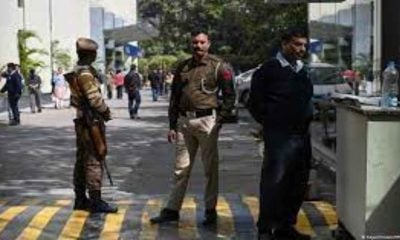
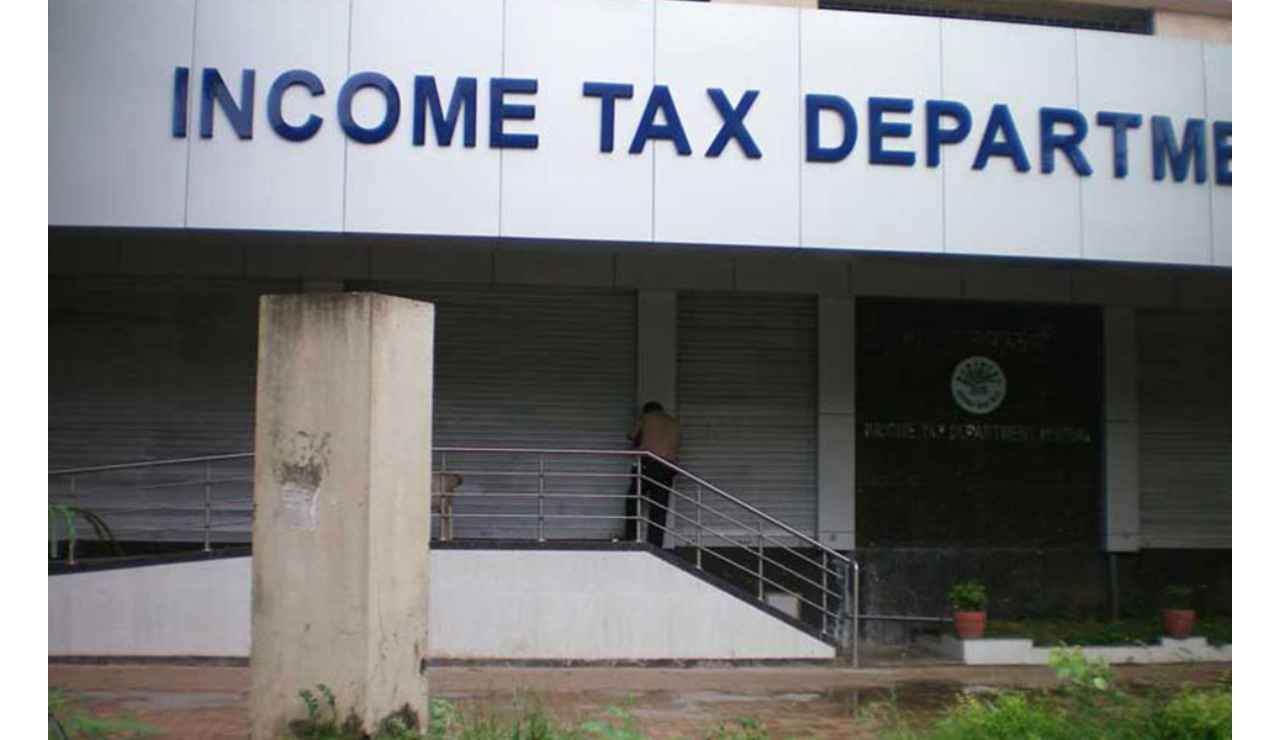
The income tax department has seized Rs 94 in cash as well as gold and diamond jewellery worth   Rs 8 crore and 30 luxury watches after raids on real estate developers and government contractors in Karnataka.

The searches were launched on October 12 and 55 premises from the department in cities in Telangana and Andhra Pardesh, Bengaluru  and Delhi. The search has resulted in seizure of unaccounted cash of approximately Rs 94 crore, gold and jewellery worth Of Rs 8 crore , total amounting to Rs 102 crore.
30 luxury wrist watches of foreign make were found from the premises from a private salaried employee who was not engaged in the business of wrist watches. A war of words on the matter has broken out between Karnataka’s ruling Congress party and the opposition BJP after the recovery of un-accounted cash.

https://twitter.com/as6559280/status/1712842999128871410

BJP state president Nalin Kumar kateel said the money was linked to Congress. Chief Minister Siddaramaiah has said the allegation is baseless. According to the BJP president a large amount of evidence in the form of digital data , hardcopy of documents evidence in the form of loose sheets.

The modus operandi of tax evasion indicates that these contractors were involved in reducing their income by inflation of expenses by booking bogus purchases, non genuine claim of expenses with sub contractors. The irregularities detected in utilization of contract receipts. This has resulted in generation of huge unaccounted cash.

Evidence has been found which show discrepancies in the form of goods receipt note (GRN) validation have been unearthed during evidence and search of huge discrepancies in documentation related to purchases booked and actual physical transport of goods have also been unearthed. These contractors were also involved in booking expenses for non business purposes. It  said evidence related to liaison expenses were seized and large scale unaccounted cash transactions.

India News

Karnataka clears internal quota for scheduled castes, cabinet approves revised formula

Karnataka has approved a new internal quota system for Scheduled Castes, redistributing the 15% reservation and enabling recruitment to resume.

Published

on

The Karnataka government has approved a revised internal reservation formula for Scheduled Castes (SCs), marking a significant policy decision aimed at ensuring fair distribution of benefits among sub-groups.

The decision was taken during a special cabinet meeting led by Chief Minister Siddaramaiah. The approved formula redistributes the existing 15% SC reservation into three internal categories.

Under the new structure, 5.25% reservation each has been allocated to the “left-hand” and “right-hand” SC groups, while 4.5% has been earmarked for other Scheduled Caste communities, including nomadic groups.

Recruitment to resume after policy clearance

With the cabinet giving its nod, the government is expected to restart long-pending recruitment processes. Officials indicated that fresh notifications will be issued under the revised quota system, allowing hiring to move forward.

The move is expected to unlock thousands of government job vacancies that had been on hold due to the absence of clarity on internal reservation.

Decision shaped by legal constraints

The revised quota formula has been structured to comply with the Supreme Court-mandated 50% ceiling on total reservations. Earlier, the state had proposed increasing the SC quota to 17% and Scheduled Tribes (ST) quota to 7%, but this could not be implemented due to legal limitations.

As a result, the government retained the SC reservation at 15% and proportionately adjusted the internal distribution among sub-categories.

Shift from earlier quota structure

The new formula replaces the earlier proposed 6:6:5 distribution model. The cabinet revised these figures proportionately to align with the 15% cap, resulting in the current 5.25:5.25:4.5 structure.

The classification divides SC communities into three groups to address disparities in access to reservation benefits across sub-castes.

Aim to ensure equitable representation

The government has said the decision is intended to bring more balance and fairness in reservation benefits among different SC communities. The categorisation is expected to improve representation of relatively underrepresented groups within the SC category.

The cabinet’s approval is seen as a key step in addressing long-standing demands for internal reservation among Scheduled Castes in the state.

Continue Reading

India News

LPG rules change from May 1: Commercial cylinder prices hiked, dual connections restricted

From price hikes to stricter connection rules, major LPG changes from May 1 impact both households and businesses across India.

Published

on

LPG price hike

Several important changes related to LPG cylinders have come into effect from May 1, impacting both consumers and businesses across India. The most significant update is a sharp increase in commercial LPG cylinder prices, while new restrictions aim to curb misuse of connections.

According to latest updates, the price of a 19-kg commercial LPG cylinder has been increased by Rs 993, taking the rate in Delhi to around Rs 3,071.50. This steep hike is expected to impact restaurants, hotels, and small businesses that rely heavily on commercial gas.

Domestic LPG prices remain unchanged

Despite the increase in commercial cylinder rates, there has been no change in domestic LPG cylinder prices. Household consumers will continue to pay the existing rates for 14.2-kg cylinders, providing some relief amid rising fuel costs.

Dual LPG connections under scrutiny

Authorities have tightened rules around LPG usage, particularly targeting dual or multiple connections. The move is aimed at preventing misuse and ensuring fair distribution of subsidised cylinders. Reports indicate that stricter monitoring mechanisms, including eKYC verification and tracking systems, are being implemented.

New delivery and booking rules likely

Changes are also being introduced in the LPG booking and delivery system. Consumers may need to follow updated procedures such as OTP-based delivery verification and revised booking intervals. These steps are designed to improve transparency and reduce fraudulent practices in cylinder distribution.

Global factors driving price increase

The rise in commercial LPG prices is largely linked to global energy market disruptions. Ongoing geopolitical tensions have pushed crude oil prices higher, leading to increased fuel costs worldwide.

Continue Reading

India News

Mamata Banerjee visits strongroom, TMC protests over alleged EVM irregularities in Bengal

Mamata Banerjee inspected a strongroom in Kolkata as TMC alleged EVM irregularities ahead of vote counting, sparking political tensions.

Published

on

mamta banerjee

West Bengal witnessed high political tension late Thursday night after Chief Minister Mamata Banerjee visited an Electronic Voting Machine (EVM) strongroom in Kolkata amid allegations of irregularities raised by her party, the Trinamool Congress (TMC).

The development came just days before the counting of votes for the 2026 Assembly elections, intensifying the already charged political atmosphere in the state.

TMC alleges ballot boxes opened without agents

The TMC claimed that ballot boxes were opened without the presence of authorised party representatives, raising concerns about the integrity of the electoral process. Party leaders staged a sit-in protest outside the strongroom, demanding transparency and stricter monitoring.

According to reports, Banerjee visited the counting centre in the Bhabanipur constituency and spent several hours inside the strongroom to personally inspect the situation. She later warned against any attempt to tamper with the voting process and called for stronger safeguards, including CCTV monitoring.

The party also cited alleged visual evidence suggesting that ballot boxes had been accessed without proper oversight.

Election Commission rejects allegations

The Election Commission dismissed the allegations, stating that all procedures were followed as per protocol and that EVMs and ballot boxes remain secure.

Officials clarified that certain strongroom openings were conducted as part of standard procedures, including handling of postal ballots, and that political parties were informed in advance.

BJP counters claims, calls it ‘fear tactics’

Leaders from the Bharatiya Janata Party (BJP) rejected the TMC’s accusations, alleging that the ruling party was attempting to create confusion ahead of the counting day.

They described the claims as politically motivated and aimed at influencing public perception before results are declared.

High-stakes contest ahead of results

The late-night developments highlight the intense political rivalry between the TMC and BJP in West Bengal. With counting scheduled in the coming days, tensions remain high as both sides closely monitor the security of EVMs.

The 2026 Assembly elections in the state have already seen record voter participation, making the outcome crucial for all major political players.

Continue Reading

Trending

© Copyright 2022 APNLIVE.com