
Latest world news
Egyptian court sentences 75 to death, hundreds to jail for 2013 sit-in


In a major development in the Middle East, Egyptian Criminal Court has sentenced 75 people to death on Saturday including prominent Muslim Brotherhood leaders: Mohamed al-Beltagy, Safwat Higazi and Essam al-Erian for the 2013 “Rabaa dispersal” case.
Security forces dispersed supporters of the pro-Muslim Brotherhood president Mohamed Morsi on August 14, 2013 from Rabaa al-Adaweya square in Nasr City. The government claimed that many protesters were armed and the eight members of the security forces were killed. On the other hand rights groups says more than 800 protesters died.
Read More: Saudi Arabia, Egypt to set up joint $10 b fund for mega-city
The Cairo court also sentenced 47 defendants to life imprisonment, most notably the Supreme Guide of the group Mohamed Badia, former Supply Minister Basem Ouda and Asam Sultan. Osama, son of Former President Mohamed Morsi, was sentenced to 10 years in prison.
The sit-in was abruptly ended with security forces killing hundreds of protesters. The Amnesty International condemned Saturday’s court verdict, calling the trial “disgraceful”. Moustafa Kassem, a US citizen is also among those sentenced to jail term.
Read More:- Egypt: Abdel Fattah al-Sisi sworn in President for second term

Rabaa Adawiya square in Cairo was the single most deadly incident in unrest which followed the 2011 popular uprising that toppled country’s long time leader Hosni Mubarak. The violence occurred weeks after the military ousted Egypt’s first democratically elected head of state Mohammed Morsi.
Morsi was removed from office by the military nearly one year into his first term in office, after large numbers of Egyptians took to the streets demanding an end to his rule.
The National Council for Human Rights (NCHR) said that the dispersal of the sit-in left 632 people dead, 1492 injured and nearly 800 arrested.



Latest world news
S Jaishankar says India is a natural option for Russia amid Europe tensions
External Affairs Minister S Jaishankar said India remained a natural option for Russia as Moscow increasingly turned towards Asia amid strained relations with Europe. He highlighted the continuity of India-Russia ties and their significance for the balance of power in Asia.


Latest world news
Putin praises PM Modi, says he has very good ideas on Ukraine war
Russian President Vladimir Putin has praised Prime Minister Narendra Modi for repeatedly raising the need to end the Ukraine war, describing his ideas for a settlement as “very good”.

Latest world news
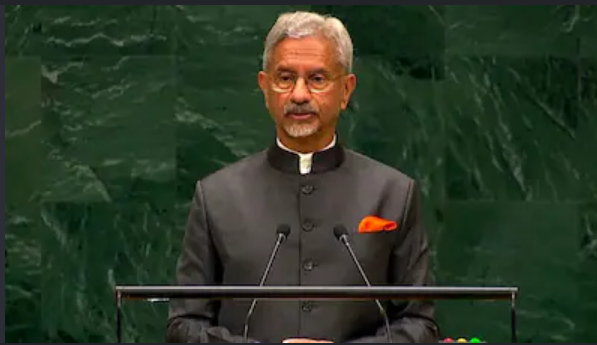
S Jaishankar calls Pakistan a “serial practitioner of terrorism” at UN
S Jaishankar criticised Pakistan at the UN General Assembly, referring to a “serial practitioner of terrorism” and warning against attempts to normalise terrorism.

CJP leaders Saurav Das, Ashutosh Ranka, Ajinkya Shinde sent to 5-day judicial custody

PM Modi speaks to Mark Carney as India and Canada push to strengthen ties

S Jaishankar says India is a natural option for Russia amid Europe tensions

Meerut murder: Muskaan Rastogi and Sahil Shukla get death sentence

Rahul Gandhi joins India Gate protest by Ankita Bhandari’s parents

Supreme Court questions EC over missing records in Sringeri election dispute
Rahul Gandhi joins India Gate protest by Ankita Bhandari’s parents
Meerut murder: Muskaan Rastogi and Sahil Shukla get death sentence
PM Modi speaks to Mark Carney as India and Canada push to strengthen ties
S Jaishankar says India is a natural option for Russia amid Europe tensions

Afghan Men Try To Hang With The Jet Engine Of The Aircraft in Kabul- Afghanistan News – Kabul News
Trending Top 10 News: 10000 Crore Fine on Flipkart, Apple to Launch Unique Feature, Hdfc Bank Job Ad

Trending Top 10 News: Nokia 6310, Apple sales, Bachpan ka Pyar Video Kid, Dainik Bhaskar IT Raid

Trending Top 10 News: Canada bans Indian flights, Rain in Delhi NCR, AIMIM Twitter hacked, Raj Kundra case

Trending Top 10 News: Shein India, Apple New Service, Pocket Oxygen, Oppo Launched New Phone
-
 India News23 hours ago
CJP leaders Saurav Das, Ashutosh Ranka, Ajinkya Shinde sent to 5-day judicial custody
-
 India News22 hours ago
PM Modi speaks to Mark Carney as India and Canada push to strengthen ties
-
 Latest world news22 hours ago
S Jaishankar says India is a natural option for Russia amid Europe tensions
-
 India News12 hours ago
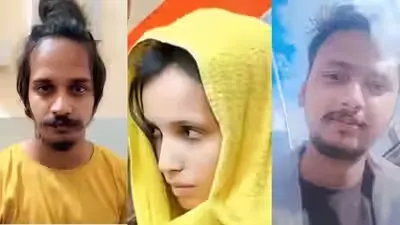
Meerut murder: Muskaan Rastogi and Sahil Shukla get death sentence
-
 India News11 hours ago
Rahul Gandhi joins India Gate protest by Ankita Bhandari’s parents
-
 India News10 hours ago
Supreme Court questions EC over missing records in Sringeri election dispute
