
Latest world news
Pakistan disappointed on India’s calling off bilateral meet at UNGA


Islamabad Foreign Office issues statement calling New Delhi reasons “unconvincing”
The Pakistan government has expressed “disappointment” on India’s decision to cancel the bilateral meeting on the level of foreign ministers which was scheduled to be held at the sidelines of UN General Assembly meeting in New York, and blamed New Delhi for “once again wasting an opportunity to change the dynamics of the bilateral relationship”.
Dawn referred to a statement issued by the Foreign Office saying that the reasons given by the Indian side for cancelling the meeting within 24 hours of its public confirmation are entirely unconvincing.
It said, “The so-called ‘disturbing developments’ alluded to in the Indian statement predated the Indian agreement to hold the bilateral meeting in New York.”
Read More: India cancels talks with Pakistan at UNGA in New York after killing of J&K cops
The Foreign Office also clarified that the alleged killing of BSF soldier took place two days before the India agreed to hold the bilateral foreign ministerial level meeting.
 “When the allegations of Pakistan’s involvement first appeared, the Pakistan Rangers clearly conveyed to BSF through official channels that Pakistan had nothing to do with it. Pakistan Rangers also extended help in efforts to locate the soldier’s body. These facts were known to the Indian authorities and a part of the Indian media also reported that Pakistan had refuted its involvement. Yet, this motivated and malicious propaganda continued,” the statement said.
“Pakistan takes this opportunity to categorically reject these allegations once again. Our authorities would be prepared to conduct a joint investigation to establish the truth,” read the Foreign Office statement.
The other reason cited by the Indian ministry referred to the issuance of 20 special postage stamps by Pakistan Post on July 24, highlighting the gross violation of human rights by Indian forces in held Kashmir.
Read More: Indian and Pakistani foreign ministers to meet in New York after Pak PM’s Imran’s letter
Islamabad clarified that the postage stamps mentioned in the Indian statement were issued before the July 25 elections, following which Prime Minister Imran Khan assumed office.
“The stamps highlight the gross and systematic human rights violations in Indian Occupied Kashmir, which were extensively documented also in a comprehensive report issued by the United Nations High Commissioner for Human Rights as late as June 2018.
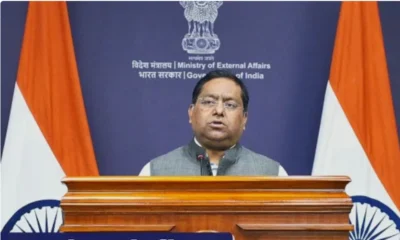
 On Friday, Raveesh Kumar, the spokesperson of Ministry of External Affairs, while announcing the calling off the foreign minister level talks, cited abduction and killing of three J&K policemen and the recent release of postal stamps glorifying slain Kashmir militant commander Burhan Wani as the reason behind the decision. He also said that the “true face of Pakistan Prime Minister Imran Khan has been exposed.
The Pakistan’s Foreign Office also expressed disappointment over the “reference in the Indian MEA statement to the person of the Prime Minister of Pakistan”, and termed it “unfortunate”.
The statement further said, “We choose not to further comment beyond saying that these comments are against all norms of civilised discourse and diplomatic communication.”
The 73rd United Nations General Assembly meeting began in New York on September 18. The first day of the high level General Debate will be held on September 25 which is scheduled to last for nine working days.
Minister of External Affairs Sushma Swaraj and her Pakistani counterpart Shah Mehmood Qureshi are slated to represent their respective countries. Both are scheduled to address the world body on September 29. It is considered to be an opportunity for nations to address the international community and is often used as a way to air their grievances.







Latest world news
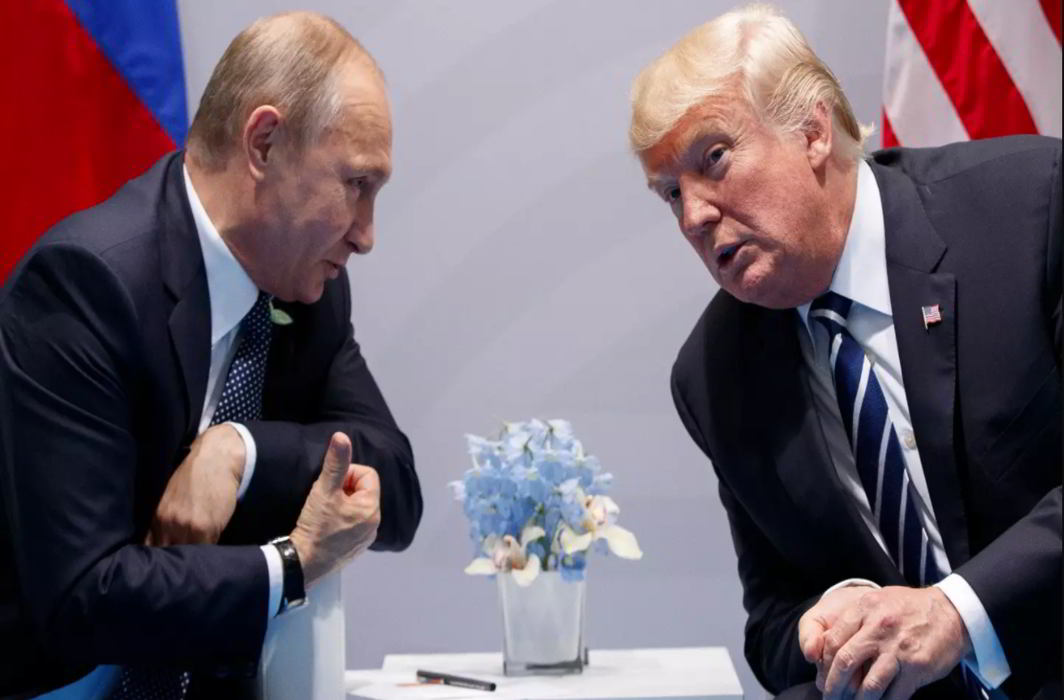
Trump waives Russia-related sanctions, tariffs in relief for India
Donald Trump has waived several Russia-related sanctions, restrictions and duties under a new US law, potentially easing tariff pressure on India and China, two major buyers of Russian energy.

Latest world news
Magnitude 7 earthquake strikes Russia’s Kamchatka Peninsula
A magnitude 7 earthquake struck Russia’s Kamchatka Peninsula region on Friday. The initial report placed the earthquake at a depth of 140 kilometres.

Latest world news
S Jaishankar says India is a natural option for Russia amid Europe tensions
External Affairs Minister S Jaishankar said India remained a natural option for Russia as Moscow increasingly turned towards Asia amid strained relations with Europe. He highlighted the continuity of India-Russia ties and their significance for the balance of power in Asia.


LK Advani, 98, hospitalised in Delhi with chest infection
Trump waives Russia-related sanctions, tariffs in relief for India

ED summons Pinarayi Vijayan in money laundering case

Anirudh Ravichander to marry Kavya Maran in November, reception on November 21

Delhi court orders release of CJP founder Abhijeet Dipke

Journalist files police complaint against Rahul Gandhi over push allegation
Delhi court orders release of CJP founder Abhijeet Dipke
Anirudh Ravichander to marry Kavya Maran in November, reception on November 21
ED summons Pinarayi Vijayan in money laundering case
LK Advani, 98, hospitalised in Delhi with chest infection

Afghan Men Try To Hang With The Jet Engine Of The Aircraft in Kabul- Afghanistan News – Kabul News
Trending Top 10 News: 10000 Crore Fine on Flipkart, Apple to Launch Unique Feature, Hdfc Bank Job Ad

Trending Top 10 News: Nokia 6310, Apple sales, Bachpan ka Pyar Video Kid, Dainik Bhaskar IT Raid

Trending Top 10 News: Canada bans Indian flights, Rain in Delhi NCR, AIMIM Twitter hacked, Raj Kundra case

Trending Top 10 News: Shein India, Apple New Service, Pocket Oxygen, Oppo Launched New Phone
-
 India News20 hours ago
LK Advani, 98, hospitalised in Delhi with chest infection
-
Latest world news20 hours ago
Trump waives Russia-related sanctions, tariffs in relief for India
-
 India News19 hours ago
ED summons Pinarayi Vijayan in money laundering case
-
 India News9 hours ago
Anirudh Ravichander to marry Kavya Maran in November, reception on November 21
-
 India News9 hours ago
Delhi court orders release of CJP founder Abhijeet Dipke
-
 India News7 hours ago
Journalist files police complaint against Rahul Gandhi over push allegation
