English हिन्दी
Connect with us

India News

Laurene Powell, wife of Apple founder Steve Jobs, gets Hindu name Kamala ahead of Maha Kumbh Mela 2025

Reports suggest that Steve Jobs, the co-founder of Apple, was not a believer in a traditional God but did believe in a higher power he referred to as consciousness.

Published

on

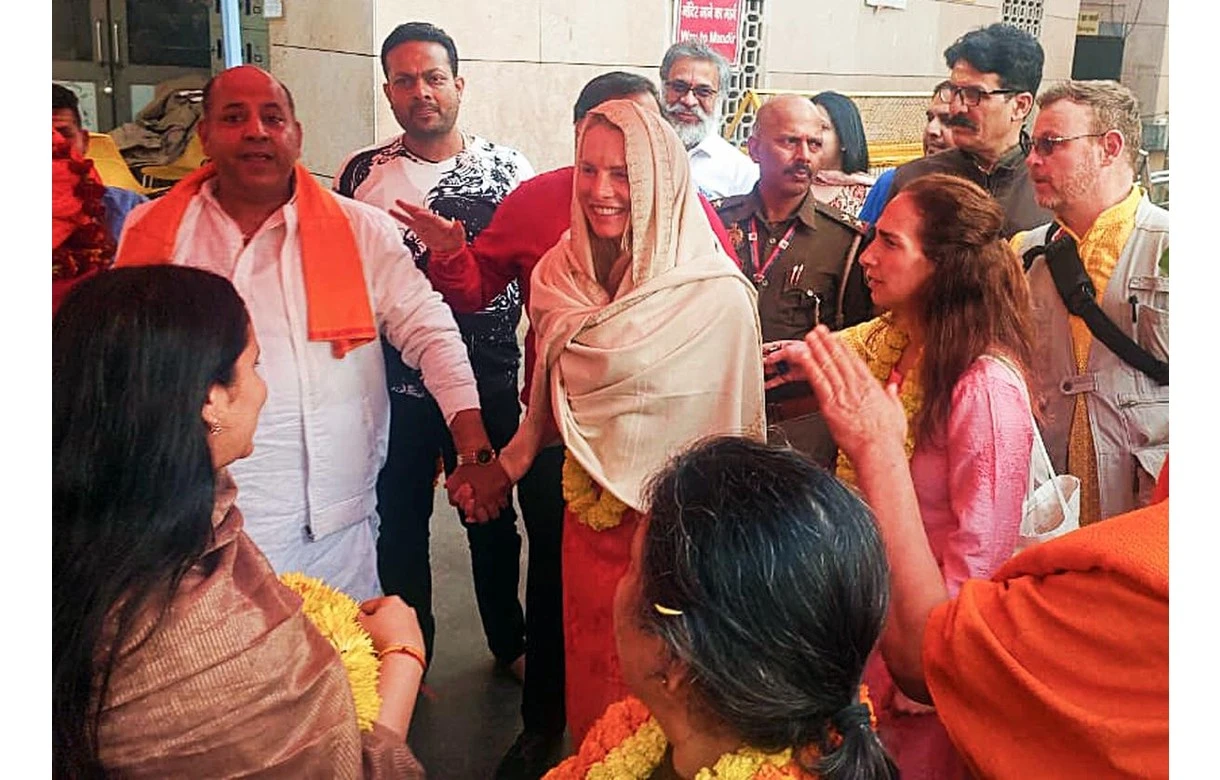
Laurene Powell Jobs, the widow of the late Apple founder Steve Jobs, is currently in India to attend the Maha Kumbh Mela 2025 in Prayagraj, Uttar Pradesh. A notable development from her highly publicized spiritual journey to Uttar Pradesh has emerged: Kailashanand Giri Maharaj announced that the Akhara has given her a Hindu name, ‘Kamala’. He described Powell Jobs as like a daughter to the Akhara and mentioned plans to integrate her into the Akhara Peshawai.

In an interview with news agency ANI, Kailashanand Giri Maharaj stated, “I had my ‘Peshwai’ at Kumbh yesterday. Today, we have come to Kashi to pray to Mahadev for an unobstructed Kumbh… I am here to invite Mahadev… Our disciple Maharshi Vyasanand is with us from America.” He further shared, “Tomorrow he will be honoured as a Mahamandaleshwar in my Akhara. Laurene Jobs has also joined us… According to our Indian tradition, in Kashi Vishwanath, no other Hindu can touch the Shivling. Therefore, she viewed the Shivling from the outside… She will stay at the Kumbh and take a dip in the Ganga…”

Laurene Powell Jobs’s visit is part of her 17-day stay in India, during which she aims to deepen her understanding of Hinduism and Sanatana Dharma. To gain further insights, she plans to participate in ‘katha’, ‘pravachans’, and engage in ‘bhajans’ and ‘kirtans’ while residing with her guru.

Reports suggest that Steve Jobs, the co-founder of Apple, was not a believer in a traditional God but did believe in a higher power he referred to as consciousness.

The highly anticipated Maha Kumbh Mela 2025 is scheduled to begin on Monday, January 13, 2025, and run until Wednesday, February 26, 2025. When asked earlier about potentially including Powell Jobs in Akhara’s Peshawai, Maharaj stated, “We will try to include her in the Peshwai. Ultimately, it will be her decision. She will experience this Kumbh and interact with the seers here. It will be a fulfilling experience for her, and we welcome those who are eager to learn about our traditions.”

“This is a religious festival; people from around the world and across India come to Maha Kumbh to seek blessings,” remarked Swami Kailashnand Ji Maharaj.

Earlier, Uttar Pradesh Deputy Chief Minister Brajesh Pathak announced that all arrangements for the Mela have been finalized. “We have completed all preparations for the Maha Kumbh… We are meeting with the saints and sages who have gathered in Prayagraj for the Mela, seeking their blessings and thanking them for their presence. It’s our duty to ensure that the saints have a smooth experience here. Everyone is welcome, and all arrangements are in place,” he stated.

Deputy CM Keshav Prasad Maurya assured devotees that this Kumbh would be a divine and grand event. “We have made extensive preparations for a holy and magnificent Kumbh in Prayagraj… We are eagerly awaiting January 13. Complete measures have been taken to ensure everyone’s safety during the ritual baths… I have witnessed the Kumbh of 2013 with its challenges and the well-managed Ardh Kumbh of 2019,” he noted.

Additionally, Uttar Pradesh Chief Minister Yogi Adityanath praised Prasar Bharati for launching a special radio channel, ‘Kumbhvani,’ in celebration of the Maha Kumbh, which begins on January 13. He stated that the channel would enable people in remote areas of the country, where connectivity remains a challenge, to access the Kumbh Mela.

India News

India offers forensic DNA support to identify Nepal flood victims

India will make forensic laboratory facilities available for DNA profiling of first-degree relatives of people missing after Nepal’s August 26 flash floods.

Published

on

India has offered forensic laboratory support to help identify people who remain missing after the devastating flash floods in Nepal.

The Ministry of External Affairs (MEA) said central and state forensic laboratories in India will make their DNA profiling facilities available for first-degree biological relatives of people missing after the August 26 flash floods in Nepal.

DNA samples can be provided by relatives in India

According to the MEA, first-degree biological relatives living in India can have their biological samples collected and DNA profiles prepared.

The relatives can include a person’s father, mother, son, daughter or sibling. DNA profiling can be carried out at Central Forensic Science Laboratories (CFSLs), State Forensic Science Laboratories (SFSLs), laboratories of the National Forensic Sciences University (NFSU), and NABL-accredited laboratories with DNA profiling capabilities.

The initiative is intended to support Nepal’s ongoing process of identifying mortal remains recovered after the flash floods.

DNA profiles to be compared with unidentified remains

The MEA said the DNA profiling may use Autosomal STR DNA profiling, as advised by Nepal Police, subject to the technical requirements communicated by the Nepali authorities.

Once prepared, DNA profiles and the preliminary information required by Nepalese authorities can be sent to Nepal Police by email for comparison with DNA profiles obtained from unidentified mortal remains.

The Indian Embassy in Kathmandu will also facilitate coordination, with copies of the DNA profiles to be shared with the embassy for this purpose.

Nepal flood death toll rises

The death toll from the flash floods has risen to at least 1,259, according to Nepalese authorities, after rescue workers recovered additional bodies from affected areas.

More than 12,000 people have been rescued, while around 5,000 people remain missing as search and rescue operations continue.

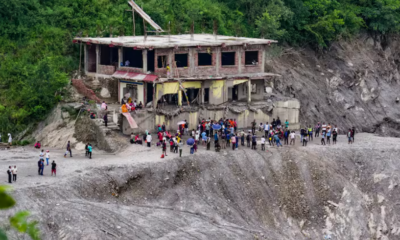
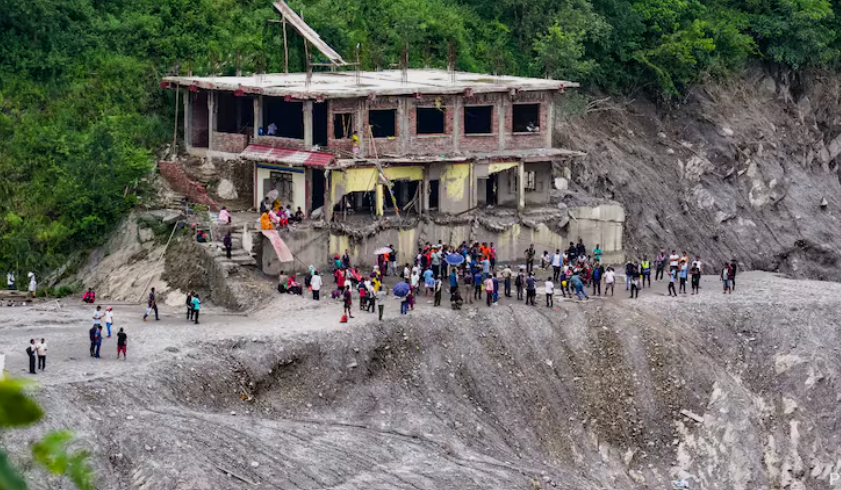
The flash floods, which followed an ice-rock avalanche near the Nepal-Tibet border, caused extensive destruction across towns and villages in northern and central Nepal.

Continue Reading

India News

PM Modi hails ISRO after successful GSLV-F17 launch, calls it proud moment

PM Modi congratulated ISRO after GSLV-F17 successfully launched EOS-05, calling the achievement a proud moment for India.
Published

on

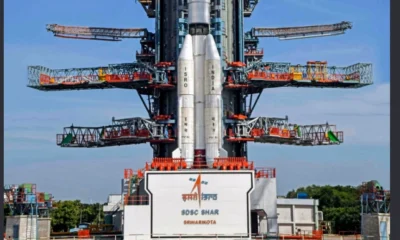
Prime Minister Narendra Modi on Friday congratulated the Indian Space Research Organisation (ISRO) after the successful launch of the GSLV-F17 rocket carrying the EOS-05 Earth observation satellite, describing the achievement as a proud moment for the nation.

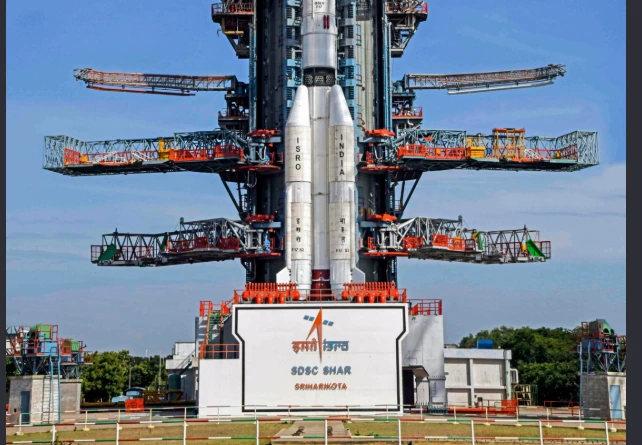
The GSLV-F17 lifted off at 2:55 a.m. IST from the Satish Dhawan Space Centre in Sriharikota, Andhra Pradesh. The EOS-05 satellite was subsequently placed into its designated sub-geosynchronous transfer orbit.

PM Modi praises ISRO’s growing capabilities

In a post on X, PM Modi said the successful mission reflected the excellence, innovation and expanding capabilities of India’s space sector.

He also highlighted the growing partnership between ISRO and Indian industry, saying it was strengthening India’s space programme and expanding capabilities across the wider space ecosystem.

The prime minister described the successful launch of GSLV-F17 carrying EOS-05 as another outstanding achievement by ISRO and a matter of national pride.

EOS-05 strengthens earth observation capabilities

According to the report, EOS-05 is India’s first-ever imaging satellite from geosynchronous orbit. The satellite is designed to provide continuous observation of the country from an altitude of nearly 36,000 km above Earth.

The mission is expected to strengthen India’s earth observation capabilities and support advanced imaging and observation applications.

ISRO Chairman Dr V Narayanan expressed satisfaction with the mission, saying the satellite was precisely injected into its intended orbit.

Mission Director Thomas Kurian described the launch as a significant milestone for the GSLV programme. He said it was the 19th flight of the GSLV and noted that EOS-05 is the heaviest satellite the launch vehicle has placed into a geosynchronous transfer orbit or sub-GTO orbit.

GSLV-F17 launch vehicle details

The GSLV-F17 stands 51.7 metres tall and has an approximate liftoff mass of 420.5 tonnes.

Science and Technology Minister Jitendra Singh also congratulated the ISRO team following the successful mission. He described EOS-05 as a state-of-the-art Earth observation satellite capable of advanced imaging across visible, infrared, multispectral and hyperspectral bands.

Continue Reading

India News

Nagaland Assembly urges Centre to withdraw Protected Area Permit regime

Nagaland Assembly unanimously passed a resolution urging the Centre to withdraw the Protected Area Permit regime, citing concerns over tourism, investment and international engagement.
Published

on

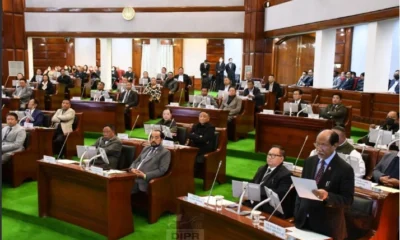
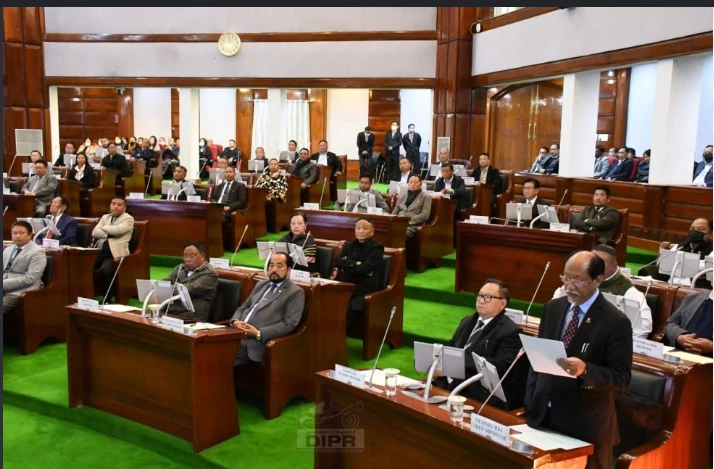
The Nagaland Legislative Assembly has unanimously passed a resolution urging the Centre to withdraw the Protected Area Permit (PAP) regime in the state, arguing that the restrictions are affecting tourism, investment, international engagement and economic opportunities.

The resolution was moved by Deputy Chief Minister and Home Minister Yanthungo Patton and was adopted through a voice vote.

PAP regime was reimposed in 2024

The Protected Area Permit regulates the entry of foreign nationals into notified areas. The regime had been relaxed in Nagaland in 2011 but was reimposed on December 17, 2024.

During the Assembly discussion, Patton said Nagaland had emerged as a peaceful destination for tourism, culture, investment, entrepreneurship and international engagement. He said these sectors were increasingly contributing to employment and livelihood opportunities, particularly for young people.

The resolution also highlighted events and initiatives such as the Hornbill Festival and the “Land of Festivals” initiative, saying they had helped showcase Nagaland and India’s cultural diversity internationally while generating economic opportunities for local communities and entrepreneurs.

Assembly links PAP restrictions to economic concerns

The state government argued that the return of the PAP regime has complicated efforts to expand international tourism, business and investment.

The Assembly resolution said the regime was creating difficulties for international tourism, business and investment, along with cultural exchanges and overseas partnerships.

However, the state maintained that relaxing the permit regime would not mean compromising national security.

The resolution assured the Centre that foreign nationals could continue to be registered, regulated and monitored through technology-based and institutional mechanisms in coordination with central agencies.

Neiphiu Rio backs review of PAP regime

Chief Minister Neiphiu Rio also participated in the debate along with Tourism and Higher Education Minister Temjen Imna Along, Industries and Commerce Advisor Hekani Jakhalu and MLA Naiba Konyak.

The legislators maintained that Nagaland’s present circumstances warranted a different approach, stressing that the state was peaceful and seeking greater opportunities in tourism, investment and other sectors.

Rio linked the demand to Nagaland’s economic aspirations and the need to create more opportunities for young people while maintaining the state’s commitment to national security.

“Security and development can go together,” Rio said.

The resolution further argued that regulations that have outlived their developmental relevance should not become barriers to employment, economic activity and Nagaland’s participation in the wider national and global economy.

Continue Reading

Trending

© Copyright 2022 APNLIVE.com