English हिन्दी
Connect with us

India News

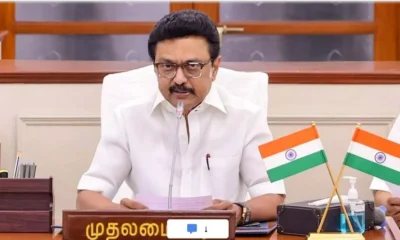
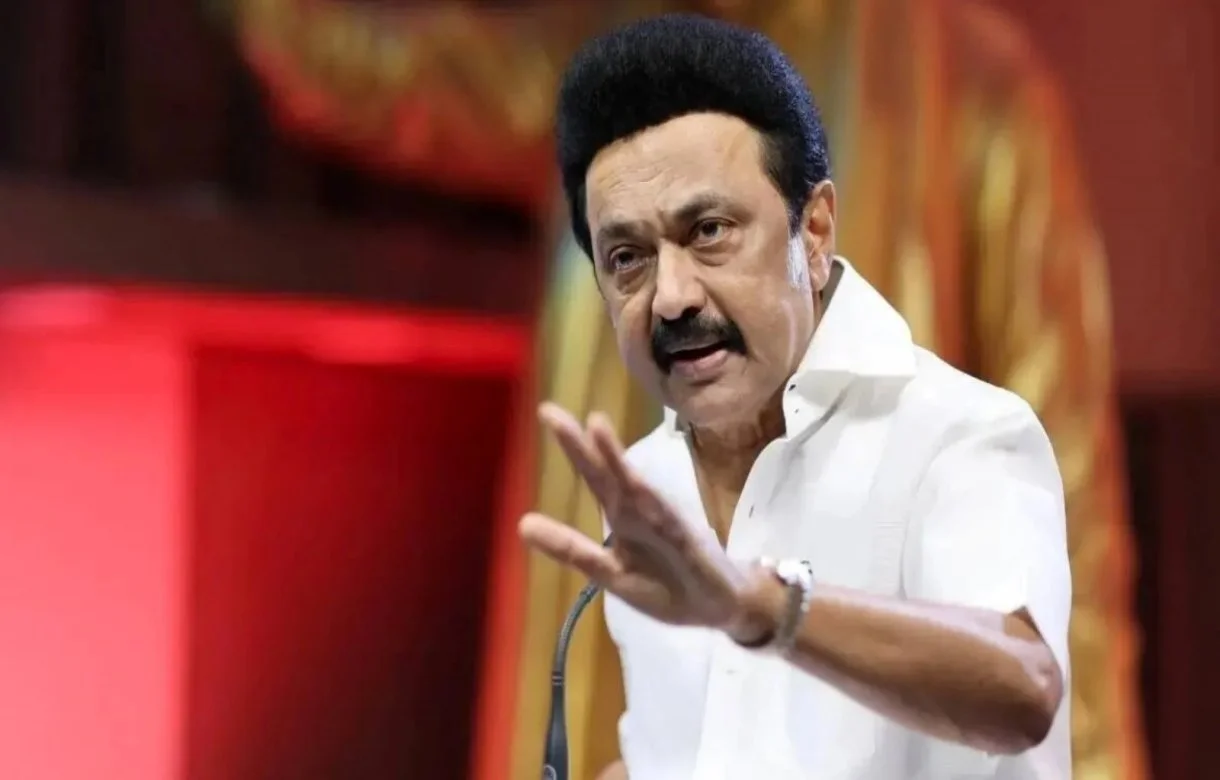
MK Stalin challenges Centre, BJP on language policy

Tamil Nadu CM MK Stalin has reaffirmed his opposition to the NEP 2020, calling it an attempt to impose Hindi. The BJP, however, argues that the policy benefits Tamil Nadu’s people.

Published

on

MK Stalin

Tamil Nadu Chief Minister MK Stalin has intensified his opposition to the National Education Policy (NEP) 2020, reiterating his stance against what he calls “Hindi imposition” in the state. He declared that Tamil Nadu will not succumb to “blackmail” from the central government over implementing the policy, which promotes a three-language formula.

Challenging the BJP to make the language policy a central agenda in the 2026 Tamil Nadu Assembly elections, he asserted that such a move would backfire politically. Stalin further claimed that Tamil Nadu has already achieved the objectives outlined in the NEP well before its 2030 goal, comparing the central initiative to an LKG student lecturing a PhD holder.

“Hindi colonialism suffocating non-Hindi speakers”: Stalin

Criticizing the central government, Stalin argued that the growing prominence of Hindi in governance, schemes, and institutions is akin to a new form of colonialism.

“Tamil Nadu will not tolerate Hindi colonialism replacing British colonialism… Hindi imposition to a nauseating extent is suffocating non-Hindi speakers,” said Stalin.

He also took a direct swipe at Union Education Minister Dharmendra Pradhan, accusing him of trying to threaten Tamil Nadu into adopting the NEP. His remarks came in response to Pradhan’s warning that funds could be withheld if the state refused to comply with the policy.

BJP defends language policy, dismisses Stalin’s claims

The BJP’s Tamil Nadu unit has pushed back against Stalin’s remarks, defending the naming of central schemes in Hindi. State BJP chief K Annamalai dismissed allegations of intentional Hindi dominance, claiming that the Hindi names of flagship programmes are more neutral compared to previous schemes named after Indira Gandhi and Rajiv Gandhi.

He further questioned Stalin’s commitment to promoting Tamil, pointing out that:

“The Centre has given Tamil names to a few trains in Tamil Nadu. What had MK Stalin done during the UPA regime to get Tamil names for trains?”

Political tensions rise as Amit Shah visits Tamil Nadu

The controversy over language policy coincides with Union Home Minister Amit Shah’s visit to Tamil Nadu, where he is set to attend the Central Industrial Security Force (CISF) raising day event. The timing has added to the political heat, as the BJP continues to push for the three-language formula, arguing that it will benefit Tamil Nadu residents when traveling outside the state.

The language debate remains a key point of contention between the DMK and the BJP, with Stalin vowing to resist any move towards Hindi dominance, while the BJP maintains that the policy offers greater opportunities for the people of Tamil Nadu.

India News

Kolkata hotel fire: 9 dead, 6 injured in Free School Street blaze

At least nine people, including a child, died and six were injured after a fire broke out at a Kolkata hotel near New Market.

Published

on

A massive fire at a hotel on Free School Street near New Market in Kolkata claimed at least nine lives, including that of a child, in the early hours of Wednesday. Six others were injured in the incident.

The fire broke out at around 2 am, trapping several guests inside the hotel as smoke rapidly spread through the building. The incident prompted a major rescue operation in the densely populated area.

According to the fire department, Bangladeshi nationals were among those killed. They had reportedly travelled to Kolkata for medical treatment.

Fire breaks out on third floor

Initial reports indicate that the blaze started on the hotel’s third floor. An air-conditioner explosion is being suspected as a possible trigger, although the exact cause of the fire has not yet been established.

Smoke quickly filled the rooms as the flames spread, leaving several guests trapped inside. Firefighters were alerted about the blaze at around 2:07 am.

Four fire tenders were sent to the location, while a disaster management team also joined the rescue operation.

Firefighters evacuated people trapped inside the building and eventually brought the blaze under control. The dense smoke made it difficult for them to move through the staircase and reach the upper floors.

A police officer said nine people had died and indicated that more casualties could not initially be ruled out. The flames had been extinguished and cooling operations were underway.

The incident occurred just two days after another deadly hotel fire in West Bengal’s Birbhum district. At least eight people were killed in a blaze at a hotel in Tarapith on August 17.

Continue Reading

India News

Supreme Court Bar Association elects Pradeep Rai as President

Senior Advocate Pradeep Rai has been elected president of the Supreme Court Bar Association after defeating Anupam Lal Das with 822 votes.

Published

on

Senior Advocate Pradeep Rai has been elected president of the Supreme Court Bar Association (SCBA), securing a decisive mandate in the 2026 election. Rai received 822 votes to defeat Senior Advocate Anupam Lal Das, who secured 451 votes.

The result places Rai at the helm of the representative body of advocates practising before the Supreme Court and gives him the responsibility of leading the Association on issues concerning the professional interests, welfare and institutional concerns of its members.

The SCBA occupies an important position as the collective representative of advocates appearing before the Supreme Court. Its responsibilities extend beyond the administration of the Association, with matters relating to the professional interests and welfare of members forming an important part of its institutional role.

Eight candidates contested for SCBA president

The presidential election was keenly contested, with eight candidates entering the race for the top post.

Those contesting for the position included Senior Advocate Pradeep Rai, Senior Advocate Mahalakshmi Pavani, Md Izhar Alam, Senior Advocate Adish Aggarwala, Gaurav Bhatia, Senior Advocate Anupam Lal Das, Senior Advocate Sukumar Pattjoshi and Senior Advocate Siddharth Mridul.

Rai ultimately emerged victorious with 822 votes, while Anupam Lal Das finished with 451 votes.

The election brought several issues concerning the functioning of the Association and the concerns of members of the Bar into focus. Professional opportunities for advocates, welfare measures and greater institutional responsiveness were among the broader issues surrounding the contest.

Rai’s agenda focused on reform and professional empowerment

Rai’s campaign was centred on an agenda of institutional reform and professional empowerment.

One of the areas highlighted during the campaign was the need to expand opportunities for younger members of the Bar. The agenda also included strengthening welfare mechanisms and addressing structural concerns affecting advocates practising before the country’s highest constitutional court.

The emphasis on younger advocates and welfare measures comes amid wider concerns within professional bodies about ensuring adequate institutional support and opportunities for members of the legal profession.

Rai’s electoral mandate now places the responsibility on the incoming leadership to translate these campaign priorities into concrete measures for members of the Association.

Significance of the SCBA leadership

The election comes against the backdrop of an evolving discussion on the role of Bar associations in ensuring effective representation and protecting the independence and institutional autonomy of the legal profession.

The SCBA has a distinctive position within India’s constitutional and legal framework as the collective representative of advocates appearing before the Supreme Court.

The Association also provides a platform for members of the Bar to deliberate on issues affecting their profession and the functioning of the legal system. Its leadership therefore has an important role in representing the collective concerns of advocates and maintaining an effective institutional forum for discussion.

Rai’s return to the Association’s leadership

For Pradeep Rai, the election victory marks a return to the leadership of the Supreme Court Bar Association.

Rai has previously served as the Association’s Vice President and has remained an active voice on issues concerning the Bar.

His latest electoral mandate brings with it the responsibility of taking forward the priorities outlined during the campaign while ensuring that the Association’s decision-making remains responsive to the wider interests of its membership.

The challenge before the new leadership will be to convert electoral assurances into tangible institutional measures while maintaining continuity in the Association’s functioning.

Bench-Bar dialogue among key institutional issues

The SCBA election also assumes significance in the context of the continuing dialogue between the Bench and the Bar on matters relating to institutional governance, professional ethics, access to justice and the working conditions of advocates.

A strong and autonomous Bar is an important component of the constitutional framework, particularly in a judicial system where advocates play a critical role in assisting courts in the administration of justice.

The Association’s leadership will therefore be expected to balance the professional and welfare concerns of its members with its wider institutional responsibilities.

What lies ahead for the new SCBA leadership

With the election process concluded, attention will now turn to the implementation of the incoming leadership’s stated agenda.

For Rai, the immediate task will be to work towards the priorities outlined during the election campaign, including measures aimed at expanding opportunities for younger advocates, strengthening welfare mechanisms and addressing structural concerns affecting members of the Bar.

The new leadership will also have to ensure that the SCBA continues to function as an effective forum for representation, deliberation and collective advocacy.

Rai’s victory consequently represents more than a change in office-bearers. It gives the new leadership a fresh mandate to address the concerns of Supreme Court advocates and shape the Association’s institutional priorities during its new term.

Continue Reading

India News

Students have eyes too: Rahul Gandhi hits back at Rijiju over protest injuries

Rahul Gandhi challenged Kiren Rijiju’s claim that no serious injuries occurred during the July 20 student protests, alleging brutal police action.

Published

on

Rahul Gandhi on Tuesday hit back at Union Minister Kiren Rijiju over his claim that no student suffered serious injuries during the student protests in Delhi last month, saying he had personally met injured protesters.

The Leader of the Opposition in the Lok Sabha also alleged that police used pellet guns and lathis studded with nails against students during the July 20 march towards Parliament.

Gandhi shared a video of Kiren Rijiju’s remarks on X and questioned the government’s account of the police action during the protests.

“Ministers of the Modi government are saying that ‘the Delhi Police should be praised’. Half a kilometre from Parliament, pellet guns were fired at peaceful students, lathis studded with nails were used, one child’s eye was lost, one girl’s ear was severed. Should we praise this brutality?” Gandhi said in his post.

The Congress leader said he had met several injured students himself and claimed that videos of the police action had been widely viewed.

Rahul Gandhi attacks Centre over student protests

Gandhi accused the government of trying to deny what protesters allegedly experienced during the July 20 demonstration.

“The fundamental mantra of this government is untruth and violence,” he alleged, adding that attempts to deny the injuries would not change what had happened.

He further said, “Don’t lie to the children of this country. They have eyes and memories too.”

The July 20 protest involved students marching towards Parliament while demanding the resignation of then Education Minister Dharmendra Pradhan.

What Kiren Rijiju said about the protests

Rijiju, who holds the Minority Affairs and Parliamentary Affairs portfolios, defended the handling of the protests and said the Delhi Police and administration deserved praise.

During an interview with a news agency, Rijiju said no person had died during the protest and claimed that no protester suffered a broken bone or was admitted to hospital with a serious injury.

“Not a single person died, not a single person suffered a broken bone. Not a single protester is admitted to the hospital with a serious injury,” he said.

Rijiju also alleged that people associated with various political groups had joined the protest and contributed to tensions.

He said the police acted only when protesters attempted to march towards Parliament and maintained that the administration handled the situation peacefully.

“In this case, one ought to praise the Delhi Police and the administration,” the minister said, arguing that no death or serious injury had occurred despite the scale of the demonstration.

Rahul Gandhi questions police action

Responding to Rijiju’s remarks, Gandhi questioned how the police action could be praised while alleging that protesters had sustained serious injuries.

His allegations about pellet firing, nail-studded lathis and specific injuries were presented by him as part of his criticism of the government’s account of the protest.

Rijiju, however, maintained that the Delhi Police did not use lathis during the protest and rejected the suggestion that the police response resulted in serious injuries.

The two accounts remain sharply at odds over the nature and severity of injuries suffered during the July 20 student protest.

Continue Reading

Trending

© Copyright 2022 APNLIVE.com