English हिन्दी
Connect with us

India News

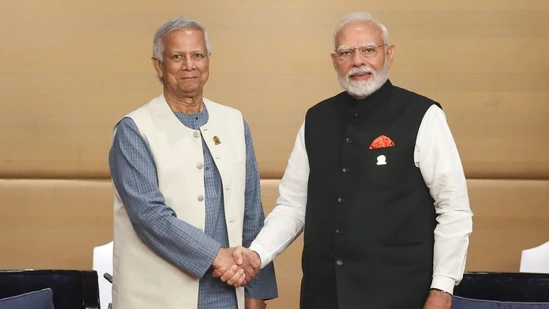
PM Modi-Muhammad Yunus hold first talks after Bangladesh regime change

PM Narendra Modi held his first meeting with Bangladesh’s interim leader Muhammad Yunus since the Hasina government’s ouster. The meeting comes amid strained ties and controversial comments by Yunus.

Published

on

Modi Yunus meet

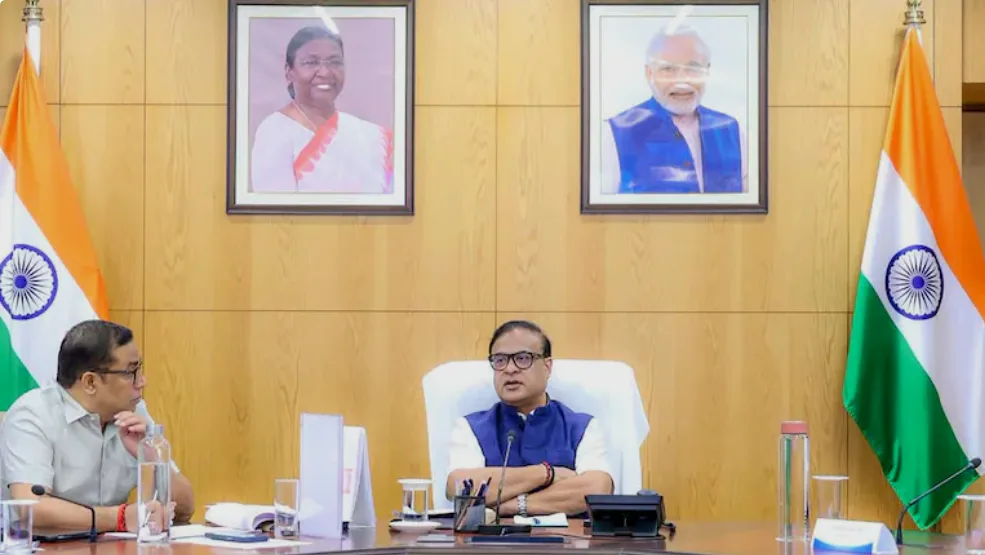
In a significant diplomatic development, Prime Minister Narendra Modi met with Muhammad Yunus, the Chief Advisor of Bangladesh’s interim government, for the first time since the regime change in Dhaka. The meeting took place on the sidelines of the BIMSTEC Summit in Bangkok, with External Affairs Minister S Jaishankar and National Security Advisor Ajit Doval also in attendance.

This high-level engagement marks a critical step in recalibrating bilateral ties that have grown tense following the ouster of the Sheikh Hasina-led Awami League government in August last year. Relations between the two neighbours have cooled amid political upheaval in Bangladesh and increasing Dhaka-Beijing proximity.

Northeastern remarks spark backlash in India

Adding to the diplomatic friction were controversial remarks by M Yunus during a recent visit to China. In a viral video, Yunus described India’s Northeastern states as “landlocked” and positioned Bangladesh as their gateway to the ocean, even calling it a potential “extension for the Chinese economy.”

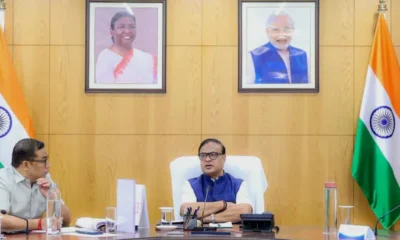
These comments triggered strong political reactions in India, especially from Assam Chief Minister Himanta Biswa Sarma, who condemned the statements as “offensive and strongly condemnable.” He expressed concern over narratives targeting the strategic Chicken’s Neck corridor and called for bolstering transport infrastructure to ensure better connectivity of the Northeast with the rest of the country.

Sarma urged the central government to explore alternative road and rail routes that bypass the Chicken’s Neck corridor and cautioned against underestimating the strategic implications of such provocative statements.

India watches Dhaka-Beijing ties with caution

The meeting comes amid India’s rising unease over Bangladesh’s growing tilt toward China, particularly following the political transition in Dhaka. Despite tensions, Prime Minister Modi had written to M Yunus on March 26, extending greetings on Bangladesh’s Independence Day. In his letter, Modi underscored the importance of mutual sensitivity, shared history from the Liberation War, and a continued commitment to peace and prosperity.

India has also voiced concerns in recent months over attacks on minorities in Bangladesh, an issue on which Dhaka has maintained that it is a domestic matter.

With this first formal interaction between Modi and Yunus, both sides may be attempting to arrest the diplomatic drift, though challenges remain, especially in the context of security sensitivities and regional geopolitics.

Continue Reading

India News

Centre ready for NEET debate in Parliament, Rahul Gandhi’s paper leak claims to be investigated: JP Nadda

Union Health Minister JP Nadda said the government is prepared for a detailed Parliament debate on the NEET paper leak issue and will investigate Rahul Gandhi’s allegations of multiple paper leaks over the last decade.

Published

on

JP-Nadda

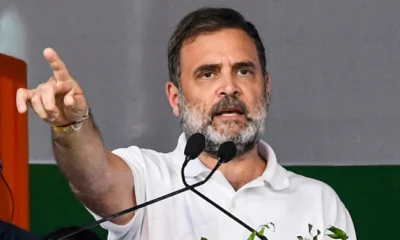
The Centre has reiterated its willingness to hold a detailed discussion on the NEET paper leak issue in Parliament, with Union Health Minister JP Nadda saying the government is prepared for a debate of any duration. He also said Leader of the Opposition Rahul Gandhi’s allegations of around 152 examination paper leaks over the past 10 years would be investigated.

Government open to debate of any duration

Speaking to the media on Wednesday, JP Nadda said the government has consistently supported a discussion on the paper leak issue in Parliament. He stated that the Opposition could decide the duration of the debate through the Business Advisory Committee, whether it is a short discussion or one extending to 12 or even 18 hours.

Nadda, who is also the Leader of the House in the Rajya Sabha, said the government remains fully prepared for a comprehensive discussion and urged the Opposition not to shift its position on the issue.

Rahul Gandhi’s paper leak allegations to be examined

Responding to Rahul Gandhi’s recent presentation, Nadda said the Congress leader referred to nearly 150 paper leak incidents over the last decade. He described those claims as a matter that requires investigation and said the government would examine the allegations before presenting the facts to the public.

According to Nadda, a responsible government is committed to verifying such claims and ensuring that the truth is established through due investigation.

Calls for a united approach on NEET issue

Highlighting the significance of the matter, Nadda said the future of students should remain the top priority for both the government and the Opposition. He appealed to political parties to work together in finding a long-term solution to prevent examination irregularities.

He added that safeguarding the interests of students is a shared responsibility and called for constructive cooperation instead of political differences.

Nadda on meeting with CJP representatives

The Union Minister also spoke about his recent interaction with representatives of the Cockroach Janata Party (CJP). He said the meeting was held in a cordial atmosphere, during which the government listened to their concerns and asked them to submit their suggestions in writing.

Nadda said the government remains open to further discussions whenever required and clarified that no meeting with the group was held on Wednesday.

Continue Reading

India News

Opposition demands Dharmendra Pradhan’s resignation before NEET discussion in Parliament

The Opposition has demanded Union Education Minister Dharmendra Pradhan’s resignation before any discussion on the NEET paper leak in Parliament, while the Centre says it is fully prepared for a debate.

Published

on

The political deadlock over the NEET paper leak issue continued in Parliament on Wednesday, with Opposition parties demanding the resignation of Union Education Minister Dharmendra Pradhan before any discussion takes place. The Centre, however, maintained that it is fully prepared to debate the matter during the ongoing Monsoon Session.

Leading the Opposition in the Rajya Sabha, Congress president Mallikarjun Kharge said there could be no fair discussion on the NEET issue unless Dharmendra Pradhan resigned from his post.

Centre rejects Opposition’s condition

Responding to the Opposition’s demand, Leader of the House JP Nadda said the government was not avoiding a discussion and remained open to debating all issues, including the alleged NEET paper leak.

He said the government had already made its position clear and described it as transparent, adding that it was willing to discuss every matter raised by the Opposition.

Parliamentary Affairs Minister Kiren Rijiju also reiterated that the Centre had been ready for discussions since the beginning of the Monsoon Session. He said the government had consistently conveyed its willingness to debate the NEET issue and other important matters.

Rijiju added that if the Opposition was looking for reasons to avoid a discussion, it would not be appropriate. According to him, the procedure and timing of the debate would be decided after consultations among all parties under the Chair’s guidance.

Opposition maintains resignation demand

The government also informed the House that its willingness to discuss the issue had been communicated to Congress leaders and representatives of other political parties.

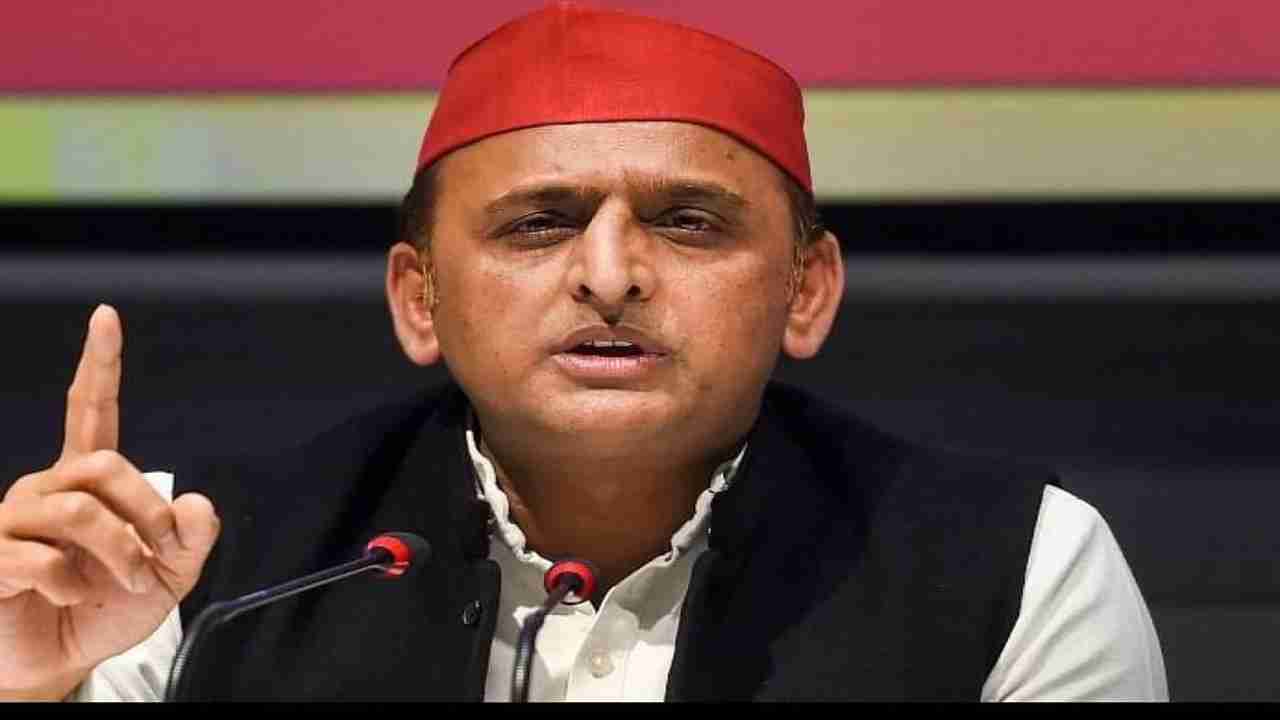
Samajwadi Party chief Akhilesh Yadav echoed the Opposition’s stand, saying students were seeking the resignation of the Education Minister before any discussion. He asserted that the resignation should come first, followed by parliamentary debate on the issue.

Akhilesh Yadav also joined Rahul Gandhi and other Opposition MPs during a march towards the Prime Minister’s residence in New Delhi on Tuesday as part of the protest over the NEET controversy.

Continue Reading

India News

Protesters pour in to Jantar Mantar, Centre readies for discussion in Parliament

Published

on

By

The agitation led by the Cockroach Janta Party (CJP) over alleged irregularities in the NEET-UG examination continued on Wednesday, with more people making a queue to join the demonstration at Jantar Mantar despite Delhi Metro shutting station gates, police action, ongoing negotiations with the Centre and heightened security across the capital.

Protesters regrouped at Jantar Mantar from late at night on Tuesday with CJP leaders warning that the Parliament march was “just a trailer” and that larger demonstrations would follow if the government failed to respond. The protest’s impact was also felt in Parliament, where repeated Opposition protests over the police action led to disruptions and adjournments in both the Lok Sabha and the Rajya Sabha.

Last evening, Congress leaders led by Rahul Gandhi and Priyanka Gandhi and Samajwadi Party president Akhilesh Yadav had staged a demonstration outside PM Narendra Modi’s residence. While Rahul’s protest drew kudos all around, AAP leaders mocked him for trying to hijack the movement that had been led by the CJP.  

In a related development, the Supreme Court declined an urgent hearing on a plea seeking intervention over the alleged police action against CJP protesters, directing the petitioner to follow the regular listing procedure.

Meanwhile, Delhi Police registered multiple FIRs in connection with Monday’s violence and maintained heavy deployment around Parliament House and Jantar Mantar. The Delhi Metro Rail Corporation closed 16 Metro stations across central Delhi, with trains passing through without halting. Interchange facilities were available at Rajiv Chowk, Mandi House and Central Secretariat, while commuters were advised to check official service updates. Traffic diversions and station closures disrupted travel across the city.

With protesters refusing to withdraw and the Centre signalling that dialogue will continue, the agitation remains one of the biggest political challenges confronting the government during the Monsoon Session.

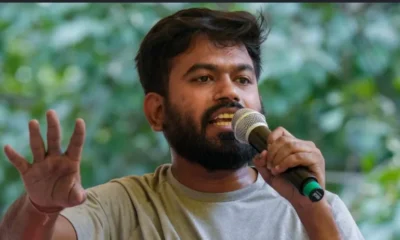
The CJP agitation took on a new lease of life and urgency on Monday when thousands of CJP supporters marched to Parliament under the banner of Chalo Sansad on the opening day of the Monsoon Session. Protesters demanded the resignation of Education Minister Dharmendra Pradhan, a parliamentary debate on the alleged examination irregularities and reforms in the examination system. Delhi Police stopped the procession near Parliament, citing security concerns and the absence of permission. They then used tear gas and lathicharged the march saying some protesters attempted to cross barricades. Several demonstrators, including CJP founder Abhijeet Dipke, were briefly detained. Over 100 students were treated for injuries including fractures and pellet wounds, a similar number of police personnel were also injured thought not as severely, reports said.

The stalemate in the government position to engage with the protesters broke on Monday. Health Minister JP Nadda met a CJP delegation, which submitted a memorandum outlining its demands. Government sources said the minister urged protesters to end the agitation and assured them that their concerns would be examined. However, CJP leaders said the meeting produced no concrete outcome and vowed to continue the protest.

Activist Sonam Wangchuk, who was forcibly moved to hospital by police after his health deteriorated on his indefinite fast, remains under medical supervision with the court’s clearing his request to be moved from Safdarjung Hospital to Medanta hospital.

Continue Reading

Trending

© Copyright 2022 APNLIVE.com