English हिन्दी
Connect with us

India News

India bans direct, indirect imports of all goods from Pakistan

Published

on

India dismisses Pakistan raising Kashmir issue in UN Security Council

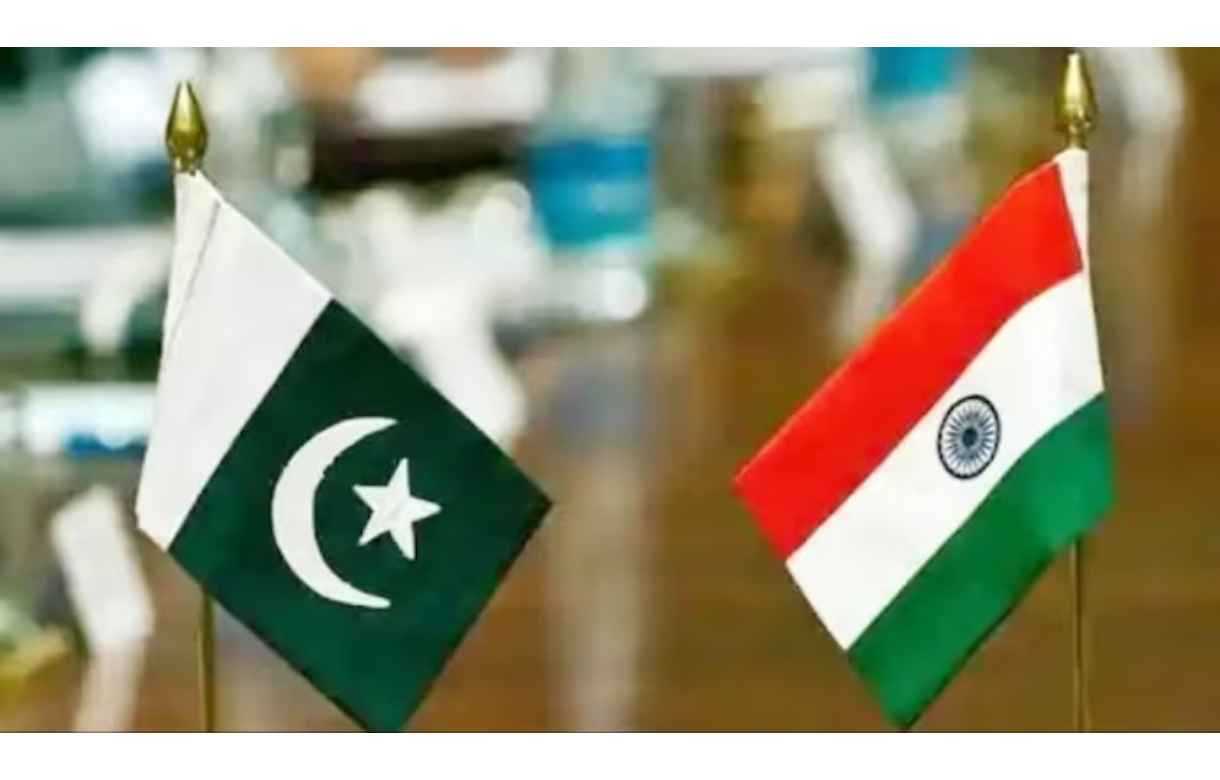
India has imposed an immediate ban on all direct and indirect imports from Pakistan, citing national security and public policy concerns following the April 22, 2025, Pahalgam terror attack that killed 26 people, mostly tourists.

The decision, outlined in a Government Order issued on Friday, May 2, 2025, halts all inbound shipments of Pakistani goods, effectively severing trade ties between the two nations.

The Directorate General of Foreign Trade (DGFT) amended the Foreign Trade Policy (FTP) 2023, adding a clause under “Prohibition on Import from Pakistan” that bans “direct or indirect import or transit of all goods originating in or exported from Pakistan, whether freely importable or otherwise, with immediate effect until further notice.”

Exceptions require explicit government approval, the notification stated. India’s trade with Pakistan has been minimal, with imports in April-January 2024-25 totaling just $0.42 million—0.0001% of India’s total imports—primarily fruits and nuts ($0.08 million), oil seeds and medicinal plants ($0.26 million), and organic chemicals. Exports to Pakistan during the same period were $447.65 million, led by organic chemicals ($129.55 million) and pharmaceuticals ($110.06 million).

The ban follows a series of Indian measures post-Pahalgam, including closing the Attari land-transit post, expelling Pakistani military attachés, and suspending the 1960 Indus Waters Treaty.

Pakistan retaliated by halting all trade with India, including third-country transactions, and suspending bilateral agreements.

Trade between the two nations had already dwindled after the 2019 Pulwama attack, when India imposed a 200% import duty on Pakistani goods and revoked Pakistan’s Most Favoured Nation (MFN) status under the World Trade Organization (WTO), citing security exceptions. Pakistan, which never granted India MFN status despite a 2012 commitment, suspended trade ties in August 2019.

Historical trade data reflects the declining relationship. In 2023-24, India’s exports to Pakistan were $1.18 billion, with imports at $2.88 million. In 2022-23, exports reached $627.1 million and imports $20.11 million, while 2021-22 saw exports of $513.82 million and imports of $2.54 million.

In 2017-18, total trade was $2.41 billion, with India importing $488.5 million worth of goods, mainly fruits and cement. India’s high tariffs post-Pulwama effectively curtailed imports, a trend now cemented by the total ban.

The strained ties, rooted in the Kashmir dispute and cross-border terrorism, have been further exacerbated by the Pahalgam attack. India is also reportedly urging global multilateral agencies to review loans and grants to Pakistan, signaling a broader diplomatic push.

Continue Reading

India News

Telegram restricted ahead of NEET-UG re-exam, NTA backs move to curb exam fraud

NTA has welcomed the Centre’s decision to temporarily restrict Telegram ahead of the NEET-UG 2026 re-examination, citing the need to prevent fraud and misinformation.

Published

on

NEET

The Centre has imposed temporary restrictions on messaging platform Telegram ahead of the NEET-UG 2026 re-examination, with the National Testing Agency (NTA) welcoming the decision as part of efforts to prevent exam-related fraud and misinformation.

The temporary curbs will remain in place until June 22, a day after the NEET-UG re-exam scheduled for June 21. Authorities said the action was taken following concerns that the platform was being misused by cheating networks and individuals circulating misleading claims related to the examination.

NTA says move aimed at protecting exam integrity

According to the NTA, the restrictions are intended to safeguard candidates from fraudulent activities and false information that could affect the fairness of the examination process. The agency stated that maintaining the integrity of the re-examination remains a priority as lakhs of students prepare to appear for the test.

The NEET-UG re-exam is being conducted after the original examination was cancelled amid allegations of question paper leaks and irregularities. Since then, authorities have been monitoring online platforms for suspicious activity and misleading content targeting candidates.

Restrictions linked to concerns over fake paper leak claims

In recent weeks, several reports surfaced about Telegram channels allegedly offering access to leaked examination papers. The NTA had repeatedly advised students not to trust such claims and referred suspicious links and posts for verification by cybercrime authorities. No official confirmation of any genuine leaked re-exam paper had been issued.

Authorities believe the temporary restrictions will help limit the spread of fake content and reduce opportunities for organised exam fraud in the days leading up to the re-test.

Wider efforts to secure the re-examination

The government and examination authorities have introduced several measures ahead of the re-exam, including monitoring social media platforms and creating channels for reporting suspicious claims related to NEET-UG 2026. The NTA has also urged candidates to rely only on official communications for updates regarding the examination.

With the re-examination approaching, officials say the latest action is part of a broader effort to ensure a fair and transparent process for all candidates.

Continue Reading

India News

Abhishek Banerjee says will not bow to BJP after nearly 11 hours of ED questioning

After spending nearly 11 hours before the Enforcement Directorate, TMC leader Abhishek Banerjee said he would not bow to the BJP and accused the ruling party of using investigative agencies for political purposes.

Published

on

Abhishek Banerjee

Trinamool Congress leader and Diamond Harbour MP Abhishek Banerjee on Tuesday said he would not bow to the BJP after spending nearly 11 hours being questioned by the Enforcement Directorate (ED) in connection with an ongoing investigation.

Speaking after the questioning, Banerjee alleged that central agencies were being used to target opposition leaders and asserted that he would continue his political fight despite what he described as sustained pressure.

The TMC leader has repeatedly maintained that investigations involving him are politically motivated, a charge he has made on several previous occasions while appearing before central agencies.

His appearance before the ED comes amid a period of heightened political activity and multiple investigations involving leaders in West Bengal. Recent days have also seen Banerjee face summons and questioning in separate matters by state investigative agencies.

After leaving the ED office, Banerjee reiterated that he would not be intimidated and said he remained committed to his political responsibilities. He also accused the BJP of attempting to weaken opposition parties through investigative action, an allegation that the BJP has rejected in the past.

The Enforcement Directorate has not publicly commented on Banerjee’s remarks. The investigation related to the questioning remains ongoing.

Continue Reading

India News

DMK attacks Rahul Gandhi, accuses him of weakening opposition unity

DMK has intensified its criticism of Rahul Gandhi, alleging that the Congress leader’s actions have weakened opposition unity and strained relations within the INDIA bloc.

Published

on

Rahul-Gandhi

The war of words between the DMK and Congress has intensified, with the DMK launching a strong attack on Leader of Opposition Rahul Gandhi and accusing him of contributing to divisions within the opposition alliance. The criticism comes amid strained ties between the two parties following their political split in Tamil Nadu.

According to the DMK, Rahul Gandhi’s political approach has weakened unity among opposition parties. The party’s IT wing mocked the Congress leader on social media, while an editorial published in the DMK’s official mouthpiece Murasoli questioned his recent remarks on opposition solidarity.

DMK questions Rahul Gandhi’s remarks on opposition unity

In its editorial, Murasoli argued that Rahul Gandhi was speaking about opposition unity despite, according to the DMK, contributing to disagreements among alliance partners in several states. The publication cited criticism directed at Congress by various opposition parties and suggested that the party’s actions had often created tensions within the INDIA bloc.

The editorial also referred to past political disputes involving Congress and Left parties, particularly in Kerala, claiming such episodes had raised concerns among opposition allies about Congress’s approach toward its partners.

Tamil Nadu political fallout adds to tensions

The attack comes after a major political realignment in Tamil Nadu. Following the 2026 Assembly elections, Congress ended its alliance with the DMK and joined the government led by Vijay’s Tamilaga Vettri Kazhagam (TVK). The move left the DMK in the opposition and significantly altered the political equation between the two former allies.

The DMK has alleged that Congress benefited from the alliance during the election and later abandoned its partner. The party’s editorial questioned whether assurances from Congress leadership would be trusted by alliance partners after the developments in Tamil Nadu.

Congress rejects allegations

Congress has not issued a detailed official response to the editorial, but party sources have rejected the allegations. According to the party, its decisions in Tamil Nadu were made in line with the mandate delivered by voters and were not intended to undermine either the DMK or the broader opposition alliance.

The latest exchange highlights growing strains between two key opposition parties even as leaders continue to stress cooperation on national issues. Just days earlier, Rahul Gandhi had said that the DMK remained aligned with the opposition on defending the “idea of India” despite political differences.

Continue Reading

Trending

© Copyright 2022 APNLIVE.com