English हिन्दी
Connect with us

India News

India activates Territorial Army amid border tensions with Pakistan

India activates 14 Territorial Army battalions following Pahalgam terror attack; Operation Sindoor hits nine terror camps in Pakistan and PoK.

Published

on

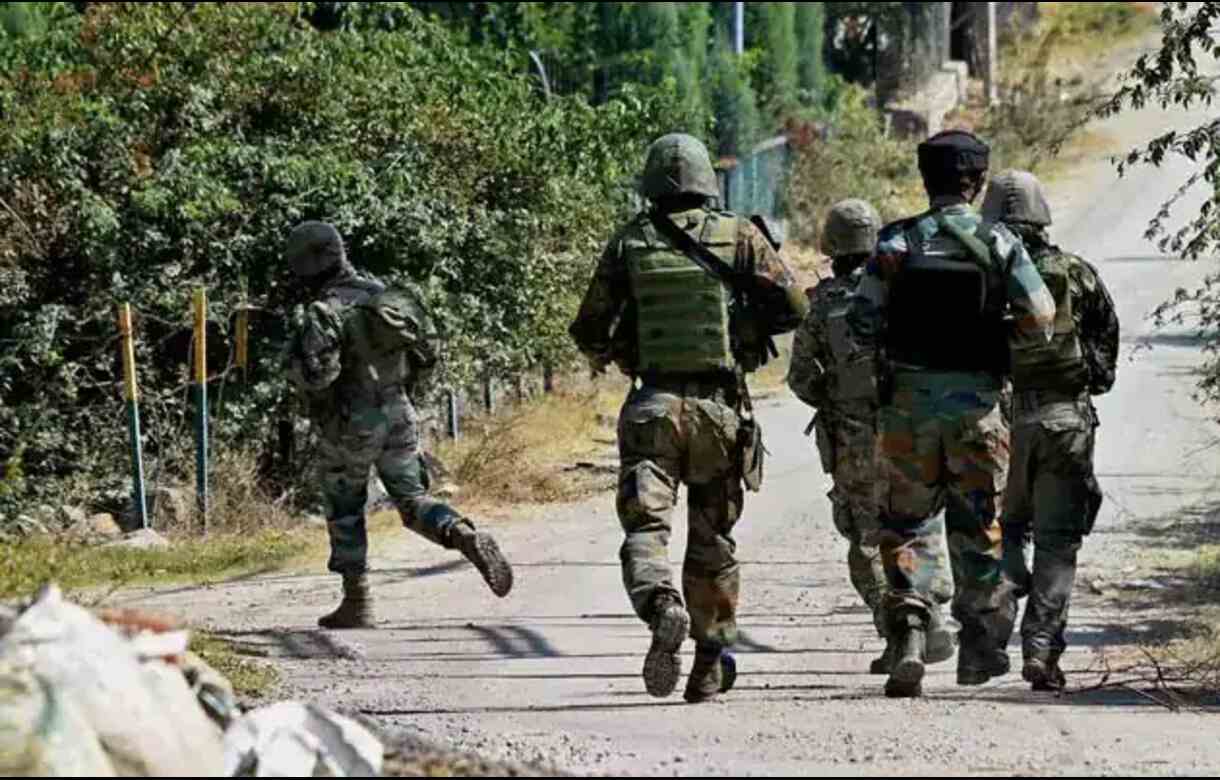
Amid escalating military tensions with Pakistan following the Pahalgam terror attack, the Indian government has moved swiftly to bolster national security. The Ministry of Defence has activated 14 battalions of the Territorial Army, deploying them for operations across the country until 2028. This significant mobilization comes as part of a strategic initiative for “heightened readiness and reinforcement,” according to official sources.

Territorial Army called into action

The Territorial Army, India’s auxiliary military force composed of trained volunteers, will now support the regular Army in handling emerging threats. This is a rare move, underscoring the seriousness of the current situation. The deployment has been ordered by the Department of Military Affairs as tensions with Pakistan remain high in the aftermath of a deadly terror attack in Pahalgam, which claimed 26 lives.

India repels twin drone and missile strikes

Over the past 72 hours, Indian forces successfully repelled two separate waves of drone and missile attacks launched from across the border. Utilizing advanced defensive infrastructure, including the S-400 Triumf system and Akash missiles, Indian air defences neutralized multiple threats, including enemy fighter jets.

The nation’s counter-unmanned aerial systems (C-UAS) were also instrumental in preventing incursions and maintaining airspace integrity.

Operation Sindoor: India strikes back

India’s military response to the terror provocation came in the form of Operation Sindoor, a joint effort involving the Army, Navy, and Air Force. In what marks the first tri-service strike since the 1971 war, India targeted nine terror camps situated in Pakistan and Pakistan-occupied Kashmir. These precision strikes resulted in the elimination of over 100 terrorists and the dismantling of infrastructure linked to past attacks, including the 2019 Pulwama bombing.

Military edge over Pakistan

According to the Stockholm International Peace Research Institute, India enjoys a clear military advantage over Pakistan. India maintains approximately 14.75 lakh active military personnel and over 16 lakh paramilitary forces, compared to Pakistan’s seven lakh active soldiers and 2.9 lakh paramilitary troops. In terms of military assets, India also possesses a superior fleet of fixed-wing aircraft, helicopters, armoured vehicles, and artillery.

Pakistan denies involvement, India presents evidence

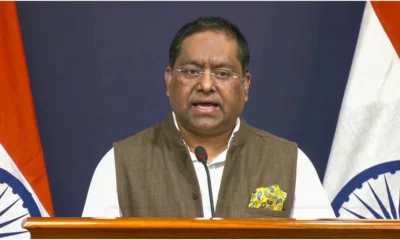
While Pakistan has denied any involvement in the Pahalgam attack and has called for an international investigation, India has presented what it describes as irrefutable proof of Islamabad’s hand in both domestic and international terror incidents. Foreign Secretary Vikram Misri, during a press briefing, detailed Pakistan’s continued support for terrorism, referencing links to attacks in cities like Moscow and London.

India News

Congress seeks 175-200 seats in UP, Samajwadi Party stresses on winnability

Congress has initiated seat-sharing talks with the Samajwadi Party for the 2027 UP Assembly elections, seeking to contest 175–200 seats. The SP has emphasised winnability as the key criterion for allocating constituencies.

Published

on

Bypoll update: BJP leads in UP's Milkipur, DMK eyes victory in Erode East

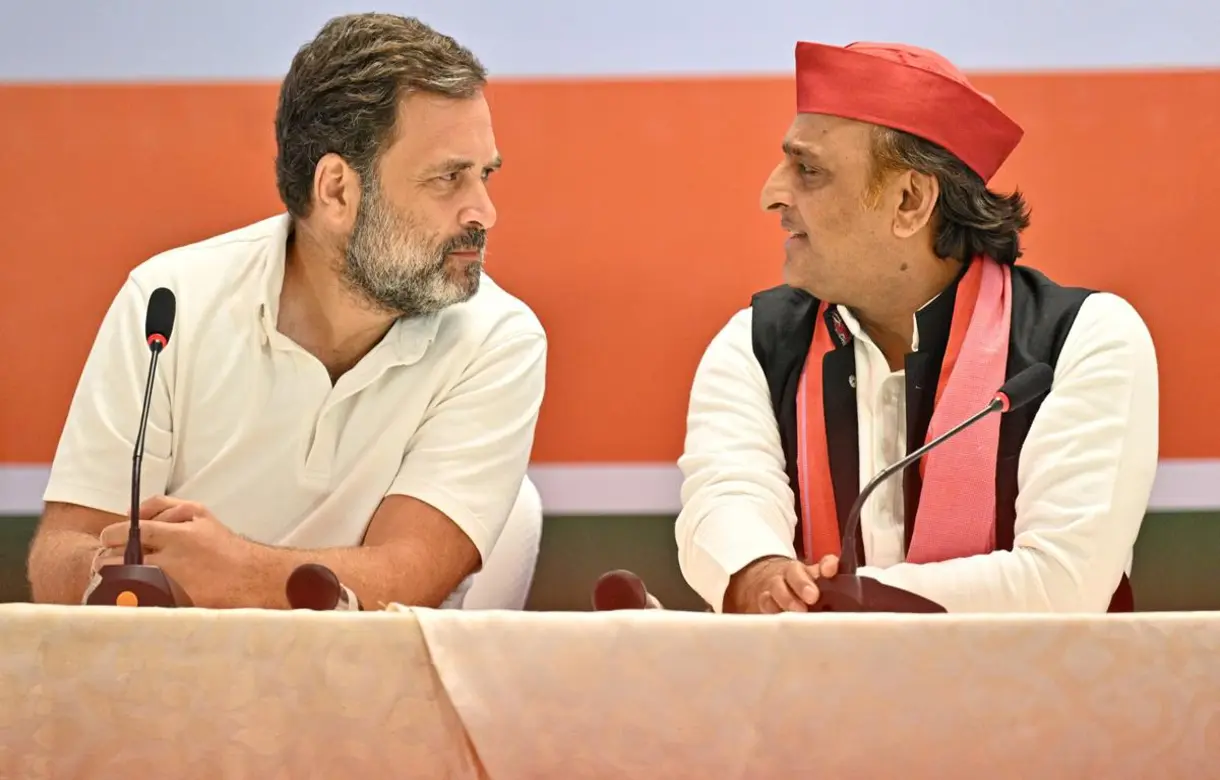
The Congress has formally initiated seat-sharing discussions with the Samajwadi Party (SP) for the 2027 Uttar Pradesh Assembly elections, submitting an initial list of constituencies it wants to contest as part of an alliance.

Congress’ Uttar Pradesh in-charge Rajendra Pal Gautam said the party had shared a list covering between 175 and 200 seats with Samajwadi Party leaders a few days ago. Detailed discussions on the distribution of constituencies are expected to follow.

The Uttar Pradesh Assembly has 403 seats. While the Congress is seeking a substantial share in the proposed alliance, the Samajwadi Party has emphasised that candidates’ electoral winnability should determine seat allocation.

A senior SP leader said the party’s position was guided by the principle that winnability should remain the primary criterion. The leader also cautioned against treating initial demands as a basis for a final agreement.

Why the Congress wants a larger share of seats

The Congress believes its performance in the 2024 Lok Sabha elections has strengthened its position in Uttar Pradesh. The party won six parliamentary seats in the state while its ally, the Samajwadi Party, secured 37. The BJP won 33 seats.

Congress leaders have argued that the results demonstrated the electoral potential of the alliance and the importance of allowing both parties a meaningful role in the upcoming Assembly contest.

However, the party’s recent Assembly election record presents a different picture. The Congress won only two seats in the 2022 Uttar Pradesh Assembly elections, down from seven in 2017, when it contested in alliance with the Samajwadi Party.

The difference between its performance in the parliamentary and Assembly elections is likely to be an important consideration in the seat-sharing negotiations.

Akhilesh Yadav stresses opposition unity

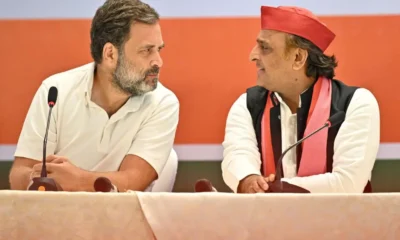
Samajwadi Party chief Akhilesh Yadav has maintained that the Congress, the SP and the INDIA bloc need to work together to defeat the BJP in Uttar Pradesh.

Speaking to reporters in Lucknow on Friday, Yadav said the alliance would move forward effectively towards that objective. His remarks indicated that the two parties remain committed to cooperation even as discussions over the distribution of seats continue.

The challenge for both sides will be to reach an arrangement that accommodates their respective political ambitions while taking the electoral strength of individual candidates and constituencies into account.

Congress leadership changes amid alliance talks

The Congress has also reorganised its Uttar Pradesh leadership ahead of the Assembly elections. Aradhana Misra was appointed as the state unit chief, replacing Ajay Rai.

The leadership change is believed by some Congress leaders to be part of efforts to facilitate a workable arrangement with the Samajwadi Party. Misra is considered to have good relations with the SP leadership.

Congress leaders have expressed hope that negotiations will produce a reasonable seat-sharing agreement and confirmed that the two parties intend to contest the 2027 Uttar Pradesh elections together.

The final seat allocation, however, remains undecided. Both parties will need to reconcile the Congress’ demand for a larger share with the SP’s emphasis on winnability before the alliance can settle on a constituency-wise arrangement.

Continue Reading

India News

Thousands bang utensils, beat drums in Manipur protest over continued killings

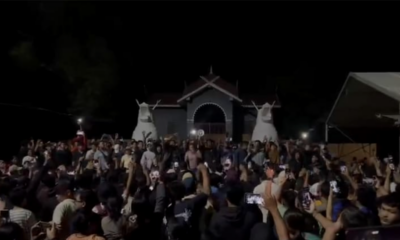
Thousands of people staged a sound protest across Manipur’s five valley districts on Friday, October 23, banging utensils, beating drums and honking vehicle horns to protest continued killings and the prolonged ethnic conflict.
Published

on

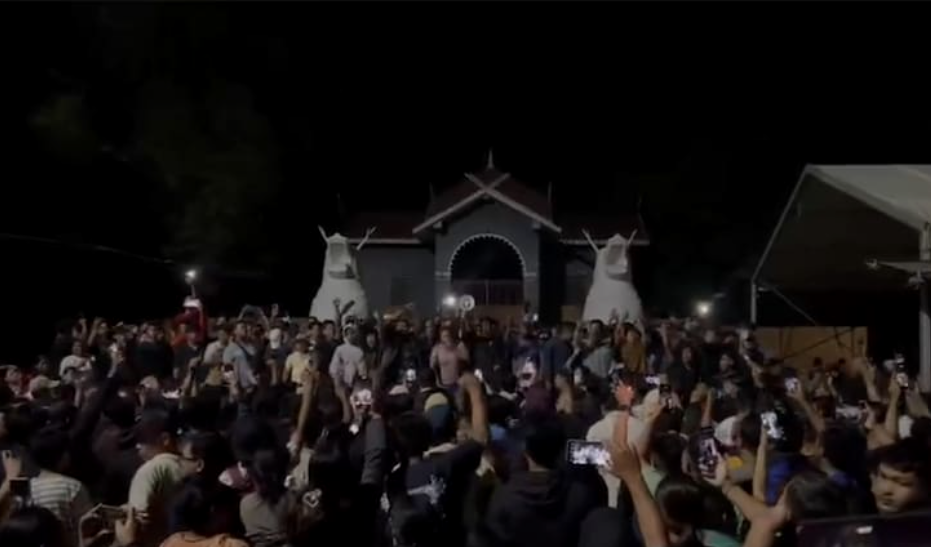
Thousands of people across Manipur’s five valley districts took to the streets on Friday evening, October 23, to stage a sound protest against continued killings, the prolonged ethnic conflict and the government’s failure to restore normalcy.

Residents in several localities of Imphal banged utensils, beat drums, struck electric poles with hammers and honked vehicle horns between 7:30 pm and 8 pm. The demonstration was intended to draw the authorities’ attention to public grievances and demands amid continuing unrest.

The protest reflected growing frustration among residents over the unresolved conflict and the lack of progress towards restoring peace in the state.

Protesters march towards Kangla

During the demonstration, protesters marched towards Kangla, the historic political and cultural centre of the erstwhile Manipur kingdom. The site is located close to Lok Bhavan and the chief minister’s secretariat in Imphal.

Security forces stopped several groups at Palace Compound, Moirangkhom and Keisampat junctions. Hundreds of other protesters reached the entrance to Kangla but were prevented from entering the fort premises.

Police later fired tear gas shells to disperse demonstrators gathered near Lok Bhavan. Barricades were also erected in the area after 8 pm.

Federation of Haomee called for the protest

The demonstration was organised in response to a call by the Federation of Haomee, a civil society organisation that urged residents to make noise between 7:30 pm and 8 pm.

The organisation’s call came amid anger over the continuing ethnic conflict and demands for effective action to restore peace in Manipur.

A protester said the demonstration was intended to make leaders hear the public’s suffering, adding that repeated appeals and demands had not received adequate attention.

Fresh killings add to tensions in Manipur

The protest took place amid renewed tensions following recent killings in the state. On October 18, three Meitei civilians who had reportedly gone to collect firewood near the Khongbal Tangkhul foothills in Imphal East district were killed in an attack, triggering protests and demands for stronger security measures.

The killings were followed by a 48-hour statewide shutdown and demonstrations in which grieving villagers brought the bodies of two victims to the chief minister’s residence.

The latest sound protest adds to the public demonstrations over the continuing violence and the demand for a return to normalcy in Manipur.

Continue Reading

India News

MEA responds after ITBP chief flags ongoing face-offs with China in Arunachal

India said deviations by Chinese forces from established patrolling patterns periodically disturb the situation along the Line of Actual Control, as the government addressed remarks by the ITBP chief about ongoing face-offs in Arunachal Pradesh.
Published

on

MEA

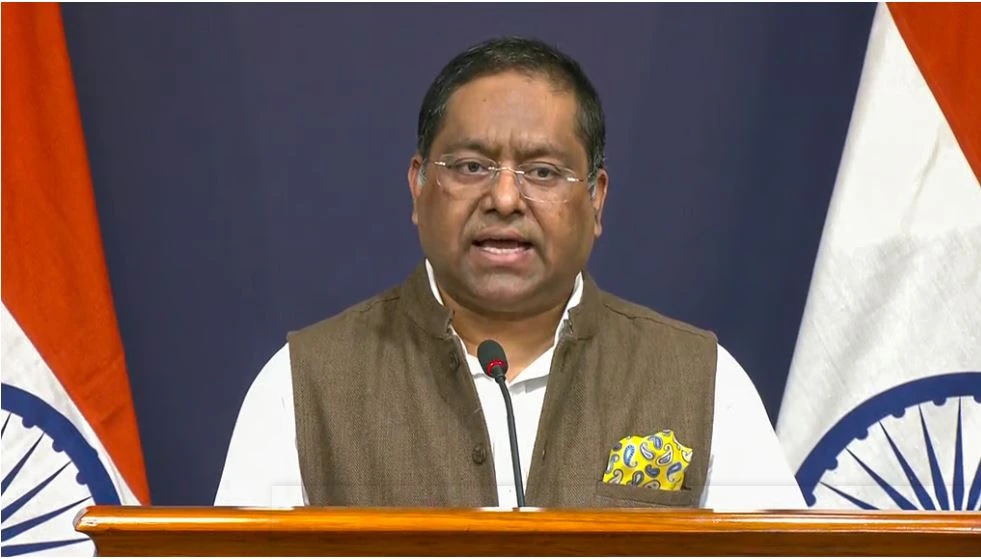
India on Friday said that deviations by Chinese forces from established patrolling patterns periodically disturb the situation along the Line of Actual Control (LAC). The Ministry of External Affairs (MEA) made the remarks amid reports of continuing face-offs between Indian and Chinese forces at multiple locations in Arunachal Pradesh.

MEA spokesperson Randhir Jaiswal addressed the issue during a regular media briefing on October 23, following remarks by Indo-Tibetan Border Police (ITBP) Director General Shatrujeet Kapur about the ongoing confrontations along the border.

“As we have noted in the past, the situation in the India-China border areas gets disturbed from time to time when Chinese forces diverge from established patrolling patterns,” Jaiswal said.

He also reiterated that maintaining peace and tranquillity in the border areas was essential for the overall development of bilateral relations between India and China.

MEA stresses diplomatic and military engagement

Jaiswal said India and China continued to use existing diplomatic and military mechanisms to resolve outstanding issues and prevent misunderstandings and miscalculations along the LAC.

He added that both countries had agreed to discuss ways to improve their understanding of the LAC in appropriate areas to strengthen border management.

The spokesperson did not elaborate on the specific confrontations mentioned by the ITBP chief, with further questions on the details referred to the Ministry of Defence, according to reporting on the briefing.

ITBP chief confirms ongoing face-offs in Arunachal Pradesh

A day before the MEA briefing, Kapur said face-offs between Indian and Chinese forces had occurred at several locations in Arunachal Pradesh in recent days and that the situation was continuing.

Speaking to ITBP personnel at a base in Alwar, Rajasthan, on Thursday, Kapur also discussed the force’s efforts to strengthen its operational capabilities along the border.

He said the ITBP had mobilised its newly raised Shaurya commando unit during the ongoing face-offs. He also highlighted the creation of drone platoons for border units and the development of a new training course to prepare personnel for battles similar to the 2020 Galwan Valley clash.

The remarks came as the ITBP continued its modernisation efforts, including a greater focus on specialised training and emerging warfare technologies.

Border management remains central to India-China ties

The latest statements underline the importance India places on maintaining peace along the disputed boundary while addressing unresolved issues through diplomatic and military channels.

India and China have continued engagements aimed at managing tensions along the LAC. However, reported confrontations at multiple locations in Arunachal Pradesh have brought the border situation back into focus.

The MEA reiterated that peace and tranquillity along the border remained essential for the broader development of bilateral relations, while emphasising continued engagement to improve border management.

Continue Reading

Trending

© Copyright 2022 APNLIVE.com