English हिन्दी
Connect with us

India News

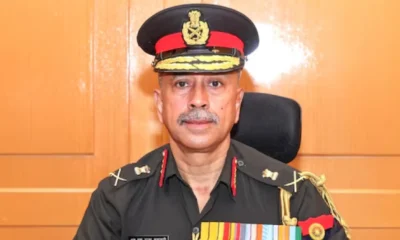
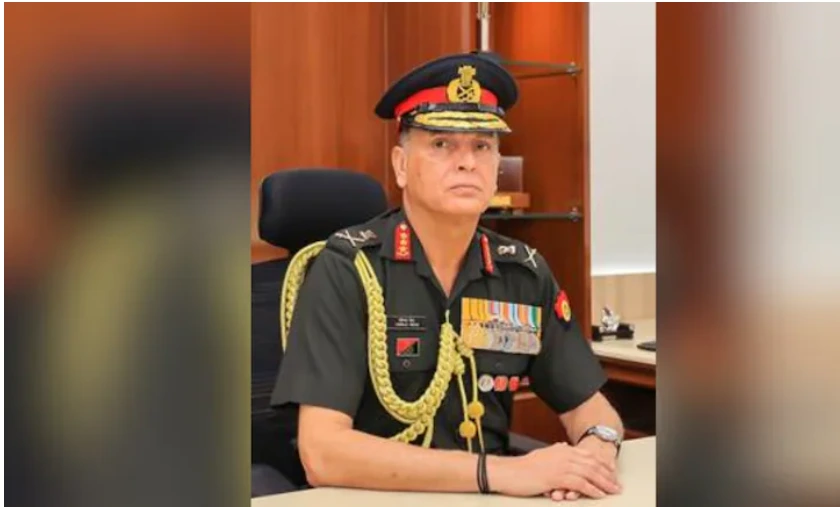
Lt Gen Dhiraj Seth appointed next Army chief, to take charge on June 30

The government has appointed Lt Gen Dhiraj Seth, currently the Vice Chief of Army Staff, as the next Army chief. He will succeed General Upendra Dwivedi on June 30.

Published

on

The Centre has appointed Lieutenant General Dhiraj Seth as the next Chief of the Army Staff (COAS), paving the way for a leadership transition in the Indian Army later this month. Lt Gen Seth, who currently serves as the Vice Chief of the Army Staff, will succeed General Upendra Dwivedi upon the latter’s retirement on June 30, 2026.

The appointment was announced on Saturday, with the government confirming that Lt Gen Seth will assume office from the afternoon of June 30. He will take over command after General Dwivedi completes his tenure as the Army’s 30th chief.

Veteran Armoured Corps officer

An officer of the Armoured Corps, Lt Gen Seth was commissioned into the Indian Army in December 1986 after graduating from the National Defence Academy. Over nearly four decades of service, he has held a range of operational, command, staff and strategic appointments across the Army.

Before becoming Vice Chief on April 1, 2026, he served in several senior leadership roles, including heading the Southern Command and South Western Command. He has also commanded formations such as the Delhi Area and the XXI Corps during his military career.

Leadership transition in the Army

Lt Gen Seth’s elevation comes as the Army prepares for a change of command at the highest level. His appointment follows his move to Army Headquarters as Vice Chief earlier this year, a role he assumed on April 1.

The Ministry of Defence said the incoming Army chief brings extensive experience from command, operational and strategic assignments across diverse military domains.

With the appointment, Lt Gen Seth is set to lead the Indian Army through the next phase of its modernisation and operational preparedness efforts after taking charge at the end of the month.

India News

IAF AN-32 aircraft crashes while landing at Assam’s Jorhat airbase, five personnel killed

Five Indian Air Force personnel were killed after an AN-32 transport aircraft crashed while landing at Jorhat Air Force Station in Assam. The IAF has ordered a court of inquiry into the accident.

Published

on

An Indian Air Force (IAF) AN-32 transport aircraft crashed while attempting to land at Jorhat Air Force Station in Assam on Saturday, resulting in the deaths of five Air Force personnel. The accident occurred during a routine sortie and triggered an emergency response at the airbase.

According to the IAF, the aircraft met with the accident during the landing phase at Jorhat. The force later confirmed the loss of five personnel and expressed condolences to their families. A court of inquiry has been ordered to determine the circumstances that led to the crash.

Court of inquiry ordered

The Indian Air Force said a formal investigation will examine the cause of the accident. Officials have not yet disclosed what may have led to the crash, and the inquiry is expected to review technical, operational and environmental factors.

Reports indicated that the co-pilot survived the accident and is undergoing medical treatment.

Personnel who lost their lives

The IAF identified the five personnel killed in the accident as:

  • Squadron Leader Prashant Singh
  • Flight Lieutenant Shubham Kumar
  • Sergeant Jitendra Sharma
  • Agniveervayu Khemaram Kumawat
  • Agniveervayu Danish Alam

The Air Force said it stands with the bereaved families during this difficult time.

AN-32’s role in the Air Force

The AN-32 is a twin-engine transport aircraft that has been a key part of the Indian Air Force’s logistics operations for decades. It is widely used to transport personnel, equipment and supplies, particularly in remote and high-altitude regions. India remains one of the largest operators of the aircraft type.

The crash comes months after a Sukhoi Su-30MKI fighter aircraft accident in Assam that claimed the lives of two IAF pilots.

Continue Reading

India News

Delhi records coolest day of June so far as rain and thunderstorms bring relief from heat

Delhi recorded its coolest day of June after rain and thunderstorms caused a sharp drop in temperatures. IMD has forecast more showers and gusty winds before temperatures begin rising again.

Published

on

Delhi weather today

Delhi witnessed its coolest day of June so far after widespread rain and thunderstorm activity caused temperatures to drop significantly across the national capital. The change in weather provided much-needed relief from the intense summer heat that had gripped the region in recent weeks.

According to the India Meteorological Department (IMD), rain and thunderstorms over the past 24 hours brought a noticeable decline in both maximum and minimum temperatures. Official weather observations showed that Delhi’s maximum temperatures fell well below normal levels, while several areas experienced strong winds and rainfall.

More rain and thunderstorms likely

The IMD has forecast additional thunderstorms, light to moderate rain and gusty winds for Delhi and nearby areas through Saturday. A yellow alert remains in place, with weather conditions expected to stay unsettled before gradually improving.

Weather experts have attributed the recent change to the influence of a western disturbance and associated weather systems affecting northwestern India. While the disturbance is gradually moving away, its impact is expected to continue for a short period.

Temperatures may rise again next week

Meteorologists expect the pleasant conditions to last for another couple of days. After that, temperatures are likely to begin rising again as rainfall activity decreases. The IMD’s latest forecast also indicates a gradual increase in temperatures by the middle of next week.

Recent weather systems have brought relief not only to Delhi but also to parts of Uttar Pradesh, Rajasthan and other northern states, where thunderstorms and rain have helped ease heatwave conditions.

Continue Reading

India News

Rajnath Singh says Indus waters will not flow to terror patrons as India maintains tough stance on Pakistan

Rajnath Singh said India would not allow Indus river waters to benefit countries that support terrorism, reinforcing New Delhi’s position on the future of the Indus Waters Treaty.

Published

on

Rajnath Singh

Defence Minister Rajnath Singh on Friday delivered a strong message to Pakistan, stating that India would not allow the waters of the Indus river system to benefit countries that support terrorism.

Addressing an event, Singh said the Narendra Modi-led government remains committed to protecting India’s interests and would ensure that water resources are not used in a manner that benefits what he described as “terror patrons.” His remarks come amid continuing tensions between India and Pakistan over the future of the Indus Waters Treaty (IWT).

The statement reflects India’s broader position that the treaty will remain in abeyance until Pakistan takes credible and irreversible steps to end support for cross-border terrorism. Officials have repeatedly maintained that terrorism and normal bilateral cooperation cannot go hand in hand.

India’s position on the Indus Waters Treaty

The Indus Waters Treaty, signed in 1960 with World Bank mediation, governs the sharing of waters from the Indus river system between India and Pakistan. For decades, it has been regarded as one of the most enduring agreements between the two neighbours.

However, India placed the treaty in abeyance after the April 2025 terror attack in Pahalgam, citing national security concerns and Pakistan’s alleged support for cross-border terrorism. Since then, Indian officials have consistently argued that Pakistan’s actions violate the spirit of goodwill and cooperation on which the agreement was based.

Government signals tougher approach on water sharing

Recent statements from senior ministers have indicated that New Delhi is exploring ways to maximise the use of water available to India under the Indus river system. Union Jal Shakti Minister C.R. Patil recently said the government is working to ensure that not a single drop of water that India can utilise goes to Pakistan in the coming years.

Rajnath Singh’s latest remarks add to that messaging, reinforcing the government’s view that issues related to water sharing cannot be separated from concerns about terrorism and national security.

Pakistan’s response and ongoing dispute

Pakistan has opposed India’s decision to keep the treaty in abeyance and has continued to raise concerns about water security and treaty obligations. The issue has also featured in international legal and diplomatic discussions, with India rejecting certain arbitration-related proceedings concerning the treaty.

The dispute remains a significant point of friction between the two countries, with both sides maintaining firm positions on the future of the water-sharing agreement.

Continue Reading

Trending

© Copyright 2022 APNLIVE.com