English हिन्दी
Connect with us

India News

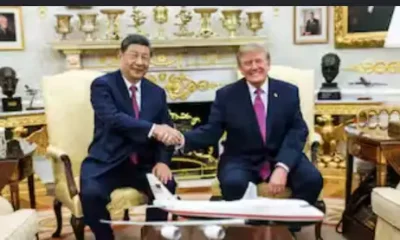
China to supply rare earths to US as part of new trade deal, Trump confirms

In a major trade development, Trump says China will supply rare earths to the US and allow student visa access under a deal pending final approval from both presidents.

Published

on

trump china

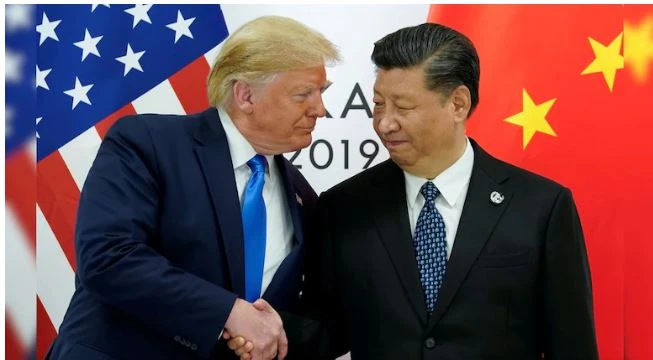
In a notable breakthrough amid prolonged trade tensions, former US President Donald Trump has claimed that a new trade agreement with China is finalized, pending his and Chinese President Xi Jinping’s final approval. The deal prominently features China’s commitment to supply rare earth materials to the United States and allow Chinese students to study in American educational institutions.

Rare earths at the center of revived US-China trade pact

Trump took to Truth Social on Wednesday to announce that China will provide “full magnets and all necessary rare earth materials” upfront to the United States. In exchange, the US has agreed to uphold access for Chinese students in its universities — a gesture Trump described as historically beneficial and acceptable to him.

The announcement comes after months of trade uncertainty. In May, talks had broken down largely over the issue of rare earths — elements critical for manufacturing electronics, military hardware, and renewable energy technologies. The sudden resumption and rapid progress of negotiations appear to be rooted in both countries’ strategic need for economic and technological stability.

Key terms of the deal

In his post, Trump specified the terms: “Our deal with China is done, subject to final approval with President Xi and me. Full magnets, and any necessary rare earths, will be supplied, up front, by China. Likewise, we will provide to China what was agreed to, including Chinese students using our colleges and universities… We are getting a total of 55% tariffs, China is getting 10%.”

This statement underscores a trade balance tilt, with the US imposing a higher tariff rate while accepting Chinese student inflow. According to US officials, the agreement restores elements of a framework established during previous Geneva talks aimed at reducing bilateral tariff escalations.

Background: efforts to restore economic cooperation

Earlier this week, Chinese and American officials announced they had established a framework to restart cooperation and reduce export restrictions from China. Chinese Vice Premier also reaffirmed Beijing’s interest in “strengthening cooperation” with Washington, signaling a broader intent to stabilize relations.

US Commerce Secretary Howard Lutnick described the latest agreement as one that puts “meat on the bones” of last month’s Geneva accord, indicating that both sides are finally turning verbal commitments into tangible policies.

The development follows a round of discussions held in London, where rare earth supply was reportedly the central issue. While Trump has emphasized that the deal awaits final sign-off from him and Xi, the outline provided points to an easing of tensions — at least on critical economic fronts.

India News

Tamil Nadu exit polls favour DMK, Vijay factor may influence margins

Exit polls suggest DMK may retain power in Tamil Nadu, but Vijay’s political debut could influence the final outcome.

Published

on

Actor vijay

Exit polls for the 2026 Tamil Nadu Assembly elections suggest that the ruling Dravida Munnetra Kazhagam (DMK), led by Chief Minister M K Stalin, is likely to return to power, though the final outcome will be confirmed on counting day.

According to multiple projections, the DMK-led alliance is expected to secure a majority in the 234-member Assembly, with estimates placing the party’s tally in the range of around 122 to 145 seats.

Most polling agencies indicate that the ruling alliance has maintained a clear edge over its rivals, particularly the AIADMK-led bloc, in what has been a closely watched contest.

Vijay factor adds new dimension

A significant highlight of this election has been the entry of actor-turned-politician Vijay and his party, Tamilaga Vettri Kazhagam (TVK). His debut has introduced a third force in a state traditionally dominated by the DMK and AIADMK.

Early assessments suggest that while TVK may not secure a large number of seats, it could influence vote shares and outcomes in several constituencies, especially by attracting younger voters and first-time participants.

This has made the electoral contest more complex, with analysts pointing to potential vote-splitting effects that could impact margins for both major alliances.

High turnout and key contest

Polling for all 234 seats was held on April 23, with the state witnessing a high voter turnout of over 84 percent, one of the highest in recent decades.

The election saw a multi-cornered fight involving the DMK alliance, AIADMK-led coalition, and newer players like TVK, alongside other regional parties.

What happens next

Exit polls provide only an early indication of voter trends and are not always accurate. The final results will be declared on May 4, when counting of votes takes place.

Until then, while projections favour a return of the DMK government, the actual impact of the “Vijay factor” and constituency-level dynamics will become clear only after the official results are announced.

Continue Reading

India News

Bengal exit polls 2026 show tight contest, some projections give BJP edge

Exit polls for West Bengal 2026 show a close race, with some projections giving BJP a narrow edge over TMC.

Published

on

Exit polls

Exit polls released after the final phase of voting in West Bengal suggest a closely contested election, with a “poll of polls” indicating that the Bharatiya Janata Party (BJP) may hold a slight edge over the ruling Trinamool Congress (TMC) in some projections.

The estimates, which combine multiple exit poll surveys, point to a tight race in the state, reflecting a competitive political contest between Chief Minister Mamata Banerjee’s TMC and the BJP. While some projections show the BJP ahead, others indicate that the TMC remains firmly in contention, highlighting the uncertainty surrounding the final outcome.

The poll of polls aggregates data from different agencies to present a broader picture of voter sentiment. However, variations across surveys underline that the margin between the two major parties is narrow, and no clear consensus has emerged.

West Bengal’s election, held in two phases, has been one of the most closely watched political battles, drawing national attention due to the high-stakes contest between the incumbent leadership and the BJP’s aggressive campaign.

It is important to note that exit polls are only indicative and not definitive. Their accuracy depends on sampling methods and voter responses, and past trends have shown that final results can differ significantly from these projections.

The official results of the West Bengal Assembly elections are scheduled to be announced on May 4, which will ultimately determine whether the TMC retains power or if the BJP manages to make a breakthrough in the state.

Continue Reading

India News

Bengal phase 2 voting crosses 60% turnout by afternoon amid tight security

West Bengal phase 2 voting records over 60% turnout by early afternoon as polling continues across 142 constituencies under tight security.

Published

on

Voting for the second phase of the West Bengal Assembly elections witnessed strong participation on Wednesday, with voter turnout crossing 60% by early afternoon.

Polling was underway across 142 constituencies spread over several districts, including key seats in Kolkata, with security tightened to ensure smooth conduct of elections. According to available data, voter turnout reached around 61% by 1 pm, reflecting steady participation since the morning hours.

The polling process began early in the day, with voters lining up outside booths in both urban and rural areas. Authorities deployed extensive security personnel across sensitive locations to maintain order and prevent disruptions.

This phase marks a crucial stage in the state elections, covering a large number of constituencies and involving a high-stakes contest among major political parties. The scale of polling and the number of seats make it a decisive segment in determining the overall outcome.

Administrative measures, including restrictions and monitoring, were put in place to ensure free and fair voting. Preparations had been completed in advance, with election officials focusing on logistics, security arrangements, and voter accessibility.

The Election Commission had earlier intensified deployment of forces and oversight mechanisms, aiming to avoid disturbances and ensure a peaceful voting environment across polling stations.

Polling is scheduled to continue until the evening, after which sealed electronic voting machines will be stored securely until counting day.

Continue Reading

Trending

© Copyright 2022 APNLIVE.com