English हिन्दी
Connect with us

Latest world news

Israeli operation targets Iran’s nuclear sites, killing top IRGC general and scientists

In a dramatic escalation, Israel’s Operation Rising Lion hit Iran’s Natanz nuclear site and killed IRGC chief Hossein Salami, marking a severe blow to Tehran’s military and nuclear infrastructure.

Published

on

israel operation rising

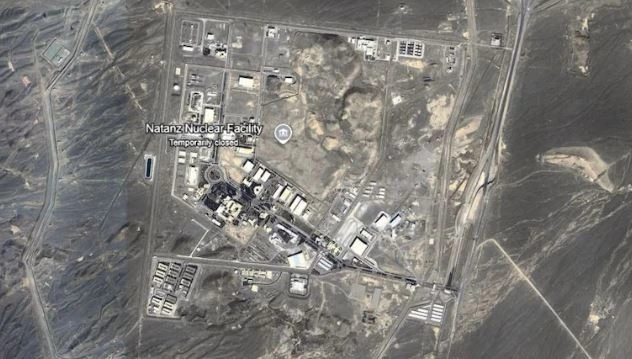
In a dramatic escalation of hostilities, Israel launched a large-scale aerial operation—termed Operation Rising Lion—early Friday morning, targeting Iran’s key nuclear and military infrastructure. The Israeli Air Force reportedly deployed dozens of jets in a sweeping attack that struck multiple high-value locations, most notably Iran’s uranium enrichment site at Natanz, where billowing black smoke was seen in the aftermath.

Iran later confirmed through state television that Major General Hossein Salami, the head of the Islamic Revolutionary Guard Corps (IRGC), was killed in what it described as a “direct assassination” by Israeli forces. Salami was considered the chief architect of Iran’s proxy military engagements across the region. His death, alongside a senior IRGC commander and two nuclear scientists, prompted Tehran to announce a state of national mourning.

Direct hit on Iran’s nuclear heartland: Natanz

The Natanz enrichment complex, spanning over 100,000 square metres in Isfahan province, was the primary target of the Israeli assault. The site, partially buried beneath desert terrain, houses thousands of centrifuges central to Iran’s uranium enrichment programme. Early visuals released briefly by Iranian state media showed fires near the Pilot Fuel Enrichment Plant (PFEP), with potential structural damage even to the more protected Fuel Enrichment Plant (FEP) located underground.

Security analysts suggest that even surface-level damage at Natanz could significantly disrupt Iran’s most fortified nuclear activities. The strike marks Israel’s most direct physical action against Iran’s nuclear assets since the historic Stuxnet cyberattack.

Iran’s nuclear network: Fordow, Isfahan, Khondab and more

Aside from Natanz, several other nuclear installations were reportedly impacted:

  • Fordow, south of Tehran, is Iran’s most fortified site, hidden deep inside a mountain. The site houses advanced IR-6 centrifuges, enriching uranium up to 60% purity. U.S. intelligence noted that Iran had doubled its centrifuge count here in 2024.
  • Isfahan, home to the Uranium Conversion Facility (UCF), processes raw yellowcake uranium into gaseous uranium hexafluoride for enrichment.
  • Khondab, formerly the Arak Heavy Water Reactor, holds potential for plutonium production. Although halted under the JCPOA, its strategic relevance remains.
  • The Tehran Research Reactor and the Bushehr civilian power plant were not directly reported as targets, but their strategic roles in training and energy highlight the broader nuclear landscape under scrutiny.

Tehran reels under shock, prepares for retaliation

In the capital, Tehran residents awoke to explosions and sirens, with smoke seen rising from the western Chitgar district. Iran soon closed its airspace, while Israel imposed a full airspace lockdown, anticipating retaliatory missile or drone attacks.

Israeli Defence Minister Israel Katz acknowledged the strikes, calling them preemptive and warning of imminent retaliation from Iran.

This development comes amid increasing concerns over Iran’s “breakout time”—the period needed to enrich uranium to weapons-grade. Recent estimates suggest that this duration has dropped to mere weeks, down from over a year under the 2015 Joint Comprehensive Plan of Action (JCPOA).

The International Atomic Energy Agency (IAEA) has assessed that Iran now possesses enough 60% enriched uranium that, if processed further to 90%, could yield materials for up to four nuclear warheads—a charge Tehran disputes, insisting its nuclear pursuits remain peaceful.

Continue Reading

Latest world news

Trump sets fresh ultimatum to Iran, rules out nuclear strike as tensions escalate

Trump says “clock is ticking” for Iran but rules out nuclear weapons, maintaining pressure for a long-term deal.

Published

on

Donald Trump statement

Amid rising tensions in the ongoing Iran-US conflict, Donald Trump has issued a new ultimatum to Iran, stating that time is running out for Tehran to reach a deal with Washington.

According to recent media reports, Trump reiterated that while the United States is prepared to continue military pressure, it does not intend to use nuclear weapons in the conflict. He emphasised that Iran has already been significantly weakened through conventional military action.

No urgency for deal, but pressure remains

Despite the “clock is ticking” warning, Trump indicated there is no immediate pressure on the US to finalise a deal. He suggested that any agreement would only be pursued if it aligns with American interests and ensures long-term stability rather than a quick resolution.

This stance reflects a continued hardline approach, where Washington is maintaining strategic pressure while keeping diplomatic options open.

Nuclear option ruled out

In a significant statement, Trump ruled out the use of nuclear weapons in the conflict, calling such a move unnecessary given the current military situation. He stressed that conventional forces have already inflicted major damage on Iran’s capabilities.

Conflict enters critical phase

The Iran-US conflict, which has seen military strikes, naval tensions, and diplomatic efforts, remains at a sensitive stage. While ceasefire efforts and negotiations have intermittently taken place, both sides continue to exchange warnings and prepare for potential escalation.

Recent developments, including maritime tensions and earlier threats targeting infrastructure, underline the fragile situation in the region.

Continue Reading

Latest world news

India-bound tanker among 2 vessels seized by Iran’s Revolutionary Guards amid Hormuz tensions

Iran’s seizure of an India-bound tanker near the Strait of Hormuz signals rising maritime tensions and risks to global oil supply routes.

Published

on

Strait of Hormuz

Iran’s Islamic Revolutionary Guard Corps (IRGC) has seized two vessels near the strategically crucial Strait of Hormuz, with one of them reportedly bound for India, intensifying concerns over maritime security in the region.

The development comes amid escalating tensions linked to the ongoing confrontation involving Iran and the United States, which has already disrupted shipping routes and heightened risks for commercial vessels passing through the area.

According to reports, the vessels were intercepted by Iranian forces close to the Strait of Hormuz — a critical chokepoint through which a significant portion of the world’s oil supply transits. The move underscores growing instability in one of the busiest and most sensitive maritime corridors globally.

Separate reports indicate that multiple ships have faced attacks or interceptions in recent days, with at least two vessels taken into custody by Iranian authorities after being targeted near Iranian waters.

The incident follows a series of confrontations at sea, including gunfire and forced halts of commercial ships, as tensions remain high despite attempts at ceasefire arrangements.

The Strait of Hormuz has become a focal point of the broader conflict, with both military actions and retaliatory measures affecting shipping traffic. Any disruption in this region carries global implications, particularly for countries like India that depend heavily on energy imports passing through the route.

India has already been taking steps to safeguard its maritime interests, including enhanced monitoring and security measures for vessels navigating the region.

Continue Reading

Latest world news

Fresh tensions as Iran targets vessel despite ceasefire announcement

Iran fired at a vessel in the Strait of Hormuz shortly after a ceasefire announcement, raising concerns over regional stability.

Published

on

Attack on vessel highlights fragile situation in Strait of Hormuz despite renewed ceasefire push

Tensions in the Middle East escalated again after Iran opened fire on a commercial vessel in the Strait of Hormuz, just hours after US President Donald Trump announced a ceasefire extension.

According to maritime security officials, an Iranian Revolutionary Guard gunboat fired at a container ship early on April 22. The vessel was damaged in the incident, but no injuries or environmental damage were reported.

The attack comes amid already heightened tensions in the region, where the strategic Strait of Hormuz — a key global oil transit route — has seen severe disruptions in recent days.

Ceasefire efforts face immediate test

The firing incident occurred shortly after Trump signalled an extension of the ceasefire, reportedly aimed at creating space for renewed negotiations with Iran. However, the latest development has raised concerns about the durability of the truce.

Reports indicate that the Iranian action followed recent US military moves, including the seizure of vessels linked to Tehran and continued naval pressure in the region.

Shipping route remains volatile

The Strait of Hormuz remains a flashpoint, with shipping traffic significantly affected. In recent days, only a handful of vessels have been able to pass through the route, compared to normal volumes, leaving many ships stranded.

The waterway is critical for global energy supplies, handling a significant share of the world’s oil shipments. Any disruption has immediate implications for international markets.

No official response yet

Iran has not officially commented on the latest firing incident. Meanwhile, international observers and maritime agencies continue to monitor the situation closely, warning of risks to crew safety and global trade.

The latest escalation underscores the fragile nature of ongoing diplomatic efforts, with both sides yet to reach a stable agreement.

Continue Reading

Trending

© Copyright 2022 APNLIVE.com