English हिन्दी
Connect with us

Top Stories

Manipur violence leaves three dead in Ukhrul after gunfights between Naga and Kuki groups

Fresh violence in Manipur’s Ukhrul district leaves three dead in clashes between Tangkhul Naga and Kuki groups.

Published

on

Manipur violence

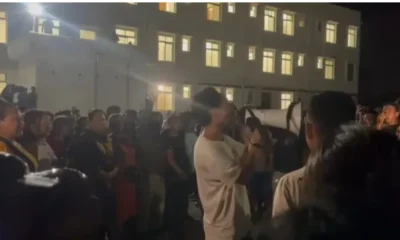
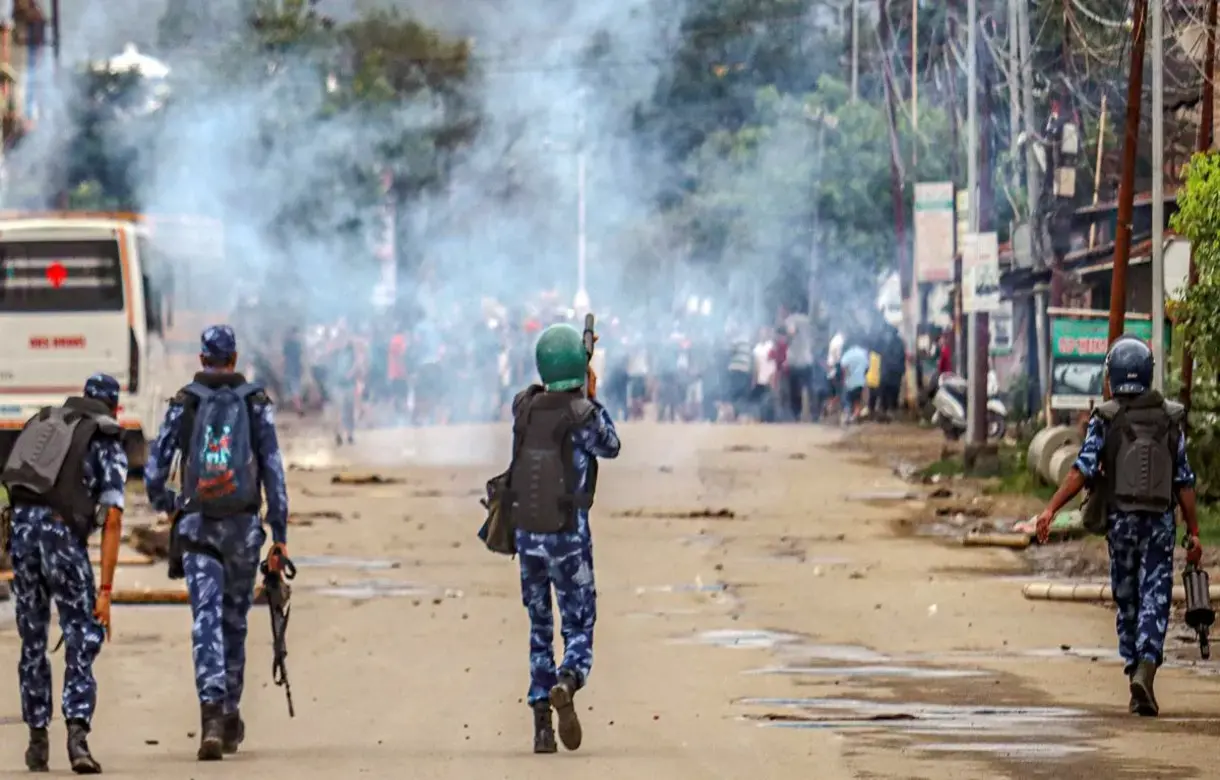
Fresh violence erupted in Manipur’s Ukhrul district on Friday, leaving at least three people dead in two separate gunfights involving members of the Tangkhul Naga and Kuki communities.

According to police, the first incident took place near Sinakeithei village in the early hours, where armed groups from both sides exchanged fire. A Tangkhul Naga man, identified as Horshokmi Jamang (29), was killed in the clash. Reports also indicated that several civilians were injured in the incident.

A second gunfight occurred nearby in Mullam village, a Kuki-inhabited area. Two men from the Kuki community — identified as Letlal Sitlhou and Paominlun Haolao — were killed in the exchange of fire.

Communities trade allegations over attacks

Civil society groups from both communities blamed each other for triggering the violence.

A Naga body alleged that village guards on patrol were ambushed by armed Kuki cadres, while Kuki groups claimed that their village was attacked by Tangkhul militants.

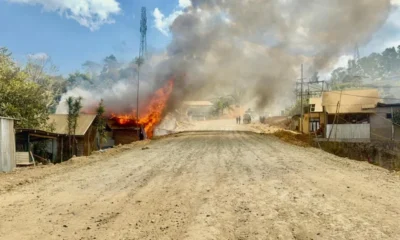
In addition, rights organisations from the Kuki side condemned the killings and reported damage to property, including houses being set on fire in affected villages.

Tensions continue to simmer in Ukhrul

Ukhrul, a district dominated by Tangkhul Nagas, has witnessed rising tensions between Naga and Kuki groups since February this year, opening another front in Manipur’s ongoing ethnic unrest.

The latest killings follow a series of recent violent incidents in the region, underlining the fragile security situation. Authorities are expected to step up security measures to prevent further escalation.

India News

Ramalinga Reddy resigns from Karnataka cabinet over portfolio allocation dispute

Karnataka minister Ramalinga Reddy has resigned from the DK Shivakumar cabinet after expressing dissatisfaction with the portfolio allocated to him, creating an early challenge for the new government.

Published

on

Senior Congress leader and Karnataka minister Ramalinga Reddy has resigned from the state cabinet, just days after taking oath in the newly formed government led by Chief Minister D.K. Shivakumar. The resignation follows his reported dissatisfaction with the portfolio allotted to him.

According to reports, Reddy was assigned the Major and Medium Irrigation department during the cabinet portfolio distribution announced on Friday. However, the veteran leader was said to be seeking the Bengaluru Development portfolio, which eventually went to Krishna Byre Gowda.

The development comes at a sensitive time for the new Karnataka government, which was sworn in earlier this week after D.K. Shivakumar took charge as Chief Minister. Portfolio allocation had reportedly been delayed amid intense lobbying for several key departments, including those linked to Bengaluru’s administration and infrastructure.

Reddy cites repeated humiliation

In his resignation, Ramalinga Reddy reportedly expressed strong disappointment with the manner in which the portfolio allocation was handled. He is said to have felt sidelined despite his seniority in the party and flagged what he described as a reversal of earlier assurances.

Reports indicated that meetings were held involving Shivakumar, Reddy and other senior leaders as efforts were made to resolve the issue. However, the discussions did not result in a breakthrough, leading to Reddy’s decision to step down from the ministry.

Early challenge for Shivakumar government

Reddy’s resignation marks one of the first major political challenges for the newly formed Congress government in Karnataka. The cabinet formation process had already drawn attention due to competition for influential portfolios and ongoing efforts to balance various factions within the party.

It remains to be seen whether the Congress leadership will attempt to persuade Reddy to reconsider his decision or move ahead with a cabinet reshuffle to address the vacancy.

Continue Reading

Latest world news

UK Foreign Secretary Yvette Cooper visits India to strengthen bilateral partnership

UK Foreign Secretary Yvette Cooper held high-level meetings in New Delhi during her first official visit to India, underscoring efforts to deepen cooperation in trade, security, technology and regional stability.

Published

on

UK Foreign Secretary Yvette Cooper visited New Delhi for her first official trip to India since assuming office, holding key meetings with Prime Minister Narendra Modi and External Affairs Minister S. Jaishankar as both countries seek to deepen cooperation across trade, security and strategic sectors.

The visit comes at a significant time in India-UK relations, with both governments working toward the implementation of their recently concluded trade agreement while also expanding collaboration in areas such as technology, climate action, supply chains and regional security.

Focus on trade and strategic cooperation

During her engagements in New Delhi, Cooper discussed ways to strengthen the comprehensive strategic partnership between the two countries. Conversations also touched on accelerating the implementation of the India-UK trade agreement and enhancing economic cooperation.

Her visit followed recent discussions between Indian Commerce Minister Piyush Goyal and UK Business and Trade Secretary Peter Kyle regarding the rollout of the bilateral trade pact.

New initiatives announced

India and the UK also announced fresh cooperation initiatives during the visit, including the launch of a Critical Minerals Global Supply Chain Observatory aimed at strengthening collaboration on critical minerals and supply-chain resilience.

Officials described the initiative as an important step in expanding cooperation in emerging strategic sectors and supporting resilient global supply chains.

Addressing global challenges

Apart from bilateral issues, discussions covered wider global concerns, including regional stability, economic disruptions arising from international conflicts and maritime security. The visit reflects the growing importance both countries attach to their strategic partnership amid evolving geopolitical challenges.

India and the UK have increasingly broadened cooperation across defence, technology, innovation, clean energy and people-to-people ties, with both sides aiming to further strengthen engagement in the coming years.

Fact-check assessment

The core angle—Yvette Cooper’s first official visit to India, meetings with PM Modi and S. Jaishankar, focus on trade, security, strategic cooperation and the launch of new bilateral initiatives—is supported by multiple current reports and appears factually sound.

Continue Reading

Latest world news

Trump says India-US trade deal likely soon, calls PM Modi a good friend

Donald Trump has expressed confidence that India and the United States will soon finalize a trade agreement, while praising Prime Minister Narendra Modi and highlighting ongoing bilateral negotiations.

Published

on

Donald Trump statement

US President Donald Trump has expressed confidence that the United States and India will reach a trade agreement in the near future, even as discussions continue amid concerns over potential new tariffs. Trump also praised Prime Minister Narendra Modi, describing him as a good friend and highlighting the strong relationship between the two leaders.

Speaking to reporters at the White House, Trump said he expects the two countries to finalize a deal and pointed to his personal rapport with Prime Minister Modi. He said the relationship between Washington and New Delhi remains strong and that ongoing negotiations are moving toward an agreement.

The remarks come shortly after a US trade delegation concluded discussions in India on an interim bilateral trade arrangement. According to Indian officials, the talks were conducted in a cooperative atmosphere, with both sides reaffirming their commitment to a mutually beneficial agreement aimed at strengthening economic ties.

During the interaction, Trump also repeated his criticism of India’s past tariff policies, arguing that India had imposed high duties on American goods for many years. He claimed recent US trade measures were intended to address what he views as an imbalance in the trading relationship.

His comments come days after the US administration proposed additional tariffs on imports from India and several other economies under a separate trade investigation related to forced-labour concerns. The proposal remains under review and has become one of the issues running alongside broader trade negotiations between the two countries.

Despite the tariff dispute, both governments have continued negotiations. Recent statements from officials on both sides suggest that substantial progress has already been made on several aspects of the proposed agreement, with discussions focused on resolving the remaining issues.

The United States is one of India’s largest trading partners, and a bilateral agreement is expected to further expand trade and investment flows between the two countries. Trump’s latest remarks are being seen as a sign that both sides remain committed to finding common ground despite ongoing trade disagreements.

Continue Reading

Trending

© Copyright 2022 APNLIVE.com