English हिन्दी
Connect with us

Latest world news

Trump sets fresh ultimatum to Iran, rules out nuclear strike as tensions escalate

Trump says “clock is ticking” for Iran but rules out nuclear weapons, maintaining pressure for a long-term deal.

Published

on

Donald Trump statement

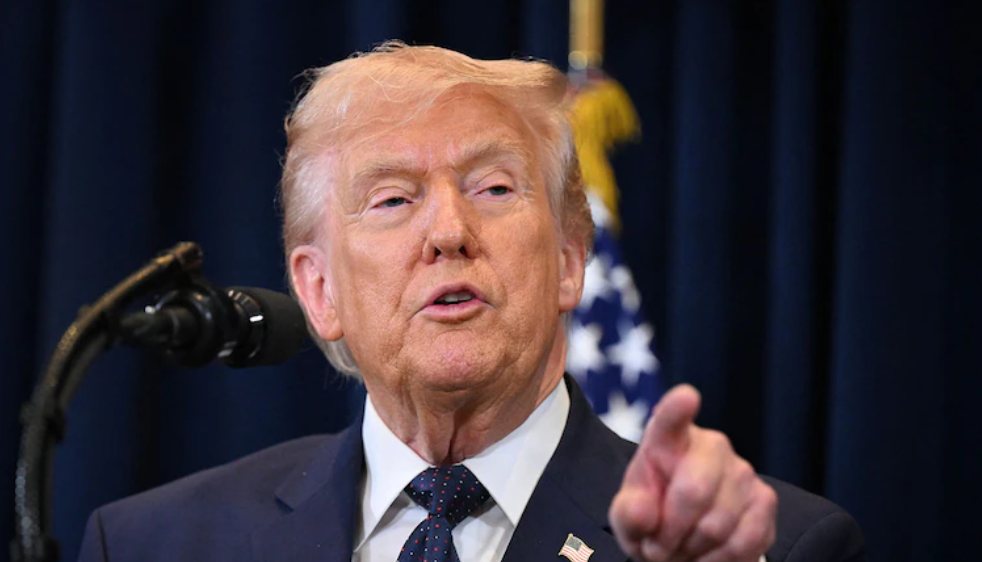
Amid rising tensions in the ongoing Iran-US conflict, Donald Trump has issued a new ultimatum to Iran, stating that time is running out for Tehran to reach a deal with Washington.

According to recent media reports, Trump reiterated that while the United States is prepared to continue military pressure, it does not intend to use nuclear weapons in the conflict. He emphasised that Iran has already been significantly weakened through conventional military action.

No urgency for deal, but pressure remains

Despite the “clock is ticking” warning, Trump indicated there is no immediate pressure on the US to finalise a deal. He suggested that any agreement would only be pursued if it aligns with American interests and ensures long-term stability rather than a quick resolution.

This stance reflects a continued hardline approach, where Washington is maintaining strategic pressure while keeping diplomatic options open.

Nuclear option ruled out

In a significant statement, Trump ruled out the use of nuclear weapons in the conflict, calling such a move unnecessary given the current military situation. He stressed that conventional forces have already inflicted major damage on Iran’s capabilities.

Conflict enters critical phase

The Iran-US conflict, which has seen military strikes, naval tensions, and diplomatic efforts, remains at a sensitive stage. While ceasefire efforts and negotiations have intermittently taken place, both sides continue to exchange warnings and prepare for potential escalation.

Recent developments, including maritime tensions and earlier threats targeting infrastructure, underline the fragile situation in the region.

Latest world news

US proposes new tariffs on India over forced labour concerns amid trade negotiations

The United States has proposed additional tariffs on imports from India and 59 other economies following a Section 301 investigation into forced labour-related trade concerns.

Published

on

Donald Trump statement

The United States has proposed imposing additional tariffs on imports from India and 59 other economies after concluding that these countries have not taken sufficient steps to prevent the importation of goods allegedly linked to forced labour. The proposal was announced by the Office of the US Trade Representative (USTR) as part of an investigation conducted under Section 301 of the US Trade Act.

According to the USTR’s findings, India could face an additional tariff of 12.5% on goods exported to the United States. The proposed measure is part of a broader plan targeting 60 economies, with tariff rates ranging between 10% and 12.5% depending on the findings related to each country.

India among countries facing higher tariff proposal

The USTR said India had not effectively enforced restrictions on imports made using forced labour, describing the issue as a burden on US commerce. The agency argued that inadequate enforcement by major trading partners creates unfair competition for American workers and businesses.

While countries including Canada, Mexico, the European Union and the United Kingdom are proposed to face a 10% tariff, India is among a larger group of economies that could be subjected to a 12.5% duty under the recommendation.

Proposal comes during India-US trade discussions

The tariff proposal has emerged while Indian and US officials are engaged in trade negotiations aimed at strengthening economic ties between the two countries. A US delegation led by Assistant USTR Brendan Lynch is currently holding discussions with Indian officials in New Delhi.

India’s Commerce Ministry has indicated that discussions with the United States on the matter are continuing and noted that the proposed tariffs have not yet been finalised. The USTR has invited public comments on the proposal until July 6, with a public hearing scheduled for July 7 before any final decision is taken.

Certain products may remain exempt

The proposed tariffs include exemptions for several categories of goods, including some energy products, pharmaceuticals, rare earth materials and selected agricultural commodities. Additional details regarding sector-specific measures, including proposed textile-related actions, are expected to be released separately.

The latest move follows a Section 301 investigation launched earlier this year into forced labour concerns across global supply chains. Any final decision on imposing the tariffs will be made after the consultation process is completed.

Continue Reading

Latest world news

Trump reportedly rebukes Netanyahu over Lebanon strikes amid ceasefire concerns

Published

on

US President Donald Trump reportedly delivered a sharp rebuke to Israeli Prime Minister Benjamin Netanyahu during a phone call over Israel’s military actions in Lebanon, as concerns grow that renewed hostilities could jeopardise fragile diplomatic efforts in the region.

According to multiple reports, Trump expressed frustration over Israeli strikes linked to ongoing tensions with Hezbollah in Lebanon. The reported exchange came at a sensitive time, with Washington attempting to prevent further escalation while also pursuing broader diplomatic discussions involving Iran.

Reports point to unusually tense exchange

Sources cited in international reports said Trump used unusually strong language during the conversation, warning that continued military actions risked damaging efforts to stabilise the situation. One report claimed Trump told Netanyahu that his actions were hurting Israel’s international standing and complicating diplomatic initiatives.

The reported disagreement followed Israeli operations against Hezbollah-linked targets in Lebanon. While Israeli officials argued that the actions were a response to security threats and ceasefire violations, the US administration has been pushing for restraint to avoid a wider regional conflict.

Lebanon fighting threatens broader diplomatic efforts

The latest tensions come amid efforts to maintain a ceasefire framework between Israel and Hezbollah. US officials have been involved in discussions aimed at reducing hostilities and preventing attacks on major Lebanese population centres, including Beirut.

Reports indicate that Trump personally intervened to discourage further escalation and support negotiations intended to preserve regional stability. Hezbollah has reportedly signalled a willingness to consider a broader ceasefire arrangement if reciprocal commitments are made.

Differing public messages after the call

Despite reports of a heated conversation, Trump later suggested publicly that discussions had been constructive and that progress had been made toward reducing tensions. Netanyahu, however, maintained that Israel would continue to respond to security threats and would not alter its overall approach toward Hezbollah if attacks persisted.

The developments highlight growing challenges facing diplomatic efforts in the Middle East, where the conflicts involving Israel, Lebanon and Iran remain closely interconnected. Analysts say any major escalation in Lebanon could further complicate ongoing negotiations and increase instability across the region.

Continue Reading

Latest world news

India, Myanmar reaffirm commitment to stronger security, trade and connectivity ties

India and Myanmar have agreed to deepen ties in security, trade and connectivity, with leaders discussing infrastructure projects, border stability and economic cooperation during talks in New Delhi.

Published

on

India Myanmar

India and Myanmar have agreed to deepen cooperation in the areas of security, trade and connectivity following high-level discussions in New Delhi during Myanmar President Min Aung Hlaing’s official visit to India.

The discussions marked an important step in strengthening ties between the neighbouring countries, which share a 1,643-kilometre border and maintain close strategic, economic and cultural links. Both sides reiterated their commitment to accelerating key connectivity projects, expanding bilateral trade and enhancing cooperation on security-related issues.

The talks were held during President Min Aung Hlaing’s five-day visit to India, his first overseas trip since assuming office earlier this year. The visit included meetings with senior Indian leaders, including Prime Minister Narendra Modi and External Affairs Minister S. Jaishankar.

Focus on connectivity and economic cooperation

India and Myanmar agreed to push forward major connectivity initiatives aimed at improving regional integration and facilitating trade. The two countries emphasized the importance of infrastructure projects that can strengthen links between India’s Northeast and Southeast Asia while boosting economic opportunities on both sides of the border.

Officials also discussed ways to expand bilateral trade and encourage greater economic engagement. Both governments expressed support for increasing cooperation across multiple sectors, including development and infrastructure.

Security and border management remain key priorities

Security cooperation featured prominently in the discussions, with both countries acknowledging the importance of maintaining peace and stability along their shared border. Border management, defence cooperation and measures aimed at ensuring regional stability were among the major topics addressed during the visit.

India has consistently viewed Myanmar as an important partner under its Act East policy, while developments in Myanmar have direct implications for security and connectivity in India’s northeastern region.

Strategic significance of the visit

Analysts view the visit as significant for both countries amid evolving regional dynamics. For India, stronger engagement with Myanmar supports connectivity goals, border security and economic interests. For Myanmar, the visit provides an opportunity to broaden diplomatic and economic engagement with a key neighbour.

The leaders also reaffirmed their commitment to maintaining close cooperation and promoting stability, development and prosperity in the region through continued dialogue and collaboration.

Continue Reading

Trending

© Copyright 2022 APNLIVE.com