English हिन्दी
Connect with us

Latest world news

The America Party: Trump vs Musk feud moves beyond tweets 

Elon Musk has launched the “American Party,” challenging the U.S. political status quo and escalating his public feud with Donald Trump. Analysts say this could shake up upcoming midterm elections.

Published

on

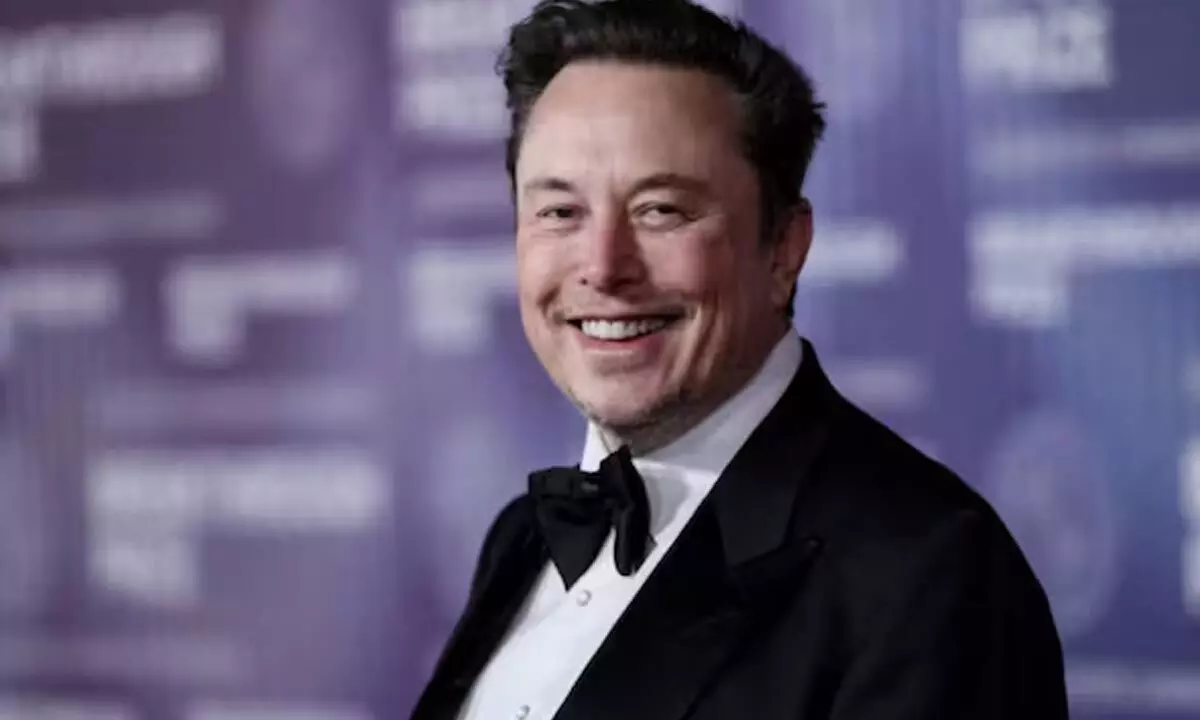
After decades shooting for the stars, Elon Musk seems to be shifting his focus from the red planet to American politics. SpaceX CEO Elon Musk has launched his political party called the “American Party” on the weekend, a move that analysts predict could impact the 2026 midterm elections.

The announcement has reignited social media feud between the CEO and US President Donald Trump. Trump announced that Musk has gone “off the rails” in a post shared on Truth Social, to which Musk responded with a three word remark “ What’s Truth Social?” on his social media platform X.

Musk said the party will provide American citizens their freedom, stating Americans need more choices than the two present parties. Musk’s launch emerges after Trump signed the “Big Beautiful Bill” a comprehensive bill with tax cuts, spending changes, and immigration enforcement, which Musk has criticised over it estimates of increasing national debt.

Political analyst Matt Shoemaker called Musk’s party a “wildcard”, suggesting the Republican Party, holding little Congressional majorities, should view the move with concern. Musk’s brand appeal with disaffected independents and younger, tech-savvy American, who consider him a superstar and his limitless resources sets him apart from previous third parties.

While a complete overtake of Congress by the “American Party” is unlikely, its potential to cause disruption is significant. Nierman , CEO of Red Banyan, said that even little vote siphoning from Republican Party in a close race can alter electoral results.

With a personal wealth estimated at $405 billion, Musk is no stranger to spending big on politics, lavishing $277 million on Trump’s 2024 campaign. Yet in a recent involvement into Wisconsin politics where he spent $20 million only for his candidate for the state Supreme Court lose showcased the limits of wealth and celebrity in politics. 

A big hurdle for Musk is to build support among voters beyond his Silicon Valley “tech bro” bubble. Musk’s popularity took a plunge after he joined Trump administration as the president’s cost cutter-in-chief. In a recent favourability rating published by Nate Silver, one of the most respected US pollsters, Musk stood at -18.1, compared to Trump’s -6.6 rating. 

Continue Reading

Latest world news

India, Myanmar reaffirm commitment to stronger security, trade and connectivity ties

India and Myanmar have agreed to deepen ties in security, trade and connectivity, with leaders discussing infrastructure projects, border stability and economic cooperation during talks in New Delhi.

Published

on

India Myanmar

India and Myanmar have agreed to deepen cooperation in the areas of security, trade and connectivity following high-level discussions in New Delhi during Myanmar President Min Aung Hlaing’s official visit to India.

The discussions marked an important step in strengthening ties between the neighbouring countries, which share a 1,643-kilometre border and maintain close strategic, economic and cultural links. Both sides reiterated their commitment to accelerating key connectivity projects, expanding bilateral trade and enhancing cooperation on security-related issues.

The talks were held during President Min Aung Hlaing’s five-day visit to India, his first overseas trip since assuming office earlier this year. The visit included meetings with senior Indian leaders, including Prime Minister Narendra Modi and External Affairs Minister S. Jaishankar.

Focus on connectivity and economic cooperation

India and Myanmar agreed to push forward major connectivity initiatives aimed at improving regional integration and facilitating trade. The two countries emphasized the importance of infrastructure projects that can strengthen links between India’s Northeast and Southeast Asia while boosting economic opportunities on both sides of the border.

Officials also discussed ways to expand bilateral trade and encourage greater economic engagement. Both governments expressed support for increasing cooperation across multiple sectors, including development and infrastructure.

Security and border management remain key priorities

Security cooperation featured prominently in the discussions, with both countries acknowledging the importance of maintaining peace and stability along their shared border. Border management, defence cooperation and measures aimed at ensuring regional stability were among the major topics addressed during the visit.

India has consistently viewed Myanmar as an important partner under its Act East policy, while developments in Myanmar have direct implications for security and connectivity in India’s northeastern region.

Strategic significance of the visit

Analysts view the visit as significant for both countries amid evolving regional dynamics. For India, stronger engagement with Myanmar supports connectivity goals, border security and economic interests. For Myanmar, the visit provides an opportunity to broaden diplomatic and economic engagement with a key neighbour.

The leaders also reaffirmed their commitment to maintaining close cooperation and promoting stability, development and prosperity in the region through continued dialogue and collaboration.

Continue Reading

Latest world news

US strikes Iranian drone control and radar sites following drone shootdown

Washington launched targeted military strikes on radar and drone command centers in Iran’s Goruk and Qeshm Island following the downing of an American surveillance drone over international waters.

Published

on

Donald Trump statement

The US military announced it executed targeted “self-defense strikes” against Iranian radar and drone command facilities over the weekend, responding directly to aggressive actions by Tehran.

According to an official statement released on social media platform X by the US Central Command (CENTCOM), the targeted military operations focused on critical infrastructure located in Goruk and Qeshm Island inside Iran.

Response to MQ-1 drone downing

The American military intervention came after Iranian forces shot down a US MQ-1 drone, which Washington maintains was operating over international waters. Media reports indicate that the US deployment of fighter aircraft successfully eliminated Iranian air defenses, a ground control station, and two one-way attack drones involved in the hostile activity. CENTCOM confirmed that no American military personnel sustained injuries during the operation.

The weekend strikes mark another escalation in a series of direct confrontations between the two nations. Just last week, both sides engaged in retaliatory actions after an official from Washington disclosed that the US military hit an active Iranian drone operation operating near the strategic Strait of Hormuz. In retaliation, Tehran targeted an American military airbase.

Broader regional tensions and transit controls

The recent security friction comes amid complex developments in the region. Concurrently, Iranian state media reported that the maritime division of its forces coordinated the passage of 28 commercial vessels, including oil tankers and container ships, through the Strait of Hormuz over a 24-hour window. Iranian authorities claimed that recent instability in the Persian Gulf stems entirely from external military aggression.

The military flare-up also coincides with ongoing and highly fragile diplomatic negotiations over a ceasefire extension and discussions regarding Iran’s nuclear infrastructure, with negotiators trading warnings regarding bilateral trust and strategic rights.

Continue Reading

Latest world news

India a critical anchor to maintain balance of power in regional security, says top US official

Speaking at the Shangri-La Dialogue, top US official Pete Hegseth praised India as a critical anchor holding the line in South Asia, noting its heavy industrial capacity to sustain high-end military operations.

Published

on

In a major statement highlighting the growing strategic alignment between Washington and New Delhi, top US official Pete Hegseth described India as a critical pillar of regional stability. Speaking on the second day of the Shangri-La Dialogue in Singapore, Hegseth noted that New Delhi’s ongoing military modernisation directly serves the shared objective of preserving a balance of power across the Indo-Pacific.

“In South Asia, India is a critical anchor to hold the line,” the top official said while addressing delegates from 44 nations. “A powerful India acting in its own self-interest advances our shared goal of maintaining a balance of power across the region.”

Growing logistics and maritime capabilities

The US administration heavily praised New Delhi’s defence industrial advancements, particularly highlighting its expanding operations in the Indian Ocean region. According to media reports, the official observed that India is modernising its armed forces to carry its share of the security burden in these crucial maritime corridors.

Furthermore, the official emphasized that New Delhi is successfully building out a heavy industrial and logistics capacity capable of sustaining high-end military operations. This expanding domestic infrastructure includes the ability to repair and maintain shared defence platforms, as well as supporting allied naval vessels operating forward in the regional theatre.

Strategic co-production and regional readiness

The partnership between the two nations is translating into tangible operational steps. The official revealed that Washington has firmly committed to pursuing joint production initiatives with New Delhi. Among these initiatives is the co-production of advanced capabilities, including Javelin anti-tank guided munitions, aimed at improving the collective readiness of their forces.

“This kind of industrial muscle isn’t just a long-term goal, it’s an immediate operational imperative,” the official stated, linking New Delhi’s defence manufacturing strength to a broader collective strategy.

Global defense spending and alliance priorities

The address also outlined Washington’s massive domestic military manufacturing mobilisation under President Donald Trump. Following a defence expenditure of USD 1 trillion last year, plans are underway for a historic generational investment of USD 1.5 trillion this year to expand military dominance and weaponry production at scale and speed.

While noting that relations between Washington and Beijing are currently better than they have been in many years, the official maintained that no state can be allowed to impose hegemony or compromise regional security.

Calling upon global partners to match this resolve, the administration indicated it expects allies to hit a defence spending target of 3.5 per cent of their GDP. Moving forward, Washington intends to prioritize and fast-track cooperation with “model allies”—defined as nations that are capable, clear-eyed, and ready to stand up for their national interests.

Continue Reading

Trending

© Copyright 2022 APNLIVE.com