English हिन्दी
Connect with us

India News

Renaming MGNREGA removes core spirit of rural employment law, says Shashi Tharoor

Published

on

Shashi Tharoor

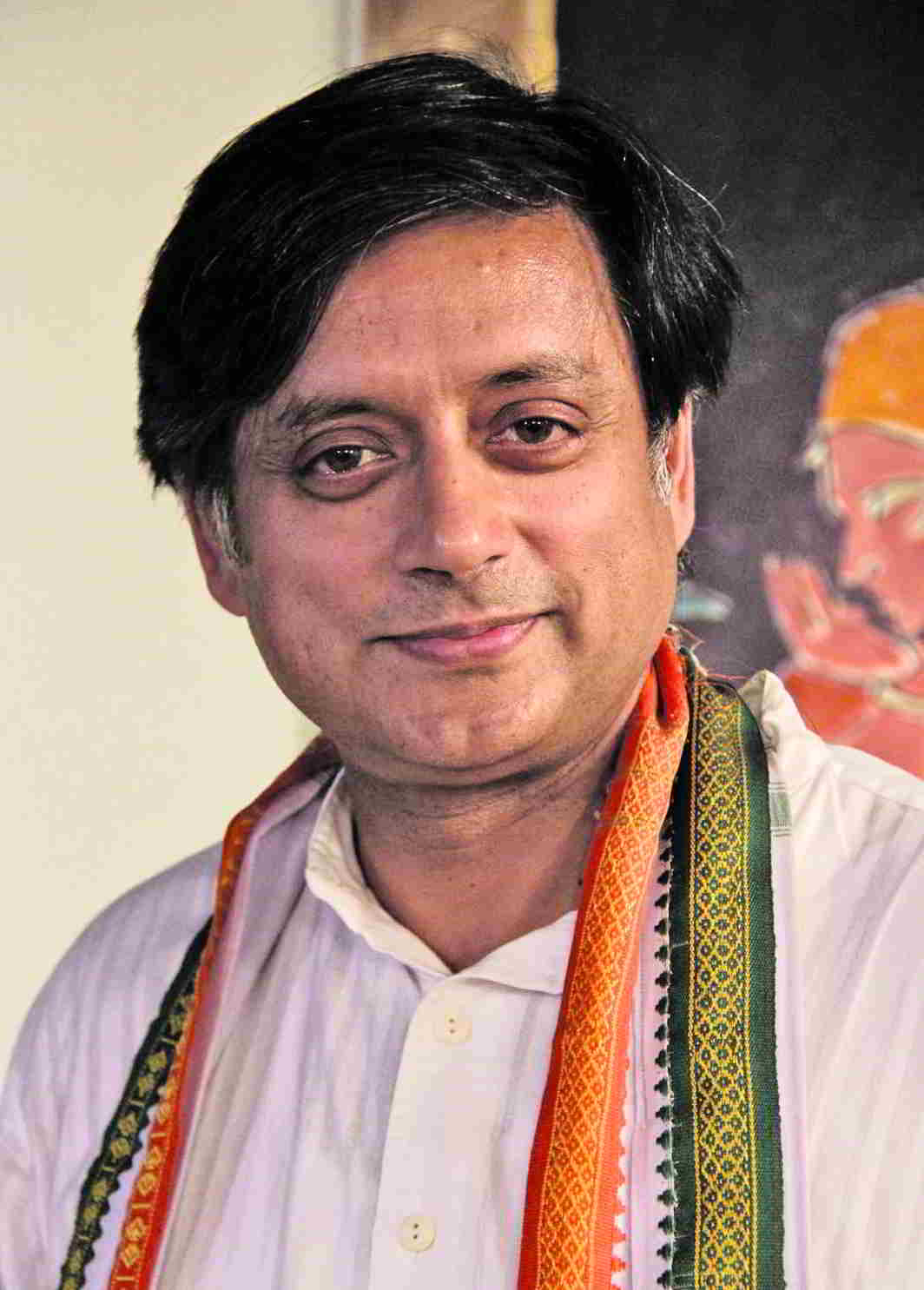
Congress MP Shashi Tharoor has strongly criticised the renaming of the Mahatma Gandhi National Rural Employment Guarantee Act (MGNREGA), saying the move strips the rural employment programme of its core essence. His remarks came after Parliament cleared the Viksit Bharat Guarantee for Rozgar and Ajeevika Mission (Gramin) Bill, also referred to as the VB-G RAM G Bill.

Speaking to media, Tharoor said the decision to remove Mahatma Gandhi’s name from the scheme “takes out the heart” of the rural employment programme that has been in place for years. He noted that the identity and philosophy associated with Mahatma Gandhi were central to the original law.

Tharoor also objected to the way the new name was framed, arguing that it unnecessarily combined multiple languages. He pointed out that the Constitution envisages the use of one language in legislation, while the Bill’s title mixes English and Hindi terms such as “Guarantee”, “Rozgar” and “Ajeevika”, along with the conjunction “and”.

‘Disrespect to both names’

The Congress leader said that inserting the word “Ram” while dropping Mahatma Gandhi’s name amounted to disrespecting both. Referring to Mahatma Gandhi’s ideas, Tharoor said that for Gandhi, the concepts of Gram Swaraj and Ram Rajya were inseparable, and removing his name from a rural employment law went against that vision.

He added that the name of Lord Ram could be used in many contexts, but questioned the rationale behind excluding Mahatma Gandhi from a programme closely linked to his philosophy of village self-rule.

Protests over passage of the Bill

The VB-G RAM G Bill was passed by the Lok Sabha on December 18 and cleared by the Rajya Sabha in the early hours of December 19 amid protests from Opposition members. Several MPs opposed the manner in which the legislation was pushed through, with scenes of sloganeering and tearing of papers in the House.

Outside Parliament, members of the Trinamool Congress staged a sit-in protest near Samvidhan Sadan against the passage of the Bill. Congress also announced nationwide protests earlier this week, accusing the government of weakening rights-based welfare schemes.

Despite opposition criticism, the government has maintained that the new law will strengthen rural employment and livelihood security. The Bill raises the guaranteed employment from 100 days to 125 days per rural household and outlines a 60:40 cost-sharing formula between the Centre and states, with a higher central share for northeastern, Himalayan states and certain Union Territories.

India News

MK Stalin announces major DMK organisational Changes in Tamil Nadu

MK Stalin has announced a major DMK organisational overhaul, introducing age and term limits and expanding party districts from 77 to 110.

Published

on

DMK chief MK Stalin has announced a major overhaul of the party’s organisational structure, months after the party lost the Tamil Nadu assembly election.

Acknowledging the defeat, Stalin said the party must openly recognise its mistakes. He also pointed to the functioning of party office-bearers as one of the factors behind the electoral loss.

“Although there are several reasons for our defeat, the functioning of our party office-bearers is also one of them,” Stalin said, stressing that the party must acknowledge its shortcomings and ensure better performance at every level.

Stalin also described the DMK as a “specialist” in making comebacks and said the party would return stronger.

Age and term limits for party posts

Among the major changes announced by Stalin are age and tenure limits for party positions.

Stalin said the changes would involve a significant restructuring of the DMK’s administrative system, with priority being given to new faces. He said the measures were intended to make the party sustainable for the next 100 years and help restore the trust of young people and women.

Under the new rules, branch secretaries must be aged 45 or below and can hold the position for a maximum of two terms.

District secretaries, meanwhile, must be below 70 years of age and can serve for a maximum of three terms.

DMK to increase party districts from 77 to 110

The DMK executive committee has approved increasing the number of party districts from 77 to 110.

The expansion will be implemented as part of the party’s 16th organisational elections. Revenue districts will generally be reorganised so that each party district covers two assembly constituencies.

Where only one constituency remains after the reorganisation, it will be attached to another suitable party district within the same revenue district as a third constituency.

Stalin has been authorised to determine and announce the constituencies that will form the 110 party districts.

New branch structure planned in urban areas

The DMK will also introduce a new branch-level structure in urban areas, along with the post of branch secretary.

The new system will initially be implemented in Chennai, Coimbatore, Madurai, Tiruchirappalli and Salem. It may subsequently be extended to other corporations.

Once the new party districts are announced, district executive committees will have to meet and establish the union, city, area, town, ward and branch-level units within 15 days.

The organisational changes come as the DMK seeks to restructure its party machinery and prepare for its political comeback following its assembly election defeat.

Continue Reading

India News

PM Modi says India’s political stability makes India a bright spot for growth

PM Modi said India’s political stability and policy continuity are helping make the country a bright spot of growth amid global concerns.

Published

on

Narendra Modi 12345

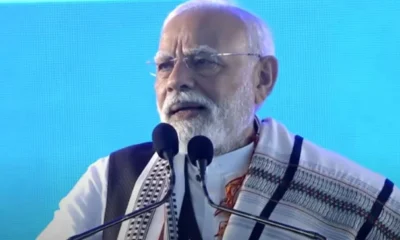
Prime Minister Narendra Modi on Friday said India has political stability and continuity in its policies, describing the country as a bright spot of growth and hope amid global concerns over economic growth.

Addressing the Economic Times World Leaders Forum, PM Modi said India is continuing to push reforms across sectors to maintain its growth momentum. He said reforms remain a key commitment of his government.

The Prime Minister said the NDA government has a clear roadmap for reforms, with a strong focus on governance. He also said the government is using incentives to encourage higher production.

PM Modi highlights shift in regulatory approach

PM Modi said his government is changing the country’s regulatory framework and moving away from what he described as a “prohibited-unless-permitted” approach.

He said the government believes there should be no regulation for an activity that has not been explicitly prohibited under law. According to him, the aim is to bring next-generation reforms at the policy and governance levels while improving ease of living.

He also contrasted the current Production Linked Incentive (PLI) model with what he described as a “Production Linked Punishment” approach followed by previous governments.

Focus on infrastructure and manufacturing

PM Modi cited changes in areas including the Indian Railways, Delhi Metro and Namo Rapid Rail as examples of reforms reflecting India’s changing needs.

He also said the government has changed the approach towards border infrastructure, which he described as a strength rather than a weakness.

The Prime Minister further highlighted India’s affordable data services and domestic mobile-phone manufacturing while discussing the country’s economic transformation.

India seen as a growth bright spot

PM Modi said the world is facing several concerns related to growth, including the weaponisation of resources, but India is being viewed as a bright spot of growth.

He said India’s political stability, policy continuity and reform efforts are helping sustain the country’s growth momentum.

Continue Reading

India News

Jharkhand students, JMM workers clash over Hemant Soren effigy burning

Clashes broke out in Ranchi, Hazaribag and Giridih as protesting students attempted to burn effigies of Hemant Soren and Rahul Gandhi.

Published

on

Clashes broke out between protesting students and police in Ranchi and several other parts of Jharkhand on Friday evening as students attempted to burn effigies of Chief Minister Hemant Soren and Congress leader Rahul Gandhi, officials said.

Similar incidents were reported in Hazaribag and Giridih, where workers of the ruling Jharkhand Mukti Morcha (JMM) clashed with students who were trying to burn effigies of Soren.

The protesting students are affiliated with the JPSC-JSSC Reforms Manch. They have accused the Jharkhand government of deceiving and betraying job aspirants following the High Court’s intervention in cases concerning recruitment examinations and appointments.

In Ranchi, a large number of students gathered at Albert Chowk to burn the effigies. Police said a scuffle broke out when they tried to control the situation.

Ranchi DSP KV Raman said the protesters changed the designated route of their march and went towards the JPSC office, where traffic was brought to a halt.

According to Raman, police repeatedly asked the protesters to follow the designated route for the march and effigy burning, but the students did not comply.

Student leaders, however, alleged that police and JMM workers attempted to prevent them from holding a peaceful march.

“They cannot stop us from holding peaceful and democratic protests,” JPSC-JSSC Reforms Manch leader Ravindra Paswan said.

Another student leader, Piyush Kumar Singh, alleged that a core committee member of the Manch, Kunal, was detained by police. He claimed that Kunal fainted and was subsequently taken to Sadar Hospital.

The protesters also alleged that female participants were assaulted by JMM workers during the scuffle.

Why are Jharkhand students protesting?

The students had earlier called off their agitation after the Hemant Soren government decided to cancel JPSC examinations where irregularities had been alleged.

However, the Jharkhand High Court subsequently intervened in several matters related to the recruitment process.

On Friday, the court stayed notifications cancelling the appointments of Child Development Project Officers (CDPOs) and those recruited through the JSSC-CGL examination.

A day earlier, the court had stayed notifications cancelling the 11th and 13th JPSC examinations. It had also stayed the order cancelling the appointments of food safety officers.

The developments have renewed the students’ concerns over the government’s handling of recruitment-related cases.

JLKM announces recruitment reforms yatra

Meanwhile, JLKM leader Devendra Nath Mahto announced that his party would launch a ‘Recruitment System Reforms Yatra’ from August 24.

Mahto alleged that the Jharkhand government was not strongly defending cases concerning the cancellation of several recruitment examinations before the High Court.

He warned that if the government failed to effectively present its case before the Jharkhand High Court on September 15, when the matters are scheduled for hearing, they would plan to gherao the Chief Minister’s residence.

Continue Reading

Trending

© Copyright 2022 APNLIVE.com