English हिन्दी
Connect with us

India News

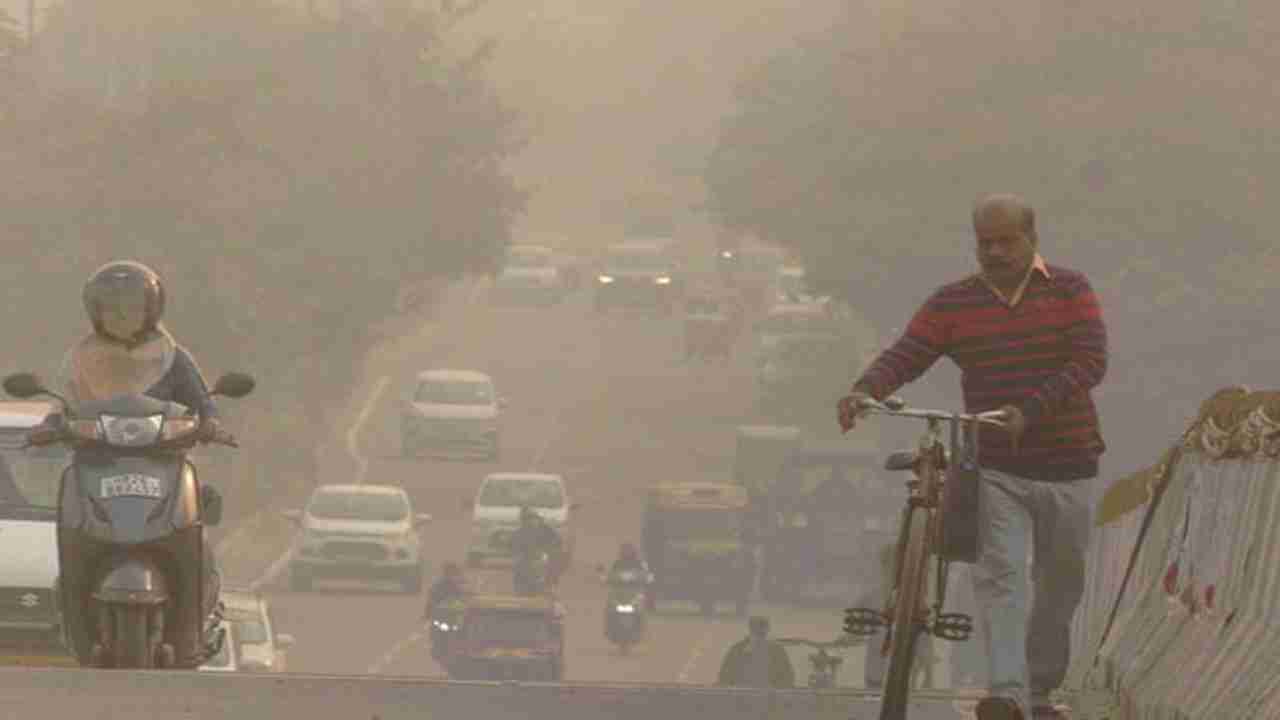
Delhi air quality plunges to severe as thick smog blankets the capital

Delhi’s air quality deteriorated sharply with AQI entering the ‘severe’ zone across several areas, prompting enforcement of GRAP stage-IV measures.

Published

on

Delhi's air quality

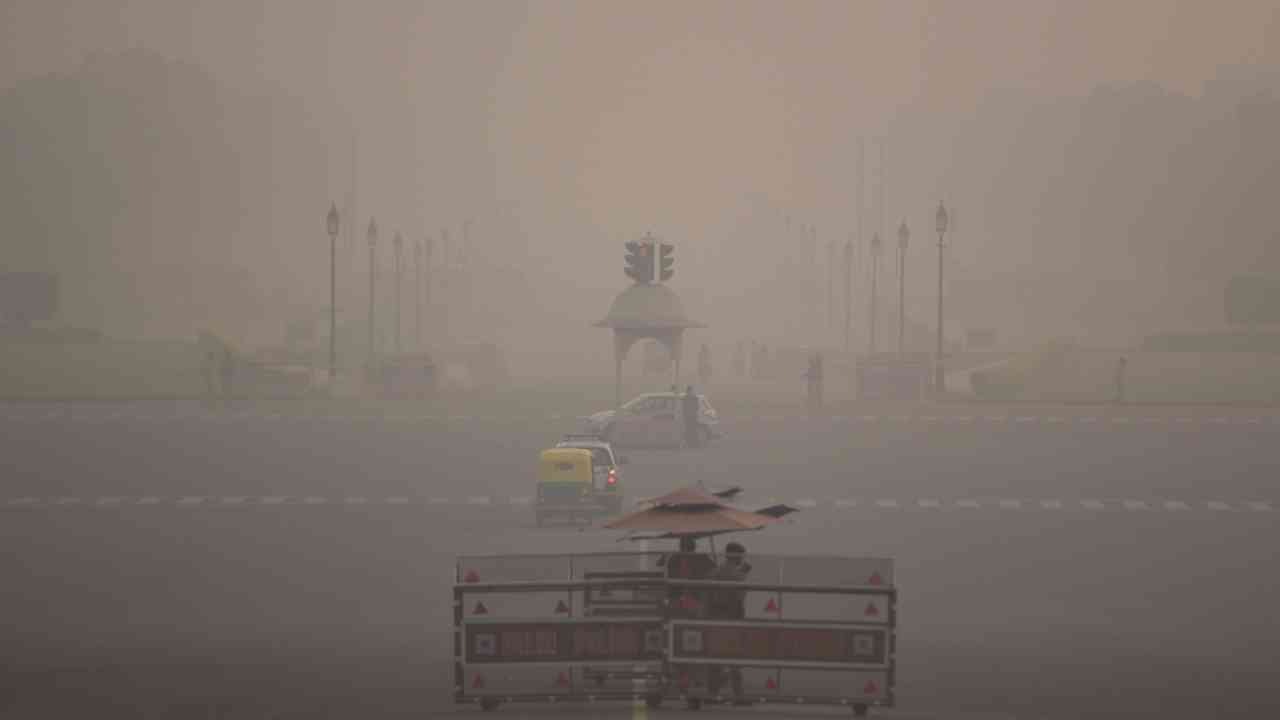
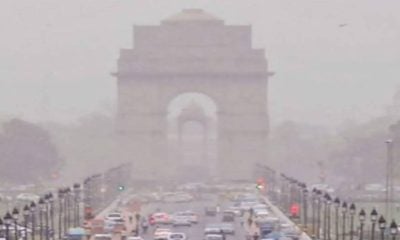
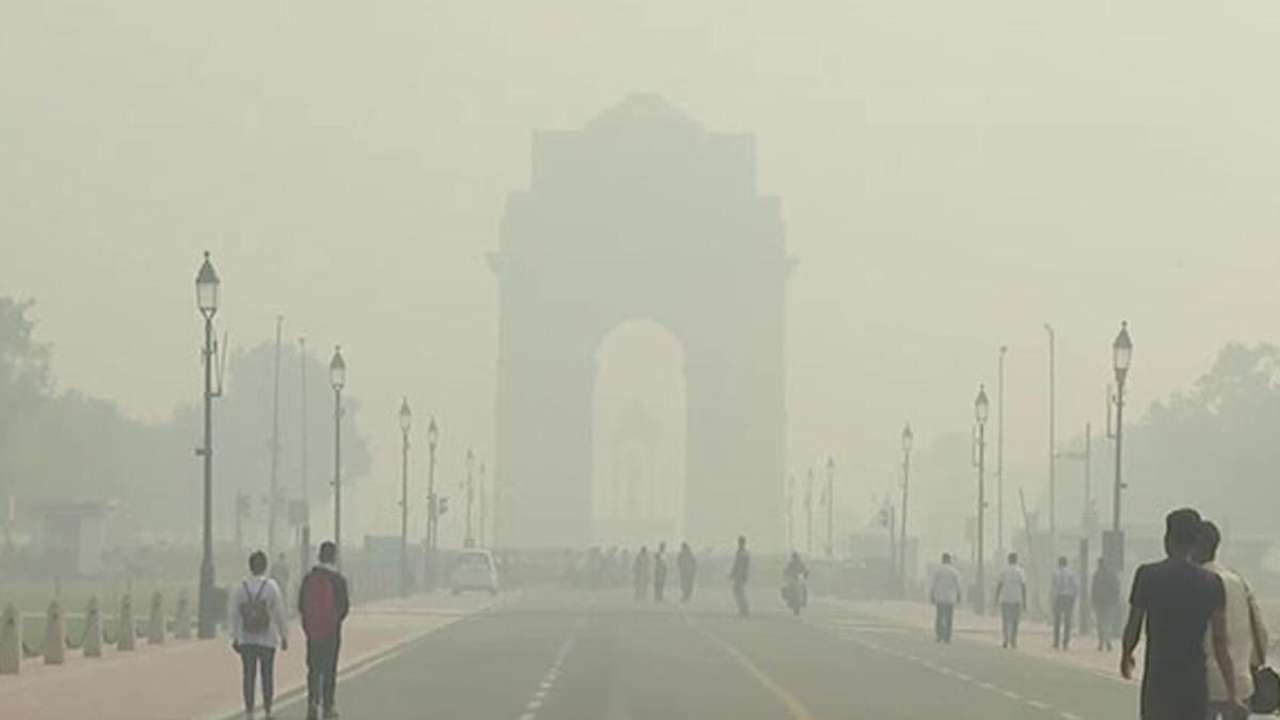
Delhi woke up to hazardous air conditions on Tuesday as dense smog covered large parts of the national capital, pushing the Air Quality Index (AQI) into the ‘severe’ category across several locations. Poor visibility and rising health concerns marked yet another spell of extreme pollution in the city.

Data from the Central Pollution Control Board (CPCB) showed the overall AQI in Delhi touching 413 in the morning, placing it firmly in the ‘severe’ bracket. Several areas across the National Capital Region (NCR) reported alarming pollution levels, indicating a widespread deterioration in air quality.

Pollution hotspots report hazardous readings

Some of Delhi’s major pollution hotspots recorded extremely high AQI levels. Anand Vihar topped the list with an AQI of 466, followed by Ashok Vihar at 444 and Chandni Chowk at 425. These areas remained in the ‘severe’ category, posing serious health risks, especially for children, the elderly and those with respiratory conditions.

Even central parts of the city were not spared. India Gate, Kartavya Path and the Rashtrapati Bhavan area were shrouded in toxic smog, with AQI levels around 384, categorised as ‘very poor’.

GRAP stage-IV measures enforced across Delhi-NCR

In response to the worsening situation, the Commission for Air Quality Management (CAQM) enforced all actions under GRAP Stage-IV across Delhi-NCR. As part of these emergency measures, truck-mounted water sprinklers were deployed to suppress dust and reduce particulate matter in the air.

As per AQI standards, readings between 401 and 500 fall under the ‘severe’ category, while levels above 300 are considered ‘very poor’, highlighting the seriousness of the current conditions.

Delhi government reviews pollution control steps

The Delhi government has reiterated its commitment to tackling rising pollution levels with strict enforcement measures. Chief Minister Rekha Gupta stated that a zero-tolerance policy will be followed against all sources contributing to air pollution in the capital.

A high-level review meeting was held at the Delhi Secretariat to assess existing measures and take further decisions. The meeting focused on enforcing Pollution Under Control (PUC) norms without any relaxation, exploring pooled and shared electric bus services across Delhi-NCR, issuing fresh guidelines for e-rickshaws, and rationalising Delhi Transport Corporation (DTC) bus routes.

Senior officials from the Environment and Transport Departments, the Delhi Pollution Control Committee (DPCC), Public Works Department (PWD) and Delhi Traffic Police, along with Environment Minister Manjinder Singh Sirsa, attended the meeting to finalise immediate and long-term steps to address the pollution crisis.

India News

PM Modi says India managed Hormuz crisis with minimal impact on citizens through energy diversification

Prime Minister Narendra Modi said India successfully navigated the Hormuz crisis by expanding energy imports, reducing the burden of rising fuel prices on citizens and strengthening the country’s refining capacity while inaugurating Rajasthan’s first integrated refinery.

Published

on

PM Modi

Prime Minister Narendra Modi on Saturday said India successfully managed one of the world’s most challenging energy crises by expanding its energy sourcing, strengthening diplomatic partnerships and shielding citizens from the impact of rising global fuel prices.

Addressing a public gathering after inaugurating the country’s first greenfield integrated refinery-cum-petrochemical complex in Pachpadra, Rajasthan’s Balotra district, the Prime Minister said India adopted proactive measures during the recent Middle East crisis that helped maintain energy security despite global uncertainties.

According to PM Modi, India significantly diversified its energy imports as tensions disrupted global fuel markets.

“When the crisis began, India was importing energy from around 25 to 26 countries. During the crisis, we expanded imports to more than 40 countries,” he said, crediting India’s diplomatic outreach for ensuring uninterrupted supplies.

The Prime Minister also highlighted the financial measures taken by the government to cushion consumers from soaring international crude oil prices. He said public sector oil companies absorbed losses exceeding Rs. 75,000 crore between April and June while the Centre reduced excise duty on petrol and diesel by Rs. 10 per litre to prevent a steep rise in fuel prices for consumers.

PM Modi added that despite attempts by some groups to spread rumours and create panic during the crisis, the government’s efforts ensured stability.

He said those who expected India to struggle during the crisis had been proven wrong as the country successfully overcame the challenge.

India strengthening refining capacity

Speaking about India’s energy infrastructure, the Prime Minister said the country has become the world’s fourth-largest refining hub and continues to expand its refining capabilities to meet future energy demand.

He also said the government’s long-term planning helped India deal with disruptions in fuel and fertiliser supplies triggered by the conflict involving Iran and the US-Israel alliance.

Pachpadra refinery inaugurated in Rajasthan

During the visit, PM Modi inaugurated India’s first greenfield integrated refinery-cum-petrochemical complex at Pachpadra, marking Rajasthan’s first refinery project. He launched the facility by remotely activating the project after inspecting the refinery complex.

The Prime Minister also laid the foundation stone for several development projects in the state.

Highlighting the government’s approach towards infrastructure development, PM Modi said the BJP governments focus not only on announcing projects but also on ensuring their timely completion.

He also remarked that work on the Pachpadra refinery had remained largely stalled during the Congress government’s tenure in Rajasthan between 2018 and 2023 before gaining momentum again.

Continue Reading

Entertainment

Aamir Khan set to wed Gauri Spratt on July 5

Actor Aamir Khan is reportedly preparing to marry longtime partner Gauri Spratt in a private ceremony on July 5. While the couple has not officially confirmed the wedding, reports suggest the celebration will be a low-key affair attended by close family and friends.

Published

on

Actor Aamir Khan is readying to finally marry his longtime partner, Gauri Spratt, in a private ceremony on July 5. Unlike other high-profile Bollywood weddings, the couple is expected to celebrate the occasion with close family members and a handful of friends, choosing a simple gathering over a lavish event. 

The reported wedding has attracted widespread attention from fans and the film industry, with many taking to social media to congratulate the couple. While neither Aamir nor Gauri has shared extensive details about the ceremony, reports suggest the celebrations will remain intimate and focused on family.

The actor was first married to Reena Dutta, and they have two children together. In 2005, Aamir married filmmaker Kiran Rao. The couple announced their separation in 2021 but have continued to maintain a friendly relationship and jointly raise their son while working together on select projects.

Gauri Spratt has largely stayed away from the limelight. Despite growing public interest in their relationship, she has preferred to keep her personal life private. Reports indicate that Gauri and Aamir have known each other for several years before deciding to take the next step in their relationship.

Known for balancing a successful film career with a private personal life, Aamir Khan has often avoided discussing family matters in public. His reported decision to opt for a low-key wedding is in line with his long-standing preference for privacy. 

As news of the upcoming ceremony continues  to make headlines, fans are eagerly waiting for an official glimpse of the celebrations. Whether through a family photograph or a public statement, many hope to see the couple share the joyful occasion with their well-wishers.

With this wedding, Aamir Khan appears ready to embrace a new phase in his life while continuing to focus on both his personal happiness and his significant contribution to Indian cinema.  

Continue Reading

India News

Vaibhav Sooryavanshi becomes India’s youngest international debutant, surpasses Sachin Tendulkar

Teenage batting sensation Vaibhav Sooryavanshi has become India’s youngest-ever international cricketer after making his debut in the second T20I against England at the age of 15 years and 99 days. The milestone sees him surpass Sachin Tendulkar and Shafali Verma in the Indian record books.

Published

on

Vaibhav suryavanshi123

Indian cricket witnessed the beginning of a new era as teenage batting sensation Vaibhav Sooryavanshi made his senior international debut, becoming the youngest player ever to represent India in men’s or women’s cricket.

The left-handed batter received his maiden India cap ahead of the second T20I against England in Manchester. At 15 years and 99 days, Sooryavanshi broke a long-standing national record previously held by cricket legend Sachin Tendulkar, who made his international debut at the age of 16 years and 205 days in 1989.

The milestone also saw Sooryavanshi overtake Shafali Verma, who had been India’s youngest international debutant overall after making her debut at 15 years and 239 days.

Historic moment for Indian cricket

The young opener’s debut had been eagerly anticipated ever since he was included in India’s squads for the Ireland and England T20I series.

Although he did not feature in the matches against Ireland, India initially continued with the experienced opening pair of Sanju Samson and Abhishek Sharma for the opening T20I against England. Following Samson’s struggles with the bat, discussions around Sooryavanshi’s inclusion intensified.

The Indian team management eventually decided to hand the youngster his opportunity, with captain Shreyas Iyer and head coach Gautam Gambhir backing the teenager for his first international appearance. The debut cap was presented to him by Tilak Verma before the Manchester encounter.

Youngest men’s debutants for India

Following his debut, Sooryavanshi now tops the list of India’s youngest men’s international debutants.

  • Vaibhav Sooryavanshi – 15 years, 99 days (vs England, July 4, 2026)
  • Sachin Tendulkar – 16 years, 205 days (vs Pakistan, November 15, 1989)
  • Piyush Chawla – 17 years, 75 days
  • Laxman Sivaramakrishnan – 17 years, 118 days
  • Parthiv Patel – 17 years, 152 days
  • Maninder Singh – 17 years, 193 days

While Sooryavanshi now holds the record for India’s youngest international debutant, Pakistan’s Hasan Raza remains the youngest men’s Test debutant globally at 14 years and 227 days. Romania’s Marian Gherasim continues to hold the record as the youngest international cricketer overall, having debuted in T20Is at 14 years and 16 days.

Shreyas Iyer backs the young opener

Speaking before the match, captain Shreyas Iyer expressed confidence in the youngster’s temperament and ability to perform at the highest level.

Iyer said Sooryavanshi had consistently impressed during training, adding that the teenager deserved his opportunity after displaying fearless batting and showing no signs of pressure despite his age.

IPL heroics paved the way

Sooryavanshi’s selection followed a remarkable IPL 2026 campaign for the Rajasthan Royals, where he emerged as the tournament’s highest run-scorer.

He accumulated 776 runs at a strike rate of 237.30, registering one century and five half-centuries while smashing 72 sixes. His performances earned him multiple individual honours, including the Orange Cap, Most Valuable Player, Emerging Player, Super Striker, and Super Sixes awards.

Strong performances across formats

The teenager has also impressed in domestic and age-group cricket.

During the recent tri-series involving Sri Lanka A and Afghanistan A, he scored 211 runs in five innings, including a match-winning 94 in the final. He also recorded the fastest fifty in List A cricket by reaching the milestone in just 11 balls against Sri Lanka A.

His record in youth cricket has been equally impressive. Sooryavanshi finished as the leading run-scorer at the Under-19 World Cup with 439 runs in seven matches, helping India lift the title. He also set a tournament record by hitting 30 sixes.

Across youth ODIs, he has accumulated 1,412 runs at an average of 56.48, while his T20 numbers include 1,477 runs from 34 innings at a strike rate above 220.

In the IPL, the youngster has already crossed the 1,000-run mark in just 23 innings, underlining the promise that has made him one of India’s brightest emerging talents.

With his record-breaking debut now complete, Indian cricket fans will be hoping that Vaibhav Sooryavanshi’s international journey lives up to the enormous expectations surrounding one of the country’s most exciting young prospects.

Continue Reading

Trending

© Copyright 2022 APNLIVE.com