English हिन्दी
Connect with us

Latest world news

Trump signs 10% global tariffs after US Supreme Court setback

Donald Trump has signed a new 10% global tariff order after the US Supreme Court struck down much of his earlier sweeping import duties

Published

on

donald-trump

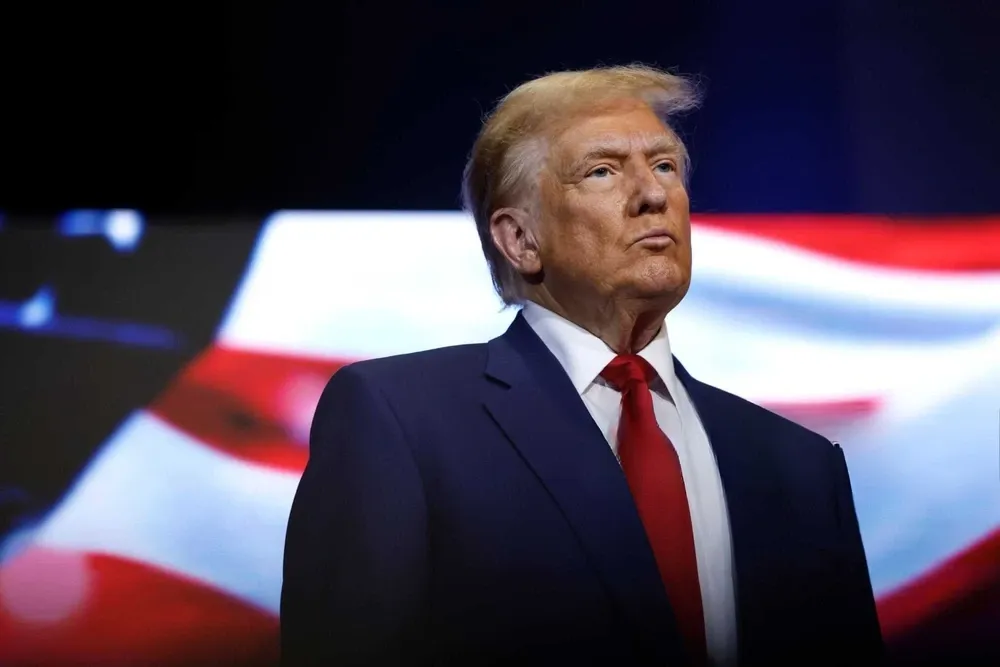
US President Donald Trump has signed a fresh executive order imposing a 10 per cent tariff on imports from countries around the world, just hours after the Supreme Court of the United States struck down much of his earlier sweeping import duties.

The new tariffs, which Trump said will take effect “almost immediately”, are being introduced under a law that limits such measures to 150 days. Describing the move as the beginning of an “adjustment process”, the President signalled that his administration would explore alternative routes to maintain revenue from import duties.

Trump criticises top court ruling

The Supreme Court’s 6-3 decision dealt a significant blow to a key part of Trump’s economic strategy. The ruling invalidated large portions of the administration’s previous tariff framework, prompting a sharp response from the President.

In posts on Truth Social, Trump said certain members of the court “should be ashamed of themselves” and termed the judgment “deeply disappointing”. He argued that the tariff mechanism used by his administration had been “acceptable and proper” and insisted that the new order was legally sound.

Trump also claimed that his use of tariffs over the past year had contributed to economic gains, citing milestones in the stock market. He said the Dow had crossed 50,000 and the S&P had reached 7,000, levels he argued were achieved sooner than expected following his election victory.

Tariffs central to Trump’s policy push

Tariffs have remained a central pillar of Trump’s economic and trade agenda. In April, he had announced “reciprocal” taxes of up to 50 per cent on imports from countries with which the United States runs trade deficits, along with a 10 per cent baseline tariff on most other nations.

He invoked a 1977 law to declare the trade deficit a national emergency, justifying broad import taxes. However, after global backlash, the administration paused the higher reciprocal tariffs for 90 days to allow for negotiations.

According to Trump, several countries agreed to revised trade terms during that period, while others faced steeper duties. He also reiterated claims that tariffs strengthened national security and helped curb fentanyl inflows by 30 per cent when used as penalties against certain countries.

“All of those tariffs remain,” Trump said, adding that other measures would now replace those struck down by the court.

The latest order underscores escalating tensions between the White House and the judiciary, as the administration seeks to preserve a cornerstone of its trade policy while navigating legal constraints.

Latest world news

Trump rejected JD Vance’s proposal for Indian peacekeepers in Ukraine, says new book

A newly published book claims Donald Trump rejected JD Vance’s proposal to include Indian troops in a potential Ukraine peacekeeping mission.

Published

on

trump

US President Donald Trump reportedly dismissed a proposal by Vice President JD Vance to involve Indian troops in a potential peacekeeping mission in Ukraine, according to a newly released book detailing internal White House discussions on the Russia-Ukraine conflict.

The revelation appears in “Regime Change: Inside the Imperial Presidency of Donald Trump”, authored by journalists Maggie Haberman and Jonathan Swan. The book claims that the discussion took place during an Oval Office meeting held shortly after Trump’s return to the White House, when senior officials were considering options to end the war in Ukraine.

Vance suggested India and Saudi Arabia

According to the book, retired Lieutenant General Keith Kellogg, Trump’s special envoy for Ukraine and Russia, presented a peace proposal that included deploying foreign troops to monitor a possible ceasefire between Russia and Ukraine. Initial plans reportedly considered personnel from European countries, including France, Britain and the Netherlands.

However, Vance is said to have raised concerns over deploying troops from NATO countries, arguing that such a move could escalate tensions with Russia. He then reportedly suggested that countries outside Europe, such as India and Saudi Arabia, could contribute troops for the mission.

Trump’s reported response

The book claims Trump laughed off the suggestion and responded by saying, “The Indians won’t do that,” adding that India would not be willing to bear the costs associated with such a deployment. The authors further state that Trump remarked on his relationship with Prime Minister Narendra Modi while expressing doubts about India’s participation.

There has been no official response from the Indian government regarding the claims mentioned in the book.

The reported exchange comes amid ongoing international efforts to secure a ceasefire and find a diplomatic solution to the prolonged Russia-Ukraine war. Several proposals involving multinational peacekeeping arrangements have been discussed in recent years, though no agreement has yet been reached.

Continue Reading

Latest world news

US Senate passes resolution to halt Iran war in rare rebuke to Trump

The US Senate has approved a resolution directing President Donald Trump to halt military action against Iran, signalling growing bipartisan concern over the conflict.

Published

on

donald-trump

In a significant challenge to President Donald Trump’s foreign policy, the US Senate has approved legislation directing the administration to halt military action against Iran, reflecting growing concern in Congress over the conflict.

The Senate passed the war powers resolution by a narrow 50-48 vote on Tuesday. The measure, which had already cleared the House of Representatives earlier this month, seeks to require congressional approval for any further military hostilities against Iran, except in cases involving self-defence or imminent threats.

The vote marked a rare instance of bipartisan opposition to Trump, with four Republican senators joining Democrats in backing the resolution. Democratic Senator John Fetterman voted against the measure, while two Republican senators were absent during the voting process.

Growing unease over Iran conflict

The resolution highlights increasing unease among lawmakers over the conflict with Iran, which began in February. Several members of Congress have argued that prolonged military engagement should not continue without explicit authorisation from lawmakers, citing Congress’s constitutional authority to declare war.

Although the Senate’s action represents a political setback for Trump, its practical impact remains uncertain. The White House has maintained that such resolutions are unconstitutional and has argued that the president retains broad authority over military operations. Legal experts also note that enforcing the measure could ultimately require judicial intervention.

The latest vote comes amid wider debate in Washington over the extent of presidential war powers and congressional oversight during overseas military engagements.

Continue Reading

Latest world news

Keir Starmer steps down as UK PM amid mounting pressure from Labour Party

UK Prime Minister Keir Starmer has announced he will step down after growing pressure from within the Labour Party, remaining in office until a new leader is chosen.

Published

on

British Prime Minister Sir Keir Starmer announced on Monday that he will step down as leader of the governing Labour Party and leave office within weeks, ending a turbulent tenure that lasted less than two years.

Starmer said he would remain as caretaker prime minister until the Labour Party elects a new leader, with the transition expected to be completed before Parliament returns in September. The announcement came after increasing pressure from within his party amid falling popularity and growing concerns over Labour’s political fortunes.

Pressure within Labour intensifies

The resignation follows days of speculation over Starmer’s future after former Greater Manchester mayor Andy Burnham emerged as a strong challenger within the party. Burnham’s recent victory in a special parliamentary election intensified calls for a leadership change and added to the pressure on Starmer to step aside.

Starmer led Labour to a landslide victory in the 2024 general election, bringing the party back to power after 14 years in opposition. However, his government’s popularity declined sharply over the past year as Labour struggled in opinion polls and local elections.

Emotional announcement outside Downing Street

Speaking outside 10 Downing Street, an emotional Starmer said every major decision he had taken had been guided by what he believed was best for the country. He also said he now wanted to spend more time with his family while ensuring a smooth transfer of power.

His departure makes him the sixth British prime minister in the past decade to leave office before completing a full term, highlighting continued political instability in the United Kingdom.

The Labour Party is expected to begin the process of choosing its next leader in the coming weeks, with Andy Burnham widely seen as a leading contender.

Continue Reading

Trending

© Copyright 2022 APNLIVE.com