English हिन्दी
Connect with us

India News

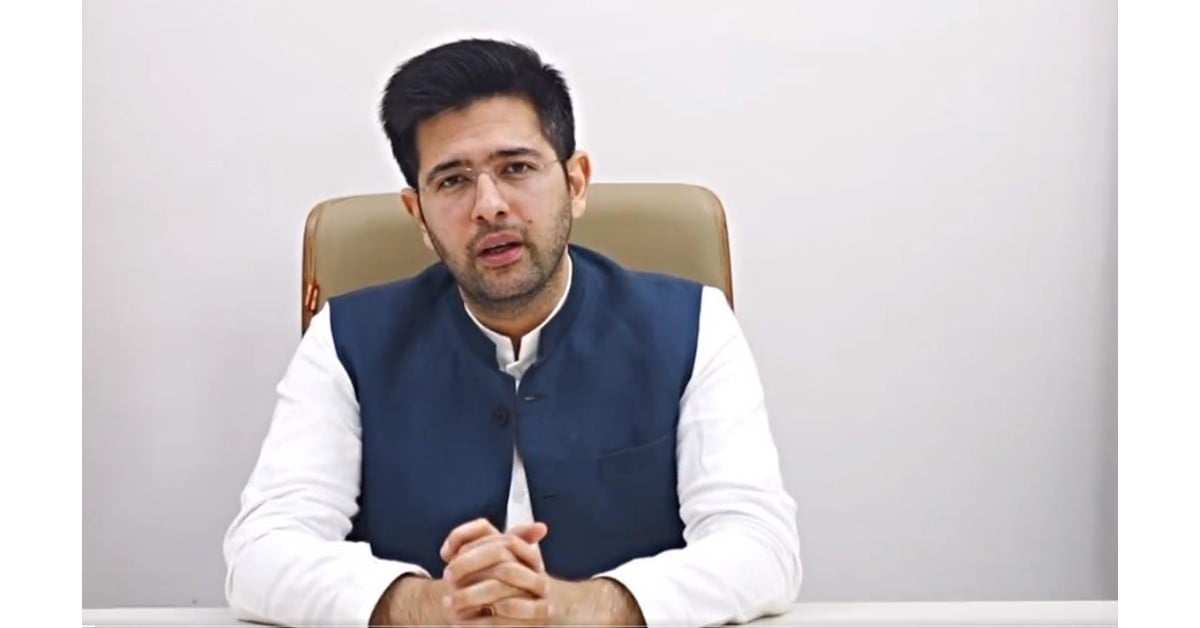
Raghav Chadha defends BJP move, cites toxic work environment in AAP

Raghav Chadha says he left AAP due to a toxic internal environment and lack of freedom to work.

Published

on

Raghav Chadha

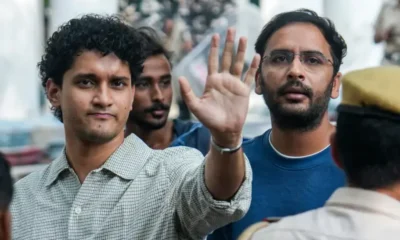
Raghav Chadha has defended his decision to leave the Aam Aadmi Party and join the Bharatiya Janata Party, stating that a “toxic work environment” within his former party forced him to take the step.

In a video shared on Instagram, the Rajya Sabha MP addressed criticism over his political switch and said the internal atmosphere in AAP had deteriorated significantly over time.

‘Stopped from working and speaking’

Chadha claimed that he and others were unable to function effectively within the party, alleging that leaders were restricted from expressing themselves or carrying out their responsibilities.

He said the environment had become increasingly difficult, adding that it was no longer possible for him to contribute meaningfully under such conditions.

Decision after years of association

The politician, who had been associated with AAP since its early days, said he had devoted a significant part of his life to the party but felt it had changed over the years. Reports indicate he highlighted that the organisation was not the same as when he joined it.

Chadha also suggested that his decision was not impulsive but taken after careful consideration of available options, including staying back or leaving politics altogether.

Response to backlash

The move has triggered strong reactions from political circles and supporters, with criticism emerging over his switch to the BJP. However, Chadha defended his choice, pointing to internal challenges and a lack of space to work within AAP.

He further argued that multiple leaders leaving the party should prompt reflection, questioning whether all of them could be wrong.

Political impact

Chadha’s exit is part of a larger development where several AAP leaders have shifted to the BJP, significantly altering the party’s strength in the Rajya Sabha.

The development has intensified political tensions between the two parties, with AAP criticising the defections and BJP welcoming the new entrants.

India News

Piyush Goyal to visit UK for talks on India-UK trade pact implementation

Commerce Minister Piyush Goyal will travel to the UK this week to review preparations and discuss implementation of the India-UK trade agreement before it comes into force on July 15.

Published

on

Union Commerce and Industry Minister Piyush Goyal is set to visit the United Kingdom from June 25 to 27 for high-level discussions aimed at ensuring the smooth implementation of the recently concluded India-UK trade agreement.

The visit comes ahead of the scheduled enforcement of the India-UK Comprehensive Economic and Trade Agreement (CETA) and the Double Contribution Convention (DCC) on July 15. During the trip, Goyal is expected to engage with senior British officials and industry representatives to review preparedness for the rollout of the landmark agreements.

Focus on implementation issues

During his stay in London, Goyal is expected to meet UK Secretary of State for Business and Trade Peter Kyle to discuss key implementation-related matters, including operational frameworks, regulatory coordination and measures to facilitate bilateral trade and investment.

The discussions are also likely to cover industry concerns and unresolved issues related to the practical execution of the agreement, with both countries seeking a seamless transition before the pact comes into force.

Trade pact to take effect from July 15

India and the UK had earlier announced that the Comprehensive Economic and Trade Agreement, along with the Double Contribution Convention, would become operational from July 15. The agreement is expected to deepen economic engagement between the two countries by reducing tariffs, improving market access and strengthening investment ties.

The upcoming visit is being viewed as a significant step in ensuring that businesses on both sides are prepared to benefit from the agreement from day one.

Continue Reading

India News

Iran invites PM Modi to attend former Supreme Leader Ali Khamenei’s funeral

Iran has reportedly invited Prime Minister Narendra Modi to attend the state funeral ceremonies of former Supreme Leader Ayatollah Ali Khamenei.

Published

on

PM Narendra Modi

Prime Minister Narendra Modi has reportedly been invited by Iranian President Masoud Pezeshkian to attend the funeral ceremonies of former Iranian Supreme Leader Ayatollah Ali Khamenei, according to diplomatic sources and media reports.

Iran is preparing to hold extensive state funeral and burial ceremonies for Khamenei, who served as the country’s Supreme Leader for more than three decades. The ceremonies are expected to take place over several days and are likely to witness the participation of senior leaders and dignitaries from across the world.

According to reports, the Iranian leadership has extended formal invitations to several international leaders, including Prime Minister Modi, as part of the planned state mourning events.

However, there has been no official confirmation so far from India’s Ministry of External Affairs regarding whether Prime Minister Modi will attend the ceremonies.

The invitation comes amid longstanding diplomatic and strategic ties between India and Iran. New Delhi had earlier conveyed condolences following Khamenei’s death and reiterated its support for peace and stability in the region.

Iran had earlier announced that the state funeral ceremonies, initially postponed, would be held between late June and early July. Authorities in Tehran are expecting a massive turnout for the final rites, with millions of mourners anticipated to participate in the ceremonies.

Ayatollah Ali Khamenei remained Iran’s highest political and religious authority from 1989 until his death, playing a central role in shaping the country’s domestic and foreign policies for decades.

Continue Reading

India News

315 districts across India at high risk as rainfall deficit and El Nino raise drought concerns

The Centre has identified 315 vulnerable districts across India as rainfall deficit and El Niño concerns threaten the ongoing kharif season.

Published

on

With the southwest monsoon recording a sharp rainfall deficit and concerns mounting over the impact of El Nino, the Centre has identified 315 districts across the country as vulnerable to below-normal rainfall during the ongoing kharif season.

According to the Union Agriculture Ministry, the country had recorded a rainfall deficit of around 43 per cent till June 23, prompting authorities to initiate a nationwide preparedness exercise to minimise the impact on agriculture and rural livelihoods.

The identified districts have been categorised based on irrigation coverage, which determines their ability to withstand prolonged dry spells. Of the total, 111 districts with irrigation coverage of less than 25 per cent have been classified as the most vulnerable. Another 76 districts with irrigation coverage between 25 and 50 per cent fall under the medium-risk category, while 128 districts with irrigation coverage exceeding 50 per cent have been placed in the relatively lower-risk category.

Officials have directed state governments to activate district-level contingency plans to protect crop production during the crucial monsoon season. These plans include measures such as promoting drought-tolerant crops, revising sowing schedules and strengthening water conservation efforts.

The government has also set up dedicated monitoring mechanisms, including an El Nino Monitoring Cell and a Crop Weather Watch Group, to closely track weather developments and coordinate response measures.

Meteorological agencies have forecast below-normal monsoon rainfall this year, with El Nino conditions expected to strengthen during the June-September period. The weather phenomenon is historically associated with weaker monsoons in India and can adversely affect agricultural output, water availability and rural incomes.

The southwest monsoon contributes nearly 70 per cent of India’s annual rainfall and remains critical for the country’s agriculture sector, particularly for rain-fed crops such as rice, pulses and oilseeds.

Continue Reading

Trending

© Copyright 2022 APNLIVE.com