English हिन्दी
Connect with us

India News

Internal report warned of imminent Wayanad tunnel slope failure before deadly landslide

An internal geological assessment reportedly warned of imminent slope failure at the Wayanad tunnel project days before the landslide that claimed six lives.

Published

on

Wayanad Tunnel

Six days before the Kerala government halted work at the Wayanad tunnel project, an internal geological report prepared by the project’s sub-contractor had reportedly warned that the slope above the tunnel’s north portal could fail at any moment under prevailing monsoon conditions.

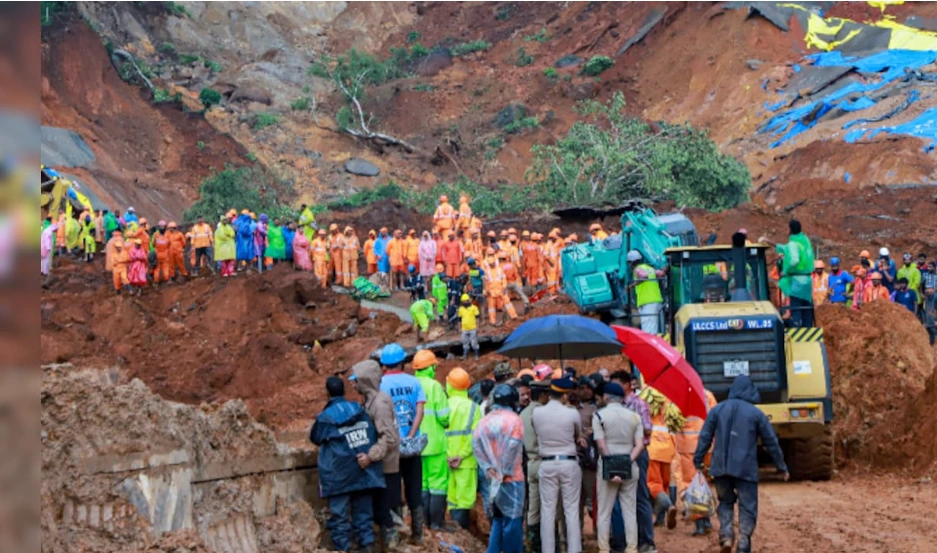
The landslide struck the north portal of the under-construction tunnel in Wayanad on Tuesday, killing six people and raising serious questions over slope stability and safety measures at the site.

Report highlighted severe slope instability

According to the internal assessment prepared by Dilip Buildcon Limited (DBL), the sub-contractor handling the tunnel work, the hillside above the north portal had already begun showing signs of structural distress.

The report was jointly prepared by DBL senior geologist Raju Sagar, Geological Survey of India (GSI) official A. Ramesh Kumar and Authority Engineer Dr H.K. Singh from Turkish Engineering Consulting & Contracting.

The assessment covered inspections carried out between June 3 and June 11 at the north portal near Kalladi-Meppadi in Wayanad.

Engineers found that the slope consisted of nearly 35 metres of loose silty soil over hard rock. The report noted that this type of soil retains water during heavy rainfall, increasing its weight while reducing stability and making it vulnerable to landslides.

Despite slope protection measures including stepped cutting, shotcrete and soil nailing, engineers observed widening cracks, soil movement, muddy seepage and cavities developing within the slope.

Underground water flow raised major concerns

One of the report’s key findings was the presence of underground water flowing between two support levels inside the slope.

According to the assessment, such internal water movement could erode the soil from within, significantly weakening the hillside and increasing the likelihood of a sudden collapse.

The report specifically identified the left side of the north portal as carrying a much higher risk than the right slope and warned that, under existing rainfall conditions, it “may culminate in sudden slope failure at any time.”

Safety systems found to be inadequate

The report also pointed to shortcomings in the site’s safety infrastructure.

It found that several drainage holes designed to reduce water pressure inside the slope were either ineffective or not functioning properly on the high-risk section. It also noted that piezometers, which monitor underground water pressure and provide early warning of slope instability, had not yet been installed.

The assessment added that the existing monitoring equipment was not accurately reflecting the visible signs of distress observed at the site.

Blasting not identified as primary cause

Trial blasting for tunnel excavation was conducted on June 5, June 6 and June 11 while the slope was already showing signs of instability.

However, the report concluded that recorded blast vibrations remained within permissible limits and indicated that prolonged heavy rainfall, rather than blasting, was the primary factor behind the slope deterioration.

Engineers recommended multiple corrective measures

The internal assessment recommended several immediate measures to improve slope stability.

These included constructing gabion retaining walls along the vulnerable left slope, covering exposed soil with protective matting and tarpaulin, creating lined drainage channels to divert rainwater, and carrying out field tests to verify the effectiveness of existing soil nails and drainage systems under saturated conditions.

The report also expressed concern over the location of a nearby concrete batching plant, stating that its weight and heavy vehicle movement could further affect slope stability. It recommended relocating the facility away from the vulnerable area.

Contractor and project authorities respond

Project authorities said the report had primarily been commissioned to assess the impact of blasting activities.

An engineer associated with Konkan Railway Corporation reportedly said work at the north portal was stopped after the findings emerged.

The engineer maintained that shotcrete was used alongside 12-metre-long concrete anchor rods installed at two-metre intervals to strengthen the slope. He also claimed that the landslide occurring above the site would have been difficult to prevent through conventional safety measures.

When asked about monsoon preparedness and slope protection, project representatives said standard engineering practices had been followed. However, they did not provide a clear explanation regarding the status of gabion wall construction or whether there had been shortcomings in preparing the site for tunnel work.

The contractor also stated that delays in government land allocation for storing excavated soil affected project logistics.

Following the landslide, the engineer said nearly 200 workers at the project’s south portal left the site out of fear and that construction would not resume until an expert committee appointed by the Kerala government approved future safety measures.

The internal report was prepared days before the District Collector issued a stop-work order on June 20, indicating that work at the north portal had already been halted amid growing concerns over slope stability.

India News

CJP announces peaceful march in Delhi on September 5

The CJP has announced a peaceful march from India Gate to Delhi Police Headquarters on September 5 over what it calls the government’s failure to honour commitments made on July 25.

Published

on

Barely six weeks after withdrawing its nationwide protests over the NEET paper leak issue, the Cockroach Janta Party (CJP) has announced a peaceful march in Delhi on September 5, accusing the government of failing to honour commitments it says were made on July 25.

The satirical group said the march will begin at India Gate and conclude at the Delhi Police Headquarters. It has appealed to students, youth organisations and young citizens to participate in large numbers.

According to the CJP, parents of NEET aspirants who died by suicide and victims of alleged police brutality will lead the march.

Why has CJP announced the march?

The CJP said its National Working Committee reviewed the government’s compliance with commitments allegedly made to young protesters on July 25, following which the nationwide protests were withdrawn.

The group alleged that the government has since delayed action and avoided providing clear commitments on some of its demands.

The CJP had earlier demanded the resignation of then Education Minister Dharmendra Pradhan, compensation for families of NEET aspirants who allegedly died by suicide following the paper leak, and an assurance that protesters would not face legal action.

The agitation was called off after the group said the government had agreed to fulfil its demands.

CJP raises issue of FIRs against protesters

The CJP has also alleged that the government did not provide a list of FIRs registered against protesters across the country for quashing, despite what it said was a request from the Supreme Court.

The group further claimed that the government had not given a clear commitment on the issue and that a written assurance to the CJP was still awaited.

“The National Working Committee of the Cockroach Janta Party (CJP) convened today to review the Government of India and BJP/NDA ruled states’ compliance with the solemn commitments made to the young people of this country on 25 July 2026,” the group said in its statement.

It alleged that the government was “playing delay games” and “hiding behind technicalities” instead of implementing the commitments it said had been made.

CJP’s earlier protests over NEET leak

The CJP’s earlier agitation over the NEET paper leak had included protests by its volunteers and students. The demonstrations gained momentum after protesters marching towards Parliament were lathi-charged by Delhi Police, according to the group.

The clashes left several protesters injured, while police personnel were also injured.

The CJP later called off its agitation after saying that its key demand for Pradhan’s resignation had been met and that the government had agreed to address its other demands.

With the latest announcement, the group has now called for another mobilisation in Delhi on September 5.

Continue Reading

India News

Gurugram rain disrupts city, offices advised WFH as schools shift online

Heavy rain caused widespread waterlogging and traffic disruption in Gurugram, prompting WFH and online class advisories.

Published

on

Gurugram faced widespread waterlogging and traffic disruption on Monday after heavy rain overwhelmed several parts of the city. The district administration advised offices to allow employees to work from home and schools to conduct classes online following the disruption.

The administration said Gurugram recorded 70 mm of rainfall by 1.30 pm. Areas including Rajiv Chowk, IFFCO Chowk, Railway Road, Sector 5, Old Delhi Road, Mehrauli Road and Basai Road were among those badly affected.

The disruption came despite the rain lasting for only about an hour, with residents again raising concerns over Gurugram’s civic infrastructure and drainage system.

Vehicles stranded, students forced to seek higher ground

Several motorists were seen abandoning their vehicles after getting stuck on waterlogged roads. Students returning from school also faced difficulties, with some moving towards elevated locations such as raised bus stops to stay away from flooded roads and the danger of open manholes obscured by muddy water.

The heavy waterlogging also affected movement on the Delhi-Jaipur Expressway, resulting in major delays for commuters.

The journey between Signature Tower and Hero Honda Chowk, which normally takes around 15 minutes, took at least 50 minutes on Monday, according to commuters.

Delhi-Jaipur Expressway, Sheetla Mata Road among affected stretches

A significant section of the Delhi-Jaipur Expressway near Cyber Hub, opposite Gateway Tower Metro station, was submerged, affecting traffic on the major route.

Sheetla Mata Road, which has been identified as one of Gurugram’s flood-prone stretches during the monsoon, was also among the worst-hit areas.

The latest disruption has once again highlighted concerns over the city’s infrastructure during periods of intense rainfall.

Continue Reading

Entertainment

Kriti Sanon’s Raksha Bandhan ad draws criticism over modern festive look

Kriti Sanon’s Raksha Bandhan advertisement has sparked an online debate, with some social media users questioning her contemporary festive outfit and the campaign’s concept.

Published

on

Kriti Sanon’s latest festive appearance has triggered a debate on social media after the actor featured in a Raksha Bandhan advertisement wearing a contemporary outfit.

In the advertisement, Kriti Sanon is seen in an off-white bralette-style blouse paired with a cape and a draped skirt. While the actor has previously experimented with contemporary interpretations of traditional fashion, some social media users criticised her look in the festive campaign.

The criticism was directed particularly at the choice of outfit for a Raksha Bandhan-themed advertisement, with several users questioning whether the look was appropriate for the occasion.

Advertisement’s pet dog sequence also draws reactions

The concept of the advertisement also became a point of discussion online. In the campaign, Kriti is seen tying a traditional rakhi on a dog after the pet barks at her.

The advertisement presents the ritual as a way of including the pet in the family’s Raksha Bandhan celebrations. However, several social media users questioned the decision to include the dog in the festive ritual.

Some commenters accused the brand of making a mockery of Indian festivals, while others said they disagreed with the overall concept of the advertisement.

Social media users criticise Kriti Sanon’s festive look

Kriti Sanon’s outfit became one of the main talking points among those criticising the advertisement. Some users described the outfit as inappropriate for a Raksha Bandhan campaign.

One social media user wrote that Kriti was tying rakhi in a “bra kinda attire” and questioned the use of such an outfit during the festival.

Another commenter compared the treatment of Raksha Bandhan with other festivals and criticised the advertisement’s presentation of the celebration.

Other reactions focused on traditional elements associated with Raksha Bandhan. One user questioned the absence of a puja thali and tilak while also criticising Kriti’s outfit.

A separate comment objected to the inclusion of the dog, arguing that the campaign was not representative of the traditional spirit of Raksha Bandhan.

These comments reflect the views of individual social media users and do not establish a broader consensus about the advertisement.

Kriti Sanon yet to respond to criticism

The Raksha Bandhan advertisement continues to receive mixed reactions on social media. While some users have criticised the actor’s outfit and the campaign’s concept, Kriti Sanon is yet to respond to the criticism.

The debate comes as brands increasingly use contemporary interpretations of traditional festivals in advertising, with the campaign’s presentation becoming a subject of discussion among social media users.

Continue Reading

Trending

© Copyright 2022 APNLIVE.com