English हिन्दी
Connect with us

India News

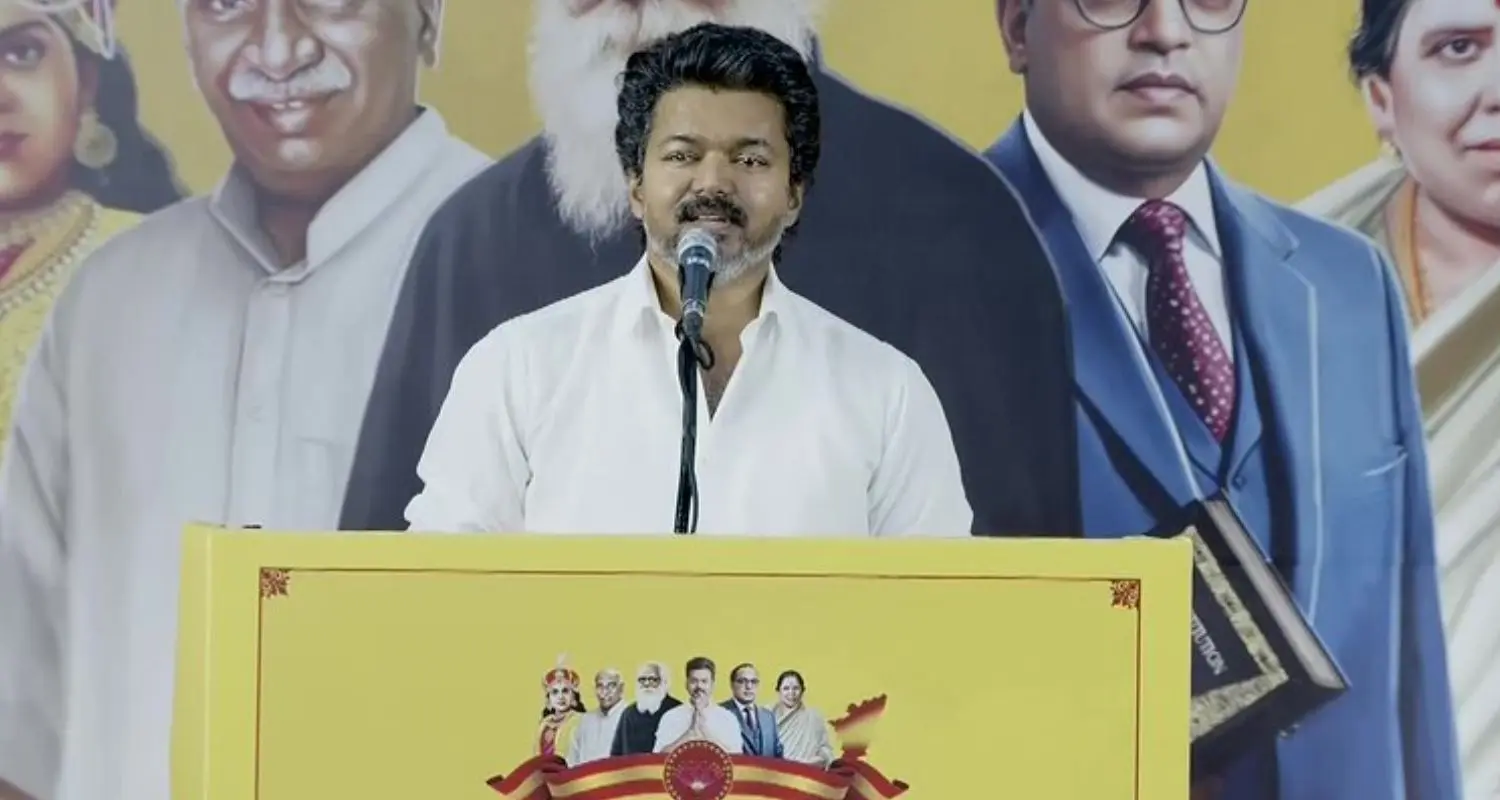
Vijay’s TVK demands scrapping NEET, seeks state control of medical education

Published

on

Tamil Nadu CM Vijay speaking on stage

Tamilaga Vettri Kazhagam (TVK), led by Tamil Nadu Chief Minister C. Joseph Vijay, has on Wednesday again demanded the complete abolition of the National Eligibility-cum-Entrance Test (NEET).

The party described its position as an “uncompromising and firm stand”, stating that it is not merely seeking reforms in the examination system but wants NEET scrapped entirely. The statement comes amid nationwide protests and growing concerns over alleged irregularities in the medical entrance examination.

A TVK statement said medical education should come under the full control of state governments rather than the Centre. The party demanded that education be shifted from the Concurrent List to the State List of the Constitution, allowing states to decide their own admission policies for medical colleges. As an interim measure, TVK proposed creating a Special Concurrent List that would grant states greater authority over education until constitutional changes are made.

The party criticized what it called the “One Nation, One Education” approach, arguing that a single national entrance test places students from rural areas, government schools, Tamil-medium institutions, and economically weaker sections at a disadvantage. TVK reiterated its demand that admissions to MBBS, BDS, and AYUSH courses under the state quota should be based on Class 12 examination marks instead of NEET.

TVK’s latest statement comes as students and activists across the country continue to protest over examination irregularities. The party clarified that its opposition to NEET is not limited to recent controversies but is based on its long-standing belief that states should have complete authority over medical education and admissions. It criticized political parties that promised to abolish NEET without delivering on those commitments, without naming the rival DMK.

The demand has reignited the debate over the future of NEET and the balance of power between the Centre and the states. Supporters believe scrapping the examination would provide a fair opportunity for students from different backgrounds, while opponents argue that NEET ensures a uniform standard for medical admissions across India.

At present, NEET remains a national-level entrance examination, and the Union Government has not announced any decision to abolish it. However, TVK has said it will continue to press for constitutional changes and greater state autonomy in medical education.

India News

Odisha SIR: Over 20 lakh voters removed from electoral roll

Odisha’s final electoral roll has been published after the Special Intensive Revision, with 20.56 lakh electors removed following verification.

Published

on

SIR

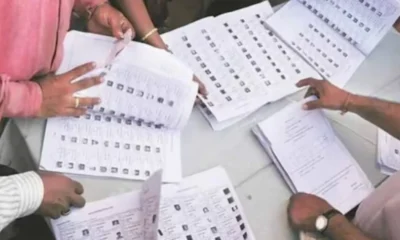
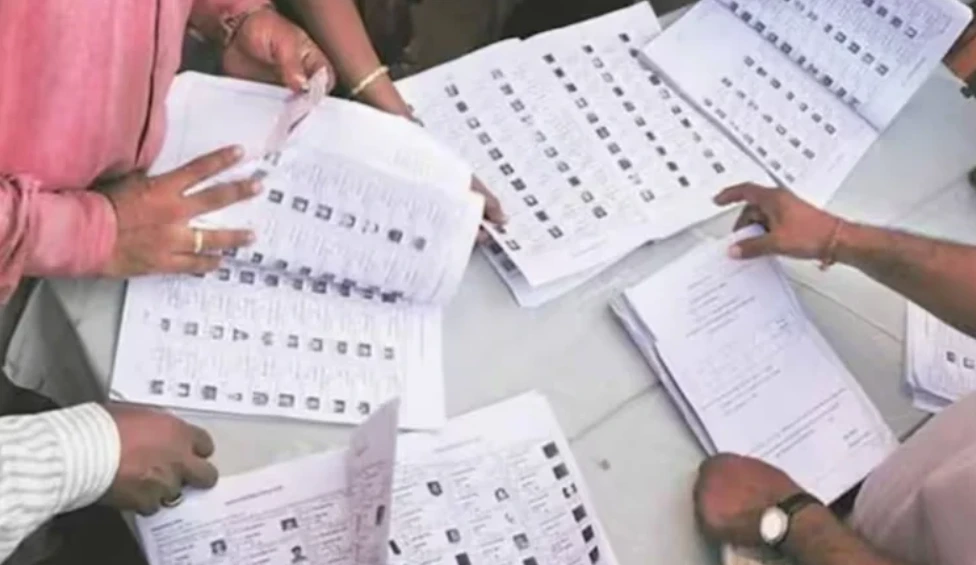
The Special Intensive Revision (SIR) of electoral rolls in Odisha has been completed, with the final electoral roll published after a verification process that resulted in the removal of 20.56 lakh electors.

According to Odisha Chief Electoral Officer S Gopalan, the SIR exercise began on May 30, 2026. At the beginning of the exercise, the electoral roll had 3,13,99,000 electors.

During the first phase, 20.12 lakh voters were removed for various reasons. This included 8.32 lakh electors who were found to be dead, 8.08 lakh who had permanently shifted, 2 lakh who were absent and 1.58 lakh who had duplicate entries.

Notices issued during verification

After the draft electoral roll was published on July 5, further verification was carried out for voters whose details could not be mapped or contained discrepancies.

Around 13 lakh electors whose details could not be mapped in the 2002 roll were issued notices. Another 45.37 lakh electors with logical errors in their entries also received notices.

In total, 58.36 lakh electors were issued notices during this process. Following hearings, 24,000 were found ineligible and removed from the roll.

Claims and objections processed

The electoral authorities also received claims and objections during the revision.

Around 57,000 Form 7 applications were received. Of these, 20,000 were found to be valid and the corresponding names were removed.

At the same time, eligible voters were added to the final roll. Around 2.74 lakh Form 6 applications and 16,000 Form 8 applications resulted in about 2.90 lakh additions.

After the verification, deletions and additions, Odisha’s final electoral roll stood at 3,16,32,754 electors.

The final roll includes about 1,61,30,000 male voters, 1,54,99,000 female voters and 2,774 third-gender electors.

Continuous updating resumes

With the completion of the SIR exercise, the regular process of updating the electoral roll has resumed.

According to the Odisha CEO, voters can now use Forms 6, 7 and 8 to apply for inclusion, deletion or corrections in the electoral roll. Applications can be submitted online or through Booth Level Officers.

Continue Reading

India News

Asaduddin Owaisi offers Opposition alliance in UP, sets October 2 deadline

AIMIM chief Asaduddin Owaisi offered an alliance to Opposition parties in Uttar Pradesh ahead of the 2027 Assembly election and set October 2 as a deadline for a response.

Published

on

Asaduddin Owaisi

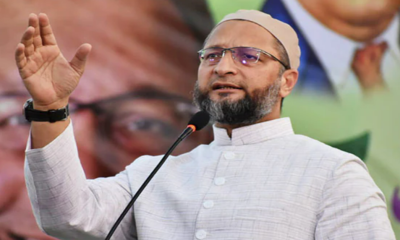
AIMIM chief Asaduddin Owaisi has offered to join hands with Opposition parties in Uttar Pradesh ahead of the 2027 Assembly election, saying his party is willing to work with those seeking to prevent the BJP from returning to power in the state.

Speaking at a public rally in Kanpur, Owaisi said the AIMIM would wait until October 2 for a response from Opposition parties before announcing any possible political alliance.

At the rally held at the Babupurwa Idgah ground in Kanpur’s cantonment area, Owaisi said the AIMIM did not want the BJP to form the government in Uttar Pradesh for a third time.

He invited parties seeking to prevent the BJP from returning to power to join hands with the AIMIM.

Owaisi targets Samajwadi Party

While making the alliance offer, Owaisi also criticised the Samajwadi Party and its chief Akhilesh Yadav.

Referring to the 2013 Muzaffarnagar riots, Owaisi questioned the record of the Samajwadi Party government during that period. He said around 50,000 people were displaced from their homes and villages during the riots.

Owaisi also alleged that political parties, including the Samajwadi Party, had failed to adequately address the social, economic and educational concerns of Muslims and had not provided sufficient political representation.

He said Muslims in Uttar Pradesh needed a political voice and urged voters to strengthen the AIMIM’s presence in the state Assembly.

AIMIM’s earlier alliance offer in Bihar

Owaisi also referred to the AIMIM’s earlier alliance proposal in Bihar ahead of the Assembly polls.

According to Owaisi, his party had offered to contest six seats as part of an alliance, but the proposal was not accepted. He alleged that “false allegations” were subsequently made against the AIMIM.

Opposition parties have previously accused Owaisi and the AIMIM of benefiting the BJP by dividing Muslim votes. Owaisi has rejected those allegations and has accused Opposition parties of fielding candidates who are unacceptable to minorities.

The latest alliance proposal comes ahead of the 2027 Uttar Pradesh Assembly election, with Owaisi setting October 2 as the date by which he expects a response from Opposition parties.

Continue Reading

India News

AAP takes Punjab report card door-to-door after BJP’s anti-drug yatra

AAP has taken its Punjab government report card door-to-door as the BJP conducts a statewide anti-drug yatra ahead of the 2027 Assembly election.
Published

on

Bhagwant Mann

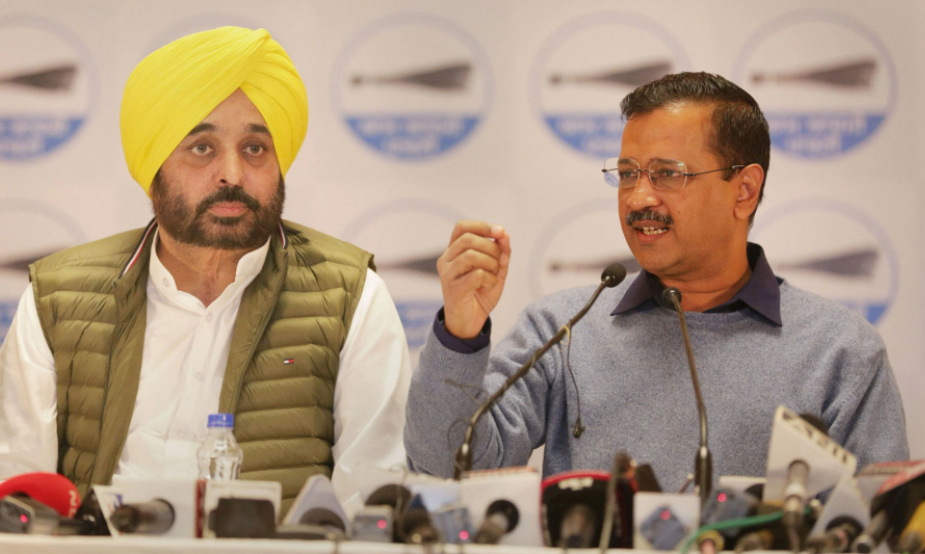
The Aam Aadmi Party has taken its Punjab government report card directly to households as the BJP steps up its statewide campaign against drugs ahead of the 2027 Punjab Assembly election. Chief Minister Bhagwant Mann began the door-to-door outreach from Dhuri, his Assembly constituency.

The move comes after the BJP launched its “Nasha Mukt Punjab Yatra”, which is focused on the drug menace, law and order and corruption. The BJP’s yatra is planned to cover all 117 Assembly constituencies before concluding in Jalandhar.

AAP is using its “Yudh Nashean Virudh” campaign and the Mann government’s wider governance record as the focus of its grassroots outreach.

AAP’s anti-drug strategy

The Punjab government is highlighting a five-point approach covering police enforcement, prevention in schools, youth engagement, community vigilance and rehabilitation.

According to government figures cited in the report, the Anti-Narcotics Task Force registered 61,824 FIRs and arrested 81,433 people between March 2025 and September 2026.

The government said the seizures during this period included 3,918 kg of heroin, 991 kg of opium, 47 tonnes of poppy husk, 1,416 kg of ganja and 65 lakh tablets and capsules.

In schools, a 14-week anti-drug curriculum is being taught to around 7.5 lakh students across 3,600 schools. The government is also promoting sports, cultural activities, mental-health clubs and other youth programmes.

Village vigilance and rehabilitation

The government said around 1.25 lakh people have joined nearly 15,000 Village and Ward Defence Committees.

It also said more than 51,000 citizen tip-offs received through the Safe Punjab WhatsApp Helpline have contributed to over 25,000 drug-related arrests.

On treatment, Punjab currently has 547 OOAT (Outpatient Opioid Assisted Treatment) centres, 219 de-addiction centres and 91 rehabilitation centres, according to the figures cited by the government.

Admissions to government de-addiction and rehabilitation centres rose from more than 12,200 in 2024 to nearly 34,000 in 2025, the report said.

BJP’s anti-drug campaign

The BJP’s “Nasha Mukt Punjab Yatra” has placed the drug issue at the centre of its political outreach in the state. The campaign is also raising concerns related to law and order and corruption and is planned across all 117 Assembly constituencies.

AAP’s response is to take its own record directly to voters, with the party highlighting action against drugs alongside welfare and development initiatives.

The door-to-door campaign comes as political parties begin intensifying their grassroots mobilisation ahead of the 2027 Punjab Assembly election.

Continue Reading

Trending

© Copyright 2022 APNLIVE.com