English हिन्दी
Connect with us

India News

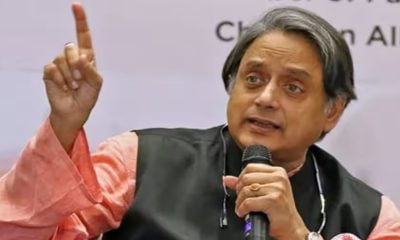
Focus should be on preventing paper leaks, not just punishment, says Shashi Tharoor

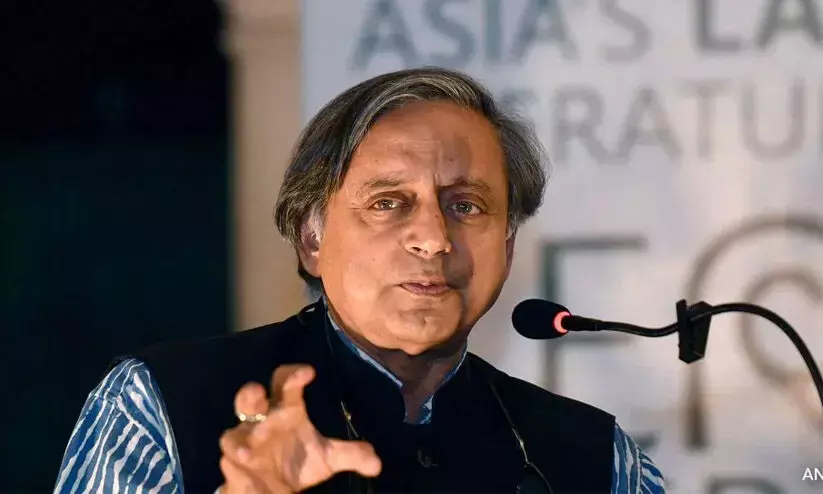
During the Lok Sabha debate on the Public Examinations Amendment Bill, 2026, Shashi Tharoor called for systemic reforms to prevent paper leaks and reduce dependence on single high-stakes examinations.

Published

on

India’s public examination system requires structural reforms that prevent paper leaks instead of relying solely on stricter punishments after the damage is done, Congress MP Shashi Tharoor said while participating in the Lok Sabha debate on the Public Examinations (Prevention of Unfair Means) Amendment Bill, 2026.

Speaking in Parliament on Tuesday, the Thiruvananthapuram MP said millions of students and their families invest years of effort, financial resources and emotional commitment into competitive examinations, making the credibility of the examination process critical.

Tharoor says students deserve a fair and secure examination system

Tharoor said students appearing for examinations such as NEET, JEE and UGC-NET carry far more than an admit card into the examination hall.

He noted that families often spend significant savings on education, coaching and study material while students devote years of preparation in pursuit of professional opportunities. According to him, a paper leak undermines not only an examination but also the hard work and sacrifices made by candidates and their families.

While acknowledging the proposed legislation’s tougher penalties, including lengthy imprisonment and heavy financial penalties for those involved in paper leaks, Tharoor argued that punishment comes only after students have already suffered the consequences.

Calls for reforms beyond stricter penalties

The Congress leader said every paper leak points to deeper weaknesses within the country’s examination system rather than being an isolated incident.

He stressed that Parliament’s objective should be to prevent such incidents altogether through stronger safeguards instead of focusing primarily on punitive measures.

Tharoor also questioned whether the judicial system would be able to consistently deliver speedy trials under the proposed fast-track provisions included in the legislation.

Suggests multiple exam attempts through computer-based testing

Advocating long-term reforms, Tharoor proposed moving away from the existing model in which a student’s future often depends on a single high-stakes examination.

He suggested introducing continuous computer-based entrance examinations with multiple attempts during the year, allowing candidates to submit their best score for admissions. According to him, such a system could reduce stress, accommodate emergencies, strengthen examination integrity and minimise the risk of paper leaks.

Raises concern over competition and student mental health

Highlighting the intense competition for professional education, Tharoor said the large gap between the number of aspirants and available seats contributes to the pressure surrounding entrance examinations.

He also expressed concern over student suicides, saying these figures represent individual lives and families affected by the immense stress associated with competitive examinations.

Calling for broader educational reforms, Tharoor said India needs more quality institutions, increased professional education seats and multiple pathways to higher education so that a single examination does not determine a student’s future.

Concluding his remarks, he said the responsibility of students is to prepare sincerely, while the responsibility of the system is to ensure that their preparation is rewarded through a fair, credible and secure examination process. He added that although the proposed legislation is likely to be passed, broader reforms are necessary to restore confidence in India’s public examination system.

India News

Champat Rai, Anil Mishra get clean chit in Ram Temple donation theft case 

The SIT probing alleged donation theft at the Ayodhya Ram Temple has cleared former Trust general secretary Champat Rai and former member Anil Mishra.

Published

on

The Special Investigation Team (SIT) probing alleged irregularities in donation management at the Ayodhya Ram Temple has cleared former Shri Ram Janmabhoomi Teerth Kshetra Trust general secretary Champat Rai and former Trust member Anil Mishra.

The Uttar Pradesh Home Department on Monday handed over the SIT’s final report to the Trust, which will now take further action based on the findings.

Rai and Mishra had resigned from their positions on June 27 after allegations of donation theft emerged. The two former Trust members were subsequently questioned by the SIT about the temple’s donation management process.

Champat Rai denied involvement in donation theft

According to sources, Champat Rai told investigators during questioning that he had no role in the alleged theft. He reportedly said that the suspects were arrested following his complaint.

Rai also told the police that ensuring there were no irregularities in donation collection was part of his responsibility and that he acted after learning about the alleged wrongdoing.

SIT was formed before Supreme Court intervention

The three-member SIT was constituted by the Uttar Pradesh government on June 13 at the request of the Shri Ram Janmabhoomi Teerth Kshetra Trust.

Lucknow Divisional Commissioner Vijay Vishwas Pant headed the panel. Range Inspector General Kiran S and Special Secretary (Finance) Neel Ratan Kumar were the other members.

The SIT submitted its preliminary report to the state government on June 23 and made several stringent recommendations.

Following the preliminary report, Trust member Krishnamohan filed a written complaint at the Shri Ram Janmabhoomi police station. An FIR was subsequently registered on June 25.

Eight people named in FIR

The FIR named Avinash Shukla, Anukalp Mishra, Lavkush Mishra, Manish Kumar Yadav, Karunesh Pandey, Ramashankar Mishra, Subhash Srivastava and Ram Shankar Yadav, alias Tinnu, along with other unidentified individuals.

According to the provided report, all eight named accused were arrested and booked under relevant provisions of the Bharatiya Nyaya Sanhita and Section 13(1)(a) of the Prevention of Corruption Act.

The SIT’s preliminary findings also formed the basis for subsequent FIRs and arrest-related action in the case.

Continue Reading

India News

Himanta Sarma accuses Sonia, Rahul of provoking unrest over Vande Mataram row

Assam CM Himanta Biswa Sarma criticised Sonia and Rahul Gandhi over the Vande Mataram controversy and accused Congress of provoking unrest.

Published

on

Himanta sharma

Assam Chief Minister Himanta Biswa Sarma on Monday criticised Congress leaders Sonia Gandhi and Rahul Gandhi over the controversy surrounding the rendition of Vande Mataram at the party headquarters in New Delhi on Independence Day.

Sarma questioned how the Congress would govern if it returned to power, alleging that the conduct of its senior leaders during the national song had raised concerns.

“During Vande Mataram, the way Sonia Gandhi behaved and the song was stopped midway clearly indicates that if Congress mistakenly comes to power, the country will face a worse situation,” Mr Sarma said.

The Assam Chief Minister also accused Sonia Gandhi and Rahul Gandhi of encouraging protests in the name of Gen Z.

“Sonia Gandhi and Rahul Gandhi have almost taken a decision to oppose the country in the name of Gen Z. They are provoking people to protest and trying hard to create a bad environment in the country,” he said.

Sarma further alleged that such actions could contribute to instability in the country.

“I am not bothered about these things, but these people are working against the country and provoking the people of the country to protest and bring anarchy,” he said.

What triggered the Vande Mataram controversy

The political row erupted after footage from the Congress Independence Day programme on August 15 surfaced on social media. The video showed senior Congress leaders, including Sonia Gandhi, Rahul Gandhi and Mallikarjun Kharge, during the rendition of Vande Mataram.

BJP leaders have interpreted gestures seen in the footage as an attempt to interrupt the national song. The Congress, however, has rejected that interpretation.

The issue has since become a political flashpoint, with BJP leaders accusing the Congress of disrespecting Vande Mataram.

A complaint seeking action against Sonia Gandhi and Rahul Gandhi over the alleged disruption is also being examined by the Delhi Police.

Continue Reading

India News

BJP unveils 64-member national team with 3 former CMs, 18 MPs and 10 women

The BJP’s new 64-member national team includes three former chief ministers, 18 sitting MPs and 10 women, with representation from 23 states and Union Territories.

Published

on

The BJP’s new 64-member team of national office bearers brings together former chief ministers, sitting MPs, women leaders and representatives from different social and regional groups as the party prepares for the 2029 Lok Sabha election.

The team, headed by BJP national president Nitin Nabin, includes three former chief ministers, 18 sitting MPs and 10 women leaders. More than 40 per cent of the members belong to deprived communities, according to the details of the appointments.

Northeast gets special focus

The new organisational team includes leaders from 23 states and Union Territories, giving the party’s national leadership a broad geographical representation.

The Northeast has received particular attention, with three leaders from Tripura, Assam and Nagaland included in the team. The BJP’s North-East Coordination Cell will also continue to function under the leadership of Sambit Patra.

The team includes four tribal representatives, with one each from West Bengal, Madhya Pradesh, Maharashtra and the Northeast. Two of these representatives are women.

Three members from Uttar Pradesh, Tamil Nadu and Madhya Pradesh represent the Scheduled Castes in the new team.

Representation across communities

The BJP’s national office bearers also include 10 experienced women leaders from different parts of the country.

The team has representation from different religious communities, including one Sikh, two Christians, one Muslim, one Jain and one Parsi member, alongside Hindu leaders.

Former chief ministers and MPs add experience

The organisational team brings considerable administrative and political experience, with former Rajasthan Chief Minister Vasundhara Raje, former Uttarakhand Chief Minister Tirath Singh Rawat and former Tripura Chief Minister Biplab Kumar Deb among the members.

Four leaders with previous experience in the Union government and one sitting Union minister are also part of the team.

The new national office bearers include 18 sitting Lok Sabha and Rajya Sabha members, bringing legislative experience and their connection with constituencies to the organisation.

Professionals and younger leaders add to the team

The team also brings together people from varied professional and academic backgrounds. It includes two professors, four practising doctors, as well as PhD holders, engineers, chartered accountants and lawyers.

The appointments to various Morchas are expected to bring organisational experience, fresh energy and domain expertise to the BJP’s national team.

Continue Reading

Trending

© Copyright 2022 APNLIVE.com