English हिन्दी
Connect with us

Latest world news

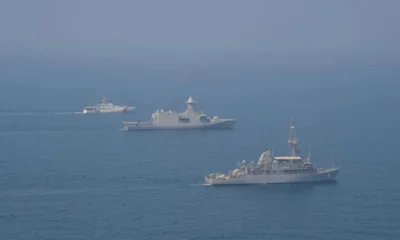
13 Indian sailors stranded at Ukraine’s Chornomorsk port amid Black Sea attacks

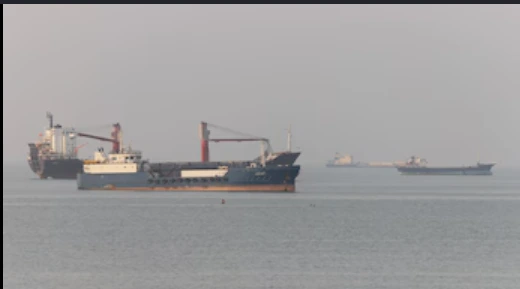
Thirteen Indian seafarers are among 15 crew members stranded aboard a cargo vessel at Ukraine’s Chornomorsk port as the Forward Seamen’s Union of India seeks urgent government intervention.

Published

on

At least 13 Indian seafarers are among the 15 crew members stranded aboard cargo vessel M.V. AMIR1 at Ukraine’s Chornomorsk port, where continued drone and missile attacks have raised serious concerns over their safety.

The Forward Seamen’s Union of India (FSUI) has described the situation as “life-threatening” and urged the Indian government, shipowners, the vessel’s flag state and relevant authorities to take immediate steps to ensure the crew’s safety and arrange their evacuation.

FSUI seeks urgent rescue of stranded Indian crew

In a post on X, the FSUI said the vessel remains trapped at Chornomorsk while repeated drone and missile attacks are taking place in the surrounding area.

According to the union, the crew is living under constant fear of being hit as hostilities continue near the Black Sea port. It appealed for urgent intervention, stating that Indian seafarers should not be left exposed in conflict zones and called for their prompt repatriation.

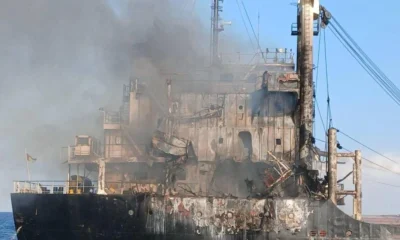
The union also shared a video, which it said was recorded from the vessel, showing large plumes of smoke rising near the port, underscoring the volatile security situation.

No official response yet

As of the latest reports, neither India’s Ministry of External Affairs nor the shipping company operating the vessel had issued an official response regarding the reported distress of the Indian crew members.

Black Sea security concerns continue

The latest incident comes amid growing risks to commercial vessels operating in the Black Sea as fighting between Russia and Ukraine continues.

Earlier this week, India summoned Ukraine’s Ambassador to India, Oleksandr Polishchuk, and lodged a strong protest following the death of an Indian seafarer in an attack on a merchant vessel in the Black Sea.

The Ministry of External Affairs said it conveyed New Delhi’s serious concern over the incident and strongly condemned attacks on commercial shipping.

The merchant vessel MV Omorfi was reportedly struck during Ukrainian drone attacks amid the ongoing conflict, further highlighting the dangers faced by civilian ships operating in the region.

Latest world news

Trump signs Russia sanctions bill, India faces 100% tariff threat

Donald Trump has signed the Russia sanctions bill into law, giving the US president authority to impose tariffs of up to 100% on countries buying Russian oil and gas, including India and China.
Published

on

Donald Trump

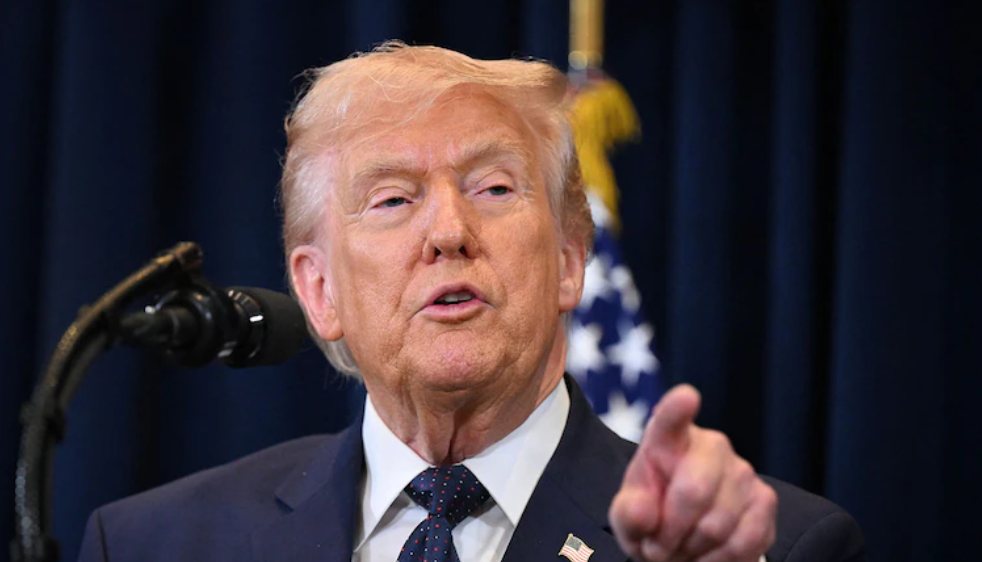
US President Donald Trump has signed a Russia sanctions bill into law, giving his administration the authority to impose tariffs of up to 100 per cent on countries that buy Russian oil and gas.

The legislation puts major Russian energy buyers, including India and China, at risk of additional US tariffs. However, the law does not automatically impose a 100 per cent tariff on either country. The actual tariff would depend on whether Trump chooses to exercise the authority granted under the legislation.

The signing came two days after the Republican-led US House of Representatives passed the sweeping sanctions package by 262-159.

The legislation, known as the Lindsey O Graham Sanctioning Russia and Iran Act of 2026, is aimed at reducing the financial resources supporting Russia’s war against Ukraine.

What does the Russia sanctions bill contain?

The new law targets Russian officials, banks, energy interests and foreign entities accused of supporting Moscow’s military operations.

It also provides for tariffs of up to 500 per cent on Russian goods. Separately, countries covered by provisions targeting purchases of Russian oil and gas could face duties of up to 100 per cent.

The legislation also includes sanctions against Russian President Vladimir Putin and senior members of the Russian government.

Why India faces a 100% tariff threat

India is among the major buyers of Russian crude oil and could therefore be affected by the new tariff authority.

An amendment proposed by Democratic Congressman Steny Hoyer sought to explicitly identify 10 countries — China, India, the UAE, Turkiye, Singapore, Azerbaijan, Kazakhstan, Hungary, Kyrgyzstan and Slovakia — as eligible for tariffs of up to 100 per cent under the secondary tariff provisions.

However, the amendment itself does not impose a 100 per cent duty on India.

Instead, the legislation gives Trump the power to impose such tariffs if he decides to use it. The eventual impact on Indian exports will depend on the tariff rate, if any, announced by the US administration.

What India said on Russian oil purchases

India had responded to the passage of the sanctions bill by reiterating its focus on energy security.

The Ministry of External Affairs said India remains committed to ensuring energy security for its 1.4 billion people and would continue to diversify its sources of energy based on changing market conditions.

The ministry also said India’s oil trade with Russia had been discussed at high levels with US officials in recent months and that New Delhi had clearly conveyed the potential implications for bilateral relations and the international energy market.

Previous US tariffs on India

The latest development comes after earlier tariff tensions between India and the US over Russian crude imports.

According to the report, Trump had previously imposed an additional 25 per cent tariff on Indian imports of Russian crude, on top of a 25 per cent reciprocal tariff. The additional tariff was removed in February 2026, while the reciprocal tariff was reduced to 18 per cent under a US-India trade framework.

The new law therefore creates another potential source of pressure on India-US trade relations, although the final effect will depend on how the Trump administration uses the tariff authority.

Continue Reading

Latest world news

US strike on Iran school that killed 150 may be war crime, UN panel says

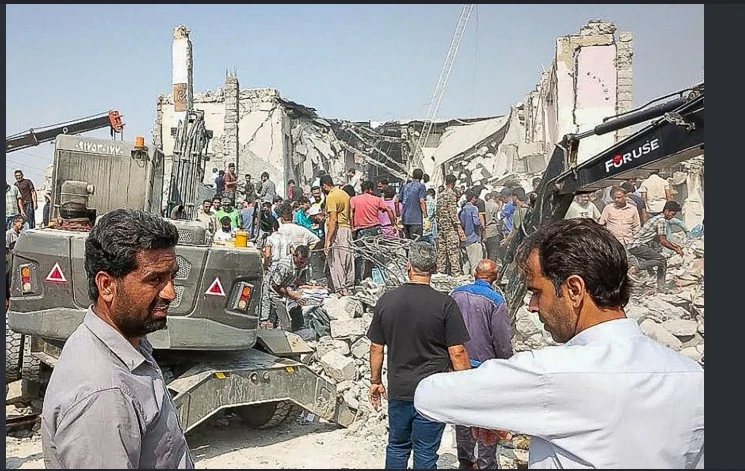
A UN-backed panel said there were reasonable grounds to believe US forces committed war crimes, citing a strike on a primary school in Minab that killed more than 150 people.
Published

on

A UN-backed group of independent experts has said there are reasonable grounds to believe US forces committed war crimes during the conflict with Iran, citing two airstrikes that caused civilian deaths.

The UN-backed fact-finding mission, in a report submitted to the UN Human Rights Council in Geneva, examined a strike on the Shajareh Tayyebeh Primary School in Minab and another attack in Lamerd.

What the UN report said about the school strike

The mission said a Tomahawk cruise missile strike on the primary school in Minab in late February killed more than 150 people.

According to the report, the mission found reasonable grounds to believe the United States committed the war crime of launching indiscriminate attacks that resulted in civilian deaths or injuries or damage to civilian objects.

The Minab strike has previously been the subject of investigations into how the school was identified as a target. Earlier reports cited evidence suggesting the strike was carried out by US forces, while the Pentagon has said the incident was under investigation.

Another US strike examined by UN mission

The fact-finding mission also examined a separate US strike in Lamerd.

It said the attack dispersed clouds of tungsten pellets over a sports complex and a residential area, killing 22 people.

The report’s findings are not legally binding, but they could contribute to future efforts to establish accountability through international legal mechanisms, according to the report.

Pentagon investigation remains ongoing

The Pentagon has previously said the Minab incident was being investigated.

A Pentagon official said on Thursday that the investigation was still ongoing and declined to comment on the report from the UN-backed outside organisation.

The report also noted that investigators had previously examined possible failures surrounding the Minab strike, including problems with US intelligence systems and information about the site being used as a school.

UN panel also accuses Iran

The UN-backed mission’s report did not focus only on alleged US violations.

It also accused the Iranian government of gross human rights violations and crimes against humanity, including in connection with violent crackdowns on Iranian protesters.

The White House rejected the UN findings and accused Iran of committing war crimes, including attacks against neighbouring countries and other actions during the conflict.

Continue Reading

Latest world news

India responds to US Russia sanctions bill, vows to protect trade interests

India has responded to the US Congress passing a Russia sanctions bill, saying it will take necessary measures to protect its trade and economic interests.
Published

on

trump modi

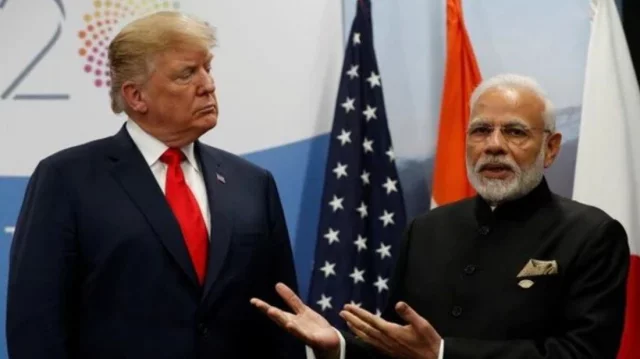
India has said it will take all necessary measures to safeguard its trade and economic interests after the US Congress passed legislation aimed at imposing tougher sanctions on Russia.

The US House of Representatives passed the Russia sanctions bill on September 16. The legislation targets Russia’s economy and provides the US president with authority to impose tariffs of up to 100% on countries that continue certain trade involving Russian energy. India and China are among the countries that could be affected by the provisions.

India says trade and economic interests will be protected

India’s response comes as the legislation moves forward in Washington. The bill, known as the Lindsey O. Graham Sanctioning Russia and Iran Act of 2026, seeks to increase economic pressure on Russia over its war in Ukraine.

India has maintained that its decisions concerning energy and trade are guided by its national interests. The latest statement indicates that New Delhi will continue to assess the implications of the US legislation while protecting its economic and trade interests.

What the US sanctions bill means for India

The legislation gives the US president a legal framework to impose additional tariffs of up to 100% on goods from countries meeting specified conditions linked to Russian energy purchases. The measure does not itself mean that India has automatically been hit with a 100% tariff. Any such tariff would depend on the provisions of the legislation and subsequent action by the US administration.

The House passed the bill by 262 votes to 159. It now moves to President Donald Trump for consideration.

The legislation also targets Russia’s energy and defence sectors and seeks to tighten measures against vessels associated with efforts to circumvent existing sanctions.

India faces fresh pressure over Russian energy trade

India has remained a major buyer of Russian energy, making the tariff provisions particularly significant for its trade relationship with the US.

However, the passage of the bill does not by itself establish that India will face a 100% tariff. The legislation creates the authority for such action subject to specified conditions and subsequent decisions by the US administration.

Continue Reading

Trending

© Copyright 2022 APNLIVE.com