English हिन्दी
Connect with us

India News

Lok Sabha passes Bill allowing government to permit charges on UPI and digital payments

The Lok Sabha has passed a Bill amending the Payment and Settlement Systems Act, allowing the government to permit charges on UPI and other notified digital payment modes by removing the legal restriction on Merchant Discount Rate.

Published

on

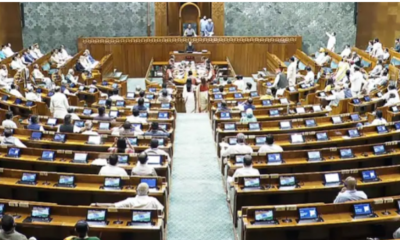
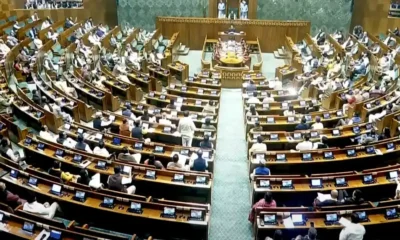
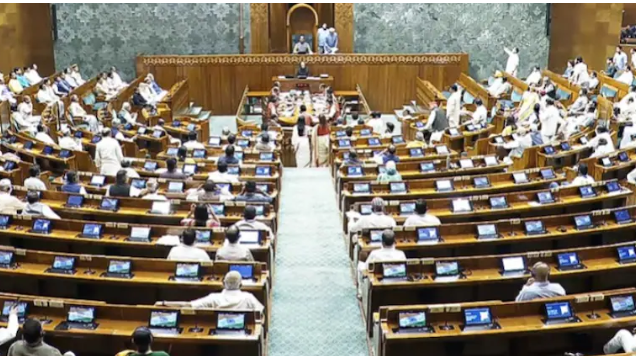
The Lok Sabha on Thursday passed the Taxation and Other Laws (Amendment) Bill, 2026, paving the way for the central government to permit banks and payment service providers to levy charges on Unified Payments Interface (UPI) and other notified electronic payment modes.

The amendment changes provisions of the Payment and Settlement Systems Act, 2007, removing the existing legal restriction that barred banks and payment system providers from charging Merchant Discount Rate (MDR) on specified electronic payment methods.

The Bill was passed by voice vote after the House resumed proceedings at 2 pm following an earlier adjournment.

What changes under the Bill?

The amendment replaces the reference to electronic payment modes prescribed under Section 269SU of the Income Tax Act with a provision allowing the central government to notify one or more electronic payment modes for which charges may be permitted.

The revised provision states that the government may specify the applicable electronic payment modes through an official notification after the law comes into force.

At present, Section 10A of the Payment and Settlement Systems Act prohibits banks and payment system providers from imposing any direct or indirect charges on prescribed electronic payment modes.

Meanwhile, Section 269SU of the Income Tax Act requires businesses with an annual turnover exceeding ₹50 crore to provide specified digital payment options, including BHIM-UPI QR codes and RuPay debit cards.

UPI remains free for now

While RTGS and NEFT transactions already attract service charges in certain cases, UPI payments have so far remained exempt from Merchant Discount Rate (MDR).

The amendment itself does not immediately introduce charges on UPI transactions. Instead, it authorises the government to notify eligible electronic payment modes and permit charges in the future.

Government cites sustainability of digital payments ecosystem

According to the government, the proposed changes aim to create a sustainable revenue model for banks, payment service providers (PSPs) and payment infrastructure companies that support India’s rapidly expanding digital payments ecosystem.

The proposal seeks to balance the interests of consumers and small businesses while ensuring adequate investment in payment infrastructure.

RBI Governor: Too early to discuss MDR rollout

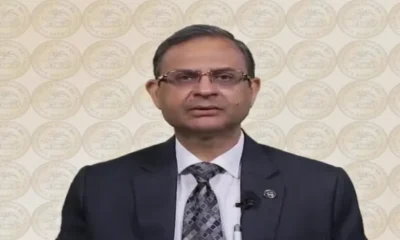
A day before the Bill was passed, Reserve Bank of India Governor Sanjay Malhotra described discussions on imposing MDR on digital payments as “premature”.

He said investment in payment infrastructure must be funded either through taxation or by adopting a “user pays” model through Merchant Discount Rate.

Malhotra noted that the government is currently bringing the legislative amendment and said it would be appropriate to wait for further developments before drawing conclusions.

He also said that under the user-pays principle, the merchant or person using the service bears the cost, whereas in the absence of MDR, the expenses are effectively supported through public taxation.

Industry has long sought MDR on UPI

The question of introducing MDR on UPI has remained a key issue for banks and payment industry stakeholders, who have argued for a sustainable compensation mechanism as digital payment volumes continue to rise.

Some industry observers have suggested that, if introduced in the future, MDR could apply only to higher-value merchant transactions rather than peer-to-peer UPI transfers. However, the Bill does not specify any such threshold or implementation framework.

India News

Delhi Building Collapse: Many trapped as 5-storey structure comes down

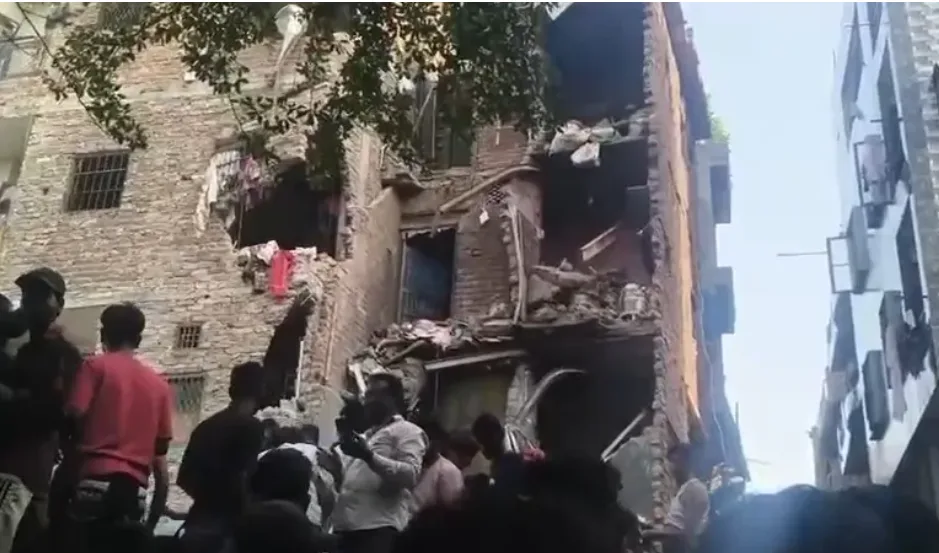
A building collapsed in Delhi’s Seemapuri area on Wednesday, with several people feared trapped under the debris. Rescue teams have reached the spot.
Published

on

A building collapsed in Delhi’s Seemapuri area on Wednesday, with several people feared to be trapped under the debris.

The incident took place in northeast Delhi, where emergency teams were rushed to the site after the collapse was reported.

Rescue operation underway

A search and rescue operation has been launched at the site as authorities work to determine whether people are trapped beneath the debris.

The Delhi Fire Service received information about the collapse at around 3:30 pm and sent fire tenders to the location. An official said some people might be trapped in the debris.

The incident has prompted an emergency response in the area, with rescue personnel working to locate anyone who may be trapped.

Collapse comes a month after Satya Niketan tragedy

The Seemapuri incident comes about a month after a building collapse in Delhi’s Satya Niketan area, where people were trapped after a multi-storey structure came down.

Further details about the Seemapuri collapse, including the number of people trapped and any casualties, are awaited as the rescue operation continues.

Continue Reading

India News

Bhagwant Mann hits back at BJP over CBI search in Sangrur

Bhagwant Mann hit out at the BJP over a CBI search in Sangrur, alleging political targeting and claiming the agency returned empty-handed after a nearly six-hour search.
Published

on

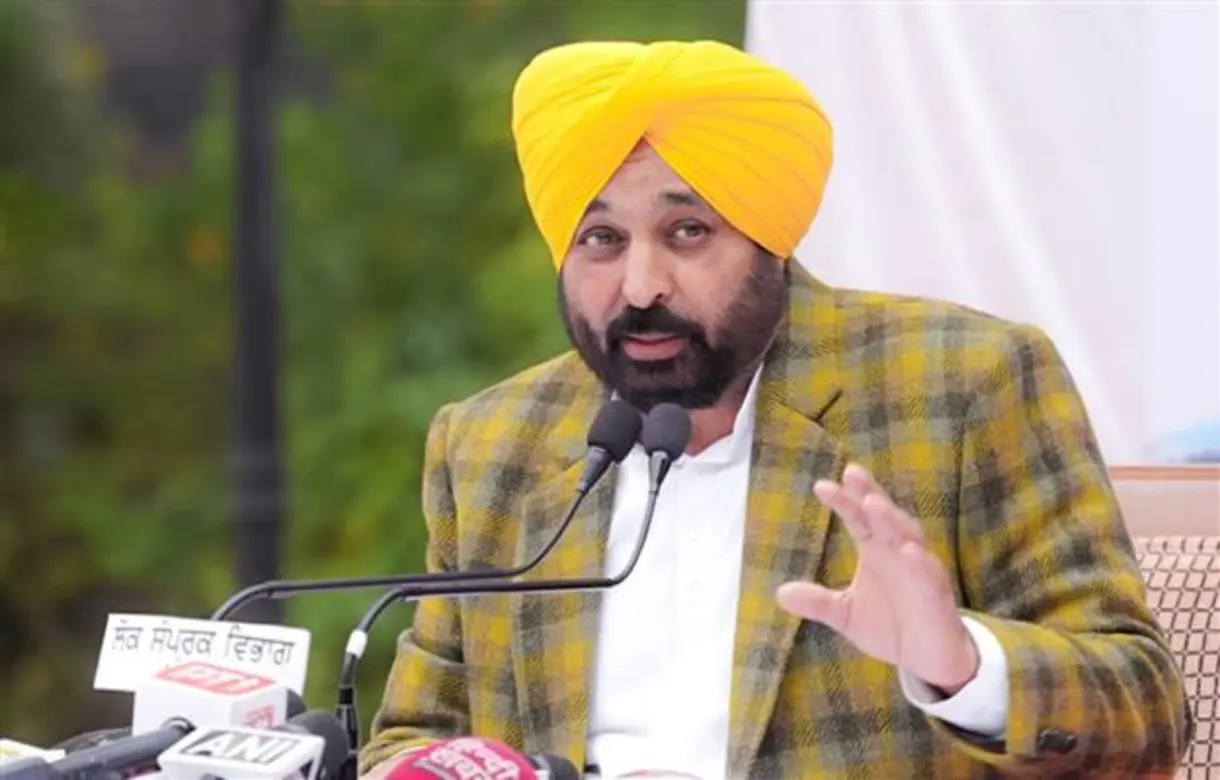
Punjab Chief Minister Bhagwant Mann has criticised the BJP over a CBI search at the residence of his officer on special duty (OSD) Rajbir Singh Ghuman in Sangrur, alleging that central agencies are being used against political opponents ahead of elections.

Mann said the CBI action was an indication that elections were approaching and accused the BJP of using agencies such as the CBI and Enforcement Directorate against Opposition leaders or their associates.

“The CBI raid shows that elections have arrived,” Mann said.

The Punjab Chief Minister cited cases involving Jharkhand Chief Minister Hemant Soren and leaders close to former West Bengal Chief Minister Mamata Banerjee while alleging that central agencies have been used ahead of elections. He also said Aam Aadmi Party leaders faced similar action before the Delhi Assembly elections.

Mann says CBI returned empty-handed

According to Mann, the CBI search at Gharachon village in Sangrur lasted nearly six hours.

The Chief Minister claimed that the agency “did not find anything” during the search and returned empty-handed. He alleged that the action was part of a BJP conspiracy to defame him and his government.

Mann also linked the CBI action to the BJP’s anti-drug campaign in Punjab and questioned the political impact of the campaign.

He alleged that the CBI action was politically motivated and intended to create a narrative against the AAP government ahead of upcoming elections.

CBI search at Mann aide’s house

Earlier, a CBI team searched the house of Mann’s OSD Rajbir Singh Ghuman in Gharachon village in Sangrur.

The search triggered a political confrontation involving the ruling AAP and Opposition parties. Representatives of Waris Punjab De and Akali Dal Punar Surjeet gathered in the village and welcomed the CBI team.

After the CBI vehicles left the area, people were seen beating dhols, performing bhangra and showering flower petals on the vehicles carrying the agency officials.

Sources cited in the report said the CBI was investigating allegations involving people accused of causing significant losses to Punjab and looting public money.

BJP hits back at Bhagwant Mann

BJP leader Tarun Chugh criticised the response to the CBI search, calling it an “extraordinary display of shamelessness”.

Taking a swipe at AAP chief Arvind Kejriwal, Chugh said the time for political drama was over and that those responsible would have to answer for money allegedly stolen from the people of Punjab.

“Stop the drama. Let the investigation proceed and let the facts speak,” he said.

Continue Reading

India News

India’s 3-part peace plan to end Russia-Ukraine war explained

India has proposed a three-part truce plan for the Russia-Ukraine war, focusing on energy infrastructure, Black Sea trade and commercial shipping.
Published

on

India has proposed a three-part truce plan aimed at reducing hostilities in the Russia-Ukraine war, with the proposal focusing on energy infrastructure, Black Sea trade and commercial shipping.

New Delhi conveyed the proposal to Ukraine during External Affairs Minister S Jaishankar’s visit to Kyiv last month, people familiar with the development said.

Ukrainian Foreign Minister Andrii Sybiha confirmed that Kyiv had received the proposal and described it as the most comprehensive among four international initiatives under consideration for ending the conflict.

What is in India’s three-part truce plan?

India’s proposal seeks action on three key areas linked to the continuing conflict.

First, it calls for an end to attacks on energy facilities and other infrastructure.

Second, the plan seeks to ensure that grain and energy continue to move through Black Sea ports, protecting important commodity flows.

Third, it proposes ending attacks on commercial shipping travelling through the Black Sea.

The proposal therefore brings together energy infrastructure, trade and maritime security as part of a broader ceasefire framework.

How does Ukraine view India’s proposal?

Ukraine has said it is willing to consider different formats for a truce.

Mr Sybiha said any agreement should go beyond combat operations and address attacks on energy and port infrastructure as well as the situation in the Black Sea.

Ukraine has also received ceasefire proposals from Turkey, Egypt and the United States. According to diplomatic sources, India’s plan differs from the Egyptian and Turkish proposals, which primarily focus on maintaining the flow of grain from the Black Sea by seeking an end to attacks on commercial shipping.

The US proposal, meanwhile, focuses on an “energy ceasefire”.

India steps up peace efforts

India has maintained that dialogue and diplomacy are the way forward for resolving conflicts.

Earlier this week, Mr Jaishankar said New Delhi had moved beyond advocacy and was holding practical discussions with both Moscow and Kyiv on reducing hostilities.

He said India had been discussing issues including the safety of Black Sea shipping, grain and energy exports and possibilities for avoiding attacks.

The proposal comes as India seeks a more active role in diplomatic efforts to reduce the intensity of the Russia-Ukraine conflict while continuing its engagement with both sides.

Continue Reading

Trending

© Copyright 2022 APNLIVE.com