English हिन्दी
Connect with us

India News

Centre rejects ethanol link to sugar price hike, cites lower production and crop damage

The Centre has rejected claims linking the sugar price hike to ethanol production, citing lower domestic output, festive demand, crop damage, global supply pressures and hoarding.


Published

on

The Centre has rejected claims that the recent increase in sugar prices is linked to the diversion of sugar for ethanol production. The government said the price rise has instead been driven by lower-than-expected domestic sugar production, increased festive-season demand, crop damage, tightening global supplies and hoarding.

Sugar prices increased from Rs 48.18 per kg on July 20 to Rs 55.70 per kg on August 20. The government has taken several measures to improve domestic availability and contain further price increases.

The Ministry of Consumer Affairs, Food and Public Distribution said it was incorrect to attribute the rise in sugar prices to ethanol production. According to the ministry, the proportion of sugar diverted for ethanol has actually declined from around 12% in the 2022-23 sugar season to about 9% in 2025-26.

The government also said nearly three-fourths of India’s ethanol production now comes from grains, particularly maize.

Sugar production estimate falls short

Sugar production during the current season is expected to be around 306 lakh metric tonnes (LMT), below the initial estimate of 343 LMT made by sugarcane-growing states.

The Centre attributed the production shortfall partly to sugarcane diseases, including Red Rot and Top Borer, along with waterlogging caused by excessive rainfall. Despite the lower output, the government said existing stocks are adequate to meet domestic requirements until the next crushing season begins in October.

Global sugar supply also under pressure

The government said rising sugar prices are not an India-specific issue, with global supplies also expected to tighten.

Government estimates indicate that the global sugar market could face a deficit of around 33 LMT in 2026-27. International sugar prices increased from $474 per tonne on June 30 to $552 per tonne on August 20, representing a rise of more than 16%.

Government measures to control sugar prices

The Centre has introduced several measures to prevent further price increases and ensure adequate supplies.

A stock limit of 400 tonnes has been imposed on sugar dealers across the country until November 30. From September 1, bulk consumers will also be restricted from holding sugar stocks equivalent to more than 15 days of consumption.

Government officials from the Centre and states are conducting physical verification of sugar stocks at mills to detect hoarding and prevent artificial scarcity.

The Centre has also approved duty-free imports of 10 LMT, or 1 million tonnes, of raw sugar to strengthen domestic supplies.

States and sugar mills have been advised to start the crushing season from October 15. The government expects sugar production in October to cross 10 LMT, compared with the usual 3-5 LMT, which could improve availability during the festive period.

Centre defends ethanol blending programme

The government also defended its ethanol-blending programme, saying it has helped reduce excess sugar stocks and improve the financial position of sugar mills.

India generally produces around 320-340 LMT of sugar annually, while domestic consumption is estimated at about 280-290 LMT. The Centre said surplus stocks can tie up working capital and contribute to delays in payments to sugarcane farmers.

According to the government, 97% of sugarcane dues for the 2025-26 season had been paid to farmers as of August 20. It also said the improved financial position of the sugar industry has reduced its dependence on government support.

The government said sugar prices for consumers have remained broadly stable over the longer term, rising by around 3% annually between August 2024 and July 2026.

Continue Reading

India News

Rahul Gandhi protests with pellet gun victim, demands FIR

Rahul Gandhi sat on a dharna outside the Parliament Street police station with student protester Sahil Lochab, demanding an FIR over alleged pellet gun injuries.

Published

on

Rahul-Gandhi

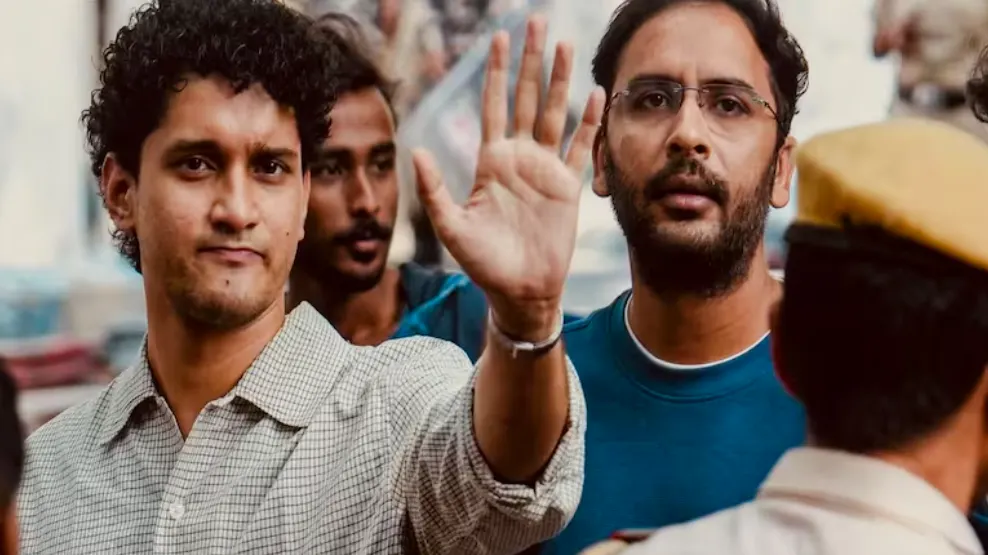
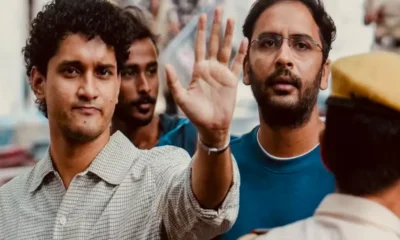
Rahul Gandhi on Friday staged a protest outside the Parliament Street police station along with student protester Sahil Lochab, demanding registration of an FIR over alleged pellet gun injuries sustained during a student protest in Delhi.

The Leader of Opposition in the Lok Sabha had earlier sought accountability over allegations that pellet guns were used against students. He entered the police station with Lochab and refused to leave after police officials declined to register an FIR, according to the report.

Gandhi later sat on a dharna outside the police station with Lochab and his mother. Congress said the protest would continue until an FIR was filed. Priyanka Gandhi also joined the protest.

Rahul Gandhi shows pellets, cites medical reports

During the protest, Rahul Gandhi displayed a small box containing pellets and said they had been recovered from Lochab’s body.

Gandhi claimed that around 200 pellets were lodged in the student’s body and three were in his eye. He also showed medical reports from Lady Hardinge Medical College and AIIMS, saying they documented more than 200 pellets in Lochab’s body.

Gandhi alleged that Lochab was hit by a pellet gun while peacefully protesting at Jantar Mantar on July 20 and said the injury had put the vision in one of his eyes at risk.

“If police did not fire these pellets, then somebody must have fired them,” Gandhi said, while demanding that an FIR be registered to investigate what happened.

Delhi Police cites Supreme Court panel

The Delhi Police told Gandhi that the Supreme Court had constituted a High-Powered Expert Committee to examine allegations of excessive and disproportionate use of force by police and paramilitary forces during the student protests.

Gandhi, however, continued his protest and demanded registration of an FIR. He said he had been told by police officers that an FIR could not be registered because there were “orders from the top”.

The Delhi Police has denied allegations that pellet guns were used against student protesters. The Rapid Action Force, the riot-control wing of the CRPF, had been deployed at Jantar Mantar during the protests.

BJP attacks Rahul Gandhi over protest

Union Minister JP Nadda criticised Rahul Gandhi’s protest, calling it “cheap, attention-seeking politics”. He alleged that the Congress leader was using the issue to divert attention from the ongoing controversy surrounding the Vande Mataram row.

BJP MP Ravi Shankar Prasad also criticised the protest, alleging that Gandhi was engaging in the “politics of anarchy”. He said police had informed Gandhi that an FIR had already been registered regarding the incident and that the matter was being investigated.

Rahul Gandhi had earlier raised Sahil Lochab’s case

Rahul Gandhi had previously raised Sahil Lochab’s case in July, presenting the 19-year-old student before the media and alleging that he had been struck by a pellet gun during a march on Parliament on July 20.

The march was linked to the student agitation over the NEET paper leak and the demand for the resignation of then Union Education Minister Dharmendra Pradhan.

Gandhi had also written to Union Home Minister Amit Shah, seeking accountability over what he described as a “barbaric assault” on peacefully protesting students and asking whether the use of force, including pellet guns, had been authorised.

Continue Reading

India News

NHAI expands Rs 350 monthly toll pass to 121 toll plazas: How to apply 

NHAI has expanded its digital FASTag Local Pass to 121 toll plazas. Check who is eligible for the Rs 350 monthly pass and how to apply online.

Published

on

Toll plaza

The National Highways Authority of India (NHAI) has expanded its digital FASTag Local Pass facility to 121 toll plazas across India, making it easier for eligible local commuters to obtain a monthly toll pass without visiting a toll plaza.

Under the new system, eligible commuters can apply for the Local Pass through the Rajmargyatra mobile app. The facility removes the need for physical visits and manual submission of documents where the required information can be verified digitally.

The Ministry of Road Transport and Highways said the initiative is aimed at making National Highway travel more convenient and citizen-friendly.

Who is eligible for the Rs 350 monthly toll pass?

The Local Pass is intended for residents living within a 20-km radius of an eligible toll plaza.

The monthly pass, starting at Rs 350, allows eligible commuters to make unlimited journeys through the respective toll plaza during the month, subject to applicable rules.

It can be particularly useful for people who regularly cross the same toll plaza for work, daily errands or other routine travel.

However, the digital Local Pass facility is currently available only at 121 toll plazas. Commuters therefore need to check whether their toll plaza is covered before applying.

How to apply for the NHAI Local Pass

Eligible commuters can apply for the Local Pass through the Rajmargyatra mobile app.

The digital system uses consent-based integration with government platforms such as DigiLocker and VAHAN to verify information related to the applicant.

The details checked include the applicant’s residential address, vehicle information and the FASTag linked to the vehicle.

The applicant’s eligibility is then determined through GIS-based verification, which checks whether the registered residential address falls within the prescribed 20-km radius of the relevant toll plaza.

What information is checked?

After obtaining the applicant’s consent, the system retrieves relevant information from digital government records.

The information includes:

  • Residential address
  • Vehicle details
  • FASTag linked to the vehicle
  • Location of the registered address in relation to the toll plaza

According to the Ministry, digital records and GIS-based verification eliminate the need for manual documentation and physical verification where the required information can be verified digitally.

Where is the digital Local Pass available?

NHAI has extended the digital Local Pass facility to 121 toll plazas across the country.

Commuters can check the list of eligible toll plazas through the Rajmargyatra portal before starting the application process.

The facility was initially introduced in July 2026 at the Mundka-Bakkarwala Toll Plaza on Delhi’s Urban Extension Road-II (UER-II). It was subsequently expanded to more than 120 toll plazas.

The government has said the facility will be rolled out at additional toll plazas in the coming months.

Why has NHAI introduced the digital system?

Previously, commuters seeking a Local Pass had to visit the concerned toll plaza and submit documents to establish that they lived within the required 20-km radius.

The new digital process is intended to reduce paperwork and manual intervention while making the eligibility verification process quicker and more transparent.

The government has described the initiative as part of the Digital India vision and its efforts to improve the Ease of Living for citizens.

For eligible local commuters who frequently use a covered toll plaza, the monthly pass starting at Rs 350 provides an online alternative to the earlier physical application process.

Continue Reading

India News

DoT asks telcos to block new SIMs for subscribers with 9 connections

The Department of Telecommunications has directed telecom operators to deny new SIM connections to subscribers who already have nine mobile connections in their name.

Published

on

The Department of Telecommunications (DoT) has directed telecom service providers to deny new mobile connections to subscribers who already have the maximum permitted number of nine connections in their name.

According to an official circular dated August 17, telecom operators must put appropriate technical and organisational measures in place from August 24 to identify subscribers seeking mobile connections beyond the prescribed limit.

The operators have been asked to inform such subscribers that they have already reached the maximum number of mobile connections permitted to an individual and that another connection cannot be provided.

Digital Intelligence Platform to help identify subscribers

The DoT has directed telecom service providers to use the Digital Intelligence Platform (DIP) for the process. The platform has been established by the department using subscriber data records uploaded by telecom operators.

The circular said details of subscribers who have already obtained mobile connections beyond the prescribed limit are available on the DIP.

From August 23, a representative image of the photograph of each subscriber who has already reached the prescribed limit of mobile connections in their name will also be made available on the platform.

The move is aimed at helping telecom operators identify subscribers attempting to obtain additional mobile connections after reaching the prescribed limit and prevent them from crossing that limit.

Telecom operators asked to streamline process by November 30

The DoT has asked telecom service providers to streamline the process with the Digital Intelligence Platform by November 30.

The circular also provides for action against mobile connections activated beyond the permitted limit until the required measures are implemented.

It said that, until such measures are implemented by a telecom service provider on a post-facto basis, any mobile connection activated beyond the prescribed limit for a day would be immediately suspended, in accordance with the terms and conditions of the Customer Application Form (CAF).

The connection would remain suspended until the issue related to crossing the permitted limit for mobile connections is resolved.

Continue Reading

Trending

© Copyright 2022 APNLIVE.com

Left Menu Icon