English हिन्दी
Connect with us

India News

India’s 3-part peace plan to end Russia-Ukraine war explained

India has proposed a three-part truce plan for the Russia-Ukraine war, focusing on energy infrastructure, Black Sea trade and commercial shipping.

Published

on

India has proposed a three-part truce plan aimed at reducing hostilities in the Russia-Ukraine war, with the proposal focusing on energy infrastructure, Black Sea trade and commercial shipping.

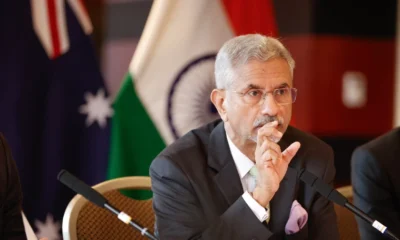
New Delhi conveyed the proposal to Ukraine during External Affairs Minister S Jaishankar’s visit to Kyiv last month, people familiar with the development said.

Ukrainian Foreign Minister Andrii Sybiha confirmed that Kyiv had received the proposal and described it as the most comprehensive among four international initiatives under consideration for ending the conflict.

What is in India’s three-part truce plan?

India’s proposal seeks action on three key areas linked to the continuing conflict.

First, it calls for an end to attacks on energy facilities and other infrastructure.

Second, the plan seeks to ensure that grain and energy continue to move through Black Sea ports, protecting important commodity flows.

Third, it proposes ending attacks on commercial shipping travelling through the Black Sea.

The proposal therefore brings together energy infrastructure, trade and maritime security as part of a broader ceasefire framework.

How does Ukraine view India’s proposal?

Ukraine has said it is willing to consider different formats for a truce.

Mr Sybiha said any agreement should go beyond combat operations and address attacks on energy and port infrastructure as well as the situation in the Black Sea.

Ukraine has also received ceasefire proposals from Turkey, Egypt and the United States. According to diplomatic sources, India’s plan differs from the Egyptian and Turkish proposals, which primarily focus on maintaining the flow of grain from the Black Sea by seeking an end to attacks on commercial shipping.

The US proposal, meanwhile, focuses on an “energy ceasefire”.

India steps up peace efforts

India has maintained that dialogue and diplomacy are the way forward for resolving conflicts.

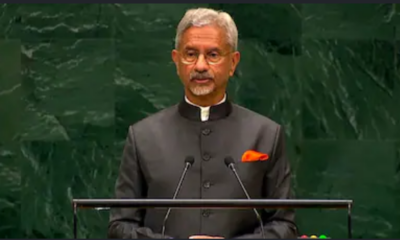
Earlier this week, Mr Jaishankar said New Delhi had moved beyond advocacy and was holding practical discussions with both Moscow and Kyiv on reducing hostilities.

He said India had been discussing issues including the safety of Black Sea shipping, grain and energy exports and possibilities for avoiding attacks.

The proposal comes as India seeks a more active role in diplomatic efforts to reduce the intensity of the Russia-Ukraine conflict while continuing its engagement with both sides.

India News

PM Modi recalls Bhuj earthquake, Covid lessons from 25-year journey

Prime Minister Narendra Modi recalled the lessons from crises such as the Bhuj earthquake and Covid-19 as he reflected on his 25-year journey in government.

Published

on

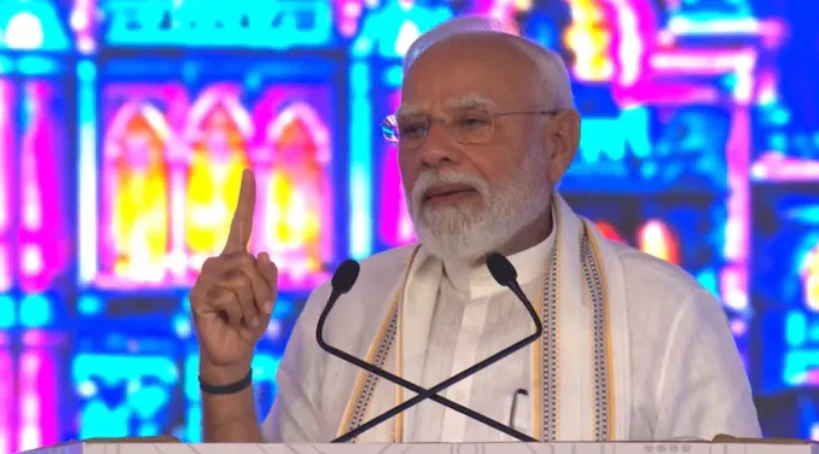
Prime Minister Narendra Modi on Wednesday reflected on his 25-year journey as head of government, recalling the lessons he learnt from major events including the Bhuj earthquake, the Chandrayaan mission and the Covid-19 pandemic.

Modi marked 25 years since he first took oath as Gujarat Chief Minister on October 7, 2001. He is now serving his third term as Prime Minister.

Addressing the ‘Viksit Bharat Sankalp Sabha’ organised by the BJP as part of the ‘Seva Sankalp Abhiyan’, PM Modi expressed gratitude to the people of India, the BJP, the NDA and political colleagues for their trust.

“Seva hi dharm hai” (service is duty), the Prime Minister said, adding that he “lives for mission, not ambition”.

What PM Modi said about learning

Reflecting on his childhood in Vadnagar, PM Modi recalled how he used to be among the first students to reach school.

He said the eagerness to learn became a part of his life and that he continues to consider himself a student.

“I try to learn something new every day,” Modi said, adding that he had prayed that his ability to learn should never diminish.

He said that the more he learns, the greater his ability to do something for the country would become.

From Bhuj earthquake to Covid

Looking back at some of the major experiences of his journey, PM Modi said the Bhuj earthquake taught him to remain steadfast during reconstruction.

He also referred to Chandrayaan, saying the mission taught him to rise after failure.

On the Covid-19 pandemic, Modi said it made him understand the importance of the nation’s collective consciousness.

The Prime Minister linked these experiences to the broader lessons he has gathered during his years in public life.

PM Modi on the role of media

PM Modi also spoke about the media’s role in his journey, saying it provided him with inspiration through both bitter and sweet experiences.

He said the experiences of his journey had shown him the importance of bringing sensitivity into policymaking.

According to Modi, every village and every poor person taught him that resources may be limited, but dreams should be big and determination should remain strong.

“25 years of public trust” an asset for country

PM Modi said the trust of the people and their hard work had always been his greatest strength.

He also said that every citizen has the greatest right over him.

Reflecting on completing 25 consecutive years as the head of a government, Modi expressed gratitude to the people for choosing him as their leader and said that the responsibility towards the country was the greatest.

He described the experience and public trust accumulated over the 25 years as a valuable asset.

Modi said this asset did not belong only to him but belonged to the country, with every child of Mother India entitled to it.

The Prime Minister took oath as Gujarat Chief Minister on October 7, 2001. He remained in the post until 2014 before becoming Prime Minister. He is currently serving his third term as Prime Minister.

Continue Reading

India News

RBI hikes repo rate by 25 basis points to 5.5% amid inflation

The RBI raised the repo rate by 25 basis points to 5.5% on October 7, 2026, amid rising inflation concerns and a challenging global economic environment.
Published

on

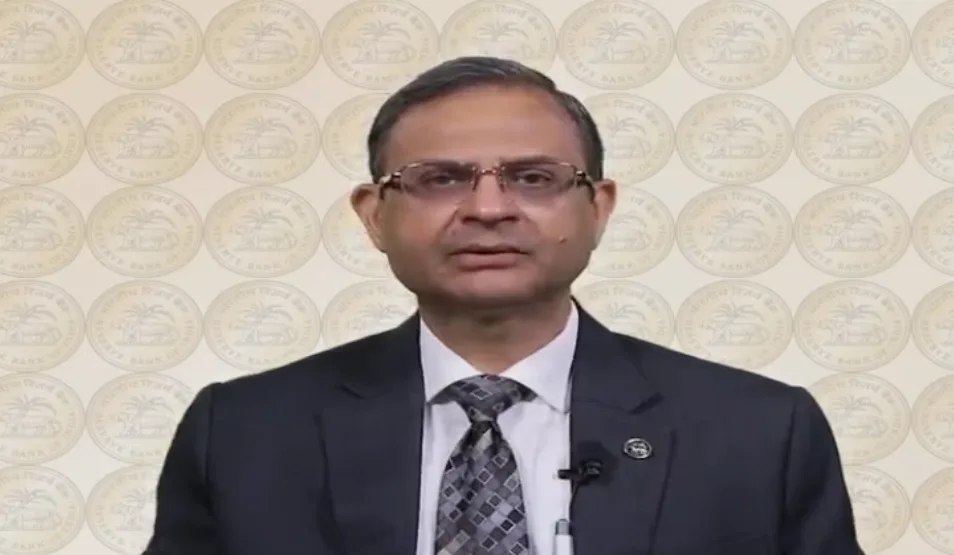
The Reserve Bank of India (RBI) raised its benchmark repo rate by 25 basis points to 5.5% on Wednesday, October 7, as policymakers respond to mounting inflationary pressures and a challenging global economic environment.

The decision marks the central bank’s first interest rate increase in nearly four years. The six-member Monetary Policy Committee (MPC), headed by RBI Governor Sanjay Malhotra, took the decision during its latest monetary policy review.

The rate increase follows a period in which the RBI cut the repo rate by a cumulative 125 basis points in 2025, bringing it down from 6.5% to 5.25%. The central bank had subsequently kept the rate unchanged through several policy reviews.

Why the RBI raised the repo rate

Rising inflation has emerged as a key concern for the central bank. India’s consumer inflation rose to 4.82% in August, moving above the RBI’s 4% target for the third consecutive month.

Higher crude oil prices and food costs have added to concerns about further price pressures. The geopolitical situation and a weak monsoon have also increased uncertainty around the inflation outlook.

India’s dependence on imported crude oil makes the economy vulnerable to increases in international energy prices, which can raise import costs and contribute to domestic inflation.

Against this backdrop, the RBI’s decision signals a shift towards tighter monetary policy. The central bank’s approach will remain important for determining how it balances price stability with the need to sustain economic growth.

What the repo rate hike means

The repo rate is the interest rate at which the RBI lends money to banks against eligible securities. Changes in this rate can influence borrowing costs across the financial system.

A higher repo rate can make borrowing more expensive for banks and, depending on how lenders adjust their rates, for households and businesses as well.

For borrowers with loans linked to external benchmarks, the increase could put upward pressure on interest payments and equated monthly instalments (EMIs). However, the actual impact will depend on individual loan terms, benchmark arrangements and lenders’ decisions.

Higher interest rates can also moderate demand in the economy, helping to contain inflationary pressures over time.

RBI’s growth outlook remains important

Despite concerns about inflation, India’s economic growth has remained resilient. The RBI has projected GDP growth of 7.1% for the 2026-27 financial year, according to .

The latest policy decision therefore comes at a time when policymakers must weigh rising prices against the risks that tighter financial conditions could pose to economic activity.

The RBI’s assessment of future inflation, growth and liquidity conditions will remain important in determining the direction of monetary policy in the coming months.

What to watch after the policy decision

Markets and borrowers will be watching the RBI’s guidance on future interest rate decisions, its assessment of inflation risks and its approach to liquidity management.

The 25-basis-point increase marks a change from the rate-cutting phase of 2025 and the subsequent pause. Whether further increases follow will depend on the evolving economic situation and the central bank’s assessment of price stability and growth.

The repo rate decision is therefore an important development for India’s monetary policy, with potential implications for borrowing costs, financial markets and the wider economy.

Continue Reading

India News

Supreme Court says will see if law was followed in CEC Gyanesh Kumar’s decisions

Published

on

By

CEC Gyanesh Kumar

With protests continuing for the third day on Sunday against Chief Election Commissioner Gyanesh Kumar, the Supreme Court on Monday issued notice to the Election Commission of India while saying it cannot go by newspaper reports alone.

The bench headed by Chief Justice of India Justice Surya Kant was hearing the pleas that CEC Gyanesh Kumar was taking unilateral decisions in the poll body even when the other Election Commissioners differed. The bench said if law wasn’t followed, it can undo it, referring to the plea which highlighted that the EC should have followed collective decision making.

The main grouse against the unilateral functioning of the Election Commission is that in the garb of the Special Intensive Revision (SIR) of electoral rolls over 13 crore citizens have been disenfranchised.

With the plea due for hearing on Monday, Sunday saw pitched confrontations between protesters, some led by the All India Students’ Association (AISA) and other Left student bodies and some led by Cockroach Janta Party, with Delhi Police personnel. Many women protesters charged Delhi Police personnel without nametags groped them.

Several student leaders including AISA’s Neha Bora were picked up by police when they were on their way to Jantar Mantar to protest demanding the sacking or resignation of CEC Gyanesh Kumar. With the yellow amaltas, a winter flower, yet to bud, the police’s yellow barricades seemd to be in full bloom blocking access to the EC headquarters, Nirvachan Sadan on Ashoka Road.

The students are said to have gotten together near Andhra Bhavan circle on Ashoka Road and were making their way to Jantar Mantar. But police personnel were deployed to prevent them from going to Jantar Mantar, which was the seat of the July protests that revolved around the demand for the sacking of Dharmendra Pradhan following the successive leaks in NEET UG.

Continue Reading

Trending

© Copyright 2022 APNLIVE.com