English हिन्दी
Connect with us

India News

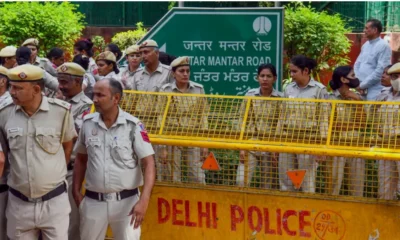
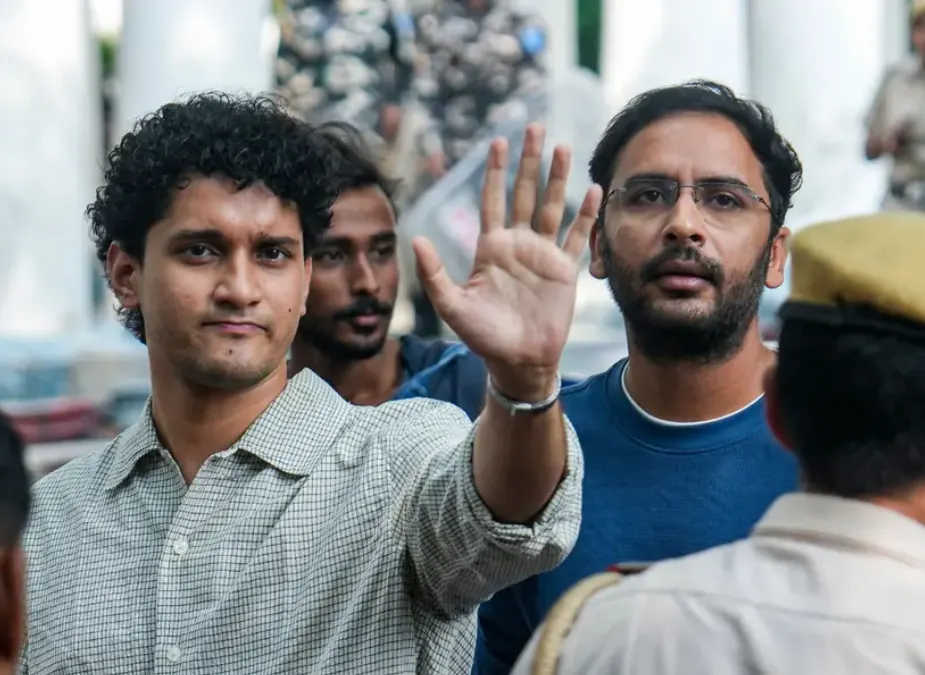
CJP claims Saurav Das, Ashutosh Ranka detained at Jantar Mantar

The Cockroach Janta Party (CJP) claimed that leaders Saurav Das and Ashutosh Ranka were detained by Delhi Police during a protest at Jantar Mantar against Chief Election Commissioner Gyanesh Kumar.

Published

on

Saurabh Das Ashutosh Ranka

The Cockroach Janta Party (CJP) claimed on Tuesday, October 13, that its leaders Saurav Das and Ashutosh Ranka had been detained during a protest in Delhi against Chief Election Commissioner Gyanesh Kumar. The party said its members had reached the protest site carrying the national flag.
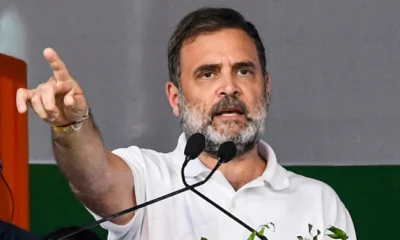
The CJP has been organising protests against alleged irregularities in the Special Intensive Revision (SIR) of electoral rolls. The party has demanded accountability from the Election Commission and the resignation of the Chief Election Commissioner.

CJP founder Abhijeet Dipke said that Saurav Das, Ashutosh Ranka and other party members had been detained, according to the party’s account.

Dipke criticised the restrictions on protests, saying that resistance could not be stopped by changing the status of a designated protest venue.

Why the CJP is protesting

The CJP has been protesting against Chief Election Commissioner Gyanesh Kumar over alleged irregularities in the voter-roll revision exercise. The party has raised concerns about the deletion and alleged manipulation of voters’ names. These claims remain allegations and should not be treated as independently established findings.

Earlier detention of CJP leaders

The latest reported detentions follow an earlier incident involving CJP founder Abhijeet Dipke and leaders Saurav Das and Ashutosh Ranka. The three were detained at Delhi’s Indira Gandhi International Airport on October 10 ahead of the planned Jantar Mantar demonstration.

According to related reporting, the three CJP leaders were released on October 11 following proceedings before an executive magistrate after furnishing a surety bond for maintaining peace and good behaviour for one year.

The CJP’s claims come amid its protests against Chief Election Commissioner Gyanesh Kumar over alleged irregularities in the voter-roll revision exercise.

India News

Supreme Court stays defamation case against Rahul Gandhi over PM Modi remarks

The Supreme Court has temporarily halted trial court proceedings in the criminal defamation case against Rahul Gandhi over his alleged remarks concerning Prime Minister Narendra Modi. The court has issued notices seeking responses within four weeks.

Published

on

Rahul Gandhi

The Supreme Court has stayed further proceedings before the trial court in a criminal defamation case against Congress leader Rahul Gandhi over his alleged remarks concerning Prime Minister Narendra Modi.

A bench comprising Justices Vikram Nath and Aparesh Kumar Singh issued notices to the Maharashtra government and the complainant, seeking their responses within four weeks. The order provides interim relief to Gandhi while the Supreme Court considers his challenge to an earlier Bombay High Court decision.

The case concerns remarks allegedly made by Gandhi in 2018. A magistrate’s order dated August 28, 2019, initiated proceedings against him in the criminal defamation case. The Supreme Court’s latest order temporarily pauses the trial court proceedings; it does not amount to a final ruling on the allegations.

Why Rahul Gandhi approached the Supreme Court

Gandhi challenged the Bombay High Court’s September 8 order, which declined to quash the summons issued against him in the criminal defamation case.

The complaint was filed by Maharashtra-based BJP member Mahesh Shrishrimal before a magistrate court in Girgaum, Mumbai. The complaint concerns remarks Gandhi allegedly made about Prime Minister Narendra Modi during a public address in Rajasthan on September 20, 2018.

The complainant alleged that Gandhi’s remarks were defamatory and affected the reputation of the Prime Minister and BJP members. These remain allegations and have not been established by a final court judgment. These are allegations in the complaint, rather than findings established by a final court judgment.

Gandhi had sought to have the criminal proceedings quashed, challenging the maintainability of the complaint and the complainant’s standing to bring the case.

What the Bombay High Court had ruled

On September 8, the Bombay High Court rejected Gandhi’s plea to quash the criminal defamation proceedings.

The Bombay High Court rejected Gandhi’s plea to quash the proceedings, holding that the complaint could not be dismissed at that stage merely on the ground that the complainant was a BJP member. It observed that whether the alleged remarks were directed solely at the Prime Minister or could also affect members of the party would require examination during the trial.

The High Court’s decision allowed the proceedings to remain in place, although it had earlier provided temporary protection to Gandhi to enable him to approach the Supreme Court.

What happens next

The Supreme Court has now stayed further proceedings before the trial court and sought responses from the Maharashtra government and Mahesh Shrishrimal within four weeks.

The Supreme Court has sought responses within four weeks. The next hearing date should be included only if it has been confirmed by the court or the reference report. The interim stay pauses the trial court process while the Supreme Court considers Gandhi’s challenge to the High Court’s order.

The latest development does not determine whether the alleged remarks amount to criminal defamation. That issue remains subject to the legal proceedings.

Continue Reading

India News

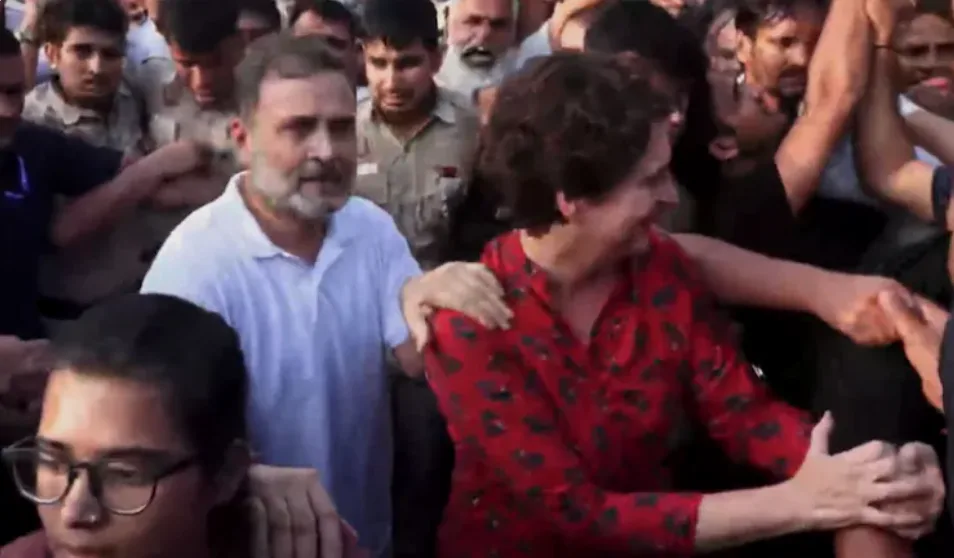
Rahul Gandhi leads INDIA bloc march to Supreme Court over voter list row

Rahul Gandhi led the INDIA bloc’s protest march towards the Supreme Court in New Delhi as opposition parties intensified their campaign over the voter list revision process and alleged electoral irregularities.

Published

on

Congress leader Rahul Gandhi led an INDIA bloc protest march towards the Supreme Court in New Delhi on Monday, October 12, as opposition parties stepped up their campaign over alleged irregularities in the revision of electoral rolls.

The demonstration was part of a wider opposition mobilisation demanding accountability from Chief Election Commissioner Gyanesh Kumar over the Special Intensive Revision (SIR) of voter lists. Opposition leaders have alleged irregularities in the revision of electoral rolls and have called for action against Chief Election Commissioner Gyanesh Kumar 

The opposition has accused the Election Commission of electoral irregularities in connection with the Special Intensive Revision (SIR) of electoral rolls. Rahul Gandhi has called for Chief Election Commissioner Gyanesh Kumar to resign 

INDIA bloc intensifies protest over voter lists

The march brought opposition parties together around their objections to the SIR process and their demand for Kumar’s resignation. Rahul Gandhi had called on political parties, students and civil society groups to participate in the demonstration.

The INDIA bloc has also raised broader concerns about electoral integrity and the treatment of voters whose names were removed from electoral rolls. The INDIA bloc has challenged alleged electoral irregularities in the SIR process and demanded accountability from Chief Election Commissioner Gyanesh Kumar. 
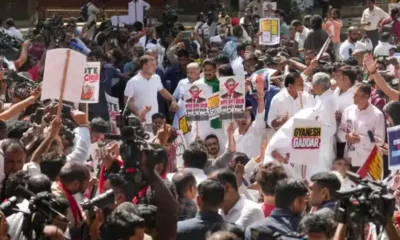
According to the report, the opposition’s legal team filed a petition against the poll panel chief over alleged ‘vote chori’ (vote theft). 

Chief Justice declines meeting request

Ahead of the march, Chief Justice of India Surya Kant declined a request to meet opposition leaders, according to reports citing sources familiar with the response.

The response did not prevent the opposition from proceeding with its planned march. The Supreme Court can consider legal challenges through its judicial process, rather than through an administrative meeting with a political delegation.

Security measures and metro restrictions in Delhi

Authorities tightened security in parts of central Delhi ahead of the demonstration. The Delhi Metro Rail Corporation announced that entry and exit at six stations would remain closed until 4 pm on October 12 for security reasons.

The affected stations were Patel Chowk, Janpath, Rajiv Chowk, Mandi House, Central Secretariat and Barakhamba Road. Interchange facilities remained available at the affected stations under the announced arrangement.

The restrictions came amid a series of protests in the capital over demands for Kumar’s resignation and allegations concerning the electoral roll revision process.

Dispute over the SIR process continues

The Special Intensive Revision has become a point of contention between opposition parties and the Election Commission, with opposition leaders alleging electoral irregularities in the revision of voter lists. 

The INDIA bloc’s campaign has focused on electoral irregularities and demands for accountability from the Election Commission’s leadership 

The dispute is now unfolding through both street protests and legal proceedings. The outcome will depend on the relevant judicial processes and any further decisions by the authorities concerned.

Continue Reading

India News

Rahul Gandhi calls protest against Gyanesh Kumar ‘Tandava’, says no plan needed

Rahul Gandhi compared the opposition’s protests against Chief Election Commissioner Gyanesh Kumar to Lord Shiva’s Tandava, saying the movement did not require a fixed plan and would continue.
Published

on

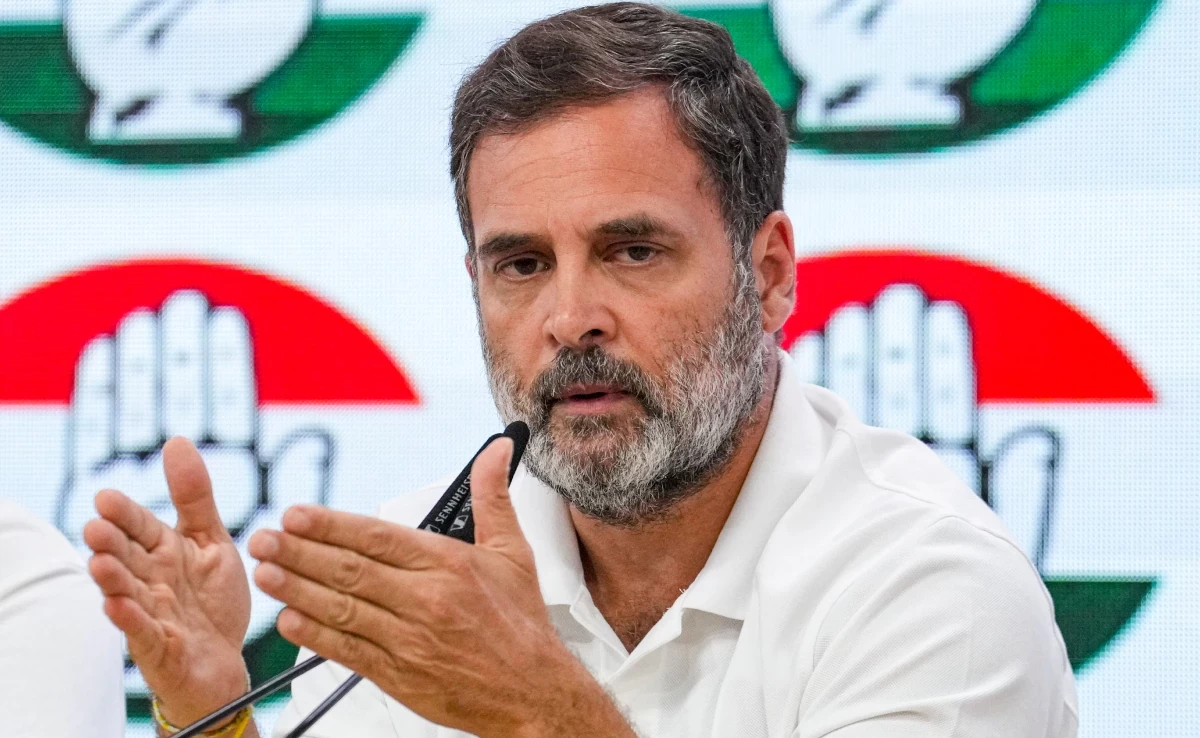
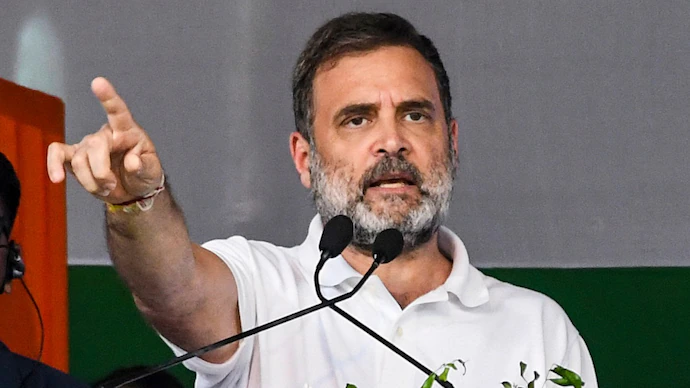
Congress leader Rahul Gandhi on Monday described the opposition’s ongoing protests against Chief Election Commissioner Gyanesh Kumar as Tandava, invoking Lord Shiva’s dance to explain why he believes the movement does not require a fixed strategy.

Speaking at a press conference in New Delhi, the Leader of the Opposition in the Lok Sabha said the protests were aimed at winning the hearts and minds of people across the country. The demonstrations concern alleged irregularities in the Special Intensive Revision (SIR) of electoral rolls and the opposition’s demand for action against Gyanesh Kumar.

Explaining a conversation with his sister, Congress MP Priyanka Gandhi Vadra, Rahul Gandhi said she had suggested that the party should make a plan for its protests.

“My sister tells me that we should make a plan. So I told my sister, ‘You are not understanding the point. This is Tandav. This is Lord Shiva’s dance. There is no planning in this,” he said.

He argued that the movement could take different forms depending on the circumstances, adding that the opposition had changed its approach when police prevented protesters from proceeding as initially intended.

Rahul Gandhi says all protests are part of one movement

Rahul Gandhi rejected the suggestion that demonstrations by different groups should be treated as separate protests. He said they were part of a broader movement to defend the Constitution and encouraged people from different political backgrounds to participate.

“All the protests are one protest. There are no parallel protests and the idea is India is marching,” he said.

The Congress leader added that the movement was open to anyone who wanted to defend the Constitution, regardless of their political affiliation.

Using the religious imagery again, Gandhi said people could join what he described as “Shiv ki Baraat”, or Lord Shiva’s procession.

He also referred to the Bharat Jodo Yatra, saying people had walked together during the campaign without a single leader dominating the procession. He described that experience as another example of the unity he associated with the movement.

Opposition plans march to Supreme Court

The remarks came as INDIA bloc leaders prepared to march towards the Supreme Court to continue their protest against the Election Commission and the SIR process.

Gandhi referred to an earlier sit-in at Akashvani Bhavan in Delhi, explaining that the original plan had been to travel by bus, sit at the location and get arrested. When police did not allow the protesters to proceed as intended, the approach changed.

He questioned whether the outcome had resulted from a predetermined plan or from adapting to the circumstances.

The opposition has been demanding Gyanesh Kumar’s removal over allegations concerning the electoral revision process. These are allegations made by opposition leaders and should not be treated as established findings.

Rahul Gandhi says resistance will continue

Gandhi said the protests were not limited to demonstrations on the streets, arguing that the opposition was seeking to influence public opinion.

“We are not fighting for the street, we are fighting for the mind, heart of Indian people,” he said.

He also said the movement would continue and reiterated his criticism of Gyanesh Kumar, Prime Minister Narendra Modi and Union Home Minister Amit Shah.

Asked about possible communication with the government, Gandhi said several people had reached out to those around him, although he had not been contacted directly. He maintained that he was making his position public through press conferences and public appearances.

The Congress leader’s remarks underscored his stated intention to continue the opposition’s campaign against the Election Commission and the SIR process, using different forms of protest rather than following a single fixed plan.

Continue Reading

Trending

© Copyright 2022 APNLIVE.com