English हिन्दी
Connect with us

Latest Politics News

SP-BSP tie up in UP: 38 seats to each, leave two for Congress and two for other allies

Published

on

[vc_row][vc_column][vc_column_text]Samajwadi Party (SP) president Akhilesh Yadav and Bahujan Samaj Party (BSP) chief Mayawati today (Saturday, Jan 12) announced an alliance for the Lok Sabha elections 2019, deciding to contest on 38 seats each, leaving two seats for the Congress and two for other allies.

The two parties have decided not to involve Congress in their battle against the BJP saying that there was no real gain in aligning with the party.

Addressing a press conference in Lucknow along with Akhilesh, Mayawati said, “We have left two Lok Sabha seats for other parties. Amethi and Rae Bareli have been left for Congress.” Uttar Pradesh has total 80 Lok Sabha seats.

About Congress, Mayawati said that BSP and SP’s past experiences with the party have been a basis for leaving it out of the 2019 alliance.

“Including Congress in the alliance will hurt SP-BSP prospects as Congress’s votes do not get transferred,” she said.

Training her guns at the ruling BJP as well as Congress, Mayawati said that the policies of both these parties have been mostly the same.

“Both the parties indulged in corruption in defence deals. Congress imposed declared emergency, today there is undeclared emergency,” said the BSP supremo.

Mayawati said the SP-BSP alliance “will give sleepless nights to Prime Minister Narendra Modi and BJP chief Amit Shah”.

Taking over from where the BSP chief stopped, SP supremo Akhilesh Yadav said, “The BJP has raked up the issue of caste in UP. People are being killed in encounters because of their caste. ”

Terming their alliance as a political revolution, Akhilesh Yadav said that the merger was necessary to bring down the soaring arrogance of the BJP.

“We have come together to rid the state and country of BJP’s religion and caste politics. This alliance was a must to destroy BJP, to defeat their arrogance. BJP can go to any extent to create differences in our workers, we must be united and counter any such tactic,” he added.

In what could be a message to his party workers, the Samajwadi Party chief further said that any insult to Mayawati would be an insult to him.

“I want to say to BJP that they should know that we (SP-BSP) are in this together. I am grateful to Mayawati for giving me equal status. They should know any insult to Mayawati is my insult,” he said.

The SP-BSP alliance comes exactly 25 years after the two parties joined hands to stop the BJP juggernaut at the height of the Ayodhya movement in 1993.

Both later formed the government with support of the Congress and Mulayam became chief minister. After around 18 months, BSP withdrew support and formed the government with support of BJP.

The two parties parted as sworn enemies, after Samajwadi workers roughed up Mayawati at a guest house in Lucknow for pulling out of their coalition government.

“For the sake of the nation, we decided to rise above the Lucknow guest house incident and again come together,” Mayawati stressed, a clarification aimed at PM Modi, who had at a recent rally in Agra scorned her for forgetting that episode while allying with the Samajwadi Party.[/vc_column_text][/vc_column][/vc_row][vc_row][vc_column][vc_column_text css=”.vc_custom_1547294438579{border-top-width: 10px !important;border-right-width: 10px !important;border-bottom-width: 10px !important;border-left-width: 10px !important;padding-top: 10px !important;padding-right: 10px !important;padding-bottom: 10px !important;padding-left: 10px !important;background-color: #d3d3d3 !important;border-radius: 10px !important;}”]The Congress said it would be a mistake to underestimate the party in UP. “Nobody should underestimate the Congress with its reach, presence and support base in Uttar Pradesh. Congress is an established party in the state,” said senior leader Abhishek Manu Singhvi.

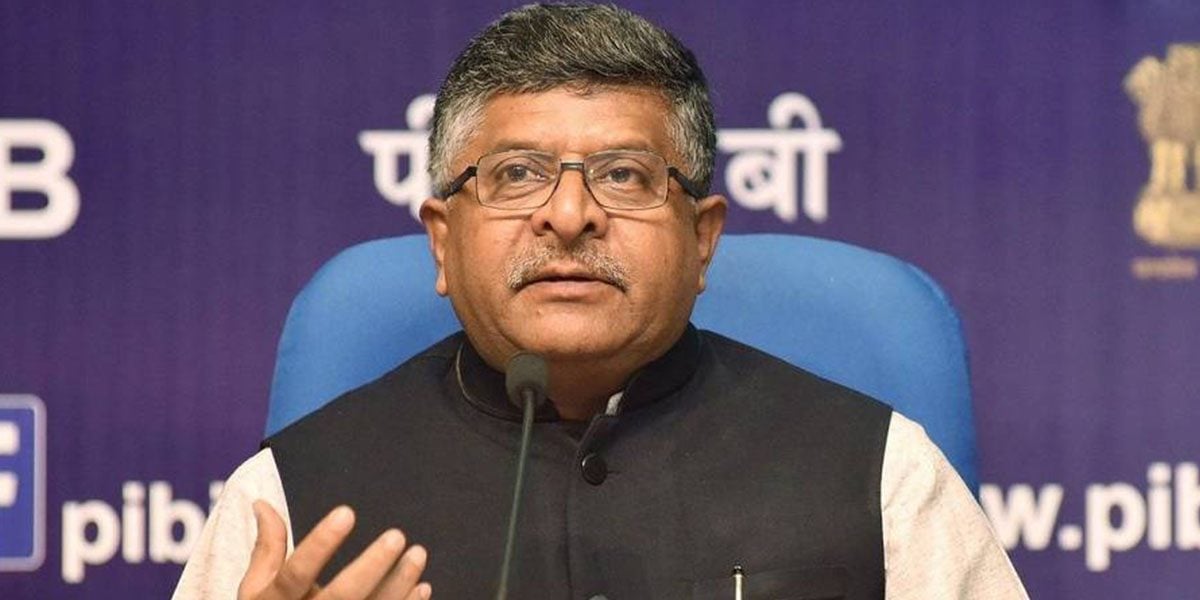
Union law minister Ravi Shankar Prasad dismissed the Samajwadi Party-Bahujan Samaj Party alliance saying it was a desperate effort for survival. “The SP BSP alliance is for their survival, it’s not in the interest of the country or Uttar Pradesh,” he said at media briefing on the second day of BJP’s national council meet in Delhi.[/vc_column_text][/vc_column][/vc_row][vc_row][vc_column][vc_column_text]Akhilesh and Mayawati, who had been exchanging barbs of ‘Bua’ and ‘Babua’ against each other during electioneering in the last Lok Sabha and Assembly polls, had previously come together for three Lok Sabha seats in the UP bypolls last year and won all.

“We have defeated the BJP in by-polls by coming together in the last year. The Congress even lost its deposit. This made us realise that of the SP and BSP come together, we can win against the BJP,” Mayawati said.

“This is not an alliance only to win the polls but to also represent the interests of the common people and Dalits, Muslims and other religious minorities,” said the BSP chief.

Significantly, she said this was a long-term relationship. “Ye lamba chalega (it will last long), even in the next Uttar Pradesh assembly election,” said Mayawati.

She beamed as Akhilesh Yadav, taking a question on what he thought of Mayawati as prime ministerial candidate, said: “Uttar Pradesh has given us prime ministers in the past and we will be happy to see another Prime Minister from Uttar Pradesh again.”

The SP-BSP tie-up could prove to be a deterrent for the incumbent BJP in the state. In 2014, the BJP had a vote share of 42.6 per cent – about the same as combined votes of SP and BSP – and won 71 out of 80 seats. Two other seats went to its ally Apna Dal.

The SP won five, the Congress two, and the BSP none.

In 2014, the BSP was runner-up in 34 seats, and the SP in 31.

The BJP may lose as many as 50 Lok Sabha seats in UP when the SP and BSP votes are combined.[/vc_column_text][/vc_column][/vc_row]

India News

Pawan Khera faces fresh setback as Supreme Court refuses relief in passport row case

Congress leader Pawan Khera faces fresh setback as Supreme Court refuses interim relief and directs him to seek bail from Guwahati High Court.

Published

on

Pawan Khera

Congress leader Pawan Khera suffered another legal setback on Friday after the Supreme Court of India declined to extend protection in a case linked to his remarks about Himanta Biswa Sarma’s wife.

A bench of the apex court refused to interfere with an earlier order that had stayed the transit anticipatory bail granted to Khera by the Telangana High Court. This decision leaves the Congress leader open to possible arrest by Assam Police in connection with the case.

During the hearing, Khera’s counsel sought interim protection, but the court declined the request and advised him to approach the appropriate court in Assam for relief. The bench clarified that the Guwahati High Court should decide any bail plea independently and on its merits.

“Am I a terrorist?” remark during hearing

While seeking protection, Khera’s legal team expressed concern over the urgency of the situation. In court, his counsel remarked, “Am I a terrorist?” highlighting the plea for temporary relief until a fresh bail application could be filed.

The Supreme Court also raised concerns over the submission of incorrect documents during the proceedings, adding another layer to the legal complications faced by the Congress leader.

Case linked to remarks on CM’s wife

The case stems from a press conference held earlier this month, where Khera made allegations regarding the citizenship status and financial assets of the Assam Chief Minister’s wife, Riniki Bhuyan Sharma.

He had claimed that she possessed multiple passports and owned undisclosed overseas properties. These allegations were strongly denied by the Chief Minister’s family, who termed them fabricated and misleading.

Legal battle intensifies

Earlier, the Telangana High Court had granted Khera temporary transit anticipatory bail, allowing him time to seek relief from a competent court in Assam. However, the Supreme Court stayed that order following a challenge by Assam authorities, escalating the legal battle.

With the latest ruling, Khera is now expected to move the Guwahati High Court for anticipatory bail as the case continues to unfold.

Continue Reading

India News

Congress suspends 5 Haryana MLAs over cross-voting in Rajya Sabha polls

Congress suspends five Haryana MLAs for cross-voting in Rajya Sabha elections, citing serious indiscipline and anti-party activities.

Published

on

The Congress has suspended five of its MLAs in Haryana for cross-voting during the recent Rajya Sabha elections, taking disciplinary action over what it described as “anti-party activities”.

The move came after the state unit reviewed the conduct of certain legislators during the polls, where some were found to have voted against the party’s authorised candidate.

Five MLAs suspended after disciplinary process

According to party sources, the MLAs were issued show-cause notices seeking an explanation for their actions. After reviewing their responses, the Congress disciplinary committee recommended suspension.

The decision was approved by the party leadership, including Congress president Mallikarjun Kharge, and has been implemented with immediate effect.

Party calls it ‘grave indiscipline’

Haryana Congress chief Udai Bhan said the action was necessary to uphold party discipline, stressing that defying the official party line during elections weakens organisational unity.

He said the party takes such violations seriously and will continue to act against any form of indiscipline.

Leadership backs strict action

Senior Congress leader and Leader of Opposition Bhupinder Singh Hooda supported the decision, saying it was taken after due consideration.

He noted that while Rajya Sabha elections are conducted through an open ballot system, allowing legislators some flexibility, the party retains the authority to initiate internal disciplinary action in cases of deviation.

Background

The action follows cross-voting reported during the recent Rajya Sabha elections in Haryana, which led to internal concerns within the party. The development has highlighted organisational challenges and prompted the leadership to take corrective steps to reinforce discipline.

Continue Reading

India News

PM Modi assures no discrimination in women’s quota, delimitation debate intensifies in Parliament

PM Narendra Modi has assured that women’s reservation will be implemented without discrimination, amid a heated debate over delimitation in Parliament.

Published

on

PM modi

Prime Minister Narendra Modi has assured that there will be no discrimination in the implementation of women’s reservation, as Parliament witnessed a sharp debate over the proposed linkage between the quota and delimitation exercise.

During the ongoing special session, the government reiterated its commitment to ensuring fair representation while addressing concerns raised by opposition parties regarding the timing and structure of the legislation.

The proposed framework aims to reserve 33 percent of seats for women in the Lok Sabha and state assemblies. However, its implementation is tied to a fresh delimitation exercise, which is expected after the next census.

Opposition questions timing and intent

Opposition leaders have raised concerns that linking the women’s quota to delimitation could delay its implementation. They argue that the process of redrawing constituencies may push the actual rollout further into the future.

The issue has triggered a broader political confrontation, with multiple parties questioning whether the move could alter representation across states.

Some critics have also alleged that the delimitation exercise could disproportionately benefit certain regions based on population, a charge the government has rejected.

Government reiterates commitment to fair implementation

Responding to these concerns, the Centre has maintained that the reforms are necessary to ensure accurate and updated representation based on population data.

Leaders from the ruling side have repeatedly emphasized that the process will be carried out transparently and without bias. The assurance that there will be “no discrimination” is aimed at addressing fears among states and opposition parties.

The debate marks a key moment in Parliament, with both sides engaging in intense exchanges over one of the most significant electoral reforms in recent years.

Continue Reading

Trending

© Copyright 2022 APNLIVE.com