The statement of the judge who supervised Central Vigilance Commission (CVC) enquiry against the now ousted CBI Director Alok Verma, the files of cases on CBI director’s table for decision on a probe, Verma’s orders that were reversed as well as the haste with which he was removed – all these have led to more questioning of the 2:1 decision of the Prime Minister Narendra Modi-headed three-member Select Committee.
Several issues stand out.
* There is the question that if – as the PM-led high powered committee found – there were serious allegations against Alok Verma, why was he merely transferred and not suspended pending an enquiry?
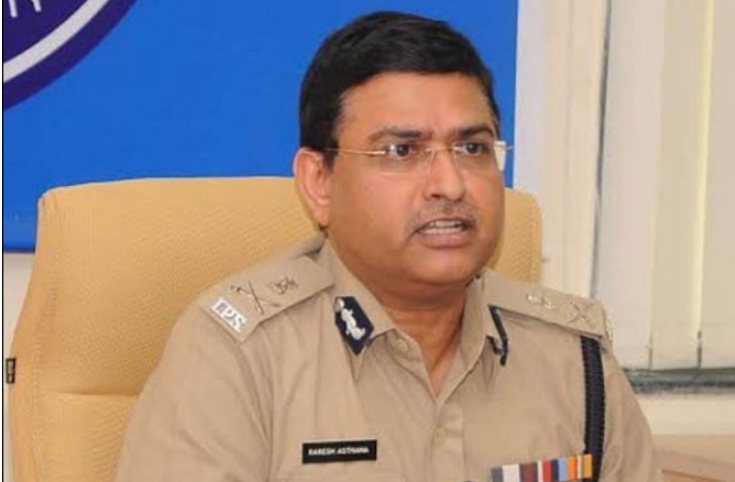
Was it to avoid taking a similar action against CBI special director Rakesh Asthana who, at least now that the Delhi High Court has upheld the FIR against him, should be suspended and not remain on forced leave simply divested of his powers?
* Questions have been raised about the role of the CVC and the background to its report against Verma. According to a report by The Wire, CVC KV Chowdary had asked Alok Verma to withdraw the adverse comments he had made on the record in his deputy, Rakesh Asthana’s annual confidential report, or ACR.
Citing sources close to Justice AK Patnaik, The Wire report says that Chowdary made this unusual request assuring him that “everything will be ok” for the former director if he does that.
Also Read: Alok Verma first CBI director to be removed by Select Committee’s 2:1 decision
Details of this meeting were provided in writing by Verma to Justice Patnaik.
Chowdary’s request to Verma came when the fight between the two officers had broken out in the CBI and when Verma had to take a call on making top PMO bureaucrat Bhaskar Khulbe, an accused in the coal scam, something that Asthana had resisted.
Asthana’s complaint to the CVC against Verma started after the latter’s refusal to withdraw those adverse comments in ACR. His complaint then formed the basis of action against Verma.
As revealed by Justice Patnaik, the entire basis of the CVC’s report against Verma is a complaint by Asthana, against whom six inquiries were pending in the CBI.
It is not clear who had asked the CVC to intercede on behalf of Asthana but officials in the CBI point out how the agency’s investigation into the role of top PMO officials had triggered anxieties in the highest levels of government, The Wire report said.
CVC had sided with Asthana earlier as well. When a controversy had broken out on his appointment as special director in the CBI and it had become clear that Alok Verma was going to object to his selection in writing, Chowdary pushed through Asthana’s appointment. Officials say that top PMO bureaucrat PK Mishra had summoned CVC Chowdary, and directed him to ensure Asthana was appointed, reported The Wire.
Later, in October 2018, when the CBI registered an FIR against Asthana, the CVC raised procedural objections – arguments which, said lawyers, hold no water, according to The Wire.
The CVC himself is seen as an officer mired in controversy. His name had surfaced in the former CBI chief Ranjit Sinha’s visitors diary scandal. Chowdary, after being appointed CVC, was also spotted in the office of Nikhil Merchant, a businessman believed to be close to the Prime Minister.
A PIL against his appointment was filed in the Supreme Court by the NGO Common Cause, which questioned his fitness for the anti-corruption job given his earlier reluctance, as a top income-tax official, to investigate the contents of incriminating documents recovered by his department from the corporate offices of the Birla and Sahara group. Those documents spoke of payments to various individuals or entities, including ‘Guj CM’.
* The very action of PM-led committee in removing Verma from CBI director’s post has been questioned by no other than the retired Supreme Court judge, Justice (retired) AK Patnaik, who was entrusted the task by the apex court to supervise the CVC enquiry on basis of which the CBI director was ousted.
Patnaik told The Indian Express (IE) that there was “no evidence of corruption” against Verma, and “what the CVC says cannot be the final word”.
Patnaik was also critical of “the very, very hasty” decision of the PM-led selection committee to remove Verma from the CBI Director’s post over charges of corruption and dereliction of duty Thursday, two days after he was reinstated by the Supreme Court, the IE report said.
Justice Patnaik told IE: “There was no evidence against Verma regarding corruption. The entire enquiry was held on (CBI Special Director Rakesh) Asthana’s complaint. I have said in my report that none of the findings in the CVC’s report are mine.”
In a two-page report to the Supreme Court bench headed by Chief Justice of India Ranjan Gogoi, Justice Patnaik stated that “the CVC forwarded to me a statement dated 9.11.2018 purportedly signed by Shri Rakesh Asthana.”
He added: “I may clarify that this statement purportedly signed by Shri Rakesh Asthana was not made in my presence”.
Justice Patnaik told IE: “Even if the Supreme Court said that the high-power committee must decide, the decision was very, very hasty. We are dealing with an institution here. They should have applied their mind thoroughly, especially as a Supreme Court judge was there. What the CVC says cannot be the final word.”
He also confirmed Verma’s claim in his letter Friday to the Department of Personnel and Training that the findings of the CVC report were not his.
“The Supreme Court entrusted me with a responsibility of supervising, so I ensured my presence, the Sana evidence etc, and I ensured that principles of natural justice were applied. Verma had access to all the documents and got a personal hearing. The enquiry was completed in fourteen days, it was all done. Thereafter, it was for the Supreme Court to decide. The report was 50 pages but there were 1,000 pages of annexures,” he said.
On January 8, when the Supreme Court set aside the October 23, 2018 orders of the CVC and the government divesting Verma of his powers and functions pending inquiry, the order made no mention of Justice Patnaik’s findings.
Also Read: CBI Director Verma’s ouster, unanswered questions, Kharge’s note, Rafale and other cases on CBI Director’s table for probe
The selection committee cited the CVC report and “the extremely serious nature of observations made by the CVC against Verma” to remove him from the post of Director.
* The backdrop to “very very hasty” convening of the PM-led committee and the decision also raises suspicion.
As soon as interim CBI director M Nageswar Rao appointed by Modi government was back in office after Verma’s ouster, he reversed all decisions taken by the CBI director. Apart from the transfers of officials, his order also negated the file signed by then Director Alok Verma in a coal scam case, allegedly involving a senior IAS officer posted in Prime Minister’s Office (PMO).
The CBI order declared four office orders issued on Wednesday and Thursday, after Verma was reinstated by the Supreme Court as CBI Director, as non-est (does not exist). It said, “consequently, all actions in pursuance thereof by all concerned are also declared hereby as null and void”.
This nullified one of the files signed by Verma on Wednesday which could have led to the chargesheeting of Bhaskar Khulbe, a West Bengal cadre IAS officer, in a coal scam case.
Currently Secretary to the Prime Minister, Khulbe is alleged to have been involved in the allotment of coal blocks to Ramsarup Lohh Udyog Limited in the Moira-Madhujore block of West Bengal. Khulbe was then Advisor, Industries to the West Bengal government. His name had figured in CBI investigations in the coal scam and had parallels with the case of former Union Coal Secretary HC Gupta.
There are other filed reported to be on CBI director’s table for a decision on probe. Among them is the complaint about Rafale deal, filed by former union minister Yashwant Sinha and Arun Shourie and lawyer Prashant Bhushan.
Some other cases mentioned in a IE report were:
– A complaint against alleged irregularities in the Rafale fighter deal with France: The verification process of the complaint was on in the agency and, sources said, “a decision was to be taken”. The 132-page complaint was received by Verma on October 4, and had been filed by former Union Ministers Yashwant Sinha and Arun Shourie and lawyer Prashant Bhushan.
– The CBI has been probing the role of highly-placed individuals in the Medical Council of India (MCI) bribery case, which implicated retired High Court judge IM Quddusi. The chargesheet against Quddusi, sources said, had been prepared and was ready for Verma’s signature.
– The case of Justice SN Shukla of Allahabad High Court, who was sent on leave following allegations of corruption in medical admissions, had been identified as fit for investigation. Sources said a PE had been prepared and was awaiting Verma’s signature.
– Another case being looked at by the CBI was BJP MP Subramanian Swamy’s letters to the CBI, complaining against Finance and Revenue Secretary Hasmukh Adhia.
In an edit-page article in IE, Ashoka University vice chancellor Pratap Bhanu Mehta, raising questions about the role of the authorities and institutions involved in the decision and the process, says: “The ouster of Alok Verma is another step in the cavalier destruction of institutions. Each step to use the law to resolve the CBI crisis has led not to the reinstatement of the rule of law but the extension of an arbitrary rule by law.”
Also Read: Delhi High Court rejects CBI Spl Director Rakesh Asthana’s plea for quashing cases
Mehta said the texts of these proceedings gain their potency from the context and subtext. The context, he said, is twofold:
The first is the growing institutional murkiness in the handling of the Rafale deal. Whatever the truth of it may be, the Supreme Court botched up the matter by its ill-argued and factually-incorrect order in the case. The bad handling of one case related to Rafale may be a mistake, but the bad handling of another case that is indirectly related to Rafale reeks of more than incompetence.
The second is the Narendra Modi government’s record with independent institutions: Its assaults on institutions ranging from the RBI to the CBI. In fact, one of the odd things that seems to distinguish Modi’s rule has been the creation of conflicts between law enforcement agencies and the executive, which often get reflected in civil wars within law enforcement agencies themselves. This was a pattern in Gujarat and is being repeated again. So this episode is yet another in a train of institutional decimations. Even if the prime minister had good reason to act as he did in this instance, the context makes his actions less than self-evidently credible.
“The biggest casualty of this affair has been the Supreme Court’s authority,” wrote Mehta. The government, on the other hand, has done nothing to allay the suspicion that any independent officer or agency that stands in the way of the government will be unceremoniously mowed down.