English हिन्दी
Connect with us

Latest Politics News

Narendra Modi sweeps back to power, Opposition fails to put up a fight in most states

Published

on

Narendra Modi

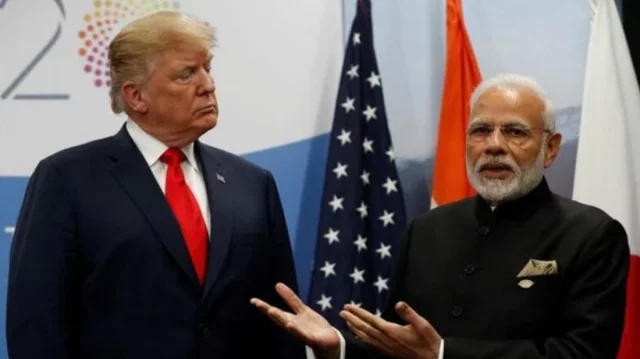
[vc_row][vc_column][vc_column_text]In a remarkable poll verdict with far reaching implications for India, Prime Minister Narendra Modi was voted back to power with a bigger majority that put paid to Opposition’s efforts and hopes of posing a challenge even jointly.

Prime Minister Narendra Modi today (Thursday, May 23) attributed the victory to the country. Modi, who is set to enjoy his second straight term as the Prime Minister, said India has won again.

“With all+ development for all+ everybody’s confidence = victorious India,” Modi tweeted. “Together we grow. Together we prosper. Together we will build a strong and inclusive India. India wins yet again,” he said.

If the trends stay until final results, the BJP will surpass its 2014 tally when it had won 282 seats on its own in the 543-member Lok Sabha. Adding the seats won by its allies, the BJP-led National Democratic Alliance could win 343 seats, up from 336 in 2014.

Till evening, BJP had crossed a tally of 300 on its own – winning 22 and leading in 282 seats, a total of 304. With allies, it was near 350, exceeding the previous NDA tally.

Senior BJP ministers and alliance partners credited PM Narendra Modi and BJP president Amit Shah for the victory described by many as a “tsunami”. Amit Shah hailed the party’s superb showing in the Lok Sabha polls as “victory of India” and said it is people’s mandate against the Opposition’s propaganda and personal attacks as well as their total rejection of politics of dynasty, appeasement, and casteism.

Also Read: Lok Sabha Election Result 2019

In a series of tweets, Shah said this victory is a “win of people’s confidence in Prime Minister Narendra Modi”.

Senior ministers Rajnath Singh, Sushma Swaraj, Suresh Prabhu, and Ramvilas Paswan were among those who credited Modi for the stupendous electoral triumph.

Meanwhile, Opposition leaders too congratulated the BJP on its victory. West Bengal Chief Minister Mamata Banerjee congratulated the winners, adding that “all losers are not losers.” Taking to Twitter, Mamata sought for a complete review of the results before sharing her views on the trends.

Former J&K chief minister Mehbooba Mufti conceded defeat from the Anantnag constituency and said it was time for the Congress “to get an Amit Shah” “Congratulations to Narendra Modi ji for a historic mandate. Today surely belongs to BJP and it’s allies. Time for Congress to get an Amit Shah,” she tweeted.

Narendra Modi will become the first non-Congress Prime Minister to return to power after a full five-year term. In 2014, Narendra Modi’s BJP became the first party since Rajiv Gandhi’s Congress in 1984 to win a full majority on its own; in 2019, it looks set to become the first party since Indira Gandhi’s Congress to return with a majority of its own. 

Some notable points:

In a major upset, Congress president Rahul Gandhi had to eat a humble pie in Amethi at the hands of BJP’s Smriti Irani.

The loud and clear message was the electorate putting a stamp of approval on hardline Hindutva, seen in victory of BJP candidates like terror-accused Pragya Thakur over former chief minister Digvijay Singh who spared no effort to present himself as genuine Hindu.

Others of her ilk like Sakshi Maharaj, Niranjan Jyoti were also on way to victory, as was Giriraj Singh from Begusarai.

Also Read: Assembly Election Result 2019

Favourites of the much-reviled lot of liberals – ‘libtards’ – under this dispensation were crushed. Kanhaiya Kumar lost to one of the outspoken Hindutva proponents in Modi’s council of ministers, Giriraj Singh, whose penchant for denouncing every dissenter with ‘send him to Pakistan’ earned him the sobriquet of ‘Visa mantri’. Atishi Marlena of Aam Aadmi Party (AAP) lost to BJP’s Gautam Gambhir in East Delhi.

BJP

There has been a surge in the BJP’s voteshare almost everywhere across the country.

Among the major states where it has a presence, the BJP has got more votes than in 2014 in Gujarat, Haryana, Jharkhand, Himachal Pradesh, Karnataka, Madhya Pradesh, Delhi, Odisha, Rajasthan, Uttar Pradesh, Uttarakhand, and West Bengal.

In large parts of the country, the BJP’s opponents can no longer claim the BJP does not have the support of the majority — in several big states, the party has received more than 50% of the vote.

Opposition

For Congress, it was another dismal performance after the phenomenal debacle of 2014. From 44 in 2014, it failed to make much headway and seemed likely to be confined to just 50 seats.

It was leading in only one seat in Madhya Pradesh and drawing a zero in Rajasthan, where the party won Assembly elections just four months ago. In Chhattisgarh, the Congress is leading only in Bastar and Mahasamund. The party had swept the polls in this state in November-December.

The only good news for the Congress is in Punjab and Kerala. In Kerala, the Congress-led UDF appears to be sweeping the poll, leading in 19 out of 20 seats. This appears to be in line with party leaders’ assessment that the party could do well due to the presence of Rahul Gandhi as a candidate in Wayanad.

Rahul Gandhi himself is trailing in Amethi. His confidants Jyotiraditya Scindia (Guna), Deepender Hooda (Rohtak), Gaurav Gogoi (Kaliaburg) and Sushmita Dev (Silchar) were all trailing.

Congress veterans Mallikarjun Kharge, leader of the Congress in the outgoing Lok Sabha, former Haryana Chief Minister Bhupender Hooda, former Madhya Pradesh chief minister Digvijaya Singh and former Union Minister M Veerappa Moily too are trailing in their respective constituencies.

Also Read: Narendra Modi headed for a sweep back to power with greater strength

The Left is shrinking further, with its tally going down to perhaps five at the national level. In Kerala, where the CPI-M-led LDF is in power, all its candidates except in Kasargode are trailing.

The most disappointing for the anti-BJP camp has so far been the performance of the gathbandhan in Uttar Pradesh where the SP-BSP-RLD alliance was expected to give a fight to the BJP which won 71 of the 80 seats in 2014. The BJP seemed set to win 60 seats.

The NDA is sweeping Bihar as well, winning 38 out of the state’s 40 seats. This is a crushing blow from Lalu Prasad’s RJD, and its young leader Tejashwi Yadav.

However, the regional parties in the southern states appeared to have contained the BJP’s race and disappointed the party leadership in its ambition to grow as a formidable force in those states except in Karnataka. DMK, which is in alliance with the Congress in Tamil Nadu is sweeping the poll, according to the trends, the YSRCP is sweeping in Andhra Pradesh and TRS is continuing its dominance in Telangana.

[/vc_column_text][/vc_column][/vc_row]

India News

Congress suspends 5 Haryana MLAs over cross-voting in Rajya Sabha polls

Congress suspends five Haryana MLAs for cross-voting in Rajya Sabha elections, citing serious indiscipline and anti-party activities.

Published

on

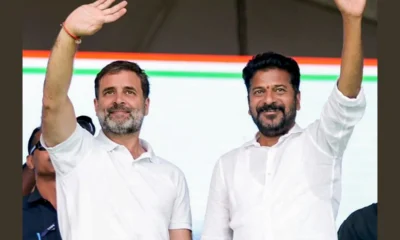
The Congress has suspended five of its MLAs in Haryana for cross-voting during the recent Rajya Sabha elections, taking disciplinary action over what it described as “anti-party activities”.

The move came after the state unit reviewed the conduct of certain legislators during the polls, where some were found to have voted against the party’s authorised candidate.

Five MLAs suspended after disciplinary process

According to party sources, the MLAs were issued show-cause notices seeking an explanation for their actions. After reviewing their responses, the Congress disciplinary committee recommended suspension.

The decision was approved by the party leadership, including Congress president Mallikarjun Kharge, and has been implemented with immediate effect.

Party calls it ‘grave indiscipline’

Haryana Congress chief Udai Bhan said the action was necessary to uphold party discipline, stressing that defying the official party line during elections weakens organisational unity.

He said the party takes such violations seriously and will continue to act against any form of indiscipline.

Leadership backs strict action

Senior Congress leader and Leader of Opposition Bhupinder Singh Hooda supported the decision, saying it was taken after due consideration.

He noted that while Rajya Sabha elections are conducted through an open ballot system, allowing legislators some flexibility, the party retains the authority to initiate internal disciplinary action in cases of deviation.

Background

The action follows cross-voting reported during the recent Rajya Sabha elections in Haryana, which led to internal concerns within the party. The development has highlighted organisational challenges and prompted the leadership to take corrective steps to reinforce discipline.

Continue Reading

India News

PM Modi assures no discrimination in women’s quota, delimitation debate intensifies in Parliament

PM Narendra Modi has assured that women’s reservation will be implemented without discrimination, amid a heated debate over delimitation in Parliament.

Published

on

PM modi

Prime Minister Narendra Modi has assured that there will be no discrimination in the implementation of women’s reservation, as Parliament witnessed a sharp debate over the proposed linkage between the quota and delimitation exercise.

During the ongoing special session, the government reiterated its commitment to ensuring fair representation while addressing concerns raised by opposition parties regarding the timing and structure of the legislation.

The proposed framework aims to reserve 33 percent of seats for women in the Lok Sabha and state assemblies. However, its implementation is tied to a fresh delimitation exercise, which is expected after the next census.

Opposition questions timing and intent

Opposition leaders have raised concerns that linking the women’s quota to delimitation could delay its implementation. They argue that the process of redrawing constituencies may push the actual rollout further into the future.

The issue has triggered a broader political confrontation, with multiple parties questioning whether the move could alter representation across states.

Some critics have also alleged that the delimitation exercise could disproportionately benefit certain regions based on population, a charge the government has rejected.

Government reiterates commitment to fair implementation

Responding to these concerns, the Centre has maintained that the reforms are necessary to ensure accurate and updated representation based on population data.

Leaders from the ruling side have repeatedly emphasized that the process will be carried out transparently and without bias. The assurance that there will be “no discrimination” is aimed at addressing fears among states and opposition parties.

The debate marks a key moment in Parliament, with both sides engaging in intense exchanges over one of the most significant electoral reforms in recent years.

Continue Reading

India News

Give all tickets to Muslim women, Amit Shah says, attacking Akhilesh Yadav on sub-quota demand

A sharp exchange between Amit Shah and Akhilesh Yadav in Parliament over sub-quota for Muslim women highlights key divisions on women’s reservation implementation.

Published

on

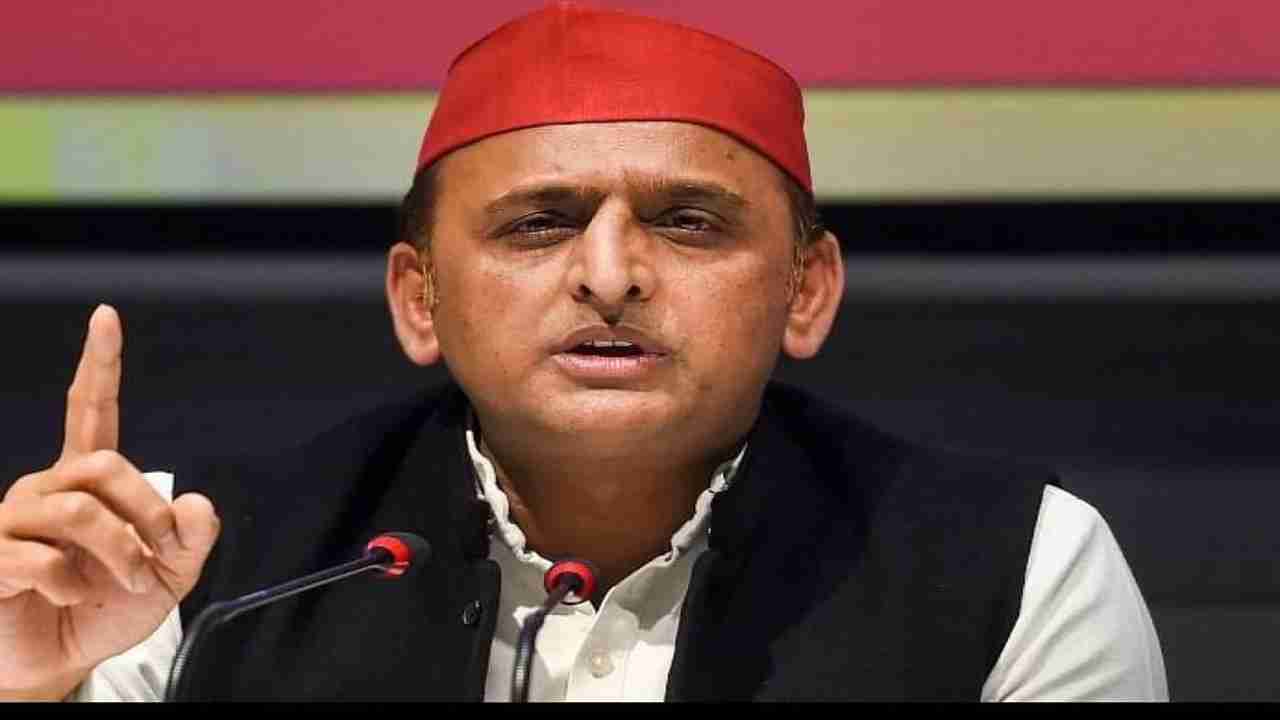
A heated exchange broke out in Parliament during discussions on the women’s reservation framework, with Union Home Minister Amit Shah and Samajwadi Party chief Akhilesh Yadav locking horns over the demand for a sub-quota for Muslim women.

The debate unfolded as the government pushed forward key legislative measures to implement 33% reservation for women in the Lok Sabha and state assemblies.

Akhilesh Yadav argued that the proposed reservation must ensure representation for women from marginalised communities, including Other Backward Classes (OBCs) and Muslim women. He said that without such provisions, large sections could remain excluded from political participation.

He also questioned the timing of the bill, alleging that the Centre was avoiding a caste census. According to him, a census would lead to renewed demands for caste-based reservations, which the government is reluctant to address.

Government rejects religion-based quota

Responding to the demand, Amit Shah made it clear that reservation based on religion is not permitted under the Constitution.

He stated that any proposal to provide quota to Muslims on religious grounds would be unconstitutional, firmly rejecting the idea of a separate sub-quota for Muslim women within the broader reservation framework.

The government has maintained that the existing framework already includes provisions for Scheduled Castes (SC) and Scheduled Tribes (ST) women within the overall reservation structure.

Wider political divide over implementation

The issue of sub-categorisation within the women’s quota has emerged as a major flashpoint, even as most opposition parties broadly support the idea of women’s reservation.

Samajwadi Party leaders reiterated that their support for the bill depends on inclusion of OBC and minority women, while the government continues to defend its constitutional position.

The debate is part of a broader discussion during the special Parliament session, where multiple bills linked to delimitation and implementation of the women’s quota are being taken up.

Continue Reading

Trending

© Copyright 2022 APNLIVE.com