English हिन्दी
Connect with us

Latest world news

Countries supporting India on Kashmir will be hit by Missile: Pak Minister

A Pakistan Minister has said any country supporting India on Kashmir issue will be hit by missile and will be treated as Pakistan’s enemy.

Published

on

Naila Inayat

[vc_row][vc_column][vc_column_text]A Pakistan Minister has said any country supporting India on Kashmir issue will be hit by missile and will be treated as Pakistan’s enemy.
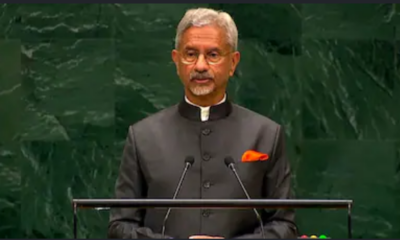
“If tensions with India rise on Kashmir, Pakistan will be compelled to go to war. Those countries backing India and not Pakistan (over Kashmir) will be considered our enemy and a missile will be fired at India and those nations supporting it,” Minister for Kashmir Affairs and Gilgit Baltistan Ali Amin Gandapur said at an event on Tuesday.

Pakistan-based journalist Naila Inayat tweeted a part of the video in which the minister is seen making the inflammatory remarks.

The Pak leader’s rhetoric on Kashmir issue comes at a time when Pakistan has been snubbed globally over the matter. Islamabad has unilaterally downgraded bilateral ties after it cried foul over New Delhi’s move to abrogate Article 370 that granted special powers to Jammu and Kashmir.

India has maintained that the decision is its internal matter, a stance which has been supported by several countries, including the SAARC nations and the Arab World.

In his maiden address at the UN General Assembly in New York in September, Prime Minister Imran Khan had devoted his 50-minute speech on Kashmir and resorted to anti-India rant. Even at that time, Khan raked up the dire consequences in the event of a nuclear war with India.

“If a conventional war starts between the two countries anything could happen. A country seven times smaller than its neighbour what will it do — either surrender or fight for its freedom,” he had said.

“My belief is we will fight and when a nuclear-armed country fights till the end it will consequence far beyond the borders. I am warning you. It’s not a threat but worry about where we are heading. If this goes wrong you hope for the best but prepare for the worst,” he had added.

The cricketer-turned-politician also admitted that Pakistan has failed in its attempt to internationalise the Kashmir issue, saying he is disappointed with the world community over the matter.

(With ANI Inputs)[/vc_column_text][/vc_column][/vc_row]

Latest world news

Will Russian oil imports be cut? India reiterates energy security as top priority

India has reiterated that its energy security needs remain paramount, even as the US pushes for a halt to Russian oil imports and links trade concessions to energy sourcing.

Published

on

India has reiterated that its energy security requirements will continue to guide decisions on crude oil imports, amid renewed pressure from the United States to halt purchases from Russia.

Responding to questions on India’s oil sourcing strategy, the Ministry of External Affairs (MEA) said the country’s priority remains meeting the energy needs of its 1.4 billion population. The government emphasised that diversification of energy supplies is central to ensuring stable and affordable access to fuel.

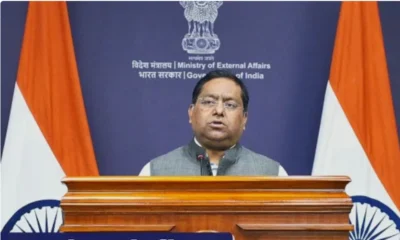
“Insofar as India’s energy sourcing is concerned, ensuring the energy security of 1.4 billion Indians is the supreme priority of the government,” MEA spokesperson Randhir Jaiswal said during a press briefing.

He added that India’s approach involves sourcing energy in line with market conditions and evolving global dynamics, a position the government has consistently articulated over time.

US pressure and tariff rollback linked to trade framework

The remarks come after the White House stated that India had committed to stopping direct or indirect imports of Russian oil and would instead increase purchases from the United States. This claim formed part of the context under which Washington decided to withdraw additional tariffs earlier imposed on Indian goods over New Delhi’s purchases of Russian crude.

The US has repeatedly argued that revenues from Russian oil exports are being used to fund the ongoing war in Ukraine, an allegation that Moscow has denied.

India, however, has not announced any formal change in its oil import policy and has continued to stress that energy decisions are driven by national interest.

Russia says India free to choose suppliers

The Kremlin has also weighed in on the issue, saying India is free to procure oil from any source it chooses. Kremlin spokesperson Dmitry Peskov noted that Russia is not India’s sole supplier of oil and petroleum products.

“India has always purchased these products from other countries. Therefore, we see nothing new here,” Peskov said.

Trade deal outlines tariff changes on both sides

Under the broader trade framework with the US, India has agreed to eliminate or reduce tariffs on all US industrial goods and a wide range of agricultural and food products. These include dried distillers’ grains, red sorghum for animal feed, tree nuts, fresh and processed fruits, soybean oil, as well as wine and spirits.

In return, the US will impose a reciprocal tariff of 18 per cent on Indian-origin goods under the relevant executive order. The tariff will apply to sectors such as textiles and apparel, leather and footwear, plastics and rubber, organic chemicals, home decor, artisanal products, and certain categories of machinery.

Continue Reading

Latest world news

PM Modi thanks President Trump, says India-US trade framework reflects strong partnership

PM Modi said the India-US interim trade framework reflects growing trust between the two countries and offers tariff relief and new opportunities for Indian exporters.

Published

on

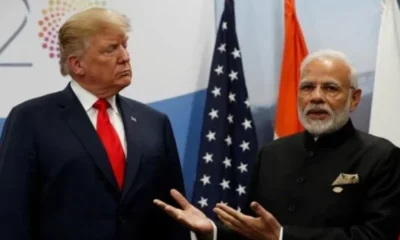
Modi trump

Prime Minister Narendra Modi has welcomed the newly announced interim trade framework between India and the United States, describing it as a reflection of the “growing depth, trust and dynamism” in bilateral relations.

The Prime Minister said the agreement highlights US President Donald Trump’s “personal commitment to robust ties between our countries” and opens up fresh opportunities across multiple sectors of the Indian economy.

Under the framework, the United States will apply a reciprocal tariff rate of 18 per cent on Indian goods. The uniform rate places India in a comparatively stronger position than several countries in the region and provides a competitive advantage for Indian exporters.

Focus on employment, innovation and supply chains

In a post on X, PM Modi said the interim framework is expected to generate large-scale employment, particularly for women and young people. He added that the agreement would deepen cooperation in investment and technology while strengthening resilient and trusted supply chains.

According to the Prime Minister, both countries share a commitment to promoting innovation, and the framework would contribute to global economic growth by enhancing trade and industrial collaboration.

Key sectors set to benefit from tariff relief

The 18 per cent tariff rate is expected to support Indian exporters in sectors such as textiles, apparel, leather goods, chemicals and engineering products. The framework also strengthens India’s position against regional competitors that rely heavily on cost-based exports.

The agreement further opens a path to tariff removal on a wide range of Indian goods, including generic pharmaceuticals, gems and diamonds, and aircraft parts. These sectors already have a strong global presence and face steady demand in the US market.

Washington will also remove tariffs on certain Indian aircraft and aircraft components, while India will receive a preferential tariff rate quota for automotive parts. However, outcomes related to generic drugs and pharmaceutical ingredients will depend on the findings of a US Section 232 investigation.

Preferential market access beyond tariffs

Beyond tariff measures, both countries have agreed to provide preferential market access in sectors of sustained mutual interest, marking another step toward closer economic cooperation under the interim framework.

Continue Reading

Latest world news

Suicide bombing at Islamabad imambargah kills 69, over 160 injured

At least 69 people were killed after a suicide bomber detonated explosives at a Shia shrine in Islamabad’s Shehzad Town area, triggering a city-wide emergency.

Published

on

Suicide bombing at Islamabad Shrine

A suicide bombing at a Shia place of worship in Pakistan’s capital Islamabad left at least 69 people dead and more than 160 injured on Friday, according to media reports.

The explosion took place at Tarlai Imambargah, located in the Shehzad Town area, when a suicide bomber detonated explosives near the main gate of the shrine during afternoon hours.

Attacker stopped at entrance, officials say

Security officials were quoted as saying that the attacker was intercepted by guards at the entrance, preventing him from entering the main hall where worshippers had gathered. Despite this, the blast caused extensive damage to the gate and nearby structures.

Visuals from the scene showed shattered windows of surrounding buildings and debris scattered across the road following the explosion.

Emergency declared, injured shifted to hospitals

Following the blast, the Islamabad Inspector General of Police declared a city-wide emergency, as rescue and law enforcement teams rushed to the site amid fears of high casualties.

The injured were shifted to Pakistan Institute of Medical Sciences (PIMS) and Polyclinic Hospital for treatment.

Prime minister condemns attack

Pakistan Prime Minister Shehbaz Sharif expressed deep grief over the attack and strongly condemned the bombing at the Shiite mosque in Islamabad.

In a statement, he said the incident was a tragic act of violence and offered condolences to the families of those killed. Official statements noted that dozens were injured in the attack, with treatment ongoing at city hospitals.

Previous attack referenced

The incident comes less than three months after a suicide blast outside a district and sessions court building in Islamabad on November 11, 2025, in which 12 people were killed and over 30 injured.

Continue Reading

Trending

© Copyright 2022 APNLIVE.com