
Latest world news
Trump got Trumped: Covid-19 pandemic effect
When Microsoft’s co-founder Bill Gates warned about future pandemics in a 2015 TED talk, many Americans believed that it was a normal warning from the billionaire philanthropist.


By Mantosh Sharma

When Microsoft’s co-founder Bill Gates warned about future pandemics in a 2015 TED talk, many Americans believed that it was a normal warning from the billionaire philanthropist. Gates said, “If anything kills over 10 million people in the next few decades, it’s most likely to be a highly infectious virus rather than a war.” He continued, “We’ve actually invested very little in a system to stop an epidemic, we’re not ready for the next epidemic.”

The US government had received a formal notification about the outbreak of Covid-19 in China on January 3.
The government did not take the threat seriously. It delayed a response and showed no acknowledgement of the threat. It took six whole weeks for a proper response from the government. On January 31, the US banned foreigners who recently visited China. On February 29, travel restrictions expanded to Iran and an advisory for South Korea and Italy. By March 11, the US actually suspended most travel from Europe. During this time, the virus was infecting the USA, and by March 16, 2020, the United States of America had the most infections in the world.
Professor Ooi Eng Eong, the Deputy Director of the Emerging infectious Diseases Program Duke-NUS Medical School, said, “To put it bluntly, the US was unprepared for it. They held on to a very optimistic view. That this was an Asian problem that wouldn’t reach them.”
Had the tests occurred in January, with effective communication for everyone, as it was a shared risk, the US would have been in a different position.
It just took a few weeks for the coronavirus to jump from 2 million to 3 million cases, and it is now approaching 7 million cases with more than 200,000 deaths worldwide. The University of Washington Institute for Health Metrics and Evaluation, IHME Model, predicted that the country would witness more than 208,000 deaths by November. On March 31, Dr. Deborah Birx, the coordinator of the White House coronavirus task force, presented the following chart:

However, the current death numbers are higher than projected for the outbreak with intervention.
The pandemic response was fractured, disorganised, politicised and lacked cohesiveness, as well as containing inadequate contact tracing. The government did not act early enough. Cases in countries like South Korea, Hong Kong and Taiwan were much less in the initial months as compared to the US. These countries tested citizens earlier and regularly, contact tracing was used and there was a political will of consistent messaging about the pandemic. The US tested fewer people and their policy to counter the pandemic was full of confusion and misdirection.
As recently as July 4, President Donald Trump said, “99% of Covid-19 cases are harmless.” However, medical stats suggest otherwise. 15-20% of cases need hospitalisation and nearly half of them need ICU with permanent injuries after sustaining the virus.

The Congressional Budget Office (CBO) suggested that the pandemic could affect 8 trillion dollars off from economic growth. Covid-19 has devastated service sectors, small businesses, daily wagers, hospitality and the travel industry. There were multiple revised estimates for economic contraction for 2020. It was ranging from 5% to 20% in 2020.

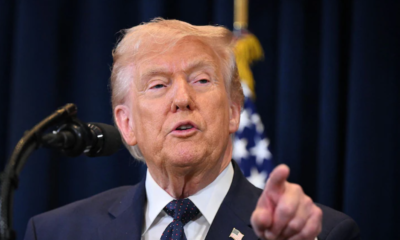
US President Donald Trump
Covid-19 rattled Trump’s presidency and it was the crisis of confidence in the government. His biggest narrative and talking point was the strength in the US economy, booming stock markets and the record-level unemployment rate. He was able to boast about it not only to his voter base but also to the established Republican base as well. It has given him an overarching power to sell himself to all small pockets of resistance in his own party. This also gave him the political capital to engage with Europe as well as other trading and strategic defence partner-states around the world.
Secondly, Trump dealt with the Covid-19 pandemic like he did with his adversaries. There is the predictive way of dealing his earlier crisis like the Russian collusion in his election and the firing of a few of his appointees who became adversaries. He first denied the allegations and later ridiculed, defamed, and downplayed the credibility of the messenger. Michael Cohen, John Bolton, John Kelly, Omarosa Manigault Newman, Jerome Powell, Anthony Scaramucci, Jeff Sessions, Rex Tillerson, and a few more have all gone through the same treatment. They all were praised by Trump while being hired and then thrown barbs at when they were fired.
The handling of the pandemic was on a similar pattern. Here are a few statements made by President Trump about the coronavirus cases.
On January 22, he said, “We have it totally under control – it’s going to be just fine.”
On February 24, he said, “The coronavirus is very much under control in the USA – the stock market is starting to look very good to me.”
On February 28, he said, “It is going to disappear. One day, it’s like a miracle, it will disappear.”
Again, dealing with the pandemic as his political enemy, he falsely created hope. He stockpiled millions of doses of hydroxychloroquine without any scientific evidence that it works. He purposely did not wear masks as a political notion, suggesting to his political base for the defiance of establishment.
This predictable instinct of his personality inadvertently positioned Donald Trump against the pandemic politically. His logic was that if you cannot win, talk it down and hence he started talking Covid-19 down.
When Covid-19 destroyed his economic narrative and political capital to bargain on international trade and alliances, he turned over to cultural issues, seeking refuge in his political base playing with racial tension. Two sections were being targeted, rural-supporter Republicans, and white-suburban moderates and independents.
Former White House Communications Director for Trump, Anthony Scaramucci, has summed up on a Yahoo Finance live video program very well, “It’s a racist move and it’s designed to help him with his base,” “If you go through his internal polling numbers, he is down double-digits in most of the swing states that he needs to win. So when he’s saying nonsense like liberate Minnesota or liberate Michigan, he’s trying to rile up his base. His only play right now is to get the people that voted for him last time to turn out in higher levels than in 2016.”
In 2016, he had positioned himself against illegal immigrants in the USA, proposed to build the wall on the Mexico border. However, in 2020 he had to find another ghost enemy, to position himself and his base against something to distract people from the pandemic-related political fallout. Hence, the China trade rivalry was brought into as a recent talking point. After the approval rating dropped, failure to contain the pandemic and economic disaster needed a diversion for the 2020 election. China must pay for the damage and he bashed Biden and China.
Thirdly, overplay with his political base and not much effort to expand beyond to other segments of society had rattled traditional Republicans who voted for him in 2016. They think another four years of Trump’s presidency may harm the Republican Party in the future. The Lincoln Project, Republican Voters Against Trump, a new super PAC, Right Side PAC, and veterans of the McCain and Bush campaigns are targeting anti-Trump Republicans to support Joe Biden in the November election. Cindy McCain, the widow of the Republican Party nominee, endorses Biden for President. This has strengthened Biden.
The President’s response in handling of the pandemic has eroded confidence in a section of voters who voted for him in 2016. Trump led in the senior citizens’ group over (Hilary) Clinton by 7 points. The new poll is suggesting Joe Biden has a lead around 10 point among registered voters. (Washington Post/ABC poll). This is the same for young women voters. Similarly, for younger voters, campus life and job prospects were shattered due to the pandemic. A recent CNN poll is showing Biden leading by over 20 points among voters under the age 34. Younger voters helped Democrats in 2018 to take over the house.
According to the NBC News polling average, The RealClearPolitics general election polling average and FiveThirtyEight’s national polling tracker gave Biden a 7-8 point advantage. Florida, Pennsylvania, Michigan, Wisconsin, North Carolina and Arizona are in trouble. Even Georgia is showing a small lead for Biden by Fox News. Arizona is breaking more in favour of Biden. Trump’s standing on independents and seniors have eroded due to the pandemic and the civil unrest created by the killing of George Floyd.
Perhaps, Trump has realised this. His recent political conspiracy theory on mail-in ballot fraud is another political divergence narrative to make the adverse election outcome questionable, hence doubtful.
However, American democratic institutions are independent and very powerful. The comments made by FBI Director Christopher Wray on the President’s conspiracy theory on mail-in ballots in the 2020 election sums it up. “Now, we have not seen, historically, any kind of coordinated national voter fraud effort in a major election, whether it’s by mail or otherwise.”
If the statistical trend continues, as it is, in the next 40-50 days we may witness a big reversal in the 2020 US Presidential election in favour of Biden. There is a chance of a landslide victory in electoral votes as witnessed in 1980 when Republican Ronald Reagan defeated incumbent Democrat Jimmy Carter with 489/49 electoral votes.






Latest world news
Nepal seeks climate compensation from India, China and US for deadly floods
Nepal has sought climate compensation from India, China and the US after a devastating flash flood killed more than 1,100 people and left nearly 4,500 missing.


Latest world news
Bank of America VP Erin Piacenti killed in New York stabbing
Bank of America vice-president Erin Piacenti, 32, was fatally stabbed in an apparently random attack in New York’s Times Square.

India News
US begins strikes on Iran, Trump warns of bigger attack
The US has begun strikes against IRGC targets in Iran after attempted attacks on commercial shipping and American service members.


Raghav Chadha marked as shifted in Punjab draft voter rolls, alleges AAP vendetta

SBI defends 7.8% GDP growth, explains controversy over revised data

Mayawati says Akash Anand needs more maturity, rules out major BSP role

Abhinandan Varthaman retires from IAF, joins FLY91 as commercial pilot

No discussion on Ajit Agarkar’s extension, BCCI clarifies after key meeting absence
No discussion on Ajit Agarkar’s extension, BCCI clarifies after key meeting absence
Mayawati says Akash Anand needs more maturity, rules out major BSP role
Abhinandan Varthaman retires from IAF, joins FLY91 as commercial pilot
Raghav Chadha marked as shifted in Punjab draft voter rolls, alleges AAP vendetta
SBI defends 7.8% GDP growth, explains controversy over revised data

Afghan Men Try To Hang With The Jet Engine Of The Aircraft in Kabul- Afghanistan News – Kabul News
Trending Top 10 News: 10000 Crore Fine on Flipkart, Apple to Launch Unique Feature, Hdfc Bank Job Ad

Trending Top 10 News: Nokia 6310, Apple sales, Bachpan ka Pyar Video Kid, Dainik Bhaskar IT Raid

Trending Top 10 News: Canada bans Indian flights, Rain in Delhi NCR, AIMIM Twitter hacked, Raj Kundra case

Trending Top 10 News: Shein India, Apple New Service, Pocket Oxygen, Oppo Launched New Phone
-
 India News20 hours ago
Raghav Chadha marked as shifted in Punjab draft voter rolls, alleges AAP vendetta
-
 India News20 hours ago
SBI defends 7.8% GDP growth, explains controversy over revised data
-
 India News9 hours ago
Mayawati says Akash Anand needs more maturity, rules out major BSP role
-
 India News10 hours ago
Abhinandan Varthaman retires from IAF, joins FLY91 as commercial pilot
-
 Cricket news8 hours ago
No discussion on Ajit Agarkar’s extension, BCCI clarifies after key meeting absence
