English हिन्दी
Connect with us

India News

Jaswant Singh passes away at 82

Published

on

Former Union minister Jaswant Singh died on Sunday morning in Delhi. He was 82. A key member of the Atal Bihari Vajpayee-led National Democratic Alliance government, Singh had been hospitalised in late June this year at the Army Research and Referral Hospital. He had been ill since falling at his home in 2014.

Jaswant Singh had served as finance minister, external affairs minister and defence minister. An Army officer, Singh, who hailed from Rajasthan, resigned from the force to follow a political career. He was a key member of the BJP when the party re-formed after the collapse of the Janata Party and the government in the late 1970s.

Prime Minister Narendra Modi condoled the passing of Singh. He said Singh had given his best years to the country both in politics and as a soldier.

The hospital issued a statement saying, “It is with profound grief that we inform about the sad demise of Honourable Major Jaswant Singh (Retired), former Cabinet Minister of government of India at 0655 hours on 27 September 2020. He was admitted on 25 June 2020 and being treated for Sepsis with Multiorgan Dysfunction Syndrome and effects of Severe Head Injury old (Optd) had a Cardiac arrest this morning.”

 Several union ministers condoled the death, including Defence Minister Rajnath Singh and Union Minister Smriti Irani. Delhi Chief Minister Arvind Kejriwal also expressed his grief at the passing of the suave, urbane leader.

In his rocky late political career, Jaswant Singh had been expelled from the BJP in 2009 for his book on Muhammad Ali Jinnah which praised the founder of Pakistan. Though he rejoined the party the next year, he was again expelled in 2014 for contesting against the official BJP candidate from Barmer as an independent. His son, Manvendra Singh, is now in the Congress and was Lok Sabha MP from Barmer.

Singh’s veteran colleagues LK Advani and Murli Manohar Joshi will be back in the limelight this Wednesday when the order in the 1992 Babri Masjid demolition case will be announced. The special judge has summoned the leaders, and Uma Bharati, to be present.

India News

Amit Shah says congress won’t return to power for 30 years

Union Home Minister Amit Shah took a swipe at Rahul Gandhi over the Opposition’s vote theft allegations, asserting that the Congress would not return to power for the next 30 years.

Published

on

Union Home Minister Amit Shah on Thursday launched a fresh attack on Congress leader Rahul Gandhi, questioning the Opposition’s allegations of vote theft and asserting that the Congress would not return to power for the next 30 years.

Addressing an event in New Delhi, Shah criticised Gandhi over his absence from the country and challenged the Congress’s objections to the Election Commission of India (ECI), arguing that the party accepted the electoral process when it won elections but questioned it after defeats.

The remarks came during an event related to projects for the rejuvenation of the Yamuna, where Shah also targeted the Congress and the Aam Aadmi Party (AAP) over their political record in Delhi.

Amit Shah’s warning to Rahul Gandhi

Taking a dig at Gandhi over his reported foreign visit, Shah said the Congress leader would have to remember his words when he returned to Delhi.

The Home Minister argued that the Congress’s political setbacks had begun long before Narendra Modi became Prime Minister and said the party could not attribute its electoral losses solely to allegations of irregularities in elections.

Shah also defended his confidence in the BJP’s electoral prospects, contrasting his prediction of the party remaining in power with the Congress’s prospects under its current political approach.

He asserted that the Congress would not get another opportunity to form a government for the next 30 years. The statement was a political prediction made by Shah, rather than an established electoral outcome.

Shah questions Congress over vote theft allegations

Shah accused the Congress and other Opposition parties of adopting inconsistent positions on the Election Commission, depending on whether election results favoured them.

Citing electoral victories in states including Kerala, Telangana and Himachal Pradesh, he argued that the Congress and its allies had accepted the electoral process when they won.

He questioned why the same institutions and electoral arrangements became subjects of criticism when the Opposition lost elections.

Shah also targeted the Opposition’s protests against alleged electoral irregularities and the Special Intensive Revision (SIR) of electoral rolls. He alleged that the Congress was using vote theft claims to protect the votes of infiltrators.

These were allegations made by the Home Minister and should be understood as his political assertions, not as independently established findings.

Amit Shah targets Opposition’s protest strategy

The Home Minister also criticised the Opposition’s demonstrations in Delhi, arguing that protests could not overturn the public mandate.

He said political parties seeking electoral victories should engage with people and address their concerns rather than rely on demonstrations and allegations against constitutional institutions.

Shah further accused the Opposition of applying different standards to court decisions, suggesting that it welcomed judgments in its favour while questioning those that went against it.

His remarks came amid continuing political disagreements over the electoral process and the Opposition’s criticism of the Election Commission.

Yamuna projects and attack on AAP

During the same event, Shah inaugurated and laid the foundation stones for 43 Delhi Jal Board projects worth Rs. 8,941 crore, aimed at improving wastewater treatment, drinking water infrastructure and the rejuvenation of the Yamuna.

He criticised previous governments in Delhi over the river’s pollution and accused the Congress and AAP of failing to address the problem adequately.

Shah also targeted AAP national convenor Arvind Kejriwal, arguing that political parties should be judged by their performance rather than their explanations for failing to deliver results.

He said the BJP would work towards cleaning the Yamuna and improving water and sewerage infrastructure in the national capital.

Continue Reading

India News

PM Modi attacks Rahul Gandhi with failed product jibe 

Prime Minister Narendra Modi targeted Rahul Gandhi at the World Summit with a “failed product” jibe, renewing his criticism of the Congress leader.
Published

on

PM Narendra Modi

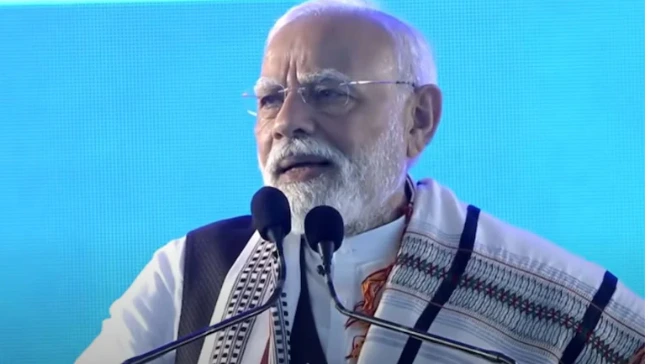
Prime Minister Narendra Modi took aim at Congress leader Rahul Gandhi, using the “failed product” remark to criticise the Congress and its repeated attempts to promote its political leadership.

The remark was part of Modi’s political attack on the Congress leader at the summit, which is being held in New Delhi on October 22 and 23 under the theme A World Between Orders. The two-day event brings together political leaders, policymakers, business executives and experts from technology and other fields.

PM Modi’s ‘failed product’ remark

The phrase “failed product” has featured in Modi’s criticism of the Congress before. In August 2023, while replying to the no-confidence motion debate in the Lok Sabha, he said the Congress had repeatedly tried to launch a “failed product”, with each attempt failing.

At the 2026 summit, the remark again became a point of political criticism directed at Rahul Gandhi.

The comment should be understood as a political jibe by the Prime Minister, rather than a factual assessment of Rahul Gandhi or the Congress.

World Summit 2026

The third edition of the World Summit is taking place in New Delhi on October 22 and 23. Its theme, “A World Between Orders”, focuses on changes in global power structures and the challenges facing countries as the international order evolves.

The summit’s discussions cover geopolitics, global strategy, economic developments, artificial intelligence, technology and India’s role in the changing world order.

Prime Minister Modi is among the prominent speakers at the event, which brings together voices from politics, diplomacy, business, science and culture.

Continue Reading

India News

Yogi Government cites Rs.15,233 crore seizures in UP gangster crackdown

Uttar Pradesh has reported asset seizures worth Rs.15,233 crore under the Gangsters Act since 2017, while housing projects on reclaimed land have provided homes to 148 families, according to reports on the state’s anti-mafia measures.
Published

on

Yogi Adityanath

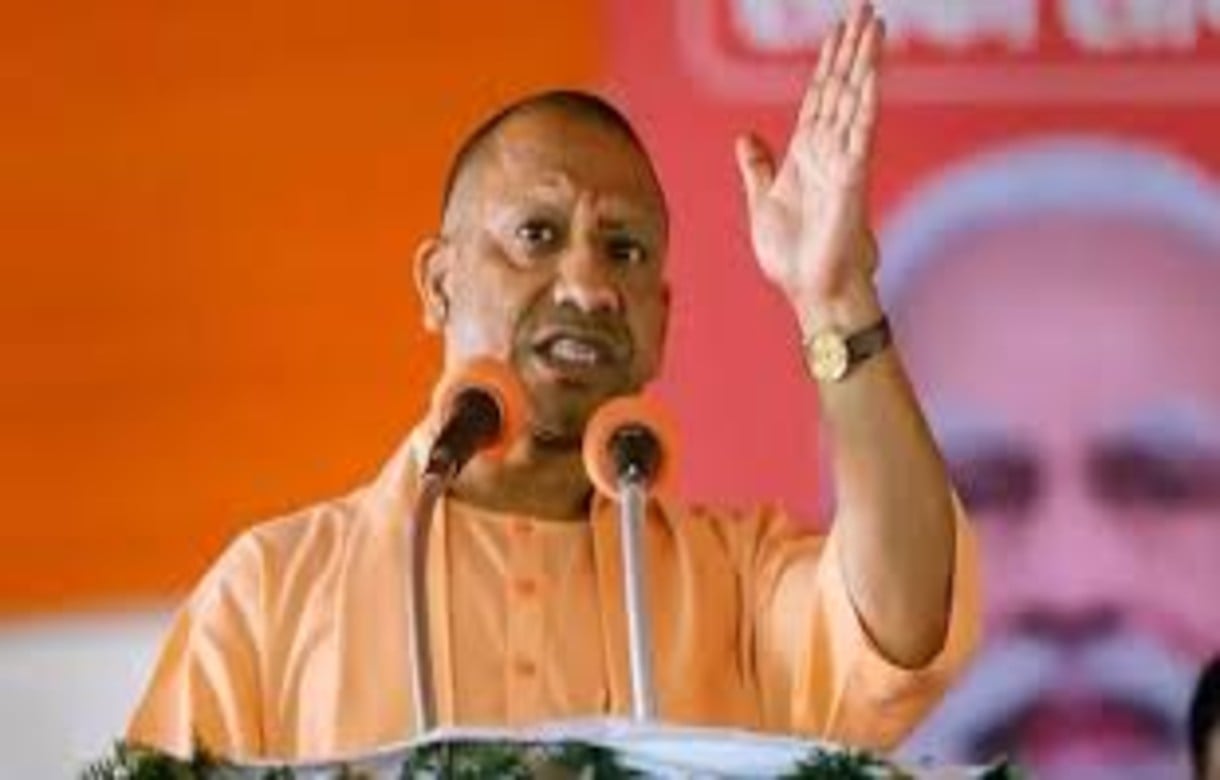
The Uttar Pradesh government has highlighted its action against organised crime under Chief Minister Yogi Adityanath, citing property seizures worth Rs.15,233 crore under the Gangsters Act since March 2017.

The figures form part of the state’s wider campaign against criminal networks and assets allegedly acquired through illegal activities. The government has also highlighted housing projects developed on land reclaimed from illegal occupation, with 148 families receiving homes across two projects.

The reported figures reflect the administration’s stated approach of targeting both criminal networks and the financial resources associated with them.

Rs.15,233 crore in assets seized under Gangsters Act

According to figures reported by the state government, action under the Gangsters Act has been taken against tens of thousands of people since March 20, 2017. The value of seized movable and immovable assets linked to illegal activities has been reported at more than Rs.15,233 crore.

The government has also reported action against identified mafia figures and their associates. Such measures form part of its broader efforts to target organised criminal networks in Uttar Pradesh.

These figures are government-reported statistics and should be attributed to the authorities rather than presented as an independently verified assessment of the state’s overall crime situation.

Housing projects on reclaimed land

The administration has also pointed to housing initiatives using land freed from illegal occupation. According to reports on these projects, 148 families received homes through developments in Lukerganj, Prayagraj, and Dalibagh, Lucknow.

The projects have been presented as an effort to put reclaimed land to public use, including providing housing to economically weaker families.

Yogi government’s anti-gangster approach

The action against criminal assets is part of the Yogi Adityanath government’s broader law-and-order strategy. The administration has repeatedly emphasised action against organised crime, the seizure of assets linked to criminal activity and measures intended to strengthen policing.

The reported seizure figures and housing initiatives illustrate the government’s stated emphasis on pursuing criminal assets alongside action against individuals and gangs.

Continue Reading

Trending

© Copyright 2022 APNLIVE.com