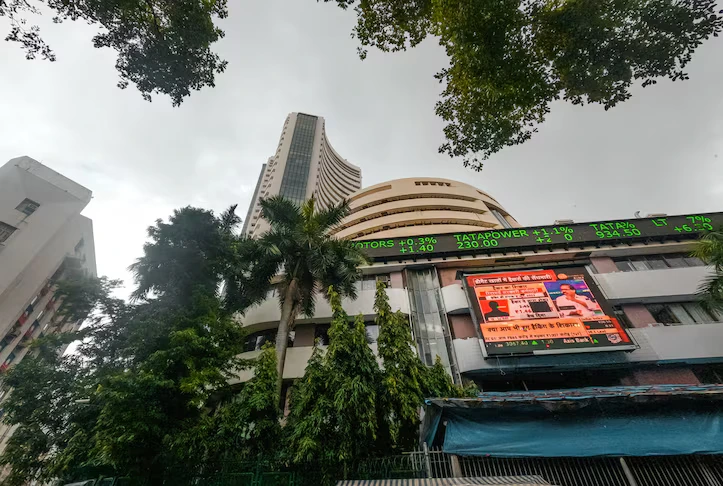
An investment plan is a basic piece of abundance creation, which encourages you to beat expansion to satisfy your budgetary objectives and furthermore settle your money related future. Rather than letting cash lie inert in your ledgers, you can put resources into various roads like stocks.
The Best investment plan is a basic piece of wealth creation, which encourages you to beat expansion to satisfy your budgetary objectives and furthermore settle your money related future. Rather than letting cash lie inert in your ledgers, you can put resources into various roads like stocks, values, shared assets, fixed store, or more.
The speculation roads you should pick, rely upon your investment plan, liquidity needs, investments skyline and danger craving. Out of these, hazard craving is a main consideration to consider, particularly in the present occasions. To assist you with choosing the correct alternative, here’s an overview on the best investment for you, in light of your danger craving.
How hazard craving influences your investment decisions?
Most investments convey a specific degree of danger and instability, which likewise influences the profits. Ordinarily, returns on an investment are more, when the degrees of danger are high. Nonetheless, there is a high danger of misfortunes in such investment.
Subsequently, investmenting choices are regularly assumed the premise of speculator’s danger craving, and we can characterize investment plan dependent on various danger levels. Here’s a gander at various investment plan, in light of various danger levels
Okay ventures
investors with lower hazard resistance, looking for practically zero instability in their investment portfolios, search for low risk investment choices. Frequently, retirees who’ve gone through many years making a savings, fall under this classification. Fixed-pay instruments like securities, debentures, Fixed Deposit and Government reserve funds plans fall under these investment classifications and suit the necessities of okay investment.
Generally safe investment plan are not connected to the securities exchange developments and are typically represented by the loan fee developments of agents. Nonetheless, the profits on these instruments are generally guaranteed, and you may need to secure your speculation for quite a while to procure considerable profits for these investment roads.
Medium-hazard investment
Financial specialists searching for a moderate degree of danger, however generally better yields when contrasted with fixed-salary instruments, search for medium-hazard investment choices. These are investment that may have a specific degree of danger yet the profits on these investment are additionally higher. Obligation reserves, adjusted shared assets, and list supports fall in this classification.
Such instruments convey a component of obligation and soundness, yet the volatilities related with their profits may likewise prompt misfortunes in chief sum. Because of the abnormalities in profit on these instruments, sorting a standard out salary from these instruments is absurd.
High-hazard investments
For market-smart speculators with a more profound comprehension of protections, and a high capacity to bear hazard, these high-hazard investment work best. In these investments, there is no restriction to the additions, however the degree of danger is additionally high. Unstable investment instruments like stocks, value shared assets, and subsidiaries fall in this class.
The profit for these instruments can give immense returns, however it is essential to realize when to place your cash in an unpredictable climate, and realize when to stop and pull out your cash with exceptional yields. The amount and timing of profits on these instruments are not fixed.
Best Investment Options in India
Notwithstanding your danger hunger, it is essential to pick the correct instruments to develop your reserve funds. To enable you to arrange for where to contribute, here’s a glance at the main 10 investment instruments picked by investors in India.Stocks: As value ventures that speak to a portion of possession in an organization or substance, stocks are outstanding amongst other speculation roads for long haul financial specialists. These can be exchanged a commercial center called the ‘Securities exchange’, where all exchanges are done electronically.Fixed Deposit: For financial specialists searching for worthwhile gets back with most reduced danger, Fixed Deposit (or FD) is a standout amongst other investment roads. By putting resources into a Fixed Deposit, you can get guaranteed returns at fixed timespans. This speculation road is one of the most favored alternatives in India, because of the accommodation and adaptability it offers. Indeed, even financial specialists with high danger craving decide to put resources into FD to expand their ventures and balance out their portfolio.Mutual Funds: These are aggregate investment vehicles oversaw by an asset administrator which pools individuals’ cash and puts resources into stocks and obligations of different organizations and make a return. With the accommodation of low beginning ventures, common assets are unstable investment roads, that are most appropriate for medium-hazard investors.Senior Citizen Savings Scheme: As an administration supported plan for people over 60 years old, Senior Citizen Savings Scheme is an incredible long haul sparing alternative for retirees. It is an extraordinary alternative to get consistent and secure salary, and senior residents can get a high and consistent pace of enthusiasm, as recommended by the legislature from time to time.Public Provident Fund: Public Provident Fund is one of the most widely recognized and believed investment plans in India. It pays loan cost every year and requires a base venture measure of Rs 500 for each annum. It has an existence of 15 years with halfway withdrawals permitted of the corpus at different focuses. This alternative additionally pays a high and consistent pace of enthusiasm as recommended the legislature from time to time.Here’s an outline of these investment, based on hazard, residency, liquidity and returns you can get:
Top 10 Best Investment Options In India
Risk Tenure Liquidity Returns
Stocks High Can be sold anytime High Market-connected
Fixed Deposit Low 7 days to 10 years Premature exit Assured
Shared Fund Moderate-High Open end* High Market-connected
Senior Citizens’ Saving Scheme Low 5 years Low 7.4%
PPF Low 15 years Partial withdrawals** 7.1%
*ELSS accompanies 3-year lock-in **Subject to conditions
Why Bajaj Finance FD is the best venture choice?
Taking a gander at different alternatives, FD has been a supported decision of investment for individuals, from the start. Alongside the accommodation of contributing, adaptability and confirmation of profits, FD is a shelter to financial specialists of all age gatherings and salary levels. The ongoing fall in repo rates has brought about bringing down of FD rates in a few banks, yet in case you’re searching for higher loan fees, you can put resources into NBFC Fixed Deposit. These NBFC FDs offer higher financing costs than bank FDs. Bajaj Finance is one such NBFC that offers rewarding loan costs of up to 7.35%, guaranteeing steady and secure development for your investment funds.
Notwithstanding your danger type, you can consider putting resources into a Bajaj Finance Fixed Deposit, and procure these benefits:High Interest Rates – The loan cost offered is one of the most elevated in the Indian monetary market. It is generally 1-2% higher than bank FD at a similar tenor. Bajaj Finance FD offers appealing loan fees of up to 7.35% and you can acquire extra 0.10% on recharging your deposits.Safety Ratings: This FD is appraised most elevated on wellbeing with evaluations of FAAA by CRISIL and MAAA by ICRA, which demonstrates most noteworthy security of your deposit.Online Fixed Deposit: Investing in a Bajaj Finance FD is currently simpler than at any other time, with a start to finish paperless online cycle that lets you contribute from the solace of your home. This office is accessible for both – existing and new clients. Likewise – you can get extra advantages of 0.10% higher financing cost on contributing online.Periodic payout alternatives: When putting resources into this FD, you can decide to get occasional payouts, in light of your prerequisites. For those hoping to make a higher corpus, aggregate FD works best, wherein you get your advantage payouts at development. Then again, for those hoping to get occasional payouts, non-total FD is an extraordinary choice, wherein you can decide to get payouts on a month to month, quarterly, half-yearly or yearly basis.Loan against FD: For those hoping to finance crises, putting resources into a Bajaj Finance FD can be an incredible decision. Not exclusively would you be able to pull back rashly after fruition of least lock-in period, however you can likewise profit a Loan against FD to subsidize unexpected costs.
The deadline to file Income Tax Returns (ITR) for most taxpayers, including salaried individuals, pensioners, and small businesses not requiring audit, ends today, September 15. Those who miss the due date face penalties, interest charges, and loss of certain tax benefits.
Penalties for late filing
If the return is not filed by the deadline, taxpayers can still file a belated return until December 31. However, under Section 234F of the Income Tax Act, late filing attracts penalties.
For income up to Rs5 lakh: penalty is capped at Rs1,000.
For income above Rs5 lakh: penalty increases to Rs5,000.
Additionally, if any tax remains unpaid, Section 234A imposes an interest of 1% per month (or part thereof) until the return is filed.
Consequences of missing deadline
Loss of certain tax benefits: Belated filers cannot carry forward specific losses such as business or capital losses.
Restrictions on tax regime change: Taxpayers lose the option to switch between old and new tax regimes after the deadline.
Refund delays: Those eligible for refunds will face delays compared to timely filers.
Steps to file before time runs out
Gather documents: Form 16, Form 26AS, Annual Information Statement (AIS), bank interest certificates, and proofs of investments or deductions.
Use the e-filing portal: File immediately to avoid last-minute portal congestion.
Verify your return: Ensure the ITR is verified electronically or physically for it to be considered valid.
India’s economy recorded a sharp growth of 7.8% in the April-June quarter (Q1) of 2025-26, surpassing the earlier estimate of 6.5% and outpacing China’s 5.2% growth in the same period. The figure also marks a notable rise from the 6.5% growth in the corresponding quarter last year, making it the fastest expansion in the last five quarters.
Strong performance across key sectors
According to data released by the National Statistical Office (NSO), the surge was driven primarily by the services sector, which expanded 9.3% compared to 6.8% a year ago, and the agriculture sector, which rose 3.7% against 1.5% last year.
The construction sector, however, witnessed a slowdown, growing 7.6% compared to 10.1% in the same quarter of the previous fiscal.
RBI’s earlier forecast
Earlier this month, the Reserve Bank of India (RBI) had projected a more modest Q1 growth of 6.5%, with overall real GDP growth for 2025-26 expected at 6.5%. RBI Governor Sanjay Malhotra attributed the positive outlook to favorable conditions, including a good monsoon, lower inflation, and strong government capital expenditure.
He said, “The above normal southwest monsoon, lower inflation, rising capacity utilisation and congenial financial conditions continue to support domestic economic activity. The supportive monetary, regulatory and fiscal policies, including robust government capital expenditure, should also boost demand. The services sector is expected to remain buoyant, with sustained growth in construction and trade in the coming months.”
India remains fastest-growing major economy
With China reporting 5.2% growth in April-June, India has retained its position as the world’s fastest-growing major economy. The latest figures highlight resilience in the face of external pressures, including recent US tariffs on Indian imports.
Sensex falls 600 points, nifty slips 180 as US tariffs hit Indian markets
Indian equity markets witnessed sharp declines as US tariffs on Indian imports took effect. Sensex dropped over 600 points, while Nifty fell nearly 180 points in early trade.
Indian stock markets opened lower on Thursday, reeling under the pressure of fresh US tariffs imposed on Indian goods.
At 9:17 am, the BSE Sensex dropped over 600 points to trade at 80,315, while the Nifty 50 declined nearly 180 points to 24,583. This comes a day after Washington enforced an additional 25% duty on Indian imports, raising the total tariff to 50%.
Broad-based sell-off across sectors
Market sentiment remained weak with 14 of the 16 major sectors posting losses. Small-cap and mid-cap indices also dipped, losing 0.2% and 0.1%, respectively.
The fall follows a steep correction earlier this week. On Tuesday, before the tariff announcement, both Nifty and Sensex fell by around 1% — their sharpest single-day decline in three months. Domestic markets remained closed on Wednesday for a local holiday.
Analysts warn of near-term pressure
According to market experts, Indian equities are likely to witness further volatility as investors digest the impact of the US action. The tariffs were imposed in retaliation for India’s continued crude oil imports from Russia, a move that has escalated trade tensions between the two nations.
APN News is today the most watched and the most credible and respected news channel in India. APN has been at the forefront of every single news revolution. The channel is being recognized for its in-depth, analytical reportage and hard hitting discussions on burning issues; without any bias or vested interests.