English हिन्दी
Connect with us

Latest business news

RBI mandates tokenisation of debit and credit cards from October 1, here are the new rules kicking in | FAQ

The last date to tokenise your cards is September 30.

Published

on

RBI mandates tokenisation of debit and credit cards from October 1, here are the new rules kicking in | FAQ

The Reserve Bank of India (RBI) has announced new rules for debit and credit card holders from October 1. Under these rules, the users are required to tokenise their debit and credit cards. The last date to tokenise your cards is September 30.

But what actually is tokenisation? Here’s all you need to know about it.

What is tokenisation of Debit and Credit cards?

As per the RBI, tokenisation refers to the replacement of actual card details with an alternate code called the token.

What is the benefit of tokenisation?

Since the merchant is not given access to the actual card information while completing the transaction, tokenized card transactions are perceived to be safer.

Will the merchant have access to your personal information after tokenisation?

The merchants can’t store information like CVV and the number while making a transaction. RBI considers tokenisation as the more secure and safest online payment system.

Read Also: Pune Zomato delivery man forcibly kisses 19-year-old girl customer, arrested

How can the tokenisation be carried out?

By submitting a request through the token requestor’s app, the cardholder can have their card tokenized. The token requestor will send the request to the card network, and with the card issuer’s approval, the card network will issue a token corresponding to the combination of the card, the token requestor, and the device.

How to tokenise your card?

Step 1: Visit the merchant’s website or app and initiate a transaction.
Step 2: Select the credit or debit card and enter the CVV details.
Step 3: Then an option will pop up-either- Secure your card or Save card as per RBI guidelines. Tick-mark the check box.
Step 4: After that, you will receive the OTP on your registered mobile number.
Step 5: Now, the tokenisation process is done.

Can you de-tokenise the card?

Yes, you can convert the token back to actual card details. This is known as de-tokenisation.

What are the charges that the customer needs to pay for availing of this service?

The customer need not pay any charges for availing of this service.

How is tokenisation different from Credit and Debit cards?

The 16-digit card number will be replaced with a token that is created by the card network and sent back to the retailer. The retailer will keep a record of this token for the next transactions. To continue with the approval process, they must enter their CVV and OTP.

Viral: Students learn Hindi grammar by singing, Twitter users in awe | Watch 

Delhi: SUV hits multiple vehicles, drags scooty rider for 100 meters in Karol Bagh

Continue Reading

India News

Bank holiday today: Are banks open or closed on June 29? Here’s what RBI calendar says

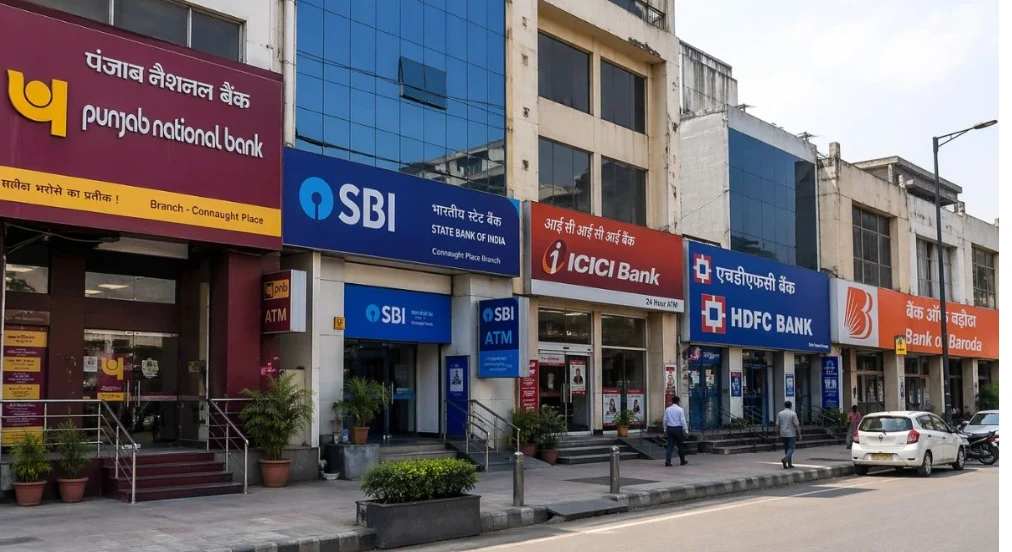
Banks in Himachal Pradesh and Mizoram will remain closed on June 29, 2026, due to regional holidays, while banking operations will continue normally in most other states.
Published

on

Bank Holidays

As June comes to an end, many customers are wondering whether banks across the country are open on June 29, 2026. According to the Reserve Bank of India’s (RBI) holiday calendar, bank operations will not be affected nationwide, but branches in some states will remain closed due to local holidays.

Banks closed in these states on June 29

Banks will remain shut in Himachal Pradesh on Monday, June 29, on account of Sant Guru Kabir Jayanti. In addition, bank branches in Mizoram will remain closed to observe Remna Ni, a regional public holiday.

However, bank branches in most other states and Union Territories are expected to function normally as June 29 is not a nationwide banking holiday.

Will online banking services remain available?

Even when physical branches remain closed, customers can continue using digital banking facilities. Services such as internet banking, mobile banking, UPI transactions, ATM withdrawals and cash deposits at ATMs will remain operational.

Customers planning to visit a bank branch are advised to check with their local branch beforehand, as holiday schedules may vary depending on the state and local observances.

Continue Reading

India News

Union Budget 2026 highlights: Nirmala Sitharaman Raises Capex to Rs 12.2 Lakh Cr, West Bengal Gets Major Allocation

Finance Minister Nirmala Sitharaman is presenting the Union Budget 2026 in Parliament today. Follow this space for live updates, key announcements, and policy insights.

Published

on

Finance Minister Nirmala Sitharaman arrives to present Union Budget 2026

Finance Minister Nirmala Sitharaman will shortly present the Union Budget 2026 in the Lok Sabha, marking her ninth consecutive Budget. The annual financial statement is expected to outline the government’s policy priorities, reform agenda and spending plans for the coming year. Stay tuned for live updates, key announcements and immediate reactions as the Budget speech unfolds.

Finance Minister Nirmala Sitharaman tabled her ninth Union Budget today, beginning her speech at 11 am.

Nirmala Sitharaman is set to present her ninth Union Budget today, with the finance minister scheduled to begin her speech at 11 am.

Budget 2026 live updates: Presenting the Union Budget for 2026–27, Finance Minister Nirmala Sitharaman said the occasion coincided with Magh Purnima and the birth anniversary of Guru Ravidas. She noted that over the past 12 years, India’s economic journey has been defined by stability, fiscal discipline, sustained growth and moderate inflation.

The budgeted fiscal deficit for fiscal 2026 is estimated at 4.4 per cent of gross domestic product (GDP)

Planned capital expenditure this fiscal year Rs 11.2 lakh crore

Rare earth corrdiors in Odisha and Kerala

Hi-tech tool rooms to be set up by PSUs

Construction equipment scheme to be launched

Container manufacturing scheme for Rs 10,000 crore over 5 years

Rs 10,000 crore SME Growth Fund

Semi-conductor mission to get Rs 40,000 crore

Rs 12.2 lakh crores for infrastructure development

Dedicated RITES to repurpose land of Central PSUs

20 new waterways over next 5 years to be connected

7 high-speed corridors on rail

High-level committee on banking for next phase of Viksit Bharat

Capital expenditure hike of to ₹12.2 lakh crore in Budget 2026, with West Bengal receiving a significant share of allocations.

Mahatma Gandhi Gram Swaraj Initiative aimed at boosting the khadi, handloom, and handicrafts sectors.

High-speed rail corridors: Mumbai-Pune, Pune-Bengaluru, Hyderabad-Bengaluru, Chennai-Bengaluru, Delhi-Varanasi, Varanasi-Siliguri, Pune-Hyderabad

Five university campuses to be established near industrial corridors

Lakpati Didi program expanded in Budget 2026 to reach more beneficiaries across India.

Fiscal deficit for FY26 revised to 4.4%; Budget Estimate for FY27 set at 4.3%.

TCS on overseas tour packages cut to 2% to ease travel costs

Tax holiday to foreign companies that provide cloud services by setting up data centres in India till 2047

17 cancer drugs exempted from import duties

Continue Reading

India News

Union budget 2026 to be presented on Sunday with special trading session

The Union Budget 2026 will be presented on a Sunday for the first time in over two decades, with NSE and BSE announcing special trading sessions for the day.

Published

on

Nirmala Sitharaman

For the first time in more than two decades, the Union Budget will be presented on a Sunday. Finance Minister Nirmala Sitharaman is scheduled to table the Union Budget for 2026 in the Lok Sabha on February 1 at 11 am, even as the day is usually observed as a holiday for government offices and financial markets.

February 1 falls on a Sunday this year, raising questions about market operations and investor response. To ensure uninterrupted trading and immediate market reaction to budget announcements, stock exchanges have announced special arrangements for the day.

Markets to remain open on budget day

Both the National Stock Exchange and the Bombay Stock Exchange have confirmed that markets will remain open on February 1. The NSE has announced a special trading session, with the pre-open market scheduled from 9 am to 9:08 am, followed by normal trading hours from 9:15 am to 3:30 pm.

The BSE has also declared the day a special trading day, with regular market hours applicable. Trading is expected to continue across equity, derivatives, and futures and options segments.

What the Sunday budget means for investors

A weekend budget presentation is seen as offering certain advantages for market participants. With trading active on the same day, investors will be able to respond to policy announcements immediately rather than waiting for the next working day.

The Sunday timing also gives investors, analysts, and financial institutions additional time to go through detailed proposals, including tax changes, fiscal deficit targets, and sector-wise allocations. The extended window for analysis may help reduce sharp, headline-driven reactions and encourage more informed decision-making.

With fewer competing developments on a non-working day, budget announcements are also expected to receive more focused attention from markets and stakeholders.

Parliamentary schedule and key milestones

The Economic Survey is expected to be tabled on January 29, ahead of the budget presentation. The Budget Session of Parliament began on January 28 with the President’s address to a joint sitting of the Lok Sabha and Rajya Sabha.

The upcoming budget will mark Nirmala Sitharaman’s ninth consecutive Union Budget. It will also be India’s 80th budget since Independence. Since 2017, Union Budgets have been presented at 11 am on February 1, following a timing change introduced during the tenure of former finance minister Arun Jaitley.

Continue Reading

Trending

© Copyright 2022 APNLIVE.com