English हिन्दी
Connect with us

Latest business news

Telenor exit may portend trend

Published

on

Telenor exit may portend trend

[vc_row][vc_column][vc_column_text]No longer wise to wait for valuations to rise before selling out; market reset likely to yield three main players

By Sindhu Bhattacharya

The valuation at which Norwegian telecom operator Telenor agreed to sell off its Indian operations to Bharti Airtel last week reveals a lot more besides just the seller’s desperation to cut losses and run. It shows why all other small telecom operators still braving it out in the world’s second largest telecom market may need to also hasten their exits.

This is no longer a game for the weak hearted, and as the Telenor deal shows, it is also no longer wise to wait for valuations to rise before the small guys start thinking of selling out. Yes, the changed telecom market reality has partly been engineered by the arrival of Reliance Jio Infocomm last September in an already crowded market. Another reason could also be the abundant spectrum availability for major telcos after the last round of auctions which has cooled the appetite of big operators to pay any premium to acquire the smaller rivals. Telenor did well to absorb its losses and exit while there was still a taker. And Bharti has gained not just in money terms but also by stocking up on spectrum for future wars with RJio on the data front.

According to analysts, the Bharti-Telenor deal was concluded at just about Rs 2,000 crore when they were expecting the deal size to be up to four times more for Bharti to acquire Telenor’s spectrum, customers and employees. Telenor had said while announcing the deal that Bharti would only acquire outstanding spectrum payments and other operational contracts including tower lease, which led analysts to conclude that Bharti will invest just Rs 2,000 crore in the deal.

Analysts from brokerage Motilal Oswal said in a note to clients this morning that after the recently-concluded auction, there were limited takers for incremental spectrum in the market. This made it difficult for Telenor to get any premium whatsoever for its significant spectrum holding in some of India’s most populous telecom circles.  Given the impending merger of number two and three telecom operators, Vodafone and Idea Cellular; the already inked RJio-RCom spectrum sharing terms; and the fact that no sizeable operator was willing to take its spectrum, Telenor was anyway left with limited options. This may have led to the low valuation in its deal with Bharti. The bottomline is that the deal worked in Bharti’s favour because it came so cheap.

These analysts further said that at a potential investment of about Rs 2,000 crore for Bharti, generating operating cash flow of Rs 32,000 crore and net debt of Rs 102,000 crore, “the investment would add hardly 2% to net debt, which would be offset by the EBITDA contribution from the merger.”

Also read: Telenor’s painful exit and the writing on the wall

This piece points out that as consolidation has picked up pace in India’s telecom market, sellers are settling for lower and lower valuations. “Telenor even settled for nothing, despite having 44 million customers and nearly Rs 5,000 crore in annual revenues; leave alone the value of its spectrum.”

The Motilal analysts quoted earlier said the Bharti-Telenor deal bolsters Bharti’s defence against RJio. While the incremental spectrum Bharti gets as part of this deal may not be presently required, given the large-scale data traffic on RJio’s network, holding high quantum of spectrum would allow Bharti to compete with RJio in a fixed-cost-driven market. “We believe Bharti’s strategy to remain ahead of the curve in data-rich spectrum investments should hold it in good stead”.

Not just the Bharti-Telenor deal, smaller telcos need to also take a lesson from other M&As being lined up. Already, the number two and three telecom operators in India. Vodafone and Idea Cellular, are in merger talks. If this merger happens, then the merged entity and Bharti will together control over 70% of India’s telecom market share by revenue. This obviously spells doom for remaining small players. Industry estimates peg post-merger market share for Tata Teleservices at 6.5%, BSNL and MTNL combine at 5%, Aircel at 5.7% and Sistema at 4%. Reliance Communications (RComm) is estimated to be close to Sistema’s share at 4.2%.

Also read: Vodafone, Idea merger plans leave Tata Tele in a fix

The market has space for four or at best five strong operators to play. Any more and it will become a very uneven playing field. Already, RJio’s freebies have spurred others to enter a bruising price war. As RJio’s commercial launch nears its April one deadline, competitors like Bharti and Vodafone will start offering competing plans – RJIo has promised voice calls for free and no charges for national roaming and there are already indications that at least Bharti will match these offers.

Also read: Tata in early talks to join RCom-Aircel-MTS combine to take on Jio

This piece speaks of a possible merger of Tata Teleservices with the RComm, Aircel, MTS combine and goes on to say that such a move could create a strong number three telco behind the proposed Vodafone-Idea combine and Bharti Airtel.[/vc_column_text][/vc_column][/vc_row]

India News

Bank holiday today: Are banks open or closed on June 29? Here’s what RBI calendar says

Banks in Himachal Pradesh and Mizoram will remain closed on June 29, 2026, due to regional holidays, while banking operations will continue normally in most other states.
Published

on

Bank Holidays

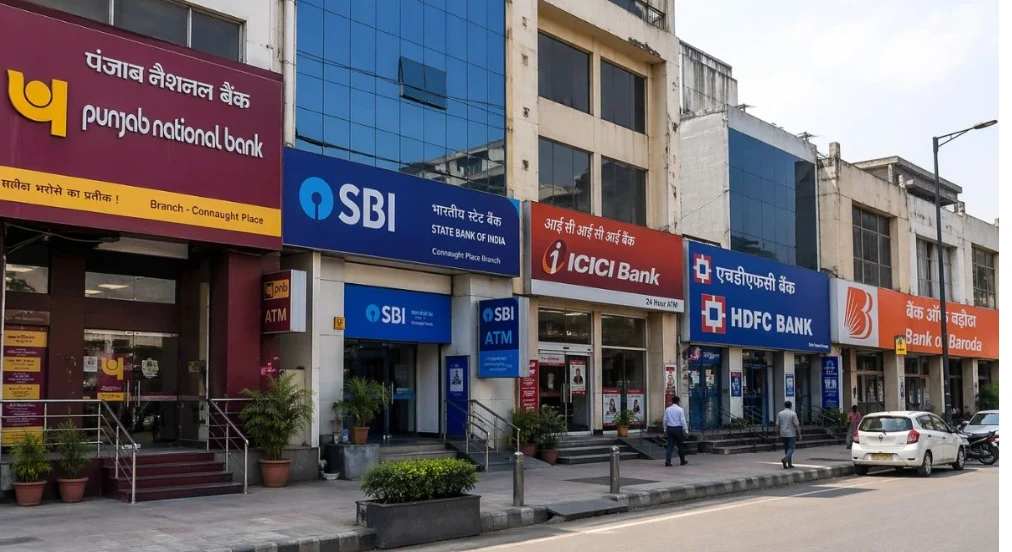
As June comes to an end, many customers are wondering whether banks across the country are open on June 29, 2026. According to the Reserve Bank of India’s (RBI) holiday calendar, bank operations will not be affected nationwide, but branches in some states will remain closed due to local holidays.

Banks closed in these states on June 29

Banks will remain shut in Himachal Pradesh on Monday, June 29, on account of Sant Guru Kabir Jayanti. In addition, bank branches in Mizoram will remain closed to observe Remna Ni, a regional public holiday.

However, bank branches in most other states and Union Territories are expected to function normally as June 29 is not a nationwide banking holiday.

Will online banking services remain available?

Even when physical branches remain closed, customers can continue using digital banking facilities. Services such as internet banking, mobile banking, UPI transactions, ATM withdrawals and cash deposits at ATMs will remain operational.

Customers planning to visit a bank branch are advised to check with their local branch beforehand, as holiday schedules may vary depending on the state and local observances.

Continue Reading

India News

Union Budget 2026 highlights: Nirmala Sitharaman Raises Capex to Rs 12.2 Lakh Cr, West Bengal Gets Major Allocation

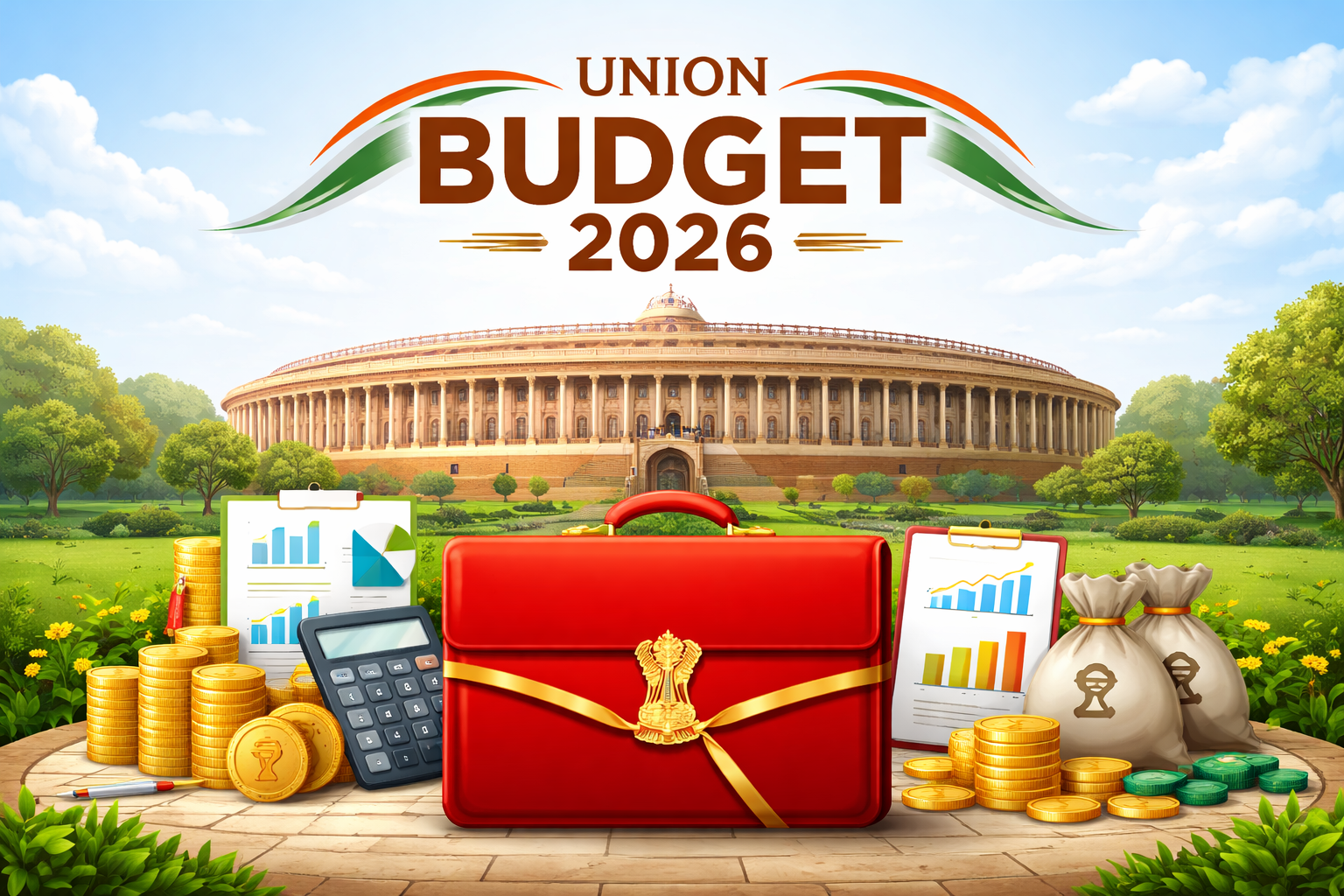
Finance Minister Nirmala Sitharaman is presenting the Union Budget 2026 in Parliament today. Follow this space for live updates, key announcements, and policy insights.

Published

on

Finance Minister Nirmala Sitharaman arrives to present Union Budget 2026

Finance Minister Nirmala Sitharaman will shortly present the Union Budget 2026 in the Lok Sabha, marking her ninth consecutive Budget. The annual financial statement is expected to outline the government’s policy priorities, reform agenda and spending plans for the coming year. Stay tuned for live updates, key announcements and immediate reactions as the Budget speech unfolds.

Finance Minister Nirmala Sitharaman tabled her ninth Union Budget today, beginning her speech at 11 am.

Nirmala Sitharaman is set to present her ninth Union Budget today, with the finance minister scheduled to begin her speech at 11 am.

Budget 2026 live updates: Presenting the Union Budget for 2026–27, Finance Minister Nirmala Sitharaman said the occasion coincided with Magh Purnima and the birth anniversary of Guru Ravidas. She noted that over the past 12 years, India’s economic journey has been defined by stability, fiscal discipline, sustained growth and moderate inflation.

The budgeted fiscal deficit for fiscal 2026 is estimated at 4.4 per cent of gross domestic product (GDP)

Planned capital expenditure this fiscal year Rs 11.2 lakh crore

Rare earth corrdiors in Odisha and Kerala

Hi-tech tool rooms to be set up by PSUs

Construction equipment scheme to be launched

Container manufacturing scheme for Rs 10,000 crore over 5 years

Rs 10,000 crore SME Growth Fund

Semi-conductor mission to get Rs 40,000 crore

Rs 12.2 lakh crores for infrastructure development

Dedicated RITES to repurpose land of Central PSUs

20 new waterways over next 5 years to be connected

7 high-speed corridors on rail

High-level committee on banking for next phase of Viksit Bharat

Capital expenditure hike of to ₹12.2 lakh crore in Budget 2026, with West Bengal receiving a significant share of allocations.

Mahatma Gandhi Gram Swaraj Initiative aimed at boosting the khadi, handloom, and handicrafts sectors.

High-speed rail corridors: Mumbai-Pune, Pune-Bengaluru, Hyderabad-Bengaluru, Chennai-Bengaluru, Delhi-Varanasi, Varanasi-Siliguri, Pune-Hyderabad

Five university campuses to be established near industrial corridors

Lakpati Didi program expanded in Budget 2026 to reach more beneficiaries across India.

Fiscal deficit for FY26 revised to 4.4%; Budget Estimate for FY27 set at 4.3%.

TCS on overseas tour packages cut to 2% to ease travel costs

Tax holiday to foreign companies that provide cloud services by setting up data centres in India till 2047

17 cancer drugs exempted from import duties

Continue Reading

India News

Union budget 2026 to be presented on Sunday with special trading session

The Union Budget 2026 will be presented on a Sunday for the first time in over two decades, with NSE and BSE announcing special trading sessions for the day.

Published

on

Nirmala Sitharaman

For the first time in more than two decades, the Union Budget will be presented on a Sunday. Finance Minister Nirmala Sitharaman is scheduled to table the Union Budget for 2026 in the Lok Sabha on February 1 at 11 am, even as the day is usually observed as a holiday for government offices and financial markets.

February 1 falls on a Sunday this year, raising questions about market operations and investor response. To ensure uninterrupted trading and immediate market reaction to budget announcements, stock exchanges have announced special arrangements for the day.

Markets to remain open on budget day

Both the National Stock Exchange and the Bombay Stock Exchange have confirmed that markets will remain open on February 1. The NSE has announced a special trading session, with the pre-open market scheduled from 9 am to 9:08 am, followed by normal trading hours from 9:15 am to 3:30 pm.

The BSE has also declared the day a special trading day, with regular market hours applicable. Trading is expected to continue across equity, derivatives, and futures and options segments.

What the Sunday budget means for investors

A weekend budget presentation is seen as offering certain advantages for market participants. With trading active on the same day, investors will be able to respond to policy announcements immediately rather than waiting for the next working day.

The Sunday timing also gives investors, analysts, and financial institutions additional time to go through detailed proposals, including tax changes, fiscal deficit targets, and sector-wise allocations. The extended window for analysis may help reduce sharp, headline-driven reactions and encourage more informed decision-making.

With fewer competing developments on a non-working day, budget announcements are also expected to receive more focused attention from markets and stakeholders.

Parliamentary schedule and key milestones

The Economic Survey is expected to be tabled on January 29, ahead of the budget presentation. The Budget Session of Parliament began on January 28 with the President’s address to a joint sitting of the Lok Sabha and Rajya Sabha.

The upcoming budget will mark Nirmala Sitharaman’s ninth consecutive Union Budget. It will also be India’s 80th budget since Independence. Since 2017, Union Budgets have been presented at 11 am on February 1, following a timing change introduced during the tenure of former finance minister Arun Jaitley.

Continue Reading

Trending

© Copyright 2022 APNLIVE.com