English हिन्दी
Connect with us

India News

Trumpism’s first innocent victim

Published

on

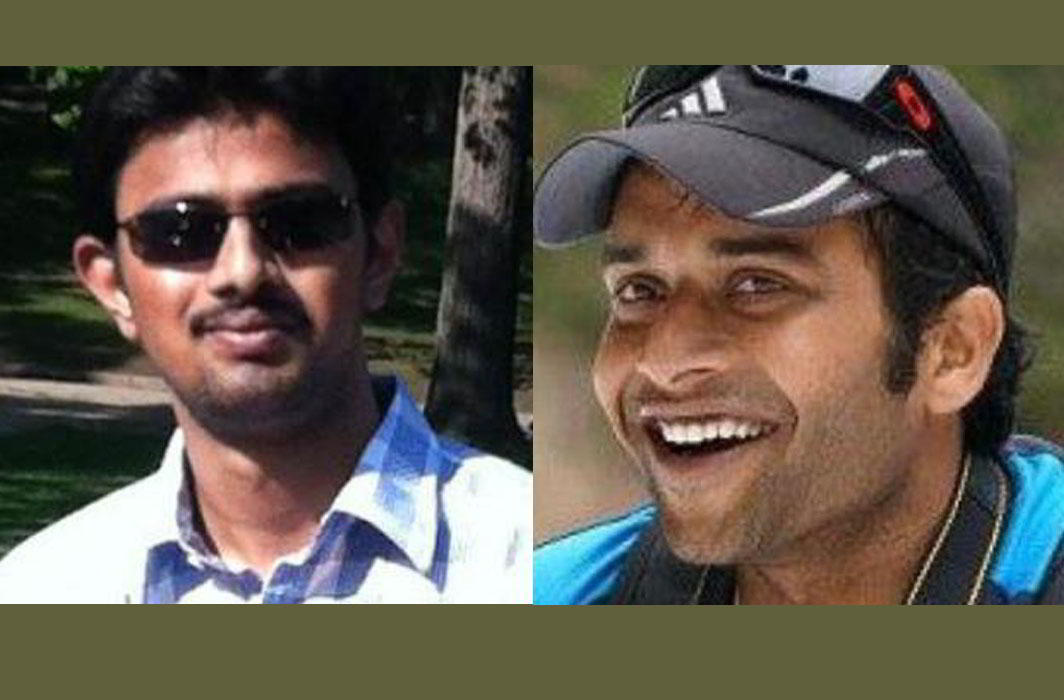
Srinivas Kuchibhotla (left) and Alok Madasani

[vc_row][vc_column][vc_column_text]Indian techie shot dead, his friend badly injured in Kansas bar hate killing

By Sujit Bhar

How the social fabric in the US has changed with President Donald Trump’s vitriolic tirade against immigrants and even his fight against H1B visas for technically skilled immigrants was evident in the shooting down of an Indian techie in Olathe, Kansas on February 22 night.

Srinivas Kuchibhotla and Alok Madasani, engineers from India, worked at a tech company called Garmin, dealing in GPS technology, and were considered “top-of-the-class types” by their boss. Their only fault was being present at the restaurant at the same time when Adam Purinton, a 51-year-old American army veteran-turned tech worker, was around, drinking and hurling racial abuses. Purinton was shouting: “Get out of my country.”

The result of the inescapable confrontation, in which the two Indians were supported by Ian Grillot, an American, was that Purinton left for his home, returned with a gun and fired on the Indians. Kuchibhotla (32) died, while Madasani and Grillot were injured. Purinton, the coward that he obviously is, fled the scene.

The situation has gotten so out of hand that there is little fear or remorse among these semi-literate cowards in American society today. Purinton fled the scene of his shooting and landed at an Applebee’s restaurant in Clinton, Missouri, about 90 miles away some hours later. There, he confessed to the bartender, who reiterated later that Purinton had told him “he had killed two Middle Eastern men” and was looking for a place to hide.

The bartender had the sense to call the police and Purinton was taken into custody. He has been charged with premeditated murder and two counts of attempted murder.[/vc_column_text][/vc_column][/vc_row][vc_row css=”.vc_custom_1487937838202{margin-top: 10px !important;margin-right: 10px !important;margin-bottom: 10px !important;margin-left: 10px !important;background-color: #e0e0e0 !important;}”][vc_column][vc_column_text css=”.vc_custom_1487937879550{margin-top: 5px !important;margin-right: 5px !important;margin-bottom: 5px !important;margin-left: 5px !important;}”]The Indian victims

Srinivas Kuchibhotla: A graduate of Jawaharlal Nehru Technological University, Hyderabad; masters degree in electrical and electronic engineering, University of Texas, El Paso, 2007. First job: Software engineer at Rockwell Collins, then to Garmin International.

Alok Madasani: Graduated from Vasavi College of Engineering, Hyderabad. Masters from University of Missouri-Kansas City. Aviation program coordinator at Garmin.[/vc_column_text][/vc_column][/vc_row][vc_row][vc_column][vc_column_text]The scenario has created reverberations of fear, protest and disgust. Indian foreign minister Sushma Swaraj has tweeted: “We will make all arrangements to transport the mortal remains of Srinivas Kuchibhotla to Hyderabad.”

Condemning the shooting, the US embassy’s Charge d’Affaires Mary Kay Carlson in New Delhi said in a statement: “The United States is a nation of immigrants and welcomes people from across the world to visit, work, study and live. US authorities will investigate thoroughly and prosecute the case, though we recognize that justice is small consolation to families in grief.”

Yes, it is small consolation. It is also a situation in the US today that is getting more and more recognition around the world: a situation where intolerance is being bred among the illiterate and semi-literate extreme right wing masses, who cannot even tell the difference between citizens of a “Middle Eastern” country and highly educated and skilled Asian people who have added hugely to American wealth.

These are possibly direct fallouts of Trump’s weird and whimsical decisions, starting from the H1B Act that has raised the minimum salary package to US $ 130,000 and done away with Masters Degree exemption, to the travel ban (which was halted by federal courts but is expected to come back as a different avatar). It also reflects Trump’s hatred for stricter gun laws and its outcomes.

The bile today starts at the President’s Oval Office, trickling down to the common man, who doesn’t know any better. This regressive attitude of the administration can result in a huge section of the super high-tech industry of the country shifting focus to more favourable climates. Already Canada has shown interest in setting up its own version of Silicon Valley and Mexico has indicated that Indian techies were welcome there.

Indian tech companies have to readjust. If they can adjust with a haircut that will bring down their foreign income from over 60 percent from the US to a lot less (possibly upping their domestic commitments, as Reliance chairman Mukesh Ambani has suggested), the overall dependence on US will decrease.

If the US is bent on its isolation from the global village, the globe will have to readjust and this will not benefit the Trump administration. World commerce will not exist in a vacuum.

Apart from IT, there are hundreds of thousands of highly educated Indians in other H1B field: Pharmaceuticals, teaching, robotics, etc. These, too, will be affected.

Howsoever much the lure of lucre, it cannot override personal safety, safety of family and a level of self worth and respect that is developed through education and proper upbringing. The final say, unfortunately, does not lie with the US.[/vc_column_text][/vc_column][/vc_row]

India News

PM Modi’s Indonesia visit to boost defence, digital and strategic partnership

Prime Minister Narendra Modi’s Indonesia visit is expected to strengthen bilateral ties through new initiatives in defence, digital infrastructure, maritime security, trade and critical minerals.

Published

on

PM Narendra Modi

Prime Minister Narendra Modi’s upcoming visit to Indonesia is expected to give fresh momentum to the growing strategic partnership between the two countries, with discussions likely to cover defence cooperation, maritime security, digital connectivity, trade, critical minerals and several other sectors.

India’s Ambassador to Indonesia, Sandeep Chakravorty, said the relationship between New Delhi and Jakarta has entered a stronger phase following Indonesian President Prabowo Subianto’s visit to India as the Chief Guest for the Republic Day celebrations last year. He said the Prime Minister’s visit is expected to further strengthen this trajectory through a series of new understandings and agreements.

Defence and maritime cooperation likely to receive major push

According to the ambassador, defence and maritime security will remain key pillars of the discussions during the visit.

He highlighted Indonesia’s strategic location along the Malacca Strait, describing secure sea lanes as vital for both countries and the wider Indo-Pacific region. He stressed that uninterrupted maritime connectivity remains essential for global trade and regional stability.

Without revealing specific details, Chakravorty indicated that the visit could produce significant outcomes in defence cooperation, saying several important announcements are expected.

‘BrahMos Plus’ hints at broader defence partnership

The ambassador also suggested that defence ties between India and Indonesia are moving beyond discussions centred on the BrahMos supersonic cruise missile.

Responding to a question about future cooperation, he remarked that the next phase would be “BrahMos Plus,” while refraining from providing further details.

He said future collaboration is expected to focus on defence manufacturing, technology partnerships, training and capacity building. India, he noted, has emerged as an important exporter of defence equipment and could support Indonesia’s efforts to strengthen its domestic defence manufacturing capabilities.

Military cooperation is also expanding, with India set to participate with troops for the first time in the multinational Garuda Shield military exercise after previously attending as an observer.

Digital connectivity and UPI integration gain momentum

Digital cooperation is expected to be another major highlight of the visit.

The ambassador said Indonesia is preparing to launch its Open Network for Digital Commerce (ONDC)-inspired platform during Prime Minister Modi’s visit, making it the fastest international adopter of India’s digital public infrastructure model.

The initiative is expected to support nearly 65 million micro, small and medium enterprises (MSMEs) in Indonesia by creating a more open digital commerce ecosystem.

Chakravorty also said discussions on integrating India’s Unified Payments Interface (UPI) with Indonesia’s payment systems have reached an advanced stage.

While technical integration remains complex due to Indonesia’s multiple payment-switch networks, he expressed confidence that progress would continue and the Prime Minister’s visit could accelerate the process.

Critical minerals and investment to feature prominently

Critical minerals are also expected to be a major area of cooperation as both countries look to strengthen supply chains for clean energy technologies and electric vehicle manufacturing.

Indonesia possesses significant reserves of nickel and other strategic minerals, while India is seeking reliable supplies to support its manufacturing ambitions.

The ambassador said India plans to invest in processing critical minerals within Indonesia rather than importing only raw materials. He added that such investments would support industrial development in both countries while contributing to India’s self-reliance goals.

Cultural ties to be highlighted

Apart from strategic and economic cooperation, the visit is also expected to showcase the longstanding cultural relationship between India and Indonesia.

Both countries will launch a 15-month programme commemorating Rabindranath Tagore’s 1927 visit to Indonesia, recognising his influence on the country’s educational and cultural landscape.

Prime Minister Modi is also expected to visit Yogyakarta, a city known for its historic temples, reflecting the deep civilisational links shared by the two nations.

With cooperation expanding across defence, digital infrastructure, trade and critical minerals, the visit is expected to mark another important step in strengthening the India-Indonesia strategic partnership and advancing cooperation in the Indo-Pacific region.

Continue Reading

India News

Ram Mandir Trust accepts Champat Rai’s resignation amid donation theft row

The Shri Ram Janmabhoomi Teerth Kshetra Trust has accepted Champat Rai’s resignation as General Secretary following the donation theft controversy, with Bajrang Bagra emerging as a leading contender for the post.

Published

on

Champat Rai

The Shri Ram Janmabhoomi Teerth Kshetra Trust has accepted the resignation of its General Secretary, Champat Rai, following the controversy surrounding the alleged theft of cash donations at the Ram Temple in Ayodhya.

According to sources, Bajrang Bagra has emerged as one of the leading contenders for the post. Bagra currently serves as the International General Secretary of the Vishwa Hindu Parishad (VHP). A chartered accountant by profession and a former head of PSU NALCO, he is considered to have the administrative and financial expertise required as the Trust moves into its next phase.

Sources indicated that the Trust is looking to appoint someone with strong experience in governance, finance and institutional administration to strengthen its functioning.

Although Champat Rai has stepped down as General Secretary, sources said he is expected to continue as a trustee unless he decides otherwise.

Decision on successor may come after VHP executive meeting

The appointment of the next General Secretary is unlikely to be announced immediately. The VHP’s biannual national executive meeting is scheduled to take place in Delhi on July 19 and 20, where several organisational decisions, including transfers and appointments, are expected to be discussed.

Champat Rai and trustee Anil Mishra had submitted their resignations after Uttar Pradesh Chief Minister Yogi Adityanath reportedly took a firm stand on the alleged donation theft. Their resignations came after the Special Investigating Team (SIT) submitted its preliminary findings into the case.

Donation theft investigation

According to the preliminary investigation, temple staff responsible for counting cash donations allegedly siphoned off money despite CCTV cameras being installed at the counting centre. The report stated that the footage was not monitored regularly, allowing the alleged theft to continue. Reports suggest that around Rs 7 crore to Rs 7.5 crore may be missing.

So far, eight people have been arrested in connection with the case. Among them is Ram Shankar Yadav, also known as Tinnu Yadav, who worked as Champat Rai’s driver.

Sources said Champat Rai has told his close associates that Tinnu Yadav played the central role in the alleged fraud and misused the trust placed in him. According to the sources, Rai also claimed that when Yadav feared he would be caught, he leaked information to a Samajwadi Party leader.

The other accused arrested in the case are Avinash Shukla, Anukalp Mishra, Lav Kush Mishra, Manish Kumar Yadav, Karunesh Pandey, Ramashankar Mishra and Subhash Srivastava.

Continue Reading

India News

WhatsApp gets more time to respond on username feature, rollout in India put on hold

WhatsApp has been granted more time to respond to the government’s concerns over its username feature and has assured that it will not launch the feature in India until discussions are completed.

Published

on

WhatsApp

Meta assures the government that the feature will not be introduced in India until ongoing consultations are completed.

Meta-owned WhatsApp has been granted an extension to submit its response to the Centre regarding its proposed username feature, while assuring the government that it will not roll out the feature in India until discussions on the matter are concluded.

According to sources, the government has allowed WhatsApp three additional days to file its response after the company sought more time. The original deadline for the reply was Friday.

The proposed username feature would allow users to connect with others without revealing their phone numbers, a move that has raised concerns within the government over its potential impact on cyber safety.

Last week, the Centre issued a notice to Meta questioning the feature, expressing concerns that it could increase online fraud, phishing attempts, impersonation, and so-called “digital arrest” scams. The government also directed the company to pause the rollout until consultations are completed to its satisfaction.

Sources said representatives from Meta met officials from the Ministry of Electronics and Information Technology (MeitY) on Friday following the issuance of the notice. During the discussions, WhatsApp reportedly assured authorities that the feature would not be introduced in India before the consultation process is completed.

The government has also asked Meta to explain why action should not be initiated under the Information Technology Act and the relevant rules if the proposed feature is found to compromise user safety. It reminded the company that WhatsApp, as a significant social media intermediary, must comply with due diligence obligations under Indian law.

A WhatsApp spokesperson had earlier clarified that the username feature is not yet live and is expected to be introduced gradually later this year.

The company said it has built several safeguards into the feature to prevent impersonation. According to WhatsApp, usernames of public figures, government entities, celebrities, and verified Meta accounts have been reserved so that they can only be claimed by their legitimate owners. It also said lookalike variations of such usernames are being restricted.

WhatsApp also clarified that users will still need a phone number to create and use a WhatsApp account. The username feature is intended only as an alternative way for people to connect.

The company added that users would need to know another person’s exact username before initiating contact. It also plans to limit how many new users an account can message, prevent repeated attempts to guess usernames, and use automated systems to detect impersonation and abusive behaviour.

To help users identify unfamiliar contacts, WhatsApp said it will display contextual information whenever someone sends a message through a username for the first time. Users will be informed whether the sender is a new account, an existing contact, someone who shares a mutual group, or a person located in another country before deciding whether to respond.

Following its notice to WhatsApp, the IT Ministry also issued notices to Telegram and Signal, seeking details on how their existing username-based systems address concerns related to fraud and impersonation. While WhatsApp has around 500 million users in India, Telegram has a significantly smaller user base.

In recent days, Meta and Telegram have also come under regulatory scrutiny on separate issues. The government recently issued a notice to Meta regarding child sexual abuse material appearing in Instagram advertisements, while Telegram was directed to strengthen action against the circulation of pirated films, OTT content, and other copyrighted audio-visual material on its platform.

Continue Reading

Trending

© Copyright 2022 APNLIVE.com