English हिन्दी
Connect with us

India News

30 killed as rain and floods ravage north India, Yamuna crosses danger mark in Delhi

Published

on

30 killed as rain and floods ravage north India, Yamuna crosses danger mark in Delhi

Torrential downpour battered several parts of north India leaving at least 30 dead and several dozen missing.

In southern India, the number of deaths in flood-ravaged Kerala climbed to 121 as more bodies were found. In Karnataka, also battered by floods, the number of deaths went up to 76, while 10 people remained missing.

Of the 15 wettest places in the world in the past 24 hours, 13 were in India, according to global weather monitoring website El Dorado Weather. The world’s wettest place was Diamond Harbour in West Bengal, which received 220mm of rainfall in the past 24 hours. Vellore with 188mm rain was ranked second, Jamshedpur third with 172mm, Shimla seventh with 146mm and Chandigarh was 11th in the global ranking with 121mm of rain.

Rivers overflowed and in Delhi, the water level in the Yamuna crossed the warning mark today (Monday, August 19) morning.

The level at the Old Railway Bridge at 11 a.m. on August 19 was 204.88 m, above the warning level of 204.5 m. The danger mark is 205.33 m and the level in Yamuna is expected to cross it later in the day, said reports quoting an Irrigation and Flood Control Department official. The

A flood alert was issued in parts of Delhi, Haryana, Punjab and Uttar Pradesh as the Yamuna and other rivers neared the danger mark. Delhi government has asked people living in low-lying areas to move to safer places.

Most of the damage was reported from the two worst-hit states — Himachal Pradesh and Uttarakhand — as heavy rains remained unabated through the Himalayan belt. Hundreds were stranded after incessant rainfall triggered landslides, snapped road links, led to shutting down of hydropower projects and release of excess water from dams in the region.

In Himachal Pradesh, at least 24 people, including two from Nepal, were killed and nine others injured in rain-related incidents.

Twenty-five tourists, including a foreigner, who were stranded for over two days in Kullu without access to food and shelter, were rescued on Sunday.

Hundreds of tourists were also left stranded in Himachal Pradesh’s tribal Lahaul and Spiti district after a freak snowfall on Sunday cut off roads in the region, officials said. They said rescuers were on their way to Chandratal situated at an altitude of about 4,300metres or 14,100ft in the Himalayas.

The India Meteorological Department’s (IMD) office in Himachal Pradesh said on Sunday that the state received the highest ever rainfall for a 24-hour period since records began almost 70 years ago. “The state as a whole received 102.5mm and this was 1,065% more than normal,” IMD said in a statement.

Landslides cut off several parts of the state, leaving hundreds of tourists and locals stranded. Train services between Kalka and Shimla and traffic on the Chandigarh-Manali highway was disrupted. All schools and colleges in Shimla, Solan, Kullu and Bilaspur districts will be closed on Monday.

In Uttarakhand, three people were killed and 22 were reported missing following a cloudburst in Uttarakhand. Flash floods in Mori block of Uttarkashi district struck several villages, washing away houses. A woman was also swept away in the Dehradun district when her car fell into a river, officials said.

Two people were airlifted from Arakot of Uttarkashi’s Mori tehsil and brought to Sahasradhara helipad in Dehradun following a cloudburst in the area, news agency Asian News International reported on Monday. They are being shifted to Doon Hospital, it said. Two helicopters were sent to Arakot earlier with communication equipment and ropes and three medical teams have also reached Arakot.

At least 10 people were reported missing as cloudbursts wreaked havoc in several villages, damaging several houses in Arakot, Makuri and Tikochi villages in Uttarkashi district, the worst-hit region in the state.

In Punjab, three people were killed when the roof of their house collapsed. Heavy rain remained unabated in the state and neighbouring Haryana, triggering floods in some parts and prompting authorities to sound a high alert.

Several villages including Bholewal Jadid, Rajapur and Khera Bet in Punjab have been affected. In addition, 2.23-lakh cusec water was released from Ropar headworks yesterday.

Indian Army and National Disaster Relief Force (NDRF) personnel launched a rescue operation in Punjab’s Jalandhar district on Monday after major breaches were reported on the Satluj River at four places in Bholewal, Meowal and other villages under Philluar sub-division.

As per the initial reports, more than 20 people are still trapped even as NDRF teams rescued four people from Nawan Khera village.

Jalandhar’s deputy commissioner Varinder Kumar Sharma has asked people in at least 13 villages of Phillaur district to be evacuated. Officials said the situation is under control in Shahkot sub-division of Jalandhar district, where around 63 villages were put on high alert. Sharma requested residents of Shahkot to move to safer places as around 2.4 lakh cusec of water from the Sutlej is likely to hit the area during the day.

The situation also remained under control in the Shaheed Bhagat Singh Nagar district, where more than 65 villages were put on high alert. Heavy rainfall in Jalandhar lead to waterlogging in several places across the city.

The India Meteorological Department has warned heavy rainfall likely at isolated places across Punjab.

In Uttar Pradesh, several rivers, including Ganga, Yamuna and Ghaghra, are in spate. The Ganga is flowing above the danger mark in Badaun, Garhmukteshwar, Naraura and Farrukhabad. The Sharda river at Paliakalan and the Ghaghra river at Elginbridge are flowing above the red mark, authorities said.

In Kerala, ground-penetrating radars were used to locate bodies at Kavalappara in Malappuram and Puthumala in Wayanad, where massive landslides had wiped out two villages. A government report said 121 people have lost their lives since August 8 and some 47,000 people are still in 296 relief camps.

The number of deaths in rain-related incidents in flood-hit Karnataka went up to 76, with the recovery of 10 more bodies, while 10 persons are were reported missing. More than 500 relief camps are still open in the state, helping over 2 lakh people with food, water and shelter, officials said.

In West Bengal, the weather in large parts of the state’s south, including capital Kolkata, improved after two days of torrential downpour that led to waterlogging in many areas and snapped road links at several places. In neighbouring Odisha, while the flood threat was called off, the weather office forecast heavy rainfall in the next two days.

Heavy rain also hit several parts of Chennai and its neighbourhood with the weather office predicting more showers over the next two days.

As of August 15, a total of 1,058 persons have died due to rain-related incidents during the monsoon season that started on June 1 with one-fourth of the deaths reported from Maharashtra.

India News

PM Modi assures no discrimination in women’s quota, delimitation debate intensifies in Parliament

PM Narendra Modi has assured that women’s reservation will be implemented without discrimination, amid a heated debate over delimitation in Parliament.

Published

on

PM modi

Prime Minister Narendra Modi has assured that there will be no discrimination in the implementation of women’s reservation, as Parliament witnessed a sharp debate over the proposed linkage between the quota and delimitation exercise.

During the ongoing special session, the government reiterated its commitment to ensuring fair representation while addressing concerns raised by opposition parties regarding the timing and structure of the legislation.

The proposed framework aims to reserve 33 percent of seats for women in the Lok Sabha and state assemblies. However, its implementation is tied to a fresh delimitation exercise, which is expected after the next census.

Opposition questions timing and intent

Opposition leaders have raised concerns that linking the women’s quota to delimitation could delay its implementation. They argue that the process of redrawing constituencies may push the actual rollout further into the future.

The issue has triggered a broader political confrontation, with multiple parties questioning whether the move could alter representation across states.

Some critics have also alleged that the delimitation exercise could disproportionately benefit certain regions based on population, a charge the government has rejected.

Government reiterates commitment to fair implementation

Responding to these concerns, the Centre has maintained that the reforms are necessary to ensure accurate and updated representation based on population data.

Leaders from the ruling side have repeatedly emphasized that the process will be carried out transparently and without bias. The assurance that there will be “no discrimination” is aimed at addressing fears among states and opposition parties.

The debate marks a key moment in Parliament, with both sides engaging in intense exchanges over one of the most significant electoral reforms in recent years.

Continue Reading

India News

Give all tickets to Muslim women, Amit Shah says, attacking Akhilesh Yadav on sub-quota demand

A sharp exchange between Amit Shah and Akhilesh Yadav in Parliament over sub-quota for Muslim women highlights key divisions on women’s reservation implementation.

Published

on

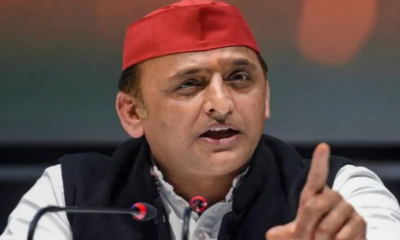
A heated exchange broke out in Parliament during discussions on the women’s reservation framework, with Union Home Minister Amit Shah and Samajwadi Party chief Akhilesh Yadav locking horns over the demand for a sub-quota for Muslim women.

The debate unfolded as the government pushed forward key legislative measures to implement 33% reservation for women in the Lok Sabha and state assemblies.

Akhilesh Yadav argued that the proposed reservation must ensure representation for women from marginalised communities, including Other Backward Classes (OBCs) and Muslim women. He said that without such provisions, large sections could remain excluded from political participation.

He also questioned the timing of the bill, alleging that the Centre was avoiding a caste census. According to him, a census would lead to renewed demands for caste-based reservations, which the government is reluctant to address.

Government rejects religion-based quota

Responding to the demand, Amit Shah made it clear that reservation based on religion is not permitted under the Constitution.

He stated that any proposal to provide quota to Muslims on religious grounds would be unconstitutional, firmly rejecting the idea of a separate sub-quota for Muslim women within the broader reservation framework.

The government has maintained that the existing framework already includes provisions for Scheduled Castes (SC) and Scheduled Tribes (ST) women within the overall reservation structure.

Wider political divide over implementation

The issue of sub-categorisation within the women’s quota has emerged as a major flashpoint, even as most opposition parties broadly support the idea of women’s reservation.

Samajwadi Party leaders reiterated that their support for the bill depends on inclusion of OBC and minority women, while the government continues to defend its constitutional position.

The debate is part of a broader discussion during the special Parliament session, where multiple bills linked to delimitation and implementation of the women’s quota are being taken up.

Continue Reading

India News

No state will lose a seat, Centre assures as delimitation debate takes centre stage in Parliament

Parliament’s special session begins with key focus on implementing women’s reservation and delimitation, setting the stage for major electoral changes.

Published

on

Parliament

A special session of Parliament commenced on Thursday, with the Centre set to take up crucial legislation related to women’s reservation and delimitation of constituencies. The session, scheduled over three days, is expected to witness intense debate as the government pushes forward its legislative agenda.

At the centre of discussions is the proposal to operationalise the women’s reservation law, which seeks to allocate 33 percent of seats in the Lok Sabha and state assemblies to women. The law, passed earlier, requires enabling provisions before it can be implemented.

The rollout of the reservation is closely tied to the delimitation exercise — a process that redraws parliamentary constituencies based on updated population data. The implementation is expected only after the next census and delimitation process are completed.

The government is aiming to put in place the framework so that the reservation can be enforced in future elections, likely around 2029.

Delimitation and numbers at play

Delimitation is a key aspect of the proposed changes, as it will determine how seats are redistributed and which constituencies are reserved. The exercise is expected to reflect population shifts and may also involve an increase in the total number of Lok Sabha seats.

This linkage has made the issue politically sensitive, with several opposition parties backing women’s reservation in principle but raising concerns over how and when delimitation will be carried out.

Political reactions and expected debate

The session is likely to see sharp exchanges between the government and opposition. While there is broad agreement on increasing women’s representation, disagreements remain over the timing, process, and potential political implications of the delimitation exercise.

Some leaders have argued that delimitation could significantly alter the balance of representation among states, making it a contentious issue beyond the women’s quota itself.

The government, however, has framed the move as a step toward strengthening women’s participation in governance and ensuring more inclusive policymaking.

Continue Reading

Trending

© Copyright 2022 APNLIVE.com