English हिन्दी
Connect with us

India News

6-month “cooling off” period for divorce under Hindu Marriage Act can be waived: SC

Published

on

6-month “cooling off” period for divorce under Hindu Marriage Act can be waived: SC
[vc_row][vc_column][vc_column_text]Apex court says legal proceedings for divorce by mutual consent should be completed within a week

The objective of including a six-month “cooling off” period in a mutual consent  divorce, introduced in the Hindu Marriage Act, 1955, was to enable the couple to reflect on their decision and see if they had taken it hastily and if there still remained a possibility of reconciliation.

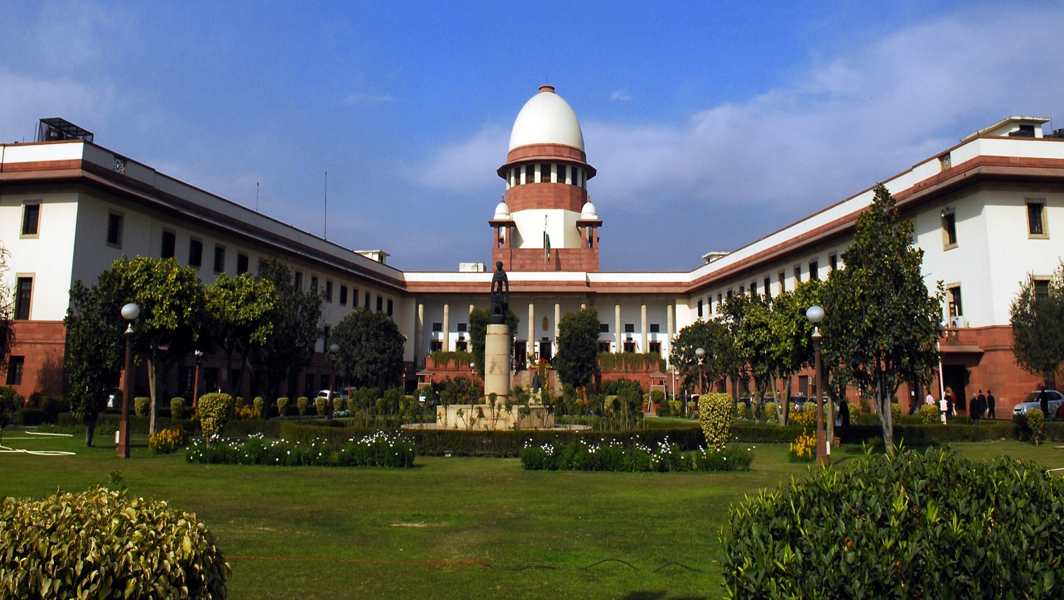
The Supreme Court on Tuesday (September 12) observed that this was not necessary any more for consenting couples who have gone beyond the point of reconciliation and that the entire process in these cases should be completed in a week. This judgement emanated from a plea by a couple living separately for eight years and who wanted this cooling off period to be waived for the benefit of the children and so the two can resettle.

The Supreme Court bench of Justices AK Goel and UU Lalit observed that this cooling off period was introduced with a noble purpose in mind, but it could not be made mandatory. When all efforts at mediation have failed and when both parties have already lived separately for at least a year, divorce should be granted quickly to allow the parties time to resettle and start afresh, say reports.

This statutory separation and the six-month waiting period are applicable for Hindu couples, as per the act’s Section 13B(2) if both parties do not change their pleas for divorce in a time period not less than six months and not later than 18 months, then the court shall pass a decree declaring the marriage to be dissolved. The period of six to 18 months provided in section 13B is an interregnum to give time and opportunity for the couple to reflect on their move.

The bench observed: “The object of the provision is to enable the parties to dissolve a marriage by consent if the marriage has irretrievably broken down and to enable them to rehabilitate them as per available options. The amendment was inspired by the thought that forcible perpetuation of status of matrimony between unwilling partners did not serve any purpose. The object of the cooling off period was to safeguard against a hurried decision if there was otherwise possibility of differences being reconciled.”

“The object was not to perpetuate a purposeless marriage or to prolong the agony of the parties when there was no chance of reconciliation. Though every effort has to be made to save a marriage, if there are no chances of reunion and there are chances of fresh rehabilitation, the court should not be powerless in enabling the parties to have a better option,” the bench said.

The bench, after studying the said section, came to the conclusion that the period mentioned was not mandatory but directory in nature.

-India Legal Bureau

[/vc_column_text][/vc_column][/vc_row]

India News

PM Modi accuses Congress of anti-Sikh bias over Rahul Gandhi’s ‘traitor’ remark

Prime Minister Narendra Modi accused Rahul Gandhi of targeting BJP MP Ravneet Singh Bittu with a ‘gaddar’ remark because of his Sikh identity while speaking in the Rajya Sabha.

Published

on

PM Modi

Prime Minister Narendra Modi on Wednesday launched a sharp attack on Leader of the Opposition Rahul Gandhi, alleging that his “traitor” remark against BJP MP Ravneet Singh Bittu reflected the Congress party’s animosity towards the Sikh community.

The Prime Minister made the remarks in the Rajya Sabha while replying to the motion of thanks on the President’s address. Referring to an incident in the Parliament complex a day earlier, Modi said Gandhi’s comment had crossed all limits of political decency.

The controversy stems from a protest by suspended Opposition MPs, during which Ravneet Singh Bittu — a former Congress leader who joined the BJP ahead of the 2024 Lok Sabha elections — allegedly made a remark suggesting the protesters were behaving as if they had won a war.

In response, Rahul Gandhi was heard saying, “A traitor is walking by, look at his face,” before approaching Bittu and extending his hand. Gandhi then reportedly added, “Hello, brother. My traitor friend. Don’t worry, you will come back.”

Bittu refused to shake hands with the Congress leader and instead described him as an “enemy of the country” before walking away from the scene.

While the Congress later clarified that Gandhi’s remark was aimed at Bittu for leaving the party, the BJP seized upon the comment, calling it an insult to the Sikh community. Protests were subsequently held by members of the Sikh community outside the Congress headquarters and at other locations.

Addressing the House, Prime Minister Modi said that many leaders had quit the Congress in the past and that the party itself had split multiple times, but none of those leaders had been labelled a traitor. “He called this MP a traitor because he is Sikh,” the Prime Minister alleged, as treasury bench members raised slogans condemning the remark.

Continue Reading

India News

Manipur Assembly to meet at 4 pm today, floor test likely under new chief minister

The Manipur Legislative Assembly will convene at 4 pm today, with a floor test likely as the new chief minister seeks to prove his majority in the House.

Published

on

Manipur assembly

The Manipur Legislative Assembly will convene at 4 pm on Thursday in Imphal, a day after Yumnam Khemchand Singh was sworn in as the chief minister. A floor test is likely to be held on the first day of the session to establish the majority of the newly formed government.

In the 60-member Assembly, the BJP holds 37 seats, while its ally National People’s Party has six members, giving the ruling combine a clear majority in the House.

Singh chaired the first Cabinet meeting of his government late Wednesday evening, shortly after taking oath as the 13th chief minister of Manipur. The meeting marked the formal start of administrative functioning under the new Council of Ministers.

His appointment came nearly a year after the resignation of former chief minister N Biren Singh, who stepped down following months of ethnic violence between the Meitei and Kuki communities in the state.

After taking oath, Singh thanked Prime Minister Narendra Modi and said he would work with “utmost diligence to advance development and prosperity in Manipur,” aligning the state’s efforts with the vision of Viksit Bharat.

He said the government’s focus would be on inclusive economic growth while preserving Manipur’s cultural heritage, adding that he would discharge his responsibilities with sincerity and dedication, mindful of the trust placed in him.

The summoning of the 12th Manipur Legislative Assembly by Governor Ajay Kumar Bhalla, along with the first Cabinet meeting, signals the resumption of legislative and administrative processes in the state, officially bringing President’s rule to an end.

The sixth session of the 12th Manipur Legislative Assembly was last held from July 31 to August 12, 2024.

Continue Reading

India News

PM Modi skips Lok Sabha reply as protests force repeated adjournments

PM Modi did not deliver his Lok Sabha reply today after sustained Opposition protests led to repeated adjournments over a dispute involving Rahul Gandhi’s proposed speech.

Published

on

PM Modi

Prime Minister Narendra Modi did not deliver his scheduled reply to the Motion of Thanks on the President’s address in the Lok Sabha today after sustained Opposition protests led to multiple adjournments of the House.

The disruption followed an escalation of tensions linked to Congress leader Rahul Gandhi’s proposed speech and the suspension of eight Opposition MPs a day earlier. The situation worsened after remarks made by BJP MP Nishikant Dubey during the proceedings.

Dispute over references to books sparks fresh ruckus

The controversy intensified when Nishikant Dubey responded to Rahul Gandhi’s demand to speak on national security and references to the unpublished memoirs of former Army chief General MM Naravane. Dubey said that while Gandhi wanted to quote from an unpublished book, he himself had brought several books that, according to him, made claims about the Gandhi family.

As Dubey began listing these books and their contents, strong protests erupted from Opposition members. Krishna Prasad Tenneti, who was presiding over the House at the time, cited Rule 349, which restricts members from reading out books, newspapers, or letters unless directly related to parliamentary business. Despite repeated warnings, the matter remained unresolved, leading to another adjournment.

Rahul Gandhi accuses government of silencing debate

Earlier in the day, Rahul Gandhi alleged that he was being prevented from speaking on an issue of national importance. He claimed the government was uncomfortable with references to General Naravane’s memoirs, which he said discussed the handling of the 2020 China border crisis.

In a social media post, Gandhi said he intended to present the Prime Minister with a book authored by the former Army chief, adding that some cabinet ministers had even questioned the existence of the book. He also wrote to Lok Sabha Speaker Om Birla after the suspension of eight Opposition MPs, alleging that parliamentary debate was being curtailed.

After it became clear that the Prime Minister would not speak in the House today, Gandhi posted that PM Modi had avoided Parliament because he was “scared” to face the truth. Congress MP Priyanka Gandhi Vadra echoed the allegation, claiming the Prime Minister was unwilling to enter the House.

Proceedings disrupted throughout the day

Lok Sabha proceedings were first adjourned until 2 pm amid loud protests over the issue linked to Naravane’s memoirs. Even after the House reconvened, disruptions continued, preventing normal business from resuming.

Later, Congress MPs staged a demonstration outside the Parliament complex, demanding that Rahul Gandhi be allowed to speak on the President’s address.

Continue Reading

Trending

© Copyright 2022 APNLIVE.com