
India News
After failed ‘Fake News’ attempt, Govt moves to regulate online news


On the face of it, the government’s stated intent behind the move to establish regulatory framework for online media and news portals seems innocuous enough – as with the order on Fake News that was hastily withdrawn in the face of angry protests.
However, the composition of committee that would go about this task shows what the outcome would be like: seven out of ten members are government officials.
And, interestingly, the Smriti Irani headed Information and Broadcasting ministry, issued the order for the committee on April 4, a day after it withdrew its guidelines on fake news following directions from Prime Minister Narendra Modi.
According to reports, the Information and Broadcasting Ministry headed by Smriti Irani has set up a committee with its secretary as the convenor to recommend formation of appropriate policy for online media, including news portals.
The 10-member committee includes secretaries of the ministries of Home, Electronics and Information Technology, the departments of Legal Affairs, Industrial Policy and Promotion and the CEO of MyGov. There will be another nominee from any other government or organisation whom the convenor deems fit.
The three media representatives will be from the Press Council of India (PCI), News Broadcasters Association (NBA) and the Indian Broadcasters Federation (IBF).
The Terms of the reference (ToR) of the committee include delineation of the sphere of online information dissemination which needs to be brought under regulation, on the lines applicable to the print and electronic media.
The committee will recommend “appropriate policy formulation” for online media/ news portal and online content platforms, including digital broadcasting, that encompasses entertainment, infotainment and news and media aggregators.
It will do so keeping in mind the existing FDI norms, programmes and advertising code for TV channels and norms circulated by Press Council, code of ethics framed by News Broadcasters Association (NBA), and Indian Broadcasting Foundation’s (IBF) prescribed norms for electronic media.
The committee will also analyse the international scenario on the existing regulatory mechanism with a view to incorporate the best practices.
The order said the content on private television channels is regulated by the Programme and Advertisement Codes, while the PCI has norms to regulate the print media. “There are no norms or guidelines to regulate the online media websites and news portals. Therefore, it has been decided to constitute a committee to frame and suggest a regulatory framework for online media/ news portals including digital broadcasting and entertainment/ infotainment sites and news/ media aggregators,” it said.
Predictably, industry insiders expressed apprehension over the move. The Times of India reported a comment from Anant Goenka of The Indian Express: “The terms of reference of the committee are vague and it is difficult, therefore, to ascertain its scope. How active this committee will be and its repercussions remain to be seen. On a first look, however, I think that there are too many members of government and there isn’t any representation from the segment it hopes to regulate. Having members of the government involved in the free flow of news and information is not welcome. If the committee’s regulations ultimately prove to be the government’s back door attempt to control mainstream news, I have no doubt that they will meet the same fate as similar attempts in the past.”
The report also had a statement from Dhanya Rajendran of The News Minute: “I’m all for a registry of news websites through which they can at least be recognised by the government. State governments often do not recognise them. But a potential regulation should not take away the freedom people currently have to set up a news website.”
On April 2, the ministry had announced norms to contain fake news which said that if publication or telecast of fake news was confirmed, accreditation of the journalist would be suspended for six months in case of first violation and for one year in case of a second violation.
In case of a third violation, his or her accreditation would be cancelled permanently, the ministry had said. However, the guidelines were withdrawn by the ministry on the direction of Prime Minister Narendra Modi after the government drew flak from media bodies and opposition which dubbed these norms an attempt to muzzle free press.
The committee, said media professionals, would be a government-dominated body to frame guidelines for a profession that is, at least in principle, supposed to act as a part of the system of checks and balances in a democracy and act as people’s watchdog, rather than serve the government of the day – essentially the political party in charge.










India News
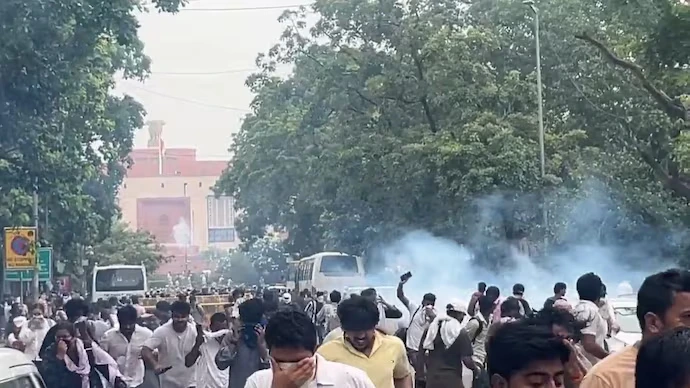
Delhi deploys 25,000 personnel, installs CCTV cameras ahead of CJP march
More than 25,000 police and paramilitary personnel have been deployed in Delhi ahead of the CJP’s planned protest march at Connaught Place. Authorities have also imposed restrictions and stepped up CCTV surveillance.

India News
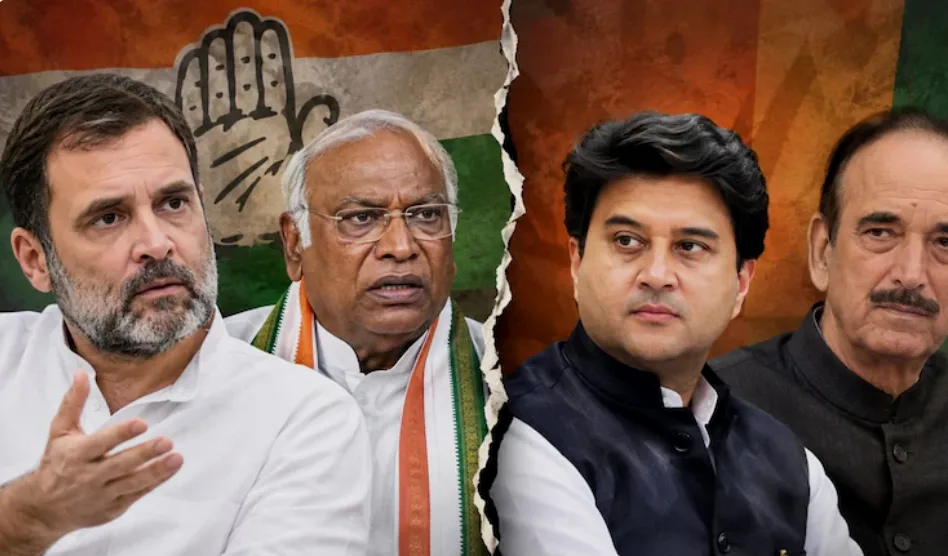
Mallikarjun Kharge’s ‘Your Friends’ jab at Rahul Gandhi over congress exits
Congress president Mallikarjun Kharge took a dig at Rahul Gandhi after the Leader of the Opposition reportedly described former party leaders Jyotiraditya Scindia and Ghulam Nabi Azad as among those who had left the Congress.
India News
Delhi Police offers 11-person limit for CJP’s Connaught Place protest
Delhi Police has offered to facilitate a group of 11 people at Central Park in Connaught Place for the Cockroach Janata Party’s October 16 protest, while warning that violations of prohibitory orders could invite legal action.


India-US trade deal first phase finalised, drafting underway

Election Commission orders voter roll revision in 17 states, UTs

Delhi Police offers 11-person limit for CJP’s Connaught Place protest

Actor Imran Khan asked to leave India after CJP protest

Mallikarjun Kharge’s ‘Your Friends’ jab at Rahul Gandhi over congress exits

Magnitude 7 earthquake strikes Russia’s Kamchatka Peninsula

Delhi deploys 25,000 personnel, installs CCTV cameras ahead of CJP march
Mallikarjun Kharge’s ‘Your Friends’ jab at Rahul Gandhi over congress exits
Delhi Police offers 11-person limit for CJP’s Connaught Place protest
Actor Imran Khan asked to leave India after CJP protest

Afghan Men Try To Hang With The Jet Engine Of The Aircraft in Kabul- Afghanistan News – Kabul News
Trending Top 10 News: 10000 Crore Fine on Flipkart, Apple to Launch Unique Feature, Hdfc Bank Job Ad

Trending Top 10 News: Nokia 6310, Apple sales, Bachpan ka Pyar Video Kid, Dainik Bhaskar IT Raid

Trending Top 10 News: Canada bans Indian flights, Rain in Delhi NCR, AIMIM Twitter hacked, Raj Kundra case

Trending Top 10 News: Shein India, Apple New Service, Pocket Oxygen, Oppo Launched New Phone
-
 India News24 hours ago
India-US trade deal first phase finalised, drafting underway
-
 India News21 hours ago
Election Commission orders voter roll revision in 17 states, UTs
-
 India News20 hours ago
Delhi Police offers 11-person limit for CJP’s Connaught Place protest
-
 India News21 hours ago
Actor Imran Khan asked to leave India after CJP protest
-
 India News8 hours ago
Mallikarjun Kharge’s ‘Your Friends’ jab at Rahul Gandhi over congress exits
-
 India News8 hours ago
Delhi deploys 25,000 personnel, installs CCTV cameras ahead of CJP march
-
 Latest world news8 hours ago
Magnitude 7 earthquake strikes Russia’s Kamchatka Peninsula
