English हिन्दी
Connect with us

India News

After fidayeen attack on BSF camp, J&K police says more Jaish militants likely in Srinagar

Published

on

After fidayeen attack on BSF camp and J&K police says more Jaish militants likely in Srinagar
[vc_row][vc_column][vc_column_text]Three JeM men killed on Tuesday near Srinagar airport were part of a larger group of infiltrators says Kashmir range IG, cautions against more attacks

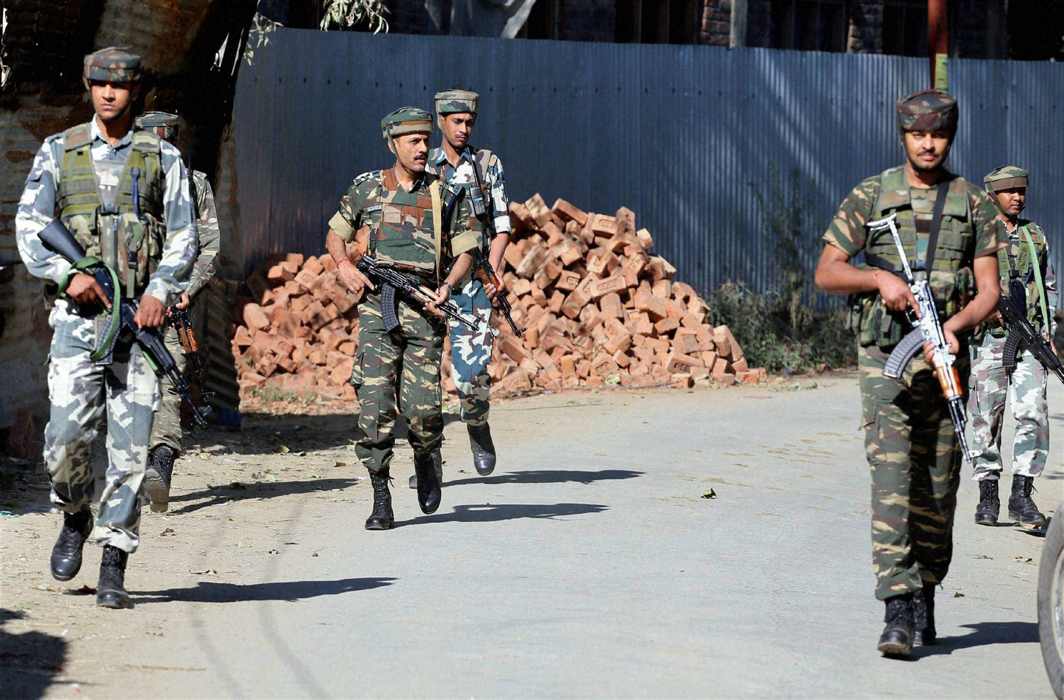
Cautioning against the possibility of another fidayeen attack in Jammu and Kashmir, the state’s police has said that the Jaish-e-Mohammed (JeM) militants who were gunned down in Srinagar on Tuesday after attacking a BSF camp were part of a larger group of infiltrators. While security agencies had managed to kill the three Jaish militants who stormed into the BSF camp near the Srinagar airport, the police say that the remaining members of the group are still at large.

The J&K police believe that the slain militants were part of a group of around 16 heavily armed terrorists affiliated with Jaish which had infiltrated into Kashmir from Pakistan sometime in August. The police have said that while a manhunt was on to nab the remaining terrorists, there was a possibility that these Jaish men could carry out more attacks in the Valley if they aren’t apprehended in time.

A report in the Times of India quoted Munir Ahmad Khan, inspector general of the Kashmir Range as saying: “the three terrorists, who carried out the Humhama fidayeen attack, were from the same group that struck district police line Pulwama on August 26, in which eight security personnel and three terrorists were killed. Another four terrorists were killed in Uri on September 25 but six to seven of them are still at large and could carry out another attack.”

It is learnt that the group of 16 JeM terrorists had spread out into Anantnag, Kulgam, Pulwama and Shopian districts of South Kashmir while three to four of them are believed to be in Srinagar.

The police also believe that the initial target of the Jaish militants on Tuesday was the Srinagar airport. However, given the heavy security presence at the entry and exit points of the airport and also within its premises, the police claim that the three Jaish men chose to target the administrative block of the BSF in Humhuma. One BSF soldier had been killed and around five other security personnel were injured in Tuesday’s fidayeen attack before the infiltrators were neutralised.[/vc_column_text][/vc_column][/vc_row]

India News

Parliament Monsoon Session 2026: Anti-paper leak Bill to be introduced in Lok Sabha today

The Lok Sabha will introduce and consider the Public Examinations (Prevention of Unfair Means) Amendment Bill, 2026, proposing stricter punishment, fast-track courts and stronger safeguards against paper leaks.

Published

on

The Lok Sabha is set to take up the Public Examinations (Prevention of Unfair Means) Amendment Bill, 2026 for consideration and passage on Monday as the Centre moves to tighten laws against paper leaks and examination-related fraud.

Union Minister Dr Jitendra Singh will seek the House’s permission to introduce the Bill before moving it for consideration and passing during the day’s legislative business.

The proceedings of the Lok Sabha are scheduled to begin at 11 am with the Question Hour, during which ministers will respond to listed oral questions.

Bill proposes stricter action against paper leaks

The proposed amendment aims to strengthen transparency and integrity in the public examination system through stricter legal provisions while safeguarding the interests of students.

Among its major provisions are:

  • Imprisonment of up to 10 years for those found guilty.
  • A fine of up to Rs.10 crore.
  • Confiscation of assets of convicted offenders.
  • A mechanism to ensure verdicts in such cases are delivered within three months through fast-track courts.

The proposed changes follow the Union Cabinet’s approval of the legislation and related measures aimed at tackling paper leaks and examination fraud with stricter punishment and expedited trials.

Supreme Court judges amendment Bill also on agenda

Apart from the anti-paper leak legislation, the Lok Sabha is also scheduled to consider the Supreme Court (Number of Judges) Amendment Bill, 2026.

Union Law Minister Arjun Ram Meghwal will move the Bill for consideration. It seeks to further amend the Supreme Court (Number of Judges) Act, 1956.

Ministers to present implementation reports

Several Union ministers are also expected to place statements before the House on the implementation of recommendations made by various Parliamentary Standing Committees.

Among them:

  • Gajendra Singh Shekhawat will present an update on recommendations related to the Ministry of Tourism.
  • Jayant Chaudhary will report on recommendations concerning the Ministry of Skill Development and Entrepreneurship.
  • Pankaj Chaudhary will table a statement on recommendations relating to the Ministry of Finance.
  • Suresh Gopi will present implementation updates on recommendations made by the Standing Committee on Petroleum and Natural Gas.

Continue Reading

India News

Who are the experts in Nandan Nilekani-led PM Modi’s exam reform task force?

PM Modi has constituted a six-member task force led by Nandan Nilekani to recommend reforms for the National Testing Agency. Here’s a look at the experts on the panel.

Published

on

Following the announcement of a high-powered task force to reform India’s examination system, the Centre has brought together experts from technology, space research, intelligence, education, cybersecurity and logistics to recommend structural changes for the National Testing Agency (NTA).

The panel, led by Infosys co-founder and technology expert Nandan Nilekani, was announced by Prime Minister Narendra Modi a day after Union Education Minister Dharmendra Pradhan resigned amid nationwide protests over the alleged NEET paper leak.

In a video message shared on social media, the Prime Minister said the government aims to make examinations more reliable, transparent and technology-driven. He said the task force would submit recommendations to improve the credibility of upcoming examinations at the earliest.

Nandan Nilekani to lead the panel

Nandan Nilekani, co-founder and non-executive chairman of Infosys, will head the task force. Widely recognised for leading the Unique Identification Authority of India (UIDAI) and playing a key role in the development of Aadhaar, Nilekani is expected to contribute his expertise in technology, digital infrastructure and data security to the examination reform process.

Former ISRO chief S Somanath

Former Indian Space Research Organisation (ISRO) chairman S Somanath, an aerospace engineer, is also part of the panel. During his tenure, ISRO successfully carried out the Chandrayaan-3 mission. His experience in executing complex, high-precision missions is expected to help strengthen quality control and multi-layered verification processes in examinations.

Former IB director Tapan Deka

Former Intelligence Bureau Director Tapan Kumar Deka has been included for his experience in intelligence and security. A former IPS officer with a postgraduate degree in Physics, he is expected to provide inputs on strengthening intelligence gathering and cyber monitoring to curb organised examination fraud and paper leak networks.

IIT Madras Director V Kamakoti

V Kamakoti, Director of IIT Madras, is another member of the panel. A computer science academic, he has led initiatives related to microprocessor development and information security at the institute. His expertise is expected to support measures aimed at enhancing cybersecurity and protecting examination software and digital infrastructure.

Former Education Secretary Anita Karwal

Former Education Secretary Anita Karwal brings administrative and academic policy experience to the task force. A retired IAS officer from the Gujarat cadre, she is expected to contribute recommendations on examination policies, answer-key mechanisms, evaluation standards and improvements in the functioning of examination centres.

Logistics expert Amrit Lal Meena

Retired bureaucrat Amrit Lal Meena, who previously served as Bihar’s Chief Secretary and as Special Secretary (Logistics) in the Ministry of Commerce and Industry, completes the six-member panel. His expertise in supply chain management is expected to help strengthen the secure printing, storage and transportation of question papers through tamper-resistant logistics systems.

The multidisciplinary panel has been tasked with recommending structural reforms aimed at improving transparency, security and reliability in India’s examination system.

Continue Reading

India News

Amit Shah praises Dharmendra Pradhan’s resignation, says Nation above post

Amit Shah hailed Dharmendra Pradhan’s resignation as Union Education Minister, saying BJP places the nation and students above any position while highlighting the government’s commitment to examination reforms.

Published

on

Amit Shah

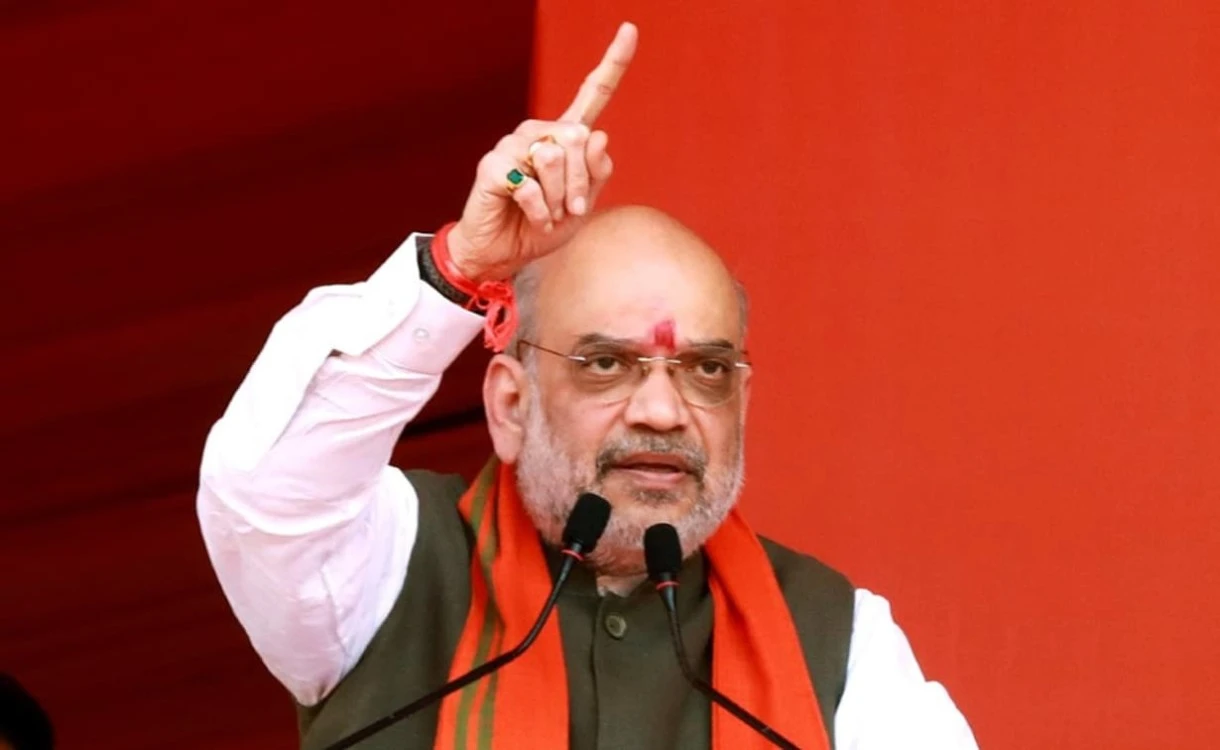
Union Home Minister Amit Shah on Saturday praised Dharmendra Pradhan’s decision to step down as Union Education Minister, saying the move reflected the Bharatiya Janata Party’s commitment to placing the nation and students above any political position.

In a post on X, Shah said that for BJP workers, the country, its youth and students are more important than any office. He described Pradhan’s resignation as an example of the party’s guiding principle of prioritising national interest over personal ambition.

Shah highlights government’s focus on exam reforms

Amit Shah said the Narendra Modi-led government respects the sentiments of students and remains committed to strengthening the examination system following concerns over alleged paper leaks.

He said the Centre has introduced strict measures to ensure severe punishment for those involved in examination paper leaks and expressed confidence that these steps would deliver justice to students who cleared the National Eligibility-cum-Entrance Test (NEET).

Praises Pradhan’s work as Education Minister

Recalling Dharmendra Pradhan’s tenure, Shah highlighted several initiatives undertaken during his time in the Education Ministry. He credited Pradhan with helping implement the National Education Policy (NEP), expanding PM SHRI schools, promoting digital education, strengthening skill development and improving coordination between industry and academic institutions.

Shah also said Pradhan worked towards making examinations more inclusive and student-centric, adding that his tenure reflected his commitment to the vision of a developed India.

Resignation follows NEET controversy

Dharmendra Pradhan’s resignation comes amid nationwide protests over alleged irregularities in the NEET examination and growing demands for accountability.

The resignation has triggered political reactions across party lines. While opposition parties have described the development as a result of sustained student protests, BJP leaders have projected it as an example of accountability and commitment to national interest.

Continue Reading

Trending

© Copyright 2022 APNLIVE.com