English हिन्दी
Connect with us

India News

Article 370, Citizenship Amendment Act in national interest: PM Modi in Varanasi

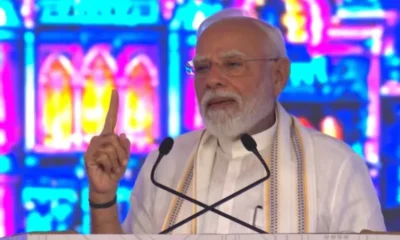
Prime Minister Narendra Modi on Sunday said the Centre had taken decisions on Article 370 abrogating special status for J&K and the Citizenship Amendment Act (CAA) in national interest.

Published

on

Narendra Modi

Prime Minister Narendra Modi on Sunday said the Centre had taken decisions on Article 370 abrogating special status for J&K and the Citizenship Amendment Act (CAA) in national interest.
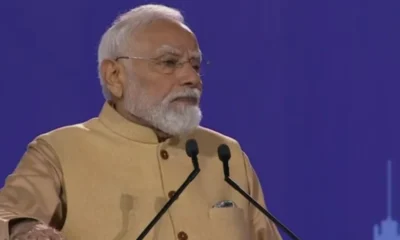
“These decisions had been pending for decades but we took them in national interest and we will remain firm on them,” he said while addressing a function in Varanasi after unveiling a 63-feet statue of BJP ideologue Deendayal Upadhyaya.

“Our government is working on his concept of self-reliance and self-service. Our schemes like free gas connections and toilets cater to the poorest of the poor,” he said while asserting that Deendayal Upadhyaya always focused on the last man in the line with his ‘antyodaya’ concept.

“Projects worth Rs 25,000 crore have either been completed or are in the process of being completed in Varanasi and this is due to the blessings of Lord Shiva who has given me the responsibility of serving you. Projects worth Rs 12,000 crore that have been launched today include hospitals, schools, roads, flyovers and water projects. We are trying to turn western Uttar Pradesh into a medical hub with improved connectivity,” he said.

Modi said that when “we talk of a five trillion dollar economy in India, we must remember that tourism is a major part of it”.

“Besides nature, heritage tourism has a strong role to play in achieving the goal. Also, along with Varanasi other holy sites are being developed using new technologies. The Kashi Vishwanath temple complex will soon get a new attractive look. The Ram temple in Ayodhya will also turn into reality because the trust for construction has been formed,” the Prime Minister said.

He also said that Sri Lankan premier Mahinda Rajapaksa was extremely impressed with Varanasi.

The Prime Minister had earlier flagged off the IRCTC’s Maha Kaal Express through video link. The train will connect the three Jyotirling pilgrim centres of Varanasi, Ujjain and Omkareshwar.

He also asserted that the trust set up for construction of the Ram temple in Ayodhya will work “rapidly”.

“A trust has been formed for construction of a grand Ram temple in Ayodhya. This trust will work rapidly,” he said as the he announced that the Central government will hand over the 67-acre land acquired in Ayodhya to the newly formed Ram Temple trust.

India News

Om Prakash Mathur sworn in as Keralam Governor

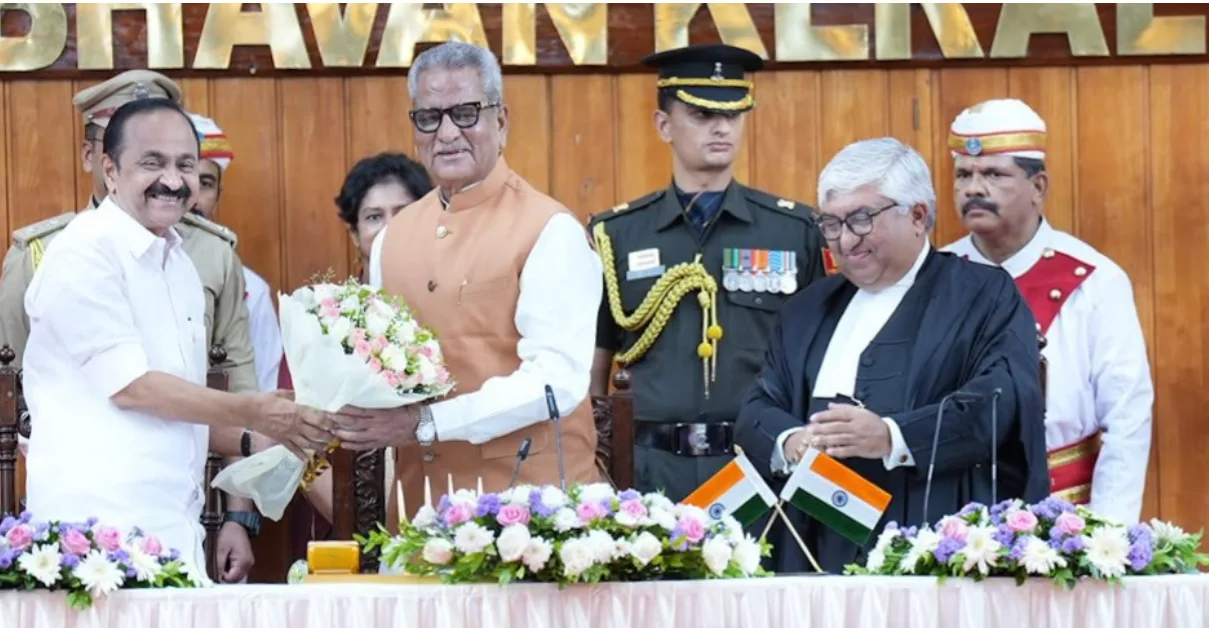
Om Prakash Mathur was sworn in as Keralam Governor on Friday. Kerala High Court Chief Justice Soumen Sen administered the oath at Lok Bhavan in Thiruvananthapuram.

Published

on

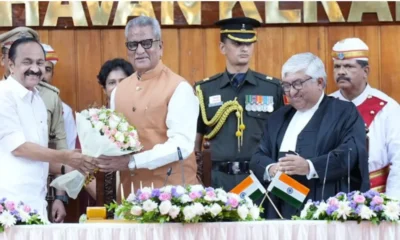
Om Prakash Mathur, a veteran Bharatiya Janata Party (BJP) leader and former Governor of Sikkim, was sworn in as the Governor of Keralam on Friday, October 23. The oath-taking ceremony was held at Lok Bhavan in Thiruvananthapuram, where Kerala High Court Chief Justice Soumen Sen administered the oath of office.

Kerala Chief Minister V D Satheesan and members of his Cabinet attended the ceremony, along with leaders from various political parties. However, leaders of the Left Democratic Front (LDF), the state’s key opposition alliance, did not participate in the event, according to the report.

Before the oath was administered, the appointment order issued by President Droupadi Murmu was read out. Mathur took the oath in Hindi and formally assumed office. The ceremony concluded with the national song Vande Mataram and the national anthem being played by the band.

Who is Om Prakash Mathur?

Mathur hails from Bedal village in the Bali tehsil of Rajasthan’s Pali district. He graduated from Rajasthan University and entered public life as a pracharak of the Rashtriya Swayamsevak Sangh (RSS).

During his political career, Mathur served as the BJP’s national general secretary in charge of Gujarat and represented Rajasthan in the Rajya Sabha. He was appointed Governor of Sikkim in July 2024 before being named to the Keralam post in the latest gubernatorial reshuffle.

Mathur succeeds Rajendra Vishwanath Arlekar

Mathur replaces Rajendra Vishwanath Arlekar, who has been appointed Governor of Tamil Nadu. President Droupadi Murmu announced the gubernatorial appointments on October 12, with the changes taking effect as the appointees assumed charge of their respective offices.

The change comes against the backdrop of disputes between successive Kerala governments and governors over university administration. The governor also serves as the chancellor of the state’s universities, with responsibilities related to their administration.

Previous disagreements over the appointment of vice-chancellors and other senior university officials had led to legal proceedings. Both the LDF and the United Democratic Front (UDF) have raised objections to appointments they alleged involved individuals associated with the BJP and RSS.

Continue Reading

India News

Two election commissioners complained against senior poll officer, RTI reveals

An RTI response has shed light on complaints by two Election Commissioners against a senior poll panel officer and the Cabinet Secretariat’s decision not to intervene directly.
Published

on

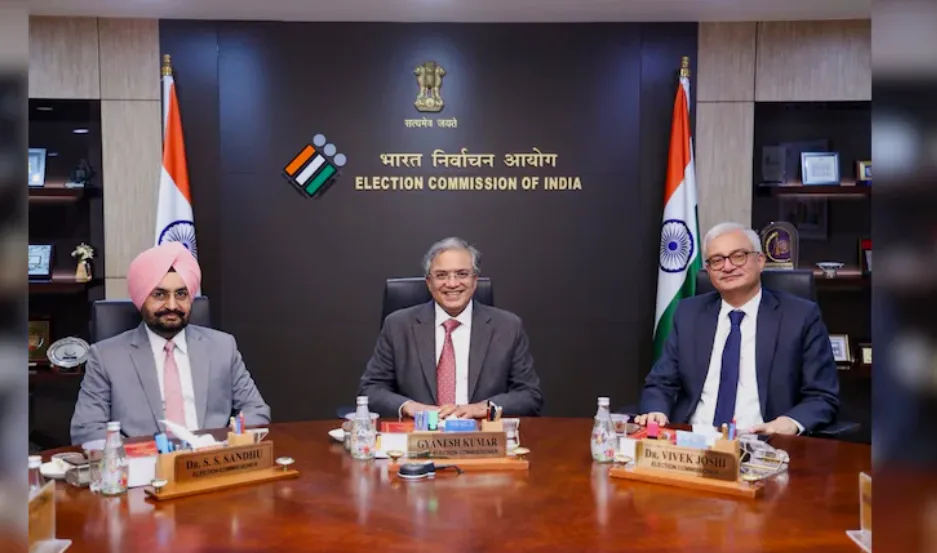
An RTI response has brought fresh details to light about complaints submitted by two Election Commissioners against a senior official of the Election Commission of India (ECI), including the Cabinet Secretariat’s decision not to intervene directly in the matter.

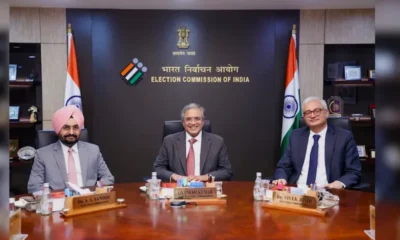
Election Commissioners Sukhbir Singh Sandhu and Vivek Joshi wrote separate letters to Cabinet Secretary T V Somanathan on July 29, 2026, raising concerns about the working of Senior Deputy Election Commissioner Maneesh Garg.

The complaints followed an order concerning the allocation of responsibilities among senior officers in the poll panel. The Cabinet Secretariat subsequently acknowledged the communications and shared them with relevant offices, while noting that direct action could be inappropriate without an official communication from the Commission as a whole.

Why the two Election Commissioners raised concerns

The dispute centred on a work-allocation order issued on July 28, when Garg took temporary charge as the link officer for the Deputy Election Commissioner handling administration, who was on leave.

According to the complaints, Garg issued an order reallocating responsibilities among senior and equivalent-ranking officers without discussing the changes with the Commission or the officers concerned.

Sandhu reportedly objected that the revised allocation had been made without consultation, while Joshi stated that a file he requested from the Administration Division was not provided to him.

The two Commissioners also referred to previous instructions against making such changes without prior discussion or approval from the Commission.

Why the Cabinet Secretariat did not intervene

Records disclosed through the RTI process indicate that the Cabinet Secretariat considered the complaints but concluded that direct intervention could be inappropriate.

In its internal deliberations, the Secretariat noted that the Election Commission is a constitutional body designed to function independently of executive interference. It also observed that the letters had been sent by the two Commissioners in their individual capacities rather than as an official communication from the Commission collectively.

The Secretariat therefore considered it appropriate to acknowledge the letters and inform the Chief Election Commissioner’s office, rather than take direct action against the official.

The Department of Personnel and Training was also informed so that the matter could be placed on record for future consideration concerning the officer.

What happened after the complaints

The Cabinet Secretariat’s records show that internal discussions took place on August 3 and August 4. The Cabinet Secretary acknowledged the two letters on August 5 and forwarded the matter to the relevant offices.

The Election Commission had also issued a clarification on September 26, stating that the dispute did not concern a policy matter or the Commission’s IT division, but the functioning of an officer posted to the poll panel.

The Commission said the work-reallocation orders were not implemented following directions from the two Commissioners and that oversight of the IT division had not actually been withdrawn.

The RTI disclosures provide an official record of how the complaints were handled by the Cabinet Secretariat, while also highlighting the institutional considerations involved in deciding whether the executive should intervene in the functioning of a constitutional body.

Continue Reading

India News

Punjab strike hits public services as 3 lakh employees and roadways workers protest

Punjab is facing disruption to government work and public transport as over three lakh government employees participate in a mass leave protest and roadways workers continue their strike over pending demands.
Published

on

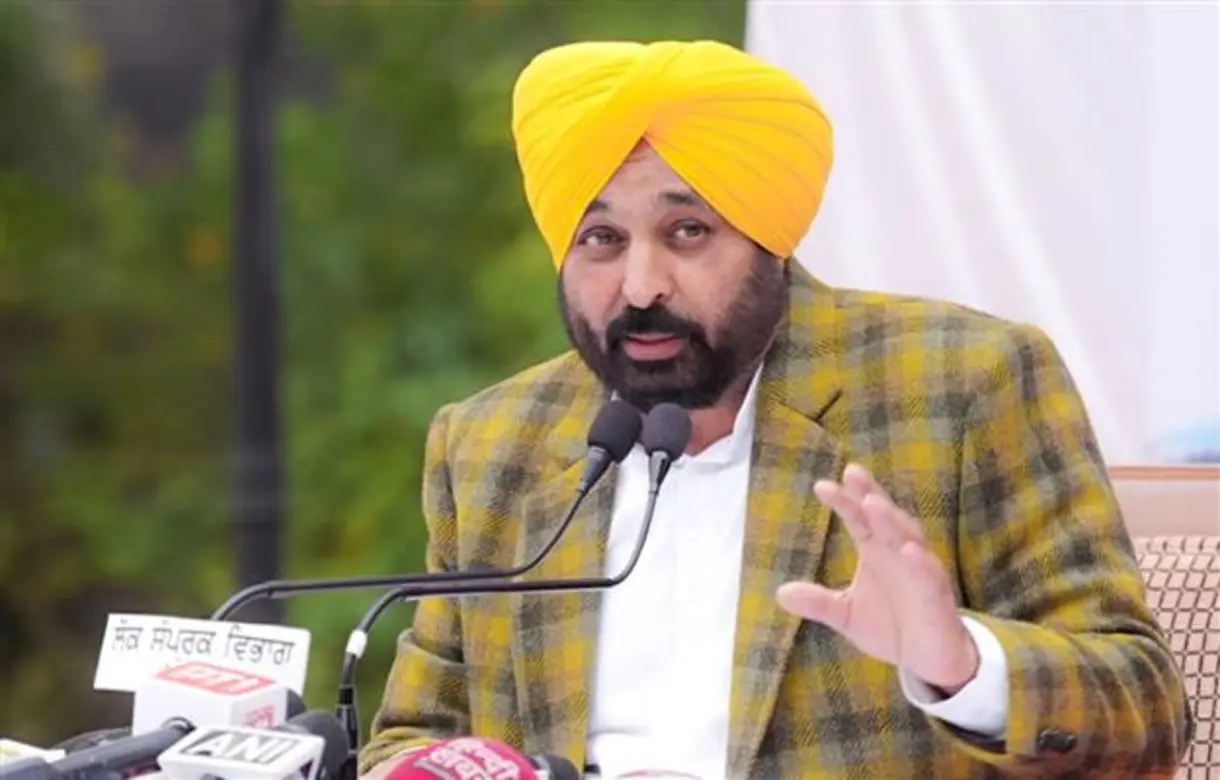
Public services in Punjab have been affected as government employees and transport workers continue their agitation over long-pending demands. The protests involve a mass casual leave programme by more than three lakh government employees and a separate strike by workers associated with state-run transport services.

The agitation has disrupted government office operations and public bus services, adding to the pressure on the Punjab government to address employees’ grievances.

Why Punjab government employees are protesting

Government employees have been pressing for the release of pending dearness allowance (DA) instalments and arrears, restoration of the Old Pension Scheme (OPS), regularisation of contractual workers and resolution of pay-related issues.

The demands also cover service conditions and benefits for workers employed across different government departments. Employee organisations have called for concrete decisions on these matters, arguing that several issues remain unresolved despite discussions with the state government.

The mass casual leave programme has affected the functioning of government offices and administrative establishments across the state.

Roadways workers’ strike affects bus services

Separately, workers associated with Punjab Roadways, PUNBUS and the Punjab Road Transport Corporation (PRTC) have continued their agitation over employment-related demands.

The transport workers’ protest has affected the availability of public buses, creating difficulties for commuters who depend on state-run services for their daily travel.

The transport workers’ demands include regularisation under applicable service rules, changes to employment arrangements for outsourced workers and action on cases linked to previous protests.

The government employees’ agitation and the transport workers’ strike are separate actions, although both concern outstanding demands and the state government’s response to employee organisations.

Talks fail to resolve the deadlock

Discussions between employee representatives and the state government have so far failed to produce a comprehensive resolution to the dispute.

Employee organisations have continued to seek assurances and concrete action on their demands. The continuation of the agitation reflects the lack of an agreement that would persuade the protesting groups to withdraw their actions.

The dispute has also placed the state government under pressure to restore normal public services while addressing the concerns raised by government staff and transport workers.

Continue Reading

Trending

© Copyright 2022 APNLIVE.com