English हिन्दी
Connect with us

India News

Assamese woman raped inside car in Gurugram

Published

on

An Assamese woman was reportedly raped by an acquaintance inside a car in Gurugram, police said on Thursday.

A senior official citing a complaint filed by the 34-year-old woman, said the victim—who works at a private firm in Gurugram—had been in touch with the accused, identified as 40-year-old Sandeep, for the past few days and the two often texted and talked on the phone.

The official said that on Monday, Sandeep offered to pick her up from Hero Honda chowk after she left from her Sector 37 office and purportedly raped her.

The woman, according to the complaint, said the accused and her talked for a while in his car and then he raped her and also threatened to kill her if she narrated the ordeal to anyone.

Based on the victim’s complaint, a case under Sections 376 (rape) and 506 (criminal intimidation) of the Indian Penal Code (IPC), was registered against the accused, Sandeep—a resident of Jhajjar, Haryana—at Sector 37 police station.

Read Also: Indore temple tragedy: Death toll mounts to 35, 14 rescued

The accused was arrested on Thursday and confessed to the crime after initial questioning, police said, adding that he was produced in a city court today and sent to judicial custody.

Further investigation is underway, they said.

In a similar incident, a 19-year-old model was allegedly gang-raped in a moving car in Kerala’s Kochi in November last year.

As per reports at the time, the victim who was inebriated at the time of the assault after having a drink at a pub near Cochin Shipyard, was offered a ride home to Kakkanad by the accused and was allegedly gang-raped on the way.

Reports had said that the accused raped her while driving through the city till late night before abandoning her near her house. Police said three men and woman were detained in connection with the incident and a case under relevant sections of the law was registered by the Ernakulam Police.

India sees single-day rise of 3,095 new Covid-19 cases, active cases cross 15K

Amritpal Singh should seek refuge in Pakistan to escape oppression, says SAD MP Simranjit Singh

Continue Reading

India News

GRAP stage-III measures enforced across Delhi as air quality worsens

Delhi’s air quality has deteriorated further, prompting authorities to enforce GRAP stage-III measures across the NCR amid rising AQI levels.

Published

on

Delhi-Pollution

Delhi’s air quality has continued to deteriorate, prompting authorities to enforce Stage-III measures under the Graded Response Action Plan (GRAP) across the National Capital Region with immediate effect.

The Commission for Air Quality Management (CAQM) said the Air Quality Index (AQI) of the national capital showed a worsening trend over the past 24 hours. The AQI stood at 343 on January 15 at 4 pm and rose further to 354 by 4 pm on Thursday, raising concerns that pollution levels could soon enter the ‘Severe’ category.

Weather agencies have forecast unfavourable atmospheric conditions in the coming days, including low wind speeds, a stable atmosphere and poor dispersion of pollutants. Officials said these conditions could push Delhi’s average AQI beyond 400, which falls under the ‘Severe’ air quality bracket.

Stage-III restrictions come into force across NCR

In view of the rising pollution levels and the forecast of further deterioration, the CAQM sub-committee on GRAP decided to invoke all measures under Stage-III. These measures correspond to ‘Severe’ air quality levels and have been implemented as a precautionary step to prevent further decline.

The Stage-III actions will be enforced in addition to the restrictions already in place under Stages I and II of GRAP, which remain operational across the NCR. Officials said the combined measures aim to tighten controls on pollution sources, enhance monitoring and ensure stricter enforcement to curb emissions.

CAQM has directed pollution control boards and concerned agencies in the NCR to intensify preventive and regulatory steps. Authorities have been asked to ensure strict compliance with GRAP norms and take prompt action against violations.

Officials said air quality levels will be closely monitored, and further decisions will be taken based on real-time data and evolving weather conditions. Citizens have been urged to cooperate with advisories and follow measures aimed at reducing pollution levels.

Continue Reading

India News

PM Modi to visit Bengal and Assam, launch Vande Bharat sleeper train and key projects

PM Modi will visit West Bengal and Assam on January 17 and 18 to launch India’s first Vande Bharat sleeper train and inaugurate major infrastructure projects.

Published

on

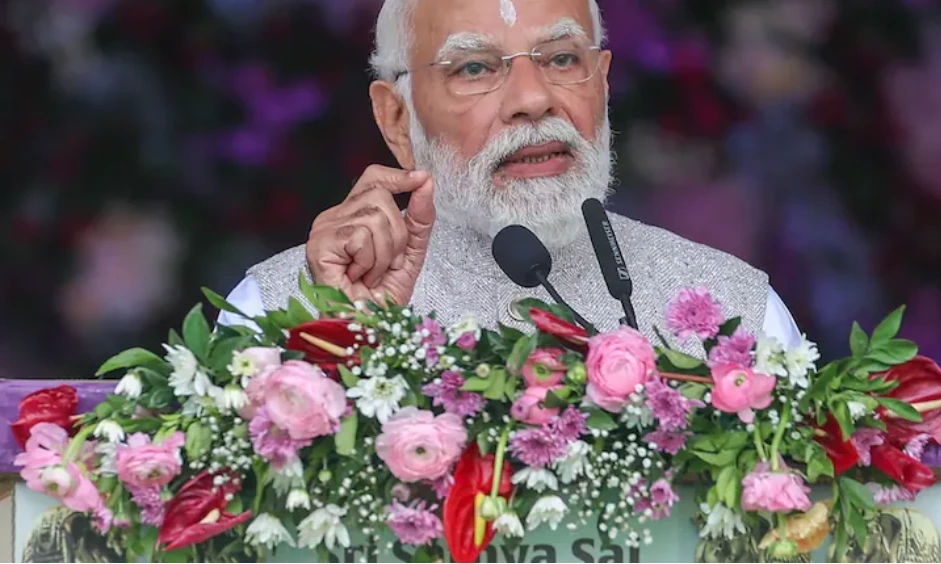
Prime Minister Narendra Modi will visit West Bengal and Assam on January 17 and 18, where he will flag off India’s first Vande Bharat sleeper train and inaugurate, dedicate and lay the foundation stone for a series of infrastructure and development projects across the two poll-bound states.

Vande Bharat sleeper train to be flagged off from Malda

On Saturday, the prime minister will visit Malda in West Bengal around 12.45 pm and flag off the country’s first Vande Bharat sleeper train connecting Howrah with Guwahati (Kamakhya) from the Malda town railway station.

Later in the day, around 1.45 pm, he will address a public programme in Malda where he will dedicate to the nation and lay the foundation stone of multiple rail and road projects worth more than Rs 3,250 crore.

Development projects in Hooghly district

On January 18, around 3 pm, the prime minister will visit Singur in Hooghly district, where he will inaugurate, lay the foundation stone and flag off various development projects worth around Rs 830 crore.

During the visit, Modi will also virtually flag off four new Amrit Bharat Express trains connecting New Jalpaiguri with Nagercoil and Tiruchirappalli, and Alipurduar with Bengaluru and Mumbai (Panvel). These services are aimed at improving affordable long-distance rail connectivity and strengthening inter-state economic and social linkages.

New train services and highway projects in north Bengal

The prime minister will flag off two new train services with LHB coaches — Radhikapur–SMVT Bengaluru Express and Balurghat–SMVT Bengaluru Express — providing direct connectivity from north Bengal to major IT and employment hubs.

He will also lay the foundation stone for the rehabilitation and four-laning of the Dhupguri–Falakata section of National Highway-31D, a project expected to significantly improve road connectivity and the movement of goods and passengers in the region.

Additionally, Modi will lay the foundation stone of four major railway projects in West Bengal, including a new rail line between Balurghat and Hili, next-generation freight maintenance facilities at New Jalpaiguri, upgradation of the Siliguri loco shed and modernisation of Vande Bharat train maintenance facilities in Jalpaiguri district.

He will also dedicate the electrification of the New Coochbehar–Bamanhat and New Coochbehar–Boxirhat rail sections, enabling cleaner and more energy-efficient train operations.

Cultural programme and Kaziranga corridor in Assam

On January 17, around 6 pm, the prime minister will attend the Bodo cultural programme “Bagurumba Dwhou 2026” at Sarusajai Stadium in Guwahati. More than 10,000 artists from across Assam are expected to perform the traditional Bagurumba dance in a single synchronised presentation.

On January 18, around 11 am, Modi will perform the bhoomi pujan for the Kaziranga elevated corridor project, valued at over Rs 6,950 crore, at Kaliabor in Nagaon district. The 86-km project includes a 35-km elevated wildlife corridor passing through Kaziranga National Park, along with bypasses and highway widening works aimed at improving connectivity while protecting biodiversity.

During the Assam programme, the prime minister will also flag off two new Amrit Bharat Express trains — Guwahati (Kamakhya)–Rohtak and Dibrugarh–Lucknow (Gomti Nagar) — strengthening rail connectivity between the northeast and northern India.

Continue Reading

India News

NDA’s track record strikes chord as PM Modi hails Maharashtra civic polls win

Prime Minister Narendra Modi hailed Maharashtra voters after the BJP-led NDA registered a historic victory in the BMC elections, ending decades of Shiv Sena dominance.

Published

on

modi on maharashtra election

Prime Minister Narendra Modi on Friday thanked the people of Maharashtra after the BJP-led National Democratic Alliance registered a landmark victory in the Brihanmumbai Municipal Corporation elections, marking the first time the party has emerged on top in the country’s richest civic body.

In a post on X, the prime minister said the people of the state had endorsed the NDA’s agenda of governance and development. He said the results of municipal corporation elections across Maharashtra showed that the alliance’s bond with voters had further strengthened.

According to PM Modi, the NDA’s track record and vision for development had “struck a chord” with the electorate. He described the verdict as a mandate to accelerate progress while celebrating Maharashtra’s cultural legacy.

BJP-Shiv Sena alliance dominates BMC

As counting continued, trends showed the BJP leading in 90 of the 227 wards in Mumbai, while the Eknath Shinde-led Shiv Sena was ahead in 28 wards. The Ajit Pawar-led NCP faction, which contested separately, was leading in only three wards.

On the opposition side, the Shiv Sena (UBT) and Maharashtra Navnirman Sena were ahead in 57 and nine wards respectively. The Congress, which contested in alliance with the Vanchit Bahujan Aghadi, was leading in 15 wards, while others were ahead in eight.

The outcome effectively ends the Shiv Sena (UBT)’s decades-long control over the Brihanmumbai Municipal Corporation, which had been the party’s main power centre since its formation.

In the seat distribution, the BJP contested 137 wards and the Shinde-led Shiv Sena 90. The Ajit Pawar faction of the NCP fielded candidates in 94 wards. On the opposition side, Shiv Sena (UBT) contested 163 seats, the MNS 52, the Congress 143, and the Vanchit Bahujan Aghadi 46.

Urban verdict weakens Pawar influence

The results in Pune and Pimpri-Chinchwad also sent a strong political message, indicating that the Pawar brand no longer guarantees success in key urban centres. Despite tactical coordination between the two NCP factions led by Sharad Pawar and Ajit Pawar, voters did not consolidate behind them.

In the Pune Municipal Corporation, the BJP emerged with a clear upper hand, either winning or leading in a significant number of wards. The NCP factions failed to convert their traditional influence into broader citywide support.

Thackeray retains Marathi Manoos connect but loses power base

Uddhav Thackeray appears to have retained a section of the Marathi Manoos vote in Mumbai, even as the Shinde-led Shiv Sena made inroads. While the Shiv Sena (UBT) managed a respectable showing in its traditional strongholds, the loss of control over the BMC is seen as a major setback.

Control of the civic body had long been central to the party’s political identity and a key factor in its alliances.

Devendra Fadnavis emerges as key strategist

Much of the credit for the BJP’s sweeping civic success is being attributed to Devendra Fadnavis. Under his leadership, the Mahayuti alliance has carried forward its assembly election momentum into municipal politics.

The results are being seen as reinforcing Fadnavis’s political standing, demonstrating that even combined opposition forces could not halt the BJP’s rise. The verdict has also challenged the long-held claim of the Thackeray family over Marathi votes in Mumbai.

Continue Reading

Trending

© Copyright 2022 APNLIVE.com