English हिन्दी
Connect with us

India News

Best fitness regime is to stay indoors, says CPCB as air quality dips in Delhi-NCR

Published

on

Best fitness regime is to stay indoors, says CPCB as air quality dips in Delhi-NCR

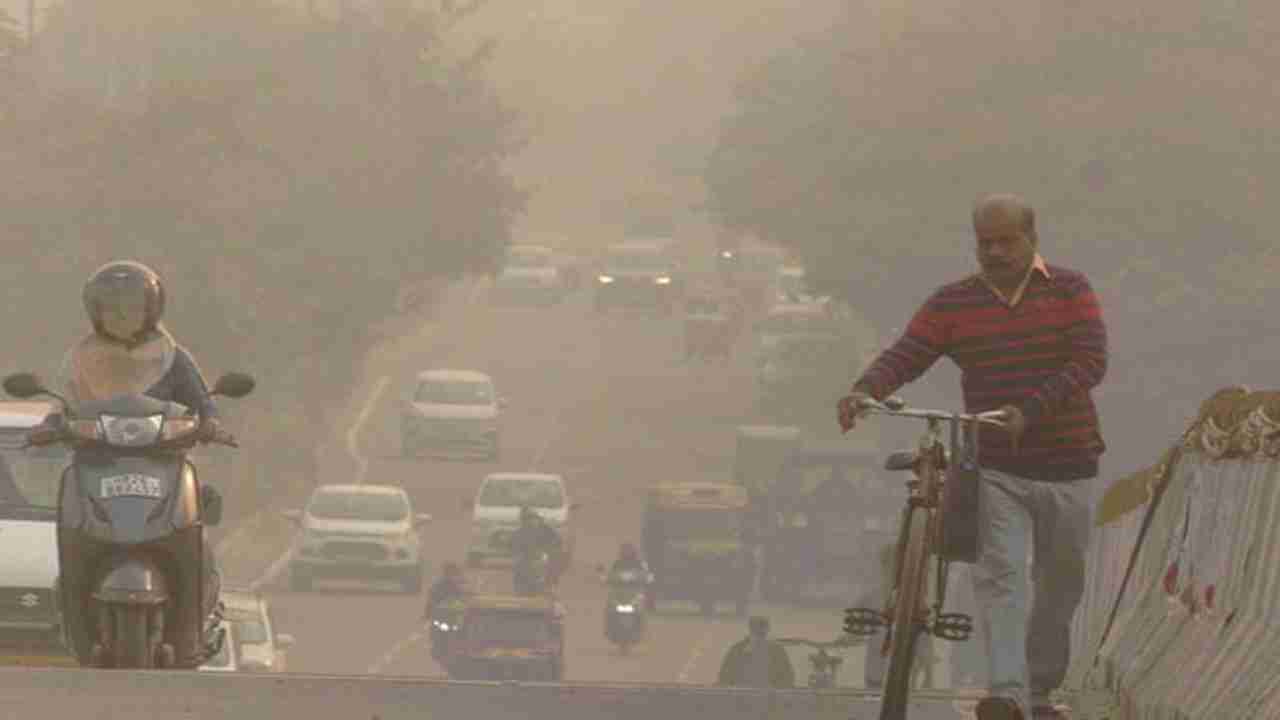
[vc_row][vc_column][vc_column_text]Air quality in Delhi has deteriorated severely and seems set to worsen further, prompting the Central Pollution Control Board (CPCB) to warn people to avoid strenuous exercises, try to minimize their exposure to the toxic air, and cut down the use of private cars.

The Environment Pollution (Prevention and Control) Authority will now take a call based on CPCB’s recommendations and pass an order, later today (Saturday, Oct 27).

CPCB expects pollution in the area to be at its worst because of toxic fumes from stubble burning in parts of Punjab and Haryana that westerly winds are expected to blow towards Delhi.

Delhi has been already reeling under ‘very poor’ air quality over the past three days and conditions are likely to deteriorate further over the weekend, CPCB’s forecasting system and SAFAR, which comes under the union ministry of earth sciences, has already said.

Air quality in Delhi and NCR (national capital region)on Friday recorded worse pollution than what it was a day after Dussehera.The Air Quality Index (AQI) of Delhi recorded was 361, against 331 on Thursday and 326 a day after Dussehera – all in “very-poor” category.

Many regions are now suffering a “severe or severe-plus” air-quality, the top four most polluted regions in Delhi included Jahangirpuri in north Delhi (AQI 464) and Mundaka in west-Delhi (AQI 444), Dwarka sub-city in south-Delhi (AQI 436), Anand Vihar in east-Delhi (AQI 415) — all marked “severe”.

“The primary pollutants in Delhi’s air – PM10 and PM2.5 – have also shot up alarmingly. At 7 pm on Friday, PM10 level shot up to 384ug/m3 which is 3.8 times above the safe limits of 100ug/m3. The ultrafine particles PM2.5 shot up to 198ug/m3, which was 3.3 times above the permissible limit of 60ug/m3. This is likely to shoot up further over the next two days as pollutants are not being dispersed because the present spell of unfavaourable weather conditions are unlikely to change,” said a CPCB official.[/vc_column_text][vc_column_text]

AQI Category, Pollutants and Health Breakpoints
AQI Category (Range) PM10

24-hr

PM2.5

24-hr

NO2

24-hr

O3

8-hr

CO

8-hr (mg/m3)

SO2

24-hr

NH3

24-hr

Pb

24-hr

Good (0-50) 0-50 0-30 0-40 0-50 0-1.0 0-40 0-200 0-0.5
Satisfactory (51-100) 51-100 31-60 41-80 51-100 1.1-2.0 41-80 201-400 0.5 –1.0
Moderately polluted

(101-200)

101-250 61-90 81-180 101-168 2.1- 10 81-380 401-800 1.1-2.0
Poor

(201-300)

251-350 91-120 181-280 169-208 10-17 381-800 801-1200 2.1-3.0
Very poor

(301-400)

351-430 121-250 281-400 209-748* 17-34 801-1600 1200-1800 3.1-3.5
Severe

(401-500)

430 + 250+ 400+ 748+* 34+ 1600+ 1800+ 3.5+


Air quality in Delhi and its environs is expected to deteriorate further between November 1 and November 10, according to the CPCB.

EPCA warned on Thursday that from November 1, the wind is expected to change its direction and blow from the west and northwest directions bringing in fumes and pollutants from stubble burning regions of Punjab and Haryana. “At present it is blowing from south east and east direction. But still at least 20% – 30% of the pollutants are coming from those two states. It will rise once the wind direction changes,” said a CPCB official.

“Between November 1 and 10 meteorological conditions may not be favourable for Delhi as a result of which air quality could deteriorate. Based on our past two years of experiences, the CPCB’s task force met on Friday and has recommended some preventive and proactive measures to EPCA,” said P Gargava, member secretary of the CPCB, as per a report in The Hindustan Times (HT).

Recommended precautions

◼ Avoid strenuous exercise, especially early in the morning. Walk slower

◼ Avoid traffic intersections during rush hour or roads with heavy traffic

◼ Close windows that face roads

◼ Cut down on smoking, lighting incense sticks

◼ Avoid using private cars for commuting

The recommendations include a ban on all civil construction and excavation activities in the entire National Capital Region between November 1 and 10; a closure of coal and biomass based industries (excluding thermal power plants and waste to energy plants) between November 4 and November 10; and an intensification of efforts by the traffic police and transport department to check visibly polluting vehicles and reduce traffic jams in Delhi.

“We are also requesting and recommending that the public minimize their exposure and cut down the use of private vehicles, particularly diesel vehicles, during the first ten days of November,” said Gargava.

“Any form of strenuous exercise including jogging at more than 5 km per hour should be avoided during this period. People should also try to avoid other forms of pollution such as burning incense sticks and mosquito coils indoors,”Dr TK Joshi, health expert of the CPCB task force, said according to HT.[/vc_column_text][vc_column_text css=”.vc_custom_1540638580024{padding-top: 10px !important;padding-right: 10px !important;padding-bottom: 10px !important;padding-left: 10px !important;background-color: #a2b1bf !important;border-radius: 10px !important;}”]Air pollution is a health risk at every stage of life.

Exposure to air pollution during pregnancy can damage a developing baby’s vital organs including the brain, heart and lungs and lead to a range of conditions including asthma, heart disease and cancers.

Air pollution also negatively affects brain development during childhood, lowering children’s chances of success in school and employment possibilities later in life.

The WHO’s estimates show that worldwide ambient air pollution accounts for:

29% of all deaths and disease from lung cancer

17% of all deaths and disease from acute lower respiratory infection

24% of all deaths from stroke

25% of all deaths and disease from ischaemic heart disease

43% of all deaths and disease from chronic obstructive pulmonary disease

India alone accounts for one-fourth of deaths in the world due to air pollution[/vc_column_text][/vc_column][/vc_row]

India News

PM Modi assures no discrimination in women’s quota, delimitation debate intensifies in Parliament

PM Narendra Modi has assured that women’s reservation will be implemented without discrimination, amid a heated debate over delimitation in Parliament.

Published

on

PM modi

Prime Minister Narendra Modi has assured that there will be no discrimination in the implementation of women’s reservation, as Parliament witnessed a sharp debate over the proposed linkage between the quota and delimitation exercise.

During the ongoing special session, the government reiterated its commitment to ensuring fair representation while addressing concerns raised by opposition parties regarding the timing and structure of the legislation.

The proposed framework aims to reserve 33 percent of seats for women in the Lok Sabha and state assemblies. However, its implementation is tied to a fresh delimitation exercise, which is expected after the next census.

Opposition questions timing and intent

Opposition leaders have raised concerns that linking the women’s quota to delimitation could delay its implementation. They argue that the process of redrawing constituencies may push the actual rollout further into the future.

The issue has triggered a broader political confrontation, with multiple parties questioning whether the move could alter representation across states.

Some critics have also alleged that the delimitation exercise could disproportionately benefit certain regions based on population, a charge the government has rejected.

Government reiterates commitment to fair implementation

Responding to these concerns, the Centre has maintained that the reforms are necessary to ensure accurate and updated representation based on population data.

Leaders from the ruling side have repeatedly emphasized that the process will be carried out transparently and without bias. The assurance that there will be “no discrimination” is aimed at addressing fears among states and opposition parties.

The debate marks a key moment in Parliament, with both sides engaging in intense exchanges over one of the most significant electoral reforms in recent years.

Continue Reading

India News

Give all tickets to Muslim women, Amit Shah says, attacking Akhilesh Yadav on sub-quota demand

A sharp exchange between Amit Shah and Akhilesh Yadav in Parliament over sub-quota for Muslim women highlights key divisions on women’s reservation implementation.

Published

on

A heated exchange broke out in Parliament during discussions on the women’s reservation framework, with Union Home Minister Amit Shah and Samajwadi Party chief Akhilesh Yadav locking horns over the demand for a sub-quota for Muslim women.

The debate unfolded as the government pushed forward key legislative measures to implement 33% reservation for women in the Lok Sabha and state assemblies.

Akhilesh Yadav argued that the proposed reservation must ensure representation for women from marginalised communities, including Other Backward Classes (OBCs) and Muslim women. He said that without such provisions, large sections could remain excluded from political participation.

He also questioned the timing of the bill, alleging that the Centre was avoiding a caste census. According to him, a census would lead to renewed demands for caste-based reservations, which the government is reluctant to address.

Government rejects religion-based quota

Responding to the demand, Amit Shah made it clear that reservation based on religion is not permitted under the Constitution.

He stated that any proposal to provide quota to Muslims on religious grounds would be unconstitutional, firmly rejecting the idea of a separate sub-quota for Muslim women within the broader reservation framework.

The government has maintained that the existing framework already includes provisions for Scheduled Castes (SC) and Scheduled Tribes (ST) women within the overall reservation structure.

Wider political divide over implementation

The issue of sub-categorisation within the women’s quota has emerged as a major flashpoint, even as most opposition parties broadly support the idea of women’s reservation.

Samajwadi Party leaders reiterated that their support for the bill depends on inclusion of OBC and minority women, while the government continues to defend its constitutional position.

The debate is part of a broader discussion during the special Parliament session, where multiple bills linked to delimitation and implementation of the women’s quota are being taken up.

Continue Reading

India News

No state will lose a seat, Centre assures as delimitation debate takes centre stage in Parliament

Parliament’s special session begins with key focus on implementing women’s reservation and delimitation, setting the stage for major electoral changes.

Published

on

Parliament

A special session of Parliament commenced on Thursday, with the Centre set to take up crucial legislation related to women’s reservation and delimitation of constituencies. The session, scheduled over three days, is expected to witness intense debate as the government pushes forward its legislative agenda.

At the centre of discussions is the proposal to operationalise the women’s reservation law, which seeks to allocate 33 percent of seats in the Lok Sabha and state assemblies to women. The law, passed earlier, requires enabling provisions before it can be implemented.

The rollout of the reservation is closely tied to the delimitation exercise — a process that redraws parliamentary constituencies based on updated population data. The implementation is expected only after the next census and delimitation process are completed.

The government is aiming to put in place the framework so that the reservation can be enforced in future elections, likely around 2029.

Delimitation and numbers at play

Delimitation is a key aspect of the proposed changes, as it will determine how seats are redistributed and which constituencies are reserved. The exercise is expected to reflect population shifts and may also involve an increase in the total number of Lok Sabha seats.

This linkage has made the issue politically sensitive, with several opposition parties backing women’s reservation in principle but raising concerns over how and when delimitation will be carried out.

Political reactions and expected debate

The session is likely to see sharp exchanges between the government and opposition. While there is broad agreement on increasing women’s representation, disagreements remain over the timing, process, and potential political implications of the delimitation exercise.

Some leaders have argued that delimitation could significantly alter the balance of representation among states, making it a contentious issue beyond the women’s quota itself.

The government, however, has framed the move as a step toward strengthening women’s participation in governance and ensuring more inclusive policymaking.

Continue Reading

Trending

© Copyright 2022 APNLIVE.com